






 Support our online development, and advance our onground research initiatives in free market economics, as we seek to showcase the brightest Next-Gen minds.
THE ME-P DISCLAIMER: Posts, comments and opinions do not necessarily represent iMBA, Inc., but become our property after submission. Copyright © 2006 to-date. iMBA, Inc allows colleges, universities, medical and financial professionals and related clinics, hospitals and non-profit healthcare organizations to distribute our proprietary essays, photos, videos, audios and other documents; etc. However, please review copyright and usage information for each individual asset before submission to us, and/or placement on your publication or web site. Attestation references, citations and/or back-links are required. All other assets are property of the individual copyright holder.
Support our online development, and advance our onground research initiatives in free market economics, as we seek to showcase the brightest Next-Gen minds.
THE ME-P DISCLAIMER: Posts, comments and opinions do not necessarily represent iMBA, Inc., but become our property after submission. Copyright © 2006 to-date. iMBA, Inc allows colleges, universities, medical and financial professionals and related clinics, hospitals and non-profit healthcare organizations to distribute our proprietary essays, photos, videos, audios and other documents; etc. However, please review copyright and usage information for each individual asset before submission to us, and/or placement on your publication or web site. Attestation references, citations and/or back-links are required. All other assets are property of the individual copyright holder.


Update for Doctors and Medical Professionals
[By Dr. David Edward Marcinko MBA]
[By Nalley Lexus Roswell, GA]

Auto manufacturers have always been at the forefront when it comes to new technology. In a very competitive market, being able to develop new gadgets and capabilities is critical when it comes to selling new cars.
While new car models feature the latest developments, engineers are already working on the ‘next big thing.’ So what will be the next big developments in technology to revolutionize the driving experience?
The Ideas
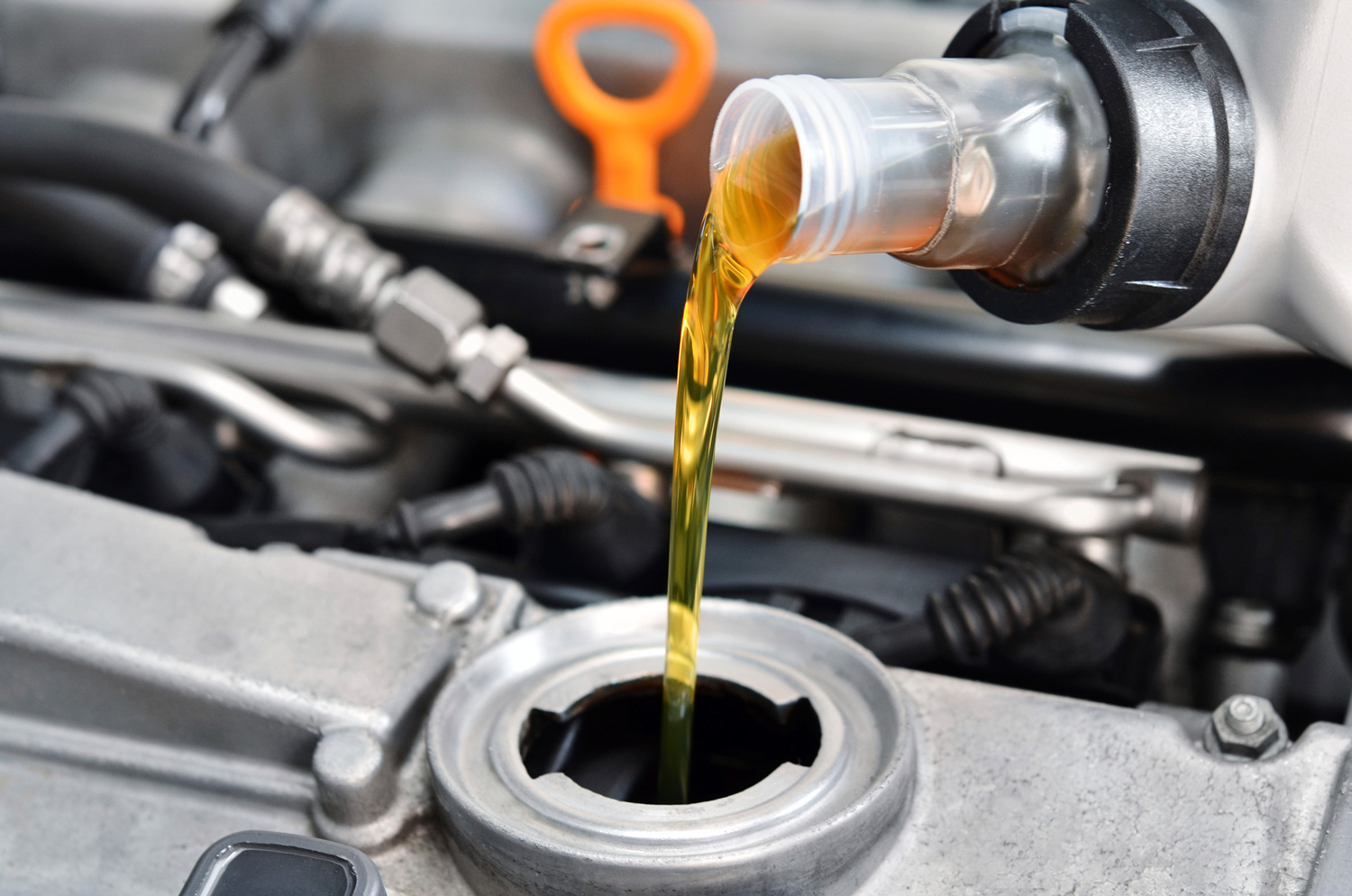
Here are three ideas for doctors and medical colleagues. All from a guy who used to change his own oil.
- Cars that can communicate with each other
One of the biggest challenges in road safety comes from the independence that one vehicle has over another. Car drivers are almost entirely insulated from each other and the outside world until disaster strikes. One technology that is trying to address this problem is called Vehicle-to-Vehicle communication – or V2V. V2V technology is now being used by manufacturers as potential technology for future cars.
V2V sends wireless signals about a car’s location, speed, and direction. These signals are, in turn, received by other cars, which interpret this information and make appropriate conclusions. That may be simply to warn the driver, or it could mean applying the brakes. A logical progression from V2V is V2I – Vehicle-to-Infrastructure. This would allow cars to talk to traffic signals and other technology to help further control traffic and speeds.
- Airbags that prevent collisions
The airbag is almost certainly one of the greatest car safety gadgets and has saved countless lives since the technology was first developed. Airbags are a great example of a passive safety feature, which means that they reduce the risk of death or injury in the event of an accident. The technology could be used, however, as an active safety feature, which could actually help prevent accidents.
Manufacturers are now experimenting with air bags, which would deploy beneath a vehicle in the event that a potential collision was about to occur. A special coating would help slow the car down, helping the driver to stop much more quickly. By lifting the car up, these bags would also reduce the risk of injury from passengers slipping under seat belts and would lessen any potential damage or injury from bumper-to-bumper impact.
- Cars that can drive themselves
The ultimate new technology must surely be one that removes the need for a car to have a driver. Any kind of independent driving technology would, of course, ensure that rules were always adhered to and would remove the margin for human error that almost certainly costs many lives every year. The technology giant Google has invested heavily in the self-driving car to date, although the big manufacturers are also likely to adopt this technology. Who knows whether it will be possible to purchase a self-driving production car within ten years?
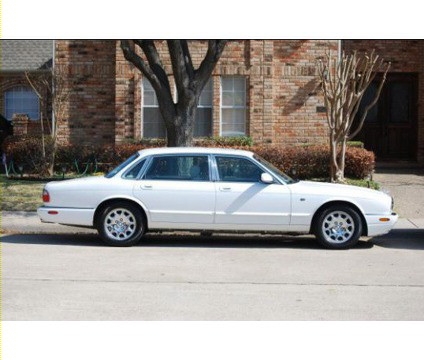
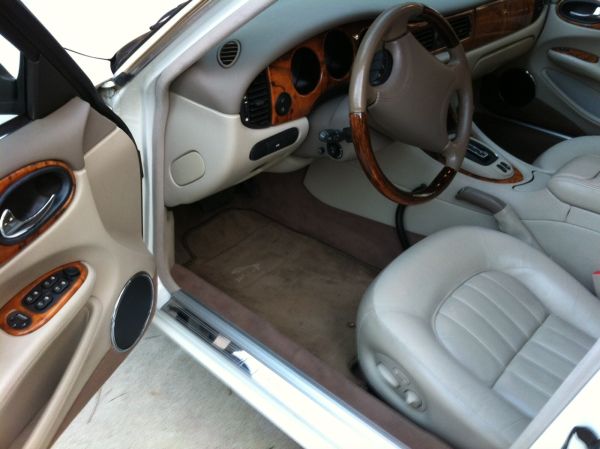
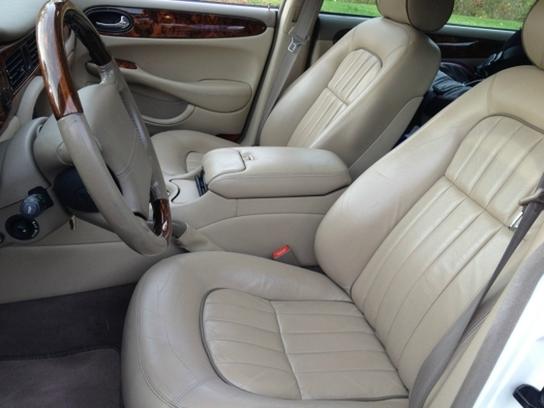
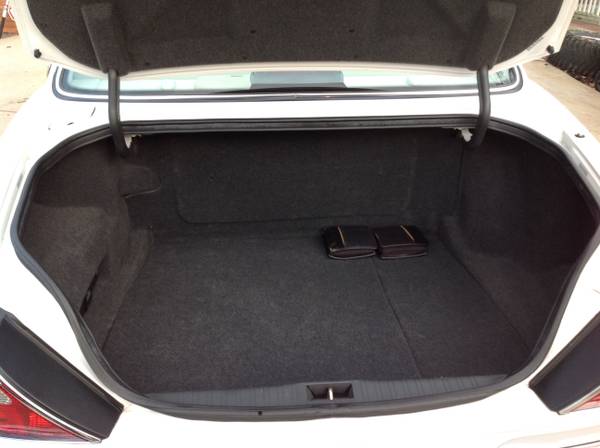
[My 2000 Jaguar XJ-V8 Luxury Touring Sedan]
Assessment
I covered the ER for more than a decade. If any one of these innovations can save a life; then I am all for it.
***
***
More:
Conclusion
Your thoughts and comments on this ME-P are appreciated. Feel free to review our top-left column, and top-right sidebar materials, links, URLs and related websites, too. Then, subscribe to the ME-P. It is fast, free and secure.
Speaker: If you need a moderator or speaker for an upcoming event, Dr. David E. Marcinko; MBA – Publisher-in-Chief of the Medical Executive-Post – is available for seminar or speaking engagements. Contact: MarcinkoAdvisors@msn.com
OUR OTHER PRINT BOOKS AND RELATED INFORMATION SOURCES:
- PRACTICES: www.BusinessofMedicalPractice.com
- HOSPITALS: http://www.crcpress.com/product/isbn/9781466558731
- CLINICS: http://www.crcpress.com/product/isbn/9781439879900
- ADVISORS: www.CertifiedMedicalPlanner.org
- FINANCE: Financial Planning for Physicians and Advisors
- INSURANCE: Risk Management and Insurance Strategies for Physicians and Advisors
- Dictionary of Health Economics and Finance
- Dictionary of Health Information Technology and Security
- Dictionary of Health Insurance and Managed Care


Share this:

Filed under: LifeStyle, Touring with Marcinko | Tagged: Dr. David Marcinko, Jaguar |
 The Leading Business Education Network for Doctors, Financial Advisors and Health Industry Consultants
Apple, Amazon, Tesla and the Changing Dynamics of the Car Industry
After I submitted a column to the Institutional Investor Magazine, on the financial innovation taking place at Apple, I learned that Sprint, T-Mobile and now Verizon are all fighting to best one another’s iPhone offers. What is really amazing about the situation is that no matter how this war among wireless carriers plays out, there will be one clear winner — Apple. And in the end, the carriers will be collective losers — they’ll be killing their margins to out-subsidize one another. They will be spending millions of dollars on advertising to get customers to come to their stores to buy — yes, Apple iPhones. If consumers choose Apple’s iPhone Upgrade Program instead of the carriers’, then Apple will win even bigger (as I argued in that column). In the meantime, 2015 will likely mark the year that AT&T’s and Verizon’s U.S. wireless service businesses went from growth to stagnation.
Another observation about Apple: Its brand extends far beyond technology and coolness. Over the years, the company has accumulated incredible goodwill with consumers. There is only one other company that comes to mind that has generated a similar amount of affection: Amazon.com. Amazon made shopping online easy, its customer service is impeccable, and it is transparent with consumers about pricing. After all, it allows other merchants to sell their merchandise through its website. Amazon will even ship it for them.
Consumers’ trust in Amazon’s pricing is so great that most people don’t even bother with comparison shopping anymore; they skip Google (which is not good news for Google, by the way) and go directly to Amazon. I recently found myself willing to pay a few dollars more on Amazon than on a competitor’s website because I knew that if I needed to return the product, the process would be seamless. That goodwill turns Apple and Amazon into “platforms” (a very trendy word on Wall Street now), allowing them to launch a wide variety of new products.
When Apple comes out with the Apple car, rumored to be due in 2019, it will be able to grab a disproportionately large market share from the General Motors of the world because of that deep well of goodwill.
By the time my youngest child, Mia Sarah, who is almost two, learns to drive, internal combustion engines will likely be a relic consigned to museums (just like Ford’s Model T). I had an “aha!” moment when I recently visited a Tesla store and saw its cars’ power train. It looks just like a skateboard — it basically consists of a flat slab of metal (which houses the battery), four wheels and an electric engine the size of a large watermelon. That’s it — the Tesla has only 18 moving parts. I don’t know how many moving parts an internal combustion engine (ICE) car has, but it must be hundreds if not thousands. Interestingly, ICE cars also have more electronics than a Tesla.
Wall Street is going gaga over the stocks of dealerships (especially after Warren Buffett’s Berkshire Hathaway bought Van Tuyl Group) and car makers. I am in the minority, but I think that party will come to an end. Just like Tesla, Apple is not going to be using a dealership model to sell its cars. It would not want the Apple car buying experience to be tainted by a sleazy car salesman. Just as with the iPhone, the company will want to have complete control of the buying experience.
If both Tesla and Apple bypass the dealership model, the GMs of the world will be at an even larger competitive disadvantage. They will have to abandon the dealership model too. Yes, I know, selling cars directly to consumers is not legal in many states, but if the U.S. Constitution could be amended 27 times, the law on car sales (which is an artifact of the Great Depression) can be amended as well.
The traditional dealership model is unlikely to survive anyway, as its economics dramatically degrade in the electric-car world. A car that has very few moving parts and minimal electronics has few things to break; and consequently, electric cars will need less servicing — throttling the dealerships’ most important profit center.
The baby boomer generation romanticizes cars. Most boomers can recite the horsepower and other engine specs of every car they have ever owned. For the tail end of Gen X (my generation) and Millennials, a car is an interruption between Facebook and Twitter. We know the brand of speakers in our car, but if asked would have to google its horsepower. We feel little romanticism for our cars and have much higher brand loyalty to Apple and Google than to GM or Ford.
What is also amazing about electric cars is that they aren’t that much different from smartphones. Smartphone prices have declined significantly over the years because their components became ubiquitous and commoditized. With the exception of spark plugs and tires, most components of a GM car will be different from the ones you’ll find in a Ford. The opportunity for scaled manufacturing and so commoditization is very limited in the auto industry.
The simplicity of electric cars and the declining ambition of Tesla, Apple and whoever else enters that space to be known as a “car” company will likely lead to commoditization of components and thus lower prices. Tesla today is more a software and battery company than a car company. (As we recently discovered, Volkswagen is a lot more of a “software” company than we thought.)
Think back eight years ago to the day when Apple introduced the iPhone. No one suspected that it (and the smartphones that followed) would enable a service like Uber, which is busy putting cabdrivers worldwide out of business. The unforeseen consequences of the advent of electric cars will reverberate much farther than the demise of dealerships and significant shifts in market share in the auto industry.
Gasoline can only be made from oil. (Yes, there is ethanol, but the economics of ethanol in the U.S. are problematic.) Sources of electricity are diverse — natural gas, coal, nuclear, solar, wind, hydro, oil (and I’m sure I’m forgetting something). Seventy percent of oil goes into cars and trucks. Just imagine for a second the shifts in global political alliances if oil lost its luster. The U.S. might forget how to spell “Saudi Arabia,” and the Middle East might start looking very different.
Apple may find its 2019 date for the Apple car to be a bit optimistic, but nevertheless, its entrance into the auto industry will likely be successful and very disruptive. After all, it has the much-needed software know-how to design a car (it is already working with car companies on CarPlay, the iPhone-centered car infotainment system), it boasts a global network of stores, it has a deep well of goodwill with a billion fans globally, it possesses unlimited resources ($150 billion of net cash, and it generates $50 billion of free cash flows a year), and its imagination has not been damaged by decades of producing cars with internal combustion engines.
Let me stress that last point. There is a very good reason why Nokia, which at one time was the dominant cellphone manufacturer, failed to compete with Apple’s iPhone. It had too much institutional knowledge. It had hundreds of engineers who tried to add IQ to a dumb phone. They were attempting to convert Symbian, a dumb phone operating system, into a smart phone operating system. Despite Apple showing Nokia how the smartphone should look, they couldn’t see their product as a smartphone but rather just as the next iteration of a dumb phone.
General Motors’ answer to Tesla was not any different from Nokia’s response to the iPhone. GM came out with the Chevy Volt, which was really one of its internal combustion engine cars with an electric engine dumped in. Unless an ICE car company creates a silo unit isolated from the rest of the operation, it will be very difficult if not impossible to get engineers who have designed ICE vehicles all their lives to suddenly change the paradigm of their thinking and turn into electric-car engineers.
Vitaliy N. Katsenelson CFA
LikeLike