







 Support our online development, and advance our onground research initiatives in free market economics, as we seek to showcase the brightest Next-Gen minds.
THE ME-P DISCLAIMER: Posts, comments and opinions do not necessarily represent iMBA, Inc., but become our property after submission. Copyright © 2006 to-date. iMBA, Inc allows colleges, universities, medical and financial professionals and related clinics, hospitals and non-profit healthcare organizations to distribute our proprietary essays, photos, videos, audios and other documents; etc. However, please review copyright and usage information for each individual asset before submission to us, and/or placement on your publication or web site. Attestation references, citations and/or back-links are required. All other assets are property of the individual copyright holder.
Support our online development, and advance our onground research initiatives in free market economics, as we seek to showcase the brightest Next-Gen minds.
THE ME-P DISCLAIMER: Posts, comments and opinions do not necessarily represent iMBA, Inc., but become our property after submission. Copyright © 2006 to-date. iMBA, Inc allows colleges, universities, medical and financial professionals and related clinics, hospitals and non-profit healthcare organizations to distribute our proprietary essays, photos, videos, audios and other documents; etc. However, please review copyright and usage information for each individual asset before submission to us, and/or placement on your publication or web site. Attestation references, citations and/or back-links are required. All other assets are property of the individual copyright holder.


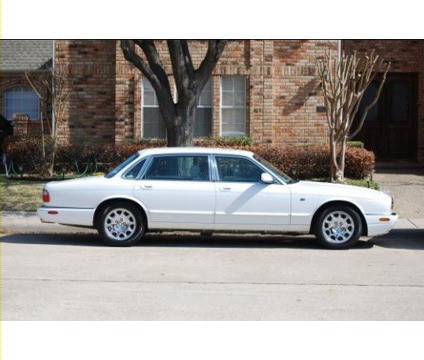
Here’s How I Can Afford Gasoline for My Vintage Jaguar XJ-8-LWB
Dr. Dr. David Edward Marcinko MBA CMP
 [Editor-in-Chief]
Dammit Spock! I’m a doctor – not an auto mechanic!
But, as the cost of fuel increases, more and more physician drivers are thinking about ways to maximize their gas mileage. As well as reducing the cost of fuel in the doctor’s pocket, optimizing fuel efficiency helps reduce the environmental impact of driving and conserves a resource that is only getting scarcer. This is especially true when you drive a luxury European touring sedan that has been said to be one of the finest in the world – like me!
There are a number of different ways drivers can increase their gas mileage. Advice and tips on fuel efficiency fall into a number of key categories.
My Tips and Pearls
1. The car that you drive can make a big difference when it comes to fuel efficiency. Clearly, the larger and more powerful the vehicle is, the lower its gas mileage is likely to be. Car manufacturers are increasingly looking to new technology to help improve fuel efficiency, and if your car is quite old then it might be time to consider switching to a new model. Fuel efficiency statistics are now commonly published and compared on driving websites, and you should consider this before buying a new, or used, car.
2. Ensuring that your car is well-maintained is also a significant factor in the fuel efficiency that you will experience. Something as small and innocuous as spark plugs, for example, can reduce your gas mileage by as much as 12%. Over the course a year, the cost of the gas you waste is likely to be far more than the cost of replacing the part. If you are in doubt, talk to a trusted mechanic about maintenance, and alway have your car serviced at the recommended intervals.
3. Tire pressure can also have a significant impact on fuel efficiency. Low tire pressure can affect the vehicle’s performance, reducing gas mileage markedly. At the same time, it is also worth remembering that having the pressure too high can also have a negative effect. Ensure that you check your tire pressure on a regular basis. Talk to your mechanic if you are unsure about the optimum pressure value for your tires.
4. The way you drive your car also impacts your overall gas mileage. The official U.S. government website for fuel economy recommends that you always observe the speed limit, noting that for each 5 mph that you drive over a 60-mph speed limit, you are likely to paying an additional $0.29 per gallon of gas. Aggressive driving can reduce your gas mileage by as much as 33% on the highway. Carrying unnecessary weight in your car also uses more fuel, and you should always turn off your engine when the car is idle.
5. By changing the way in which you use your car, you can also save money. By combining multiple short trips into single, multi-purpose outings, you can prevent wasted mileage. Commuters can consider car sharing schemes, whereby drivers take it in turns to provide transport for fellow workers, reducing the number of cars on the road. You may even choose to switch to public transport on certain days of the week, to reduce the burden on your car.
6. You can even improve gas mileage by being careful about where and when you purchase fuel. Gas is at its densest during the coolest times of day. That means that by purchasing fuel early in the morning, or after dark, the volume of gas that the pump dispenses per unit will be moderately higher than at other, warmer times of day. Be savvy about prices in your local area too, keeping an eye out for the cheapest gas stations, but don’t go out of your way to purchase fuel. The money that you save at the pump is likely to be wasted on the additional mileage spent driving to the station.
7. As the cost of gas fluctuates on such a frequent basis, learning to optimize your fuel efficiency is a great way to ensure that you get the most out of the money you spend on fuel. Ensure that your vehicle is as efficient as possible, moderate your driving behavior, and moderate the amount of driving that you do to see the biggest improvements in your gas mileage.
Assessment
This ME-P is a follow-up, by reader request, of a prior popular essay of mine. How Smart Doctors Can Save Big at the Pump I appreciate your interest.
More photos: https://medicalexecutivepost.com/wp-content/uploads/2012/04/dems-jaguar.pdf
Conclusion
Your thoughts and comments on this ME-P are appreciated. Feel free to review our top-left column, and top-right sidebar materials, links, URLs and related websites, too. Then, subscribe to the ME-P. It is fast, free and secure.
Speaker: If you need a moderator or speaker for an upcoming event, Dr. David E. Marcinko; MBA – Publisher-in-Chief of the Medical Executive-Post – is available for seminar or speaking engagements. Contact: MarcinkoAdvisors@msn.com
OUR OTHER PRINT BOOKS AND RELATED INFORMATION SOURCES:
- DICTIONARIES: http://www.springerpub.com/Search/marcinko
- PHYSICIANS: www.MedicalBusinessAdvisors.com
- PRACTICES: www.BusinessofMedicalPractice.com
- HOSPITALS: http://www.crcpress.com/product/isbn/9781466558731
- CLINICS: http://www.crcpress.com/product/isbn/9781439879900
- ADVISORS: www.CertifiedMedicalPlanner.org
- BLOG: www.MedicalExecutivePost.com
- FINANCE:Financial Planning for Physicians and Advisors
- INSURANCE:Risk Management and Insurance Strategies for Physicians and Advisors


Share this:

Filed under: Financial Planning, Op-Editorials, Touring with Marcinko | Tagged: car fuel efficiency, David Edward Marcinko, gas mileage, gas prices, Jaguar XJ-8, oil prices, Tips for Optimizing Automobile Fuel Efficiency |
 The Leading Business Education Network for Doctors, Financial Advisors and Health Industry Consultants
Dr. Marcinko
Good article … better vehicle.
Waxton
LikeLike
High gas prices still curbing consumer spending
Dr. Marcinko – It seems Americans are keeping a tight grip on their wallets, bypassing vacations and dinners out, even though they feel better about their own financial security.
http://lifeinc.today.msnbc.msn.com/_news/2012/05/21/11791830-high-gas-prices-still-curbing-consumer-spending?lite
So – what’s still spooking US consumers? Gas prices.
Rena
LikeLike
Related Driving News
[AMA course covers driver safety for older patients]
Recognizing motor vehicle injuries as a leading cause of injury-related death in adults over 65, the American Medical Association has introduced a free Web-based educational course to help physicians address the driving safety of their older patients.
http://www.physbiztech.com/news/ama-wants-physicians-help-older-patients-steer-clear-driving-problems
Ed
LikeLike
Gas prices down as economy slows
http://economywatch.msnbc.msn.com/_news/2012/06/02/12013100-gas-prices-are-silver-lining-as-economy-weakens?lite
Why? Try 8.2% unemployment … and no where to go!
Mark
LikeLike
More on Petrol
Dr. Marcinko – As a European, I know that fuel consumption has a lot to do with the car you buy. Of course, whatever you drive there are things you can do to save money and reduce energy use, CO2, emissions and pollution.
http://www.infographicsarchive.com/economics/fuel-economy-get-the-most-from-your-tank-of-petrol/
You elucidated them very well.
Manfred
LikeLike
The Gas Guzzler’s Deduction
Case Report for Doctors
Dr. Brandon Bigtop’s son, Brandon Jr, loves his truck, which he affectionately named “the Beast.” It was a gift for Brandon’s eighteenth birthday. It is painted bright red and is two tons of metal, muscle and noise. Indeed, many neighbors would grumble as Brandon drove by because the rumbling engine could be heard three blocks away. As you can imagine, eighteen-year old Brandon was in truck heaven.
Brandon is now twenty years older and a university professor, but he never could part with his beloved truck. So, the Beast now sits quietly in the driveway collecting dust and serving as merely an “eye sore” according to his wife. Every once in a while, Brandon will take the truck out for a spin but the 9 miles per gallon truck make it a costly joy ride. Plus, Brandon still gets the glares from neighbors as he passes through the neighborhood, something he does not relish anymore.
After much deliberation regarding what to do with the Beast, Brandon decides to give his truck to a local charity. It is time to part ways with his old childhood companion. Before deciding to contribute the truck to charity, Brandon checked with his tax advisor regarding the tax benefits of his gift. Brandon wanted to make sure he received the maximum tax benefit from his gift while at the same time not risking an IRS challenge to his gift.
Question
What are the tax rules for gifts of automobiles? The local charity plans to sell the truck immediately after receipt. Does this affect Brandon’s charitable deduction in any way?
Solution
For many years, donors would simply claim a charitable deduction equal to a vehicle’s “Blue Book” value. However, research by the IRS showed that many donors claimed inflated values for their vehicle gifts. For instance, many donors claimed Blue Book value although their vehicle was in poor condition and actually sold for far less than Blue Book value.
As a result, the American Jobs Creation Act of 2004 created rules for charitable contributions of cars, boats, RVs and aircraft. There are two categories for these rules.
First category: If the charity sells the vehicle within 30 days, the “sale” category rules apply. Under the sale category rules, the receipt to the donor must list the name and Social Security number of the donor, the vehicle identification number and must also state that the vehicle was sold “in an arms-length transaction between unrelated parties.” The receipt must also show the gross proceeds of the sale plus state that the charitable deduction may not exceed the gross proceeds.
This law basically provides that all gifts of vehicles that are sold will have a charitable deduction limited to the proceeds received by the charity. Since many charities sell vehicles at auctions where the prices are usually below Blue Book, the deduction for gifts of vehicles will be greatly reduced.
In this case, Brandon’s truck has a Blue Book value of $4,000. However, at auction, the charity will likely receive between $2,000-$2,200. Therefore, under the rules, Brandon’s charitable deduction will equal the gross proceeds from the charity’s sale, i.e. $2,000-$2,200.
Source: Children’s Home Society of Florida Foundation
LikeLike
Remember When … Historical Prices of Gasoline
Do you remember when a McDonald’s hamburger cost just $0.15? Or when movie tickets to see new releases were under $2?
http://www.infographicsarchive.com/economics/infographic-historical-prices-of-gasoline/
Common commodities like these are not the only purchases affected by inflation throughout the years.
Helen
LikeLike
More tips
Don’t top off
Don’t bother topping off when filling your car’s gas tank. Any additional gas is just going to seep out. Why waste your money paying for gas your car won’t use? Stop pumping at the first indication that your tank is full when the automatic nozzle clicks off.
Tighten up that gas cap
Gas will evaporate from your car’s gas tank if it has an escape. Loss, missing, or damaged gas caps cause 147 million gallons of gas to evaporate each year, according to the Car Care Council. So, be sure to tighten up that cap each time you fuel up your car.
Deborah
LikeLike
2013 Business, Charitable and Medical Mileage
In Notice 2012-72; 2012-50 IRB 1 (19 Nov 2012), the IRS published the standard mileage rates for 2013.
For vehicle use, deductions are normally permitted using actual expenses or a standard mileage rate. Taxpayers must track the dates and specific mileage in order to use the standard rates for deductions or to qualify for reimbursement.
For 2013, the standard rate for business mileage will be 56.5 cents per mile. Qualified charitable transportation remains 14 cents per mile. Medical or moving mileage will qualify for a 24 cents per mile rate.
Dr. David Edward Marcinko MBA
http://www.CertifiedMedicalPlanner.org
LikeLike
Q. My owner’s manual says that regular unleaded is fine for my vehicle. Would it be better for my car if I splurged on premium gas or is that an unnecessary waste of money?
A. Save your money. If your owner’s manual recommends regular unleaded then that’s perfectly fine. You’re just wasting precious pennies if you pay for a higher octane fuel. Most of today’s cars, with the exception of high performance engines, are tuned to run on regular unleaded fuel. And, there’s no advantage to be gained by using premium. Here’s the skinny.
Your engine’s cylinders hold a mixture of gas and air. The cylinder compresses that mixture very quickly and your spark plug ignites it. That little explosion (like a cannon firing) is the combustion in an “internal combustion engine” and creates the energy to make your car go. The octane of a gasoline tells you how much compression it can stand before it ignites spontaneously. The higher the octane, the higher the compression it can take.
Most cars have an eight to one compression ratio, which is perfect for regular unleaded gas. That means the cylinder is compressing the gas/air mixture at just the right rate.
If the gas isn’t a high enough grade for the compression rate of the cylinder, it’ll ignite early, before the spark from the spark plug. And that’s bad for your engine. Those early explosions result in knocking and pinging. So, if you don’t hear any knocking and pinging, you’re using the right grade of gas. If you do hear those sounds, try upgrading to a premium gas. But, for most cars, using a premium gas doesn’t give you or your engine any advantage.
Dr. Marcinko MBA
LikeLike