





 Support our online development, and advance our onground research initiatives in free market economics, as we seek to showcase the brightest Next-Gen minds.
THE ME-P DISCLAIMER: Posts, comments and opinions do not necessarily represent iMBA, Inc., but become our property after submission. Copyright © 2006 to-date. iMBA, Inc allows colleges, universities, medical and financial professionals and related clinics, hospitals and non-profit healthcare organizations to distribute our proprietary essays, photos, videos, audios and other documents; etc. However, please review copyright and usage information for each individual asset before submission to us, and/or placement on your publication or web site. Attestation references, citations and/or back-links are required. All other assets are property of the individual copyright holder.
Support our online development, and advance our onground research initiatives in free market economics, as we seek to showcase the brightest Next-Gen minds.
THE ME-P DISCLAIMER: Posts, comments and opinions do not necessarily represent iMBA, Inc., but become our property after submission. Copyright © 2006 to-date. iMBA, Inc allows colleges, universities, medical and financial professionals and related clinics, hospitals and non-profit healthcare organizations to distribute our proprietary essays, photos, videos, audios and other documents; etc. However, please review copyright and usage information for each individual asset before submission to us, and/or placement on your publication or web site. Attestation references, citations and/or back-links are required. All other assets are property of the individual copyright holder.


What if You Threw a Party – and Nobody Came?
 Assessment
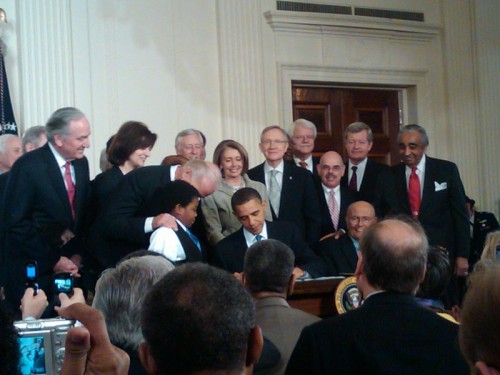
Two year anniversary [2010-2012].
Conclusion
Your thoughts and comments on this ME-P are appreciated. Feel free to review our top-left column, and top-right sidebar materials, links, URLs and related websites, too. Then, subscribe to the ME-P. It is fast, free and secure.
Link: http://feeds.feedburner.com/HealthcareFinancialsthePostForcxos
Speaker: If you need a moderator or speaker for an upcoming event, Dr. David E. Marcinko; MBA – Publisher-in-Chief of the Medical Executive-Post – is available for seminar or speaking engagements. Contact: MarcinkoAdvisors@msn.com
Our Other Print Books and Related Information Sources:
Health Dictionary Series: http://www.springerpub.com/Search/marcinko
Practice Management: http://www.springerpub.com/product/9780826105752
Physician Financial Planning: http://www.jbpub.com/catalog/0763745790
Medical Risk Management: http://www.jbpub.com/catalog/9780763733421
Hospitals: http://www.crcpress.com/product/isbn/9781439879900
Physician Advisors: www.CertifiedMedicalPlanner.org



Share this:

Filed under: Health Law & Policy | Tagged: Affordable Care Act., Obama care, PP-ACA |
 The Leading Business Education Network for Doctors, Financial Advisors and Health Industry Consultants
Worst Case Scenario?
Austin Frakt PhD thinks:
“I’ve long argued that the nightmare scenario for the insurance companies is that the mandate gets struck down, but the rest of the law stands. After all, if we force guaranteed issue and community ratings, but remove the mandate, then we stand the risk of adverse selection and gaming”.
What about you?
Barbara
LikeLike
What the Supreme Court (and You) Won’t Hear About Health Reform
An essay by Michael L. Millenson:
http://thehealthcareblog.com/blog/2012/03/23/what-the-supreme-court-and-you-won%e2%80%99t-hear-about-health-refo/
Don
LikeLike
Supreme Court Healthcare Challenge Begins
By now, all ME-P readers know that today begins arguments before the U.S. Supreme Court in the landmark healthcare law case. This case will determine not only the fate of Obama’s signature legislation and the future of the healthcare industry, but it will also determine the powers of Congress to regulate commerce and greatly influence the Presidential election.
It’s a big deal that will most likely be decided in June. Stay tuned.
Dr. David Edward Marcinko MBA
[Editor-in-Chief]
LikeLike
Will physicians ever support the Affordable Care Act?
A recent survey by Deloitte of physicians opinions on health care reform has drawn some very differing conclusions from partisan commentators.
http://www.kevinmd.com/blog/2012/04/physicians-support-affordable-care-act.html
Dr. Cunningham
LikeLike
Drug industry pushed Obama on health overhaul, e-mails suggest
http://www.msnbc.msn.com/id/47745646/ns/politics-the_new_york_times/
Newly released messages reveal an unlikely collaboration, compromises.
Parker
LikeLike
3-in-10 doctors in 2011 didn’t accept new Medicaid patients
With as many as 30 million people expected to gain health insurance through the health insurance exchanges and expanded Medicaid programs in 2014, a new survey notes that more than 30 percent of doctors said they didn’t accept new Medicaid patients in 2011.
http://www.healthcarefinancenews.com/news/three-ten-doctors-2011-didnt-accept-new-medicaid-patients?topic=29,21
Dr. Cunningham
LikeLike
UPDATE 2016
These are the 4 major groups who are left out of the ACA:
1. People who are eligible but can’t afford the premiums. Among this group are the self-employed workers, retirees younger than 65 and those whose employers don’t offer insurance. The KFF estimates that 3 million Americans fall into this group.
2. People who can’t afford the insurance offered by their employers. While most large employers subsidize the cost of health insurance for employees and often for dependents, some small employers offer insurance at full cost or charge dependents more. If the insurance is offered, those employees and their families can’t get financial help with marketplace plans. About 4.5 million uninsured Americans fall into this group, according to the KFF analysis.
3. People who don’t get Medicaid but don’t make enough to qualify for the ACA. In the 19 states that opted against expanding Medicaid, an individual must earn at least $11,880 a year to be eligible for marketplace coverage with subsidies. Someone who can’t work at all, perhaps because of an illness or unemployment, would not qualify. The KFF estimates that about 2.6 million people fall into this group in those 19 states.
4. Undocumented immigrants. Those who are not citizens, legal permanent residents or otherwise lawfully present are not eligible to buy marketplace plans, even at full price. That accounts for about 5.4 million uninsured people.
Reggie
LikeLike