







 Support our online development, and advance our onground research initiatives in free market economics, as we seek to showcase the brightest Next-Gen minds.
THE ME-P DISCLAIMER: Posts, comments and opinions do not necessarily represent iMBA, Inc., but become our property after submission. Copyright © 2006 to-date. iMBA, Inc allows colleges, universities, medical and financial professionals and related clinics, hospitals and non-profit healthcare organizations to distribute our proprietary essays, photos, videos, audios and other documents; etc. However, please review copyright and usage information for each individual asset before submission to us, and/or placement on your publication or web site. Attestation references, citations and/or back-links are required. All other assets are property of the individual copyright holder.
Support our online development, and advance our onground research initiatives in free market economics, as we seek to showcase the brightest Next-Gen minds.
THE ME-P DISCLAIMER: Posts, comments and opinions do not necessarily represent iMBA, Inc., but become our property after submission. Copyright © 2006 to-date. iMBA, Inc allows colleges, universities, medical and financial professionals and related clinics, hospitals and non-profit healthcare organizations to distribute our proprietary essays, photos, videos, audios and other documents; etc. However, please review copyright and usage information for each individual asset before submission to us, and/or placement on your publication or web site. Attestation references, citations and/or back-links are required. All other assets are property of the individual copyright holder.


Some Need-to-Know [Not Boring] Information for Doctors, Nurses and CXOs

By Dr. David Edward Marcinko FACFAS, MBA, CPHQ, CMP™
[Publisher-in-Chief]
As regular ME-P readers know, I held a property and casualty insurance license for more than 15 years; this included homeowners and automobile insurance.
BTW: P&C also includes malpractice insurance [doctors and medical professionals] and E&O insurance [accountants, financial advisors, attorneys, etc]. Yep! Med-mal is classified under the property-casualty moniker. I even edited a handbook on the topic. But, I digress.
On the Importance of Automobiles
With the possible exception of the handgun, the automobile represents the greatest single item of ownership that is capable of inflicting death, injury and damage. I learned this first-hand after covering the ER for many years.
America’s fascination with the automobile has resulted in a marked increase in the power and potential speed of our vehicles. The aging trend in Sports Utility Vehicles (SUVs) has also witnessed a substantial increase in damage due to their higher ground clearance and heavier frames. The owners and operators of any vehicle must be financially able to respond to any resulting claims, or they need to transfer the risk through insurance. All states require some minimal coverage for personal vehicles.
The F.A.P.
The most frequently used policy to insure individual private passenger vehicle risks is the Family Automobile Policy (FAP). It provides two major types of coverage: liability and physical damage.
Liability coverage includes both bodily injury and property damage. Physical damage, on the other hand, includes comprehensive and collision coverage.
[A] Liability Coverage
The liability section of the FAP is contained within most policies as Part A – Liability and Part B -Personal Injury Protection.
[1] Bodily Injury
Bodily injury liability coverage generally includes sickness, disease and death, and is expressed in dual limits — per person and per occurrence. Nearly half of the states require minimums of $25,000 per person and $50,000 per occurrence. Higher limits of $100,000 per person and $300,000 per occurrence are often required for consideration of umbrella coverage.
[2] Property Damage
Property damage liability is coverage for damage or destruction to the property of others and includes loss of use. Liability coverage limits usually include property damage limits as the third number, i.e., $100/300/25. The coverage here would be for $25,000 of property damage. As automobiles become more expensive, however, coverage to $50,000 is not considered excessive.
[3] Personal Injury
Personal injury coverage is provided for medical expenses, funeral expenses and loss of earnings for anyone sustaining an injury while occupying your vehicle, or from being struck by your vehicle while a pedestrian.
Liability insurance follows the vehicle, not the driver. Coverage is extended to the vehicle owner and any resident in the same household. It also covers anyone using the insured vehicle with the permission of the owner and within the scope of that permission.
Newly acquired vehicles are usually covered automatically for liability for 15-30 [getting shorter] days after acquisition, but physical damage must have been on all currently covered vehicles to be included. Coverage is also typically extended to a temporary substitute automobile, but only if this vehicle is used in place of the covered automobile, because of its breakdown, repair, servicing, loss or destruction.
[B] Physical Damage Coverage
[1] Comprehensive
Comprehensive physical damage includes coverage for theft, vandalism, broken windshields, falling objects, riot or civil commotion, and even damage from foreign substances, such as paint. Comprehensive is often described as coverage for all those hazards other than collision.
[2] Collision
Collision involves the upset of the covered vehicle and collision with an object, usually another vehicle, and not enumerated in the discussion of comprehensive. Colliding with a bird or animal is considered under the comprehensive coverage.
The distinction between comprehensive coverage and collision coverage is more than technical. The deductible provisions of the FAP often show a considerable difference in these areas, with the collision deductible typically being much greater.
Damage to tires can be covered by provisions in either comprehensive or collision. Exclusions typically include normal wear and tear, rough roads, hard driving or hitting or scraping curbs.
[C] Repairs after the Accident
Following a collision, the insurance company will assign a claims adjuster to determine the extent of damage and the cost of repairs. If these repairs exceed the estimated value of the vehicle, it may be “totaled.” Experience tells me that the value of the vehicle to the owner nearly always exceeds that estimated by the insurance company.
[D] Uninsured / Underinsured Motorists Coverage
Uninsured motorist coverage provides protection from the other driver who is operating his/her vehicle without any insurance coverage. It covers expenses resulting from injury or death as well as property damage. There are currently a dozen states where it is estimated that over 20 percent of the vehicles on the highway are being operated without any insurance. This is not coverage that should be rejected when buying automobile insurance.
Underinsured motorist coverage provides protection from the other driver who purchased only the state-mandated minimum liability insurance coverage. Again, this is not coverage that the medical professional or healthcare practitioner should thoughtlessly reject when buying automobile insurance.
Assessment
The medical professional is strongly urged to consider purchasing replacement cost coverage rather than accepting actual cash value car insurance, which is the depreciated value of the vehicle. The cost may be higher for this coverage, but accepting a larger deductible will often make up the difference. Paying a little more towards the deductible could easily be worth it, if the damage is extensive.
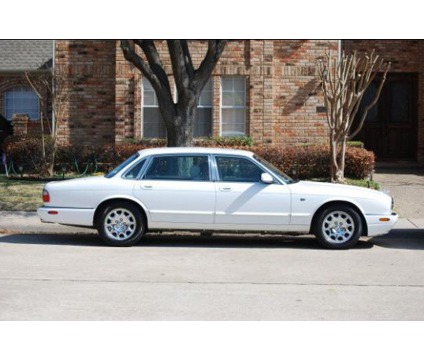
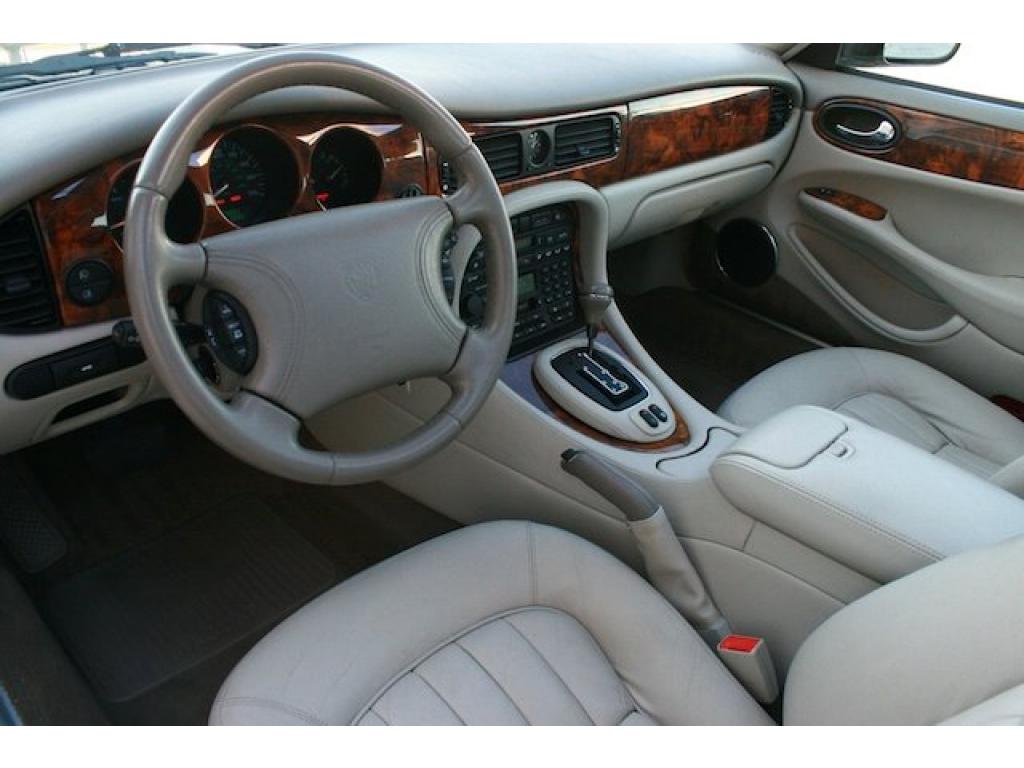
Or, if you have a classic pristine Eurpean touring sedan [2000 pearl-white Jaguar, XJ-V8-L], built for the Queen in Coventry England, like I do. Jay Leno is my hero!
Conclusion
And so, your thoughts and comments on this ME-P are appreciated. Feel free to review our top-left column, and top-right sidebar materials, links, URLs and related websites, too. Then, subscribe to the ME-P. It is fast, free and secure.
Link: http://feeds.feedburner.com/HealthcareFinancialsthePostForcxos
Speaker: If you need a moderator or speaker for an upcoming event, Dr. David E. Marcinko; MBA – Publisher-in-Chief of the Medical Executive-Post – is available for seminar or speaking engagements. Contact: MarcinkoAdvisors@msn.com
Our Other Print Books and Related Information Sources:
Health Dictionary Series: http://www.springerpub.com/Search/marcinko
Practice Management: http://www.springerpub.com/product/9780826105752
Physician Financial Planning: http://www.jbpub.com/catalog/0763745790
Medical Risk Management: http://www.jbpub.com/catalog/9780763733421
Healthcare Organizations: www.HealthcareFinancials.com
Physician Advisors: www.CertifiedMedicalPlanner.com
Subscribe Now: Did you like this Medical Executive-Post, or find it helpful, interesting and informative? Want to get the latest ME-Ps delivered to your email box each morning? Just subscribe using the link below. You can unsubscribe at any time. Security is assured.
Link: http://feeds.feedburner.com/HealthcareFinancialsthePostForcxos
Sponsors Welcomed: And, credible sponsors and like-minded advertisers are always welcomed.
Link: https://healthcarefinancials.wordpress.com/2007/11/11/advertise


Share this:

Filed under: Insurance Matters, Risk Management | Tagged: auto insurance, automobile insurance, Automobile Insurance Update for Medical Professionals, car insurance, david marcinko, Jaguar, jaguar XJ8-L, medical risk management |
 The Leading Business Education Network for Doctors, Financial Advisors and Health Industry Consultants
Ford, Microsoft Develop ‘Doctor in Your Car’
Good essay – Dr. Marcinko.
Now, Ford, Microsoft, Healthrageous, and BlueMetal Architects have collaborated on a new technology that helps drivers monitor health and wellness while in their cars.
Officials say the goal for ‘Doctor in Your Car” is to determine how to noninvasively extend health management into the personal vehicle. BlueMetal Architects developed the prototype system for this new technology with Healthrageous using information collected from blood pressure monitors, activity monitors, glucose meters, and behavioral data shared by the user to help drivers lead healthier lifestyles.
http://www.hcplive.com/pop-medicine/Doctor-In-Your-Car-Feature-to-be-Developed-by-Ford-Microsoft
Kirk
LikeLike
Keeping that used car a bit longer?
American drivers are holding on to their cars and trucks longer, new data suggest, as they put off buying new vehicles in the face of high unemployment and a struggling economy.
The average age of a vehicle on the road has climbed to a record 10.8 years, according to automotive research firm Polk. Last year the average vehicle on U.S. roads was 10.6 years old, up from 10 years in 2008.
http://bottomline.msnbc.msn.com/_news/2012/01/17/10174285-americans-keeping-their-autos-longer-than-ever
But, is this true for doctors?
Kenneth
LikeLike
On Auto Leases
Remember, dealerships love to push auto leasing because it is so profitable for them, but leasing is almost always a bad idea.
In a lease, you are simply renting the vehicle for a set period of time. Once that term expires, you must return the vehicle to the dealership with nothing to show for years of payments.
Richard
LikeLike
Hacking Seen as Rising Risk With Car Electronics
Drivers can talk with each other via Bluetooth phone connections, ask their cars for directions and dial up satellite radio. The same cars use electronic components to signal the gas pedal to accelerate and control stability.
What increasingly worries scientists however, is that entertainment computers could be manipulated to tell the safety computers what to do.
http://money.msn.com/auto-insurance/news.aspx?feed=BLOOM&date=20120130&id=14737112
This is kinda like eMRs, isn’t it, Dr. Marcinko?
Dr. Giles
LikeLike
More on Auto Insurance
Great pointers for all here. Your car habits are directly related to your health and longevity projections.
As a financial planner – the one variable that we really don’t know is also the one variable that has often the most impact on a personal financial plan – the longevity of the client.
We can “guess” using mortality risk tables, but a better way is to use a longevity calculator, like the one put out by Wharton professor Dean Foster (http://gosset.wharton.upenn.edu/mortality/perl/CalcForm.html)
Car driving factors that influence longevity include:
* Regularly wear seat belt, or not
* Miles per year driven
* Regularly keeps speed limit
* Ever drive drunk?
* Age of driver of the automobile
Statistically, a chain-smoker who is a safe driver has better longevity than an unsafe driver that avoids tobacco or alcohol, and is physically fit.
As Dr. Marcinko infers here, our cars can be loaded guns.
David K. Luke, MIM
Certified Medical Planner™candidate
http://www.CertifiedMedicalPlanner.org
LikeLike
Mr. Luke,
Excellent comment. I suggest all ME-P readers check out the sobering life expectancy calculator, as well.
http://gosset.wharton.upenn.edu/mortality/form.html
Ann Miller RN MHA
[Executive-Director]
LikeLike
10 of the Reasons Why Car Accidents Occur
Mr. Lule – Automobile accidents bring scores of thousand fatalities and millions worth of damage properties each year in the United States alone.
And, sad to say, majority of these accidents can be avoided through knowing and avoiding accident-causing circumstances.
http://www.always10list.com/2012/03/10-of-reasons-why-car-accidents-occur.html
Grace
LikeLike