





 Support our online development, and advance our onground research initiatives in free market economics, as we seek to showcase the brightest Next-Gen minds.
THE ME-P DISCLAIMER: Posts, comments and opinions do not necessarily represent iMBA, Inc., but become our property after submission. Copyright © 2006 to-date. iMBA, Inc allows colleges, universities, medical and financial professionals and related clinics, hospitals and non-profit healthcare organizations to distribute our proprietary essays, photos, videos, audios and other documents; etc. However, please review copyright and usage information for each individual asset before submission to us, and/or placement on your publication or web site. Attestation references, citations and/or back-links are required. All other assets are property of the individual copyright holder.
Support our online development, and advance our onground research initiatives in free market economics, as we seek to showcase the brightest Next-Gen minds.
THE ME-P DISCLAIMER: Posts, comments and opinions do not necessarily represent iMBA, Inc., but become our property after submission. Copyright © 2006 to-date. iMBA, Inc allows colleges, universities, medical and financial professionals and related clinics, hospitals and non-profit healthcare organizations to distribute our proprietary essays, photos, videos, audios and other documents; etc. However, please review copyright and usage information for each individual asset before submission to us, and/or placement on your publication or web site. Attestation references, citations and/or back-links are required. All other assets are property of the individual copyright holder.


Plugging my Interview and Otherwise Clogging Things
[By D. Kellus Pruitt DDS]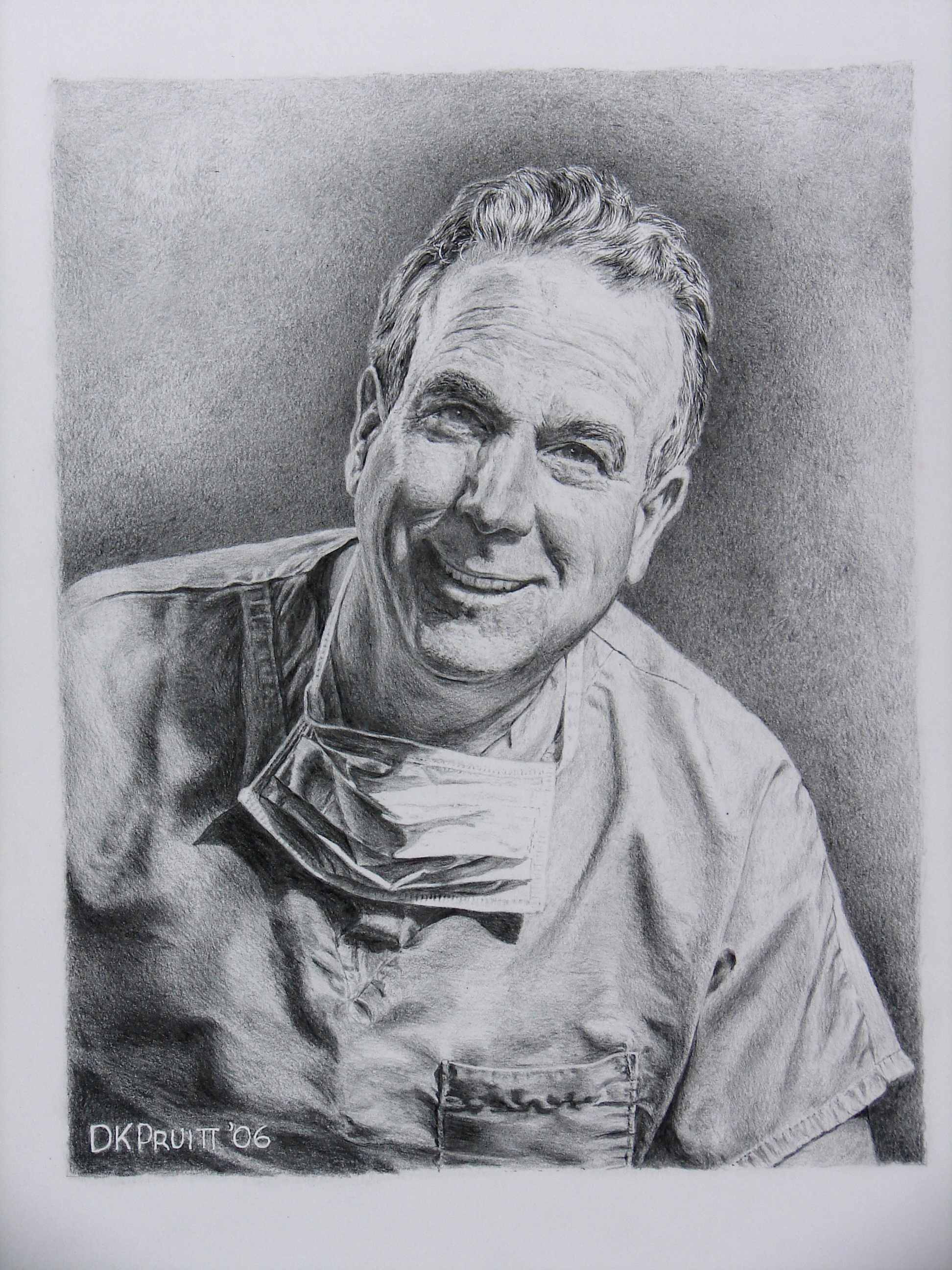
Where are the EDR cheerleaders when I need them? On Tuesday May 31st, I’ve got a show to put on!
http://www.blogtalkradio.com/thewholetooth
Where are the EDR Cheerleaders?
Every now and then I still come across EDR vendors on the internet who would mislead naïve dentists about their product to make a sale. Today, I held FirstEMR representative Robert Evans accountable for self-serving misinformation he posted on EMR and HIPAA forum. (My dad would be proud that I told him “Get that garbage out of here!”). Then, remembering my manners, I invited Mr. Evans to please call into The Whole Tooth Blogtalkradio program on May 31 to further discuss the future of EHRs in dentistry. Unfortunately, because of things like the reflexive “garbage” statement, I don’t think he’ll show.
I try my best to be “collegial,” but I simply cannot pretend unethical sales techniques are acceptable in my neighborhood, and I want to help my friends easily recognize them… so what if I have a little fun.
Of Robert Evans
Thanks for your response, Robert Evans.
As I read your list of 6 rationalizations for electronic dental records here on the EMR and HIPAA forum , it occurred to me that you haven’t had a chance to read my detailed post on this thread from November 22 (Number 14) in which I de-bunked 28 similar myths – substantially including your 6. But since I never tire of doing this, let’s once again go through the details of a popular national blunder in dentistry you and other well-intentioned stakeholders in the HIT industry were sucked into.
“My personal background is medical administration and operations.” That would explain your misconceptions about EHRs in the unique field of dentistry.
For your first mistake, you say “Dentists can qualify as eligible providers for ARRA incentives” You really should have gone on to explain that for a dentist to qualify for the stimulus money, 30% of his or her practice has to be from Medicare/Medicaid. Since you surely should have known that, to fail to mention it could easily be interpreted as deceptive.
This is just a guess, but I’d say less than 10% of the dentists in the nation in private practice would make it on that qualification alone even if it made business sense to accept government money and the expensive demands that come with it. Since you are in the EHR business, you may have more accurate figures on that. What’s more, our grandchildren’s money will be gone long before the stimulus makes it to dentistry. You should already know that as well.
“All of our clients, including Dentists, Endodontists, Periodontists, Implant Surgeons and more are extremely pleased that they made the transition “ All of them, Robert? Really?
The ME-P Forum
This ME-P forum right here is full of stories about disappointed providers – perhaps other than your clients – who are finding huge problems with the transition. De-installations are far too common. It seems like a while back it was close to 30%. Then again, since you are in the business, you probably have more accurate figures for that as well.
Even the stimulus money isn’t sufficient subsidy for physicians to realize a return on investment in EMRs. And virtually nobody is interoperable as planned. That means the office tools you sell raise the cost of healthcare rather than lower it. What’s more, physicians stand to benefit from interoperability much more than dentists regardless of stimulus money. And if a dentist can’t expect ROI from an office tool, it’s called a hobby.
By the way, have you looked at the Stage 2 Meaningful Use requirements that stand between dentists and disappearing ARRA money? Well-meaning outsiders with plans for the common good just don’t realize that someone has to enter every piece of irrelevant detail about dental patients that CMS requires in order to receive full payment.
It’s a trap, Robert. And it’s not very well hidden. Dentists don’t take candy from strangers.
The Benefits
“The benefits to your office are numerous and too many to mention here; but, please take into account the following”:
1. Never having to worry about compliance issues, as we are 100% compliant with all standards and formats that CMS is mandating.
– You are 100% scary. As long as a provider stores or transmits electronic PHI he or she clearly must be concerned about HIPAA compliance issues. What’s more, as a Business Entity for the dentists you serve, if your computer system is hacked or someone on your end otherwise fumbles or steals 500 or more of a dentists’ patients’ PHI, all of the dentist’s patients must be notified of the danger of identity theft. In addition, federal law stipulates that news of the data breach must be broadcast as a press release in the dentist’s local media. This can easily bankrupt a dentist… You just had to know about this before today.
Your compliancy claim is not only wrong, but it is irresponsible and unethical advertising. You are not 100% compliant. Since the Rule is intentionally vague, nobody is. Get that garbage out of here!
2. Greatly reduce or even eliminate human error. Some offices have brought back billing into their control and terminated the outsourcing.
– Are you kidding? Eliminate human error? Someone put you up to this didn’t they. And “outsourcing”? Once again, this is misleading and irresponsible information, Robert. What about keystroke errors? Only frustrated vendors wish computers would replace human intelligence.
3. Facilitate lab and prescription orders. Offices using e-scribe services are already on board into accepting the benefits of an EMR.
– So does this mean that when the lab delivery person comes to my office to pick up plaster models of a patient’s teeth, the prescription for the restoration must be sent separately by email instead of inserting a short hand-written note in the package… with the relevant patient’s models?
– I don’t sign enough prescriptions to make e-prescribing worth it. I really, really don’t. So how expensive would you make dental care?
4. Simple and efficient scheduling. The reception and schedulers are not tied to the telephone, fax and charting tasks as well as insurance verifications.
– That’s never before been a significant problem. Dental offices were run surprisingly efficient for decades before computers were around. Since dentistry is intricate handwork, the bottleneck in dental offices isn’t the front desk. It’s the dentist.
– What’s so wrong with telephone and fax, by the way? One doesn’t have to be a HIPAA-covered entity to use those tools.
– As for insurance verification, is the EDR intended to help the patient or the insurance company?
5. No fumbling for charts, paperwork, etc. (significant cost savings)
– Prove it.
6. Gain 15+ hours per week, back!
– Where did find this chunk of information? Please don’t insult us with wild, irresponsible statements to improve sales of your product. That would be unethical.
“Again, there are too many to list here, but contact me anytime for a quick on-site or online demonstration and let us prove to you that FirstEMR is the most appropriate solution to meet your required EMR needs.”
eDR Mandate?
Did you intentionally say my “required” EMR needs? You wouldn’t be implying that EMRs are somehow “mandated” in dentistry are you, Robert? That would be called a rookie mistake and you would be about a year behind information published in the ADA News, which was wrong to mislead members on this point in 2008.
Rather than contacting you for a quick on-site or online demonstration, I’ll do you one better. I am to be interviewed on “The Whole Tooth” blogtalkradio on May 31 concerning the future of EHRs in dentistry. It promises to be an unprecedented discussion about the obscure topic, and is certain to be educational to thousands of dentists who have been misled for years about HIPAA and EDRs.
http://www.blogtalkradio.com/thewholetooth
Assessment
When the time comes, a telephone number will be provided for live questions. I invite you to call in, Robert, and we can discuss EHRs in dentistry before an audience of around 15,000.
Conclusion
Your thoughts and comments on this ME-P are appreciated. Feel free to review our top-left column, and top-right sidebar materials, links, URLs and related websites, too. Then, subscribe to the ME-P. It is fast, free and secure.
Speaker: If you need a moderator or speaker for an upcoming event, Dr. David E. Marcinko; MBA – Publisher-in-Chief of the Medical Executive-Post – is available for seminar or speaking engagements. Contact: MarcinkoAdvisors@msn.com
OUR OTHER PRINT BOOKS AND RELATED INFORMATION SOURCES:
- DICTIONARIES: http://www.springerpub.com/Search/marcinko
- PHYSICIANS: www.MedicalBusinessAdvisors.com
- PRACTICES: www.BusinessofMedicalPractice.com
- HOSPITALS: http://www.crcpress.com/product/isbn/9781466558731
- CLINICS: http://www.crcpress.com/product/isbn/9781439879900
- ADVISORS: www.CertifiedMedicalPlanner.org
- BLOG: www.MedicalExecutivePost.com
- FINANCE: Financial Planning for Physicians and Advisors
- INSURANCE: Risk Management and Insurance Strategies for Physicians and Advisors



Share this:

Filed under: Information Technology, Pruitt's Platform | Tagged: ARRA, Darrell Pruitt, eDRs, EHRs, electronic medical records, FirstEMR, HI-TECH, Robert Evans, Whole Tooth blogtalkradio |


Plugging my own interview – Part II
If you recall, yesterday in “Plugging my interview I,” I described a difference of opinion I had with a naive EDR vendor over his misconceptions about dentistry. And then of all things, I invited the salesman to phone in to the interview on The Whole Tooth Blogtalkradio program on May 31, 7 PM Fort Worth time. Then I logged off. After reading his angry responses this morning, I now think it’s even less likely he’ll call. Would have been fun.
While I was doing other things, the vendor blew his cool over my opinion of his indefensible and deceptive EDR selling points and had to be called down by John, the website owner. John handled the hot head very well without kicking him off the site or censoring his out-of-control statements that start with comment number 29. It’s the one that begins with “Dear John and Internet Blog Officer Pruitt:”
http://www.emrandhipaa.com/emr-and-hipaa/2010/11/18/emr-stimulus-q-and-a-emr-stimulus-money-and-dentists/comment-page-1/#comment-133159
Blog Officer Pruitt took the high road in his response today before once again plugging my interview to readers of the highly respected EMR and HIPAA Forum. These are the creative minds the dental HIT industry needs if we are ever going to see interoperability:
John, I’m always thankful for your open-minded, patient confidence that comes with your years of experience in the HIT industry. What do you say we turn this discussion in a positive direction? That would be away from politically-correct mistakes of the past, around current insurmountable regulatory obstacles and toward a bright and profitable future for alert EDR stakeholders and common sense. I’ll keep this comment much shorter than the last one. And much sweeter.
For years, I’ve fruitlessly shopped an under-appreciated winning business idea that dental history will prove was ahead of its time – simple de-identification of electronic dental records. As a matter of fact, I’ve discussed this idea on this forum somewhere at least once.
Like gravity, it is inevitable that sooner or later the huge liability of data breaches from dental offices will be almost entirely eliminated – causing the dental HIT market to open wide not because of mandates, but because of dentists’ natural desire to rid themselves of paper dental records because paper will be thousands of times less secure than de-identified electronic dental records.
As you can see, I happen to think the leap in progress will be directly attributed to de-identification – a solid, common sense solution. It’s a latent crowd pleaser.
Not long from now, someone with HIT know how, common sense and an ability to think laterally will recognize this under-the-radar opportunity and will be the first to enter the dentistry niche with the next generation of electronic dental records… or not.
For those who may be interested in de-identification or other EHR topics I intend to discuss on The Whole Tooth Blogtalkradio show on May 31 (7:00 PM Fort Worth time), allow me to provide a preview. A few days ago I filled in the blanks on an information sheet I was asked to submit. Here is my description of the program and questions I’m prepared to answer (if there’s enough time).
http://www.blogtalkradio.com/thewholetooth
Get Results Marketing and Business Coaching
The Whole Tooth™ Interview Information
Interviewee Name: Darrell K. Pruitt DDS
Topic Title: Dentistry’s Low Hanging Fruit – What We Fix First
Description: Dentistry has long been an obscure niche in healthcare. As a consequence, the needs of dentists and patients have been virtually ignored by those who set national HIT standards and goals. In 2004, President Bush hastily committed tremendous government resources to developing a national system of interoperable digital health records for all providers by 2014. As it turns out, 2014 was overly ambitious for hospitals and physicians who need EHRs much more than dentists.
Paperless interoperability with dentists is nothing more than a dead politically-correct fantasy. If dental patients are ever to reap the latent benefits of Evidence Based miracles divined from data mining dental patients’ treatment histories on an internet platform (in real time) – with permission from dentists and patients of course – it’s time for dentists to ignore committee solutions that don’t fit our patients’ needs. It’s time to distance dentistry from the bi-partisan HIPAA blunder. Think laterally.
Please list the top five-eight questions/points you’d like to discuss during your interview.
1. What went wrong? – Why didn’t dentists jump on board as planned?
2. Do dental patients prefer their dentists to be paperless or not? – Does it matter?
3. If no progress is made towards interoperable dental records, what will we miss?
4. How important is security to dental patients today versus tomorrow?
5. How important is security to dentists today versus tomorrow?
6. Is encryption the answer to the increasing liability of data breaches from dental offices?
7. Is de-identification of dental records a possible solution to the liability of data breaches?
8. Is a “hybrid,”computer/fax system a possible solution to interoperability with almost all dentists?
——————–
Hope you can make it.
Darrell
LikeLike
Final Reminder
Just a reminder of my interview today concerning electronic dental records at 7 PM Central on The Whole Tooth Blogtalkradio program.
http://www.blogtalkradio.com/thewholetooth/2011/06/01/dentistrys-low-hanging-fruit-what-we-fix-1st-wdr-pruitt
If you miss it, I’ll provide a link to the recording tomorrow.
Note: The program is scheduled to last 30 to 40 minutes – concluding well before the 8 PM tip-off between the Dallas Mavericks and the Miami Heat. So if the show should run long, you can bet my part won’t.
Darrell
LikeLike
EHRs Linked to Errors and Harm
[According to AMA]
Darrell – Interesting interview.
Now, did you know about this new report from the AMA. It seems as though they are changing their mind on the subject. To many of us however, it comes as no surpirse to learn that clinicians can introduce errors when they copy and paste sensitive patient data into electronic health records … duh!
http://www.informationweek.com/news/healthcare/EMR/232400325
Then again, the AMA is imploding.
Hank
LikeLike
Thanks, Hank. I find dark humor in Obamacare, don’t you?
It’s not difficult to understand why well-meaning physicians might choose to copy-and-paste generic treatment notes instead of carefully recalling and considering the details of patients’ visits. After all, the less time harried doctors spend typing, the more time they have to look Medicare patients in the eyes, make informed diagnoses and hopefully a little money so that they can continue to treat Baby Boomers in the years ahead.
Unlike physicians, healthcare stakeholders who reap profit and/or power from the sales of mandated, subsidized and therefore lousy EHRs can never be held accountable to patients harmed by the shortcuts physicians’ are forced to make to stay in business. As long as misled lawmakers wink at stakeholders’ unfair business advantages, healthcare will only become more unfair, and patients will suffer the most.
Here is how Dr. Robert M. Wachter, noted expert in the field of medical errors and patient safety, describes the danger of copy-and-paste shortcuts that are so tempting to well-meaning doctors who have far too little time to spend with far too many patients – each wanting to ask important questions.
“In both professional and lay publications, concerns have been raised that today’s electronic health records promote the copying and pasting of clinical information, instead of its thoughtful analysis; foster a focus on completing computerized checklists and templates rather than detailed probing of the patient’s history, and support less thoughtful diagnostic reasoning and more automatic behavior on the part of caregivers.”
Why Diagnostic Errors Don’t Get Any Respect – And What Can Be Done About Them http://content.healthaffairs.org/content/29/9/1605.abstract
Only months ago, the AMA, representing only 10% of the nation’s physicians, voted to support Obama’s Patient Protection and Affordable Care Act (PPACA) which depends heavily on the $70 billion in savings from interoperable EHRs that stakeholders promised. Here’s the punch line: There are no savings. Nevertheless, the stakeholders inside and outside the AMA made out OK.
Suddenly, reality forces those same AMA leaders to reluctantly admit to the other 90% of physicians who are no longer members that EHRs actually threaten the welfare of patients in ways unheard of with paper records. Oops!
Keystroke errors or paper cuts – pick your poison.
D. Kellus Pruitt DDS
LikeLike
PR and censorship
[My conversation with a PR professional about censorship]
Darrell Pruitt: Hogan Allen, I can’t believe you and/or Richard Train censored my comments and blocked me from posting on The Whole Tooth Facebook following your article about Dr. Paul Feuerstein’s look inside the high tech dental office. It looks like Richard even went as far as to unfriend me. What are you two scared of? Customers? Let’s have some transparency, Hogan. Our conversation is a good start if you can hang with me.
Hogan Allen: Dr. Darrell Pruitt, I actually can’t believe that you are questioning why? Just so we are clear… we are not scared of customers. We just choose not to engage in this banter with you! We attempted to do this in the most professional way possible. This obviously was not good enough for you. I’m sorry that you don’t understand our objective with The Whole Tooth. That is the beauty of Social media though… You have a choice whether you would like to engage or not with individuals.
Darrell Pruitt: Since you deleted our conversation, it makes it makes it difficult for me to respond, Hogan. Just so others will know what not to post on The Whole Tooth Facebook, what did I say that you two felt was inappropriate?
Darrell Pruitt: OOPS! Did you forget to make a copy of our conversation before you deleted it? No big deal. From what you remember, describe what I said that upset you two the most. Maybe that is what we should talk about.
– Just when I thought we were getting somewhere, rather than risk discussing our differences in opinions about dentistry, the PR professional bowed out.
Hogan Allen: I’m exhausted and done with this conversation. Good luck Dr. Pruitt
Darrell Pruitt: I can see why, Hogan.
——————————
Censorship is not only rude, it’s obsolete – Just don’t do it.
Like many other PR professionals I’ve bumped into in the dental industry, Hogan Allen simply hasn’t yet grasped the news that businesses like his can no longer control their brand by censoring comments that make them appear evasive. It probably hasn’t yet occurred to either Hogan or his co-partner, Richard Train, that it took me a considerable amount of time to put together four or five carefully worded statements that were censored without warning or explanation. For all practical purposes, that time I devoted to a conversation is gone forever – just because it took less effort for either Hogan or Richard to click on the delete button than to address or even ignore my questions.
Censorship is aggression.
If your business chooses to use uncivil force against your customers in the front of the store, it should never be done anonymously like The Whole Tooth Radio’s technique, and someone better be prepared to defend its use, publicly. Otherwise, like Hogan, one could be looking for a hole to crawl into. At least he had the balls to resist unfriending me. That’s a lot more courage than Richard Train shows us.
D. Kellus Pruitt DDS
LikeLike
Profiting from EHRs
Fee-for-service healthcare: Work slower, make less money.
Obamacare: Work slower, make more money.
According to research recently published in the Journal of the American Medical Informatics Association (JAMIA), even though mandates such as HIPAA and Meaningful Use requirements prevent physicians from treating as many patients per day as they did a few years ago, the simplicity of billing insurers by simply checking a box predictably encourages providers to charge for every little thing. This includes relatively inexpensive services and items that were traditionally given away because the price wasn’t worth billing. That was before informatics professionals assigned codes for every little thing.
The study’s conclusion: That’s OK.
“The long-term financial impact of electronic health record implementation,” by Michael J Howley, Edgar Y Chou, Nancy Hansen, and Prudence W Dalrymple, JAMIA, published online August 27, 2014.
Abstract
http://jamia.bmj.com/content/early/2014/08/27/amiajnl-2014-002686.abstract
Objective To examine the financial impact of electronic health record (EHR) implementation on ambulatory practices.
Methods We tracked the practice productivity (ie, number of patient visits) and reimbursement of 30 ambulatory practices for 2 years after EHR implementation and compared each practice to their pre-EHR implementation baseline.
Results Reimbursements significantly increased after EHR implementation even though practice productivity (ie, the number of patient visits) decreased over the 2-year observation period. We saw no evidence of upcoding or increased reimbursement rates to explain the increased revenues. Instead, they were associated with an increase in ancillary office procedures (eg, drawing blood, immunizations, wound care, ultrasounds).
Discussion The bottom line result—that EHR implementation is associated with increased revenues—is reassuring and offers a basis for further EHR investment. While the productivity losses are consistent with field reports, they also reflect a type of efficiency—the practices are receiving more reimbursement for fewer seeing patients. For the practices still seeing fewer patients after 2 years, the solution likely involves advancing their EHR functionality to include analytics. Although they may still see fewer patients, with EHR analytics, they can focus on seeing the right patients.
Conclusions Practice reimbursements increased after EHR implementation, but there was a long-term decrease in the number of patient visits seen in this ambulatory practice context.
————–
The increase in healthcare costs from informatics not only appears to be consistent with what citizens have learned to expect from government interference in business. but informatics is the very backbone of Obamacare.
I hope it’s worth it.
D. Kellus Pruitt DDS
LikeLike