







 Support our online development, and advance our onground research initiatives in free market economics, as we seek to showcase the brightest Next-Gen minds.
THE ME-P DISCLAIMER: Posts, comments and opinions do not necessarily represent iMBA, Inc., but become our property after submission. Copyright © 2006 to-date. iMBA, Inc allows colleges, universities, medical and financial professionals and related clinics, hospitals and non-profit healthcare organizations to distribute our proprietary essays, photos, videos, audios and other documents; etc. However, please review copyright and usage information for each individual asset before submission to us, and/or placement on your publication or web site. Attestation references, citations and/or back-links are required. All other assets are property of the individual copyright holder.
Support our online development, and advance our onground research initiatives in free market economics, as we seek to showcase the brightest Next-Gen minds.
THE ME-P DISCLAIMER: Posts, comments and opinions do not necessarily represent iMBA, Inc., but become our property after submission. Copyright © 2006 to-date. iMBA, Inc allows colleges, universities, medical and financial professionals and related clinics, hospitals and non-profit healthcare organizations to distribute our proprietary essays, photos, videos, audios and other documents; etc. However, please review copyright and usage information for each individual asset before submission to us, and/or placement on your publication or web site. Attestation references, citations and/or back-links are required. All other assets are property of the individual copyright holder.


Leader Steps Down Abruptly
By T. Christian Miller, ProPublica, and Daniel Zwerdling, NPR – June 23, 2010 6:33 pm EDT

WASHINGTON, D.C.–The leader of the Pentagon’s premiere program for treatment and research into brain injury and post traumatic stress disorders has unexpectedly stepped down from her post, according to senior medical and congressional officials.
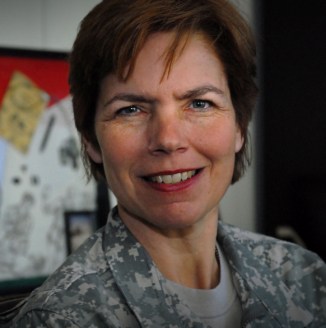
Brig. Gen. Loree Sutton told staff members at the Defense Centers of Excellence [1], or DCOE, on Monday that she was giving up her position as director. Sutton, who launched the center in November 2007, had been expected to retire next year, officials with knowledge of the situation said. The center has not publicly announced her leaving.
Did you or a loved one suffer a traumatic brain injury while serving? ProPublica and NPR want to hear your story. Tell us about your experiences with TBI. [2]
Sudden Departure
Sutton’s departure follows criticism in Congress [3] over the performance of the center and in recent reports [4] by NPR and ProPublica that the military is failing to diagnose and treat soldiers suffering from so-called mild traumatic brain injuries, also called concussions.
It comes just as the Pentagon prepares to open a new, multimillion-dollar showcase treatment facility outside Washington, D.C., for troops with brain injuries [5] and post traumatic stress disorder, often referred to as the signature wounds of the wars in Iraq and Afghanistan.
Late Wednesday, in a sign of disarray within the program, Sutton cancelled a scheduled appearance at the opening of the National Intrepid Center of Excellence [6], a gleaming new facility of waving glass and futuristic virtual reality treatment rooms in Bethesda.
“The war in Iraq and Afghanistan could end tomorrow; our mission to restore health, hope and humanity will endure for decades,” Sutton wrote in her farewell message [7]. “We simply must uphold our commitment to all who have borne the burdens of war on our behalf.”
Sutton did not respond to requests for comment. Her replacement, U.S. Army Col. Bob Saum, also declined to comment.

DCOE
Cathy Haight, the acting spokeswoman for DCOE, said Sutton’s departure, though apparently well ahead of schedule, was part of a routine command rotation. Haight said Sutton decided to leave after turning down the Army’s offer to take a new position overseeing the military medical system in Europe.
“If a general officer declines (a new position)…they are in a transition to retire,” Haight said.
In recent months, legislators have questioned Sutton’s ability to carry out the mission of the centers, which is to catalyze research and treatment across the military for soldiers returning with brain injuries and psychological wounds.
Congress directed the military in 2008 to create the brain injury center and other facilities for wounded soldiers. At an April hearing [8] of a House Armed Services subcommittee, Rep. Susan Davis [9], D-Calif., said that the center had failed to carry out its role.
“The Defense Center of Excellence, while having achieved some notable small scale successes, has not inspired great confidence or enthusiasm thus far. The great hope that it would serve as an information clearinghouse has not yet materialized,” Davis said.
“The center has also made some serious management missteps that call into question its ability to properly administer such a large and important function,” Davis continued.
Sudden Scrutiny
Scrutiny of Sutton rose another notch earlier this month, when NPR and ProPublica reported on the military’s problems in handling soldiers with mild traumatic brain injuries. Such injuries leave no visible scars, but can cause lasting mental and physical difficulties.
Military statistics show that about 115,000 troops have suffered such injuries since 2002, but in interviews, Army experts acknowledged the true toll may be far higher. Unpublished research we reviewed suggests that tens of thousands of soldiers may have gone undiagnosed. Our reporting also showed that even when soldiers were diagnosed, at one of America’s largest Army bases, they have had to fight to receive appropriate treatment [10].
Veterans’ Shocked
Still, some veterans’ advocates were shocked and saddened that Sutton was leaving. They said she had been a forceful, visible advocate for wounded troops and their families who had never received the full support of the military’s medical establishment.
Assessment
Critics of the military’s health system have noted a power vaccum at the top of the military medical structure. Four people in just over three years have rotated through the Pentagon’s top health policy position, the assistant secretary of defense for health affairs.
“She was always there for the troops,” said one veterans’ advocate, who did not want to be named for fear of criticizing the military. “She’s become the scapegoat.”
In an April interview with NPR and ProPublica, Sutton shrugged off the criticism. “Leading change,” she said, “is a journey not for the faint of heart.”
“We are very proud of the team that we have built, the concept in terms of the center of centers, the network of networks,” she said. “Are we anywhere close to where we want and need to be? No. Of course not.”
Your thoughts and comments on this ME-P are appreciated. Feel free to review our top-left column, and top-right sidebar materials, links, URLs and related websites, too. Then, subscribe to the ME-P. It is fast, free and secure.
Link: http://feeds.feedburner.com/HealthcareFinancialsthePostForcxos
Speaker: If you need a moderator or speaker for an upcoming event, Dr. David E. Marcinko; MBA – Publisher-in-Chief of the Medical Executive-Post – is available for seminar or speaking engagements. Contact: MarcinkoAdvisors@msn.com
OUR OTHER PRINT BOOKS AND RELATED INFORMATION SOURCES:
LEXICONS: http://www.springerpub.com/Search/marcinko
PHYSICIANS: www.MedicalBusinessAdvisors.com
PRACTICES: www.BusinessofMedicalPractice.com
HOSPITALS: http://www.crcpress.com/product/isbn/9781466558731
CLINICS: http://www.crcpress.com/product/isbn/9781439879900
ADVISORS: www.CertifiedMedicalPlanner.org
BLOG: www.MedicalExecutivePost.com


Share this:

Filed under: Health Law & Policy, Military Medicine | Tagged: Brig. Gen. Loree Sutton, Cathy Haight, Daniel Zwerdling, DCOE, Defense Centers of Excellence, Military Medicine, National Intrepid Center of Excellence, NPR, ProPublica, Rep. Susan Davis, T. Christian Miller, traumatic brain injury, U.S. Army Col. Bob Saum, VA healthcare |
 The Leading Business Education Network for Doctors, Financial Advisors and Health Industry Consultants
“Psycho Platoon”
Five soldiers injured in the same 2009 bomb blast are a case study in a new epidemic among America’s troops, who are grappling with a combination of concussion and post-traumatic stress disorder.
http://www.propublica.org/article/aftershock-the-blast-that-shook-psycho-platoon
Greta
LikeLike
Returning veterans encounter VA mental health meltdown
Tales of 3 Marines underscore court decision blasting ‘unchecked incompetence’ at agency
http://www.msnbc.msn.com/id/42995663/ns/health-health_care
On Memorial Day 2011
Barbara
LikeLike
Reform the VA – Now
A special report by Pete Hegseth & Stewart Hickey
In April, the inspector general of the U.S. Department of Veterans Affairs (VA) published a scathing audit of the Atlanta VA Medical Center, where poor management led to compromised mental health care for veterans and at least three preventable patient deaths.
VA officials pledged to hold people accountable. Instead, two top officials at the medical center retired early, three others were reprimanded and others faced “unspecified actions.”
Welcome to the twisted world of federal executive branch employment, where it’s nearly impossible to be fired for poor performance.
http://thehealthcareblog.com/blog/2013/09/07/reform-the-va/
Rather than being held accountable for the Atlanta medical center’s failings – where I’ve visited often – those responsible were allowed to retire or received slaps on the wrist.
Ann Miller RN MHA
LikeLike
WA Podiatrist Reminds Us of Importance of Veterans Day
As the son of Ukrainian immigrants, Dr. Harold Bressler understood more than most the value of the freedom he fought for in his time with the U.S. Army during World War II. Studying to become a doctor, Bressler hadn’t finished his education when he was inducted into military service. He served as a technician doing blood work before he was shipped overseas. Bressler spent about 18 months in Germany, doing medical work and caring for the injured.
“I took care of wounded soldiers,” he said. “You had to sew up and do surgery on people who were just filled with shrapnel.” After returning home, Bressler continued his education thanks to the GI Bill, he said. He eventually became a podiatrist. “I was giving back what my country gave me,” he said of his time in the service. “If I wasn’t living here, I would never have been what I am.” That’s why he said he takes Veterans Day so seriously. “We need to remember the fact that these veterans gave up a lot of their lives to keep our freedom,” he said.
Source: Christina Corrales-Toy
The Issaquah Press [11/5/13]
LikeLike