







 Support our online development, and advance our onground research initiatives in free market economics, as we seek to showcase the brightest Next-Gen minds.
THE ME-P DISCLAIMER: Posts, comments and opinions do not necessarily represent iMBA, Inc., but become our property after submission. Copyright © 2006 to-date. iMBA, Inc allows colleges, universities, medical and financial professionals and related clinics, hospitals and non-profit healthcare organizations to distribute our proprietary essays, photos, videos, audios and other documents; etc. However, please review copyright and usage information for each individual asset before submission to us, and/or placement on your publication or web site. Attestation references, citations and/or back-links are required. All other assets are property of the individual copyright holder.
Support our online development, and advance our onground research initiatives in free market economics, as we seek to showcase the brightest Next-Gen minds.
THE ME-P DISCLAIMER: Posts, comments and opinions do not necessarily represent iMBA, Inc., but become our property after submission. Copyright © 2006 to-date. iMBA, Inc allows colleges, universities, medical and financial professionals and related clinics, hospitals and non-profit healthcare organizations to distribute our proprietary essays, photos, videos, audios and other documents; etc. However, please review copyright and usage information for each individual asset before submission to us, and/or placement on your publication or web site. Attestation references, citations and/or back-links are required. All other assets are property of the individual copyright holder.


Physician versus Lobbyist
By Darrell K. Pruitt; DDS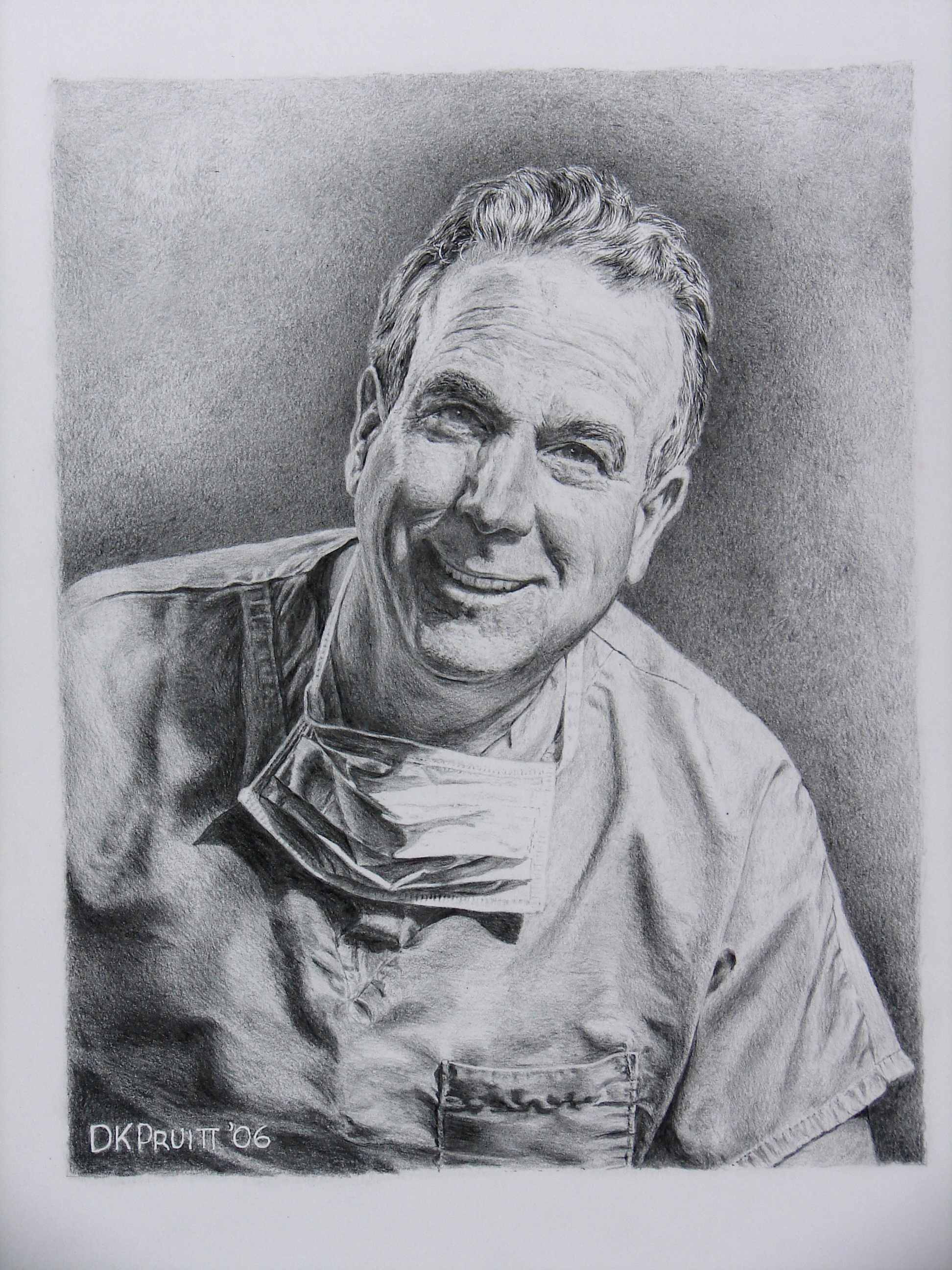
On March 23, 2010 Dr. Deborah Peel, a psychiatrist in private practice and the founder of Patient Privacy Rights (www.patientprivacyrights.org) posted an opinion piece titled: “Your Medical Records Aren’t Secure” in the Wall Street Journal.
http://online.wsj.com/article/SB10001424052748703580904575132111888664060.html
Her still popular article soon picked up 217 comments – reflecting respectable interest in the conundrum. Since then, her message of caution has gained momentum on the Internet in the security industry, and has even spilled over into appearances on Fox News, MSNBC and PBS in the last week.
Dr. Peel’s Case
Dr. Peel argues that even though the President claims digital health records will reduce costs and improve quality, they could undermine safe and effective care if patients become afraid to confide in their doctors.
“The solution is to insist upon technologies that protect a patient’s right to consent to share any personal data. A step in this direction is to demand that no federal stimulus dollars be used to develop electronic systems that do not have these technologies.”
It is easy to understand why Dr. Peel’s opinions draw the ire of HIT stakeholders both inside and outside government.
Dr. Peel concludes:
“Privacy has been essential to the ethical practice of medicine since the time of Hippocrates in fifth century B.C. The success of health-care reform and electronic record systems requires the same foundation of informed consent patients have always had with paper records systems. But if we squander billions on a health-care system no one trusts, millions will seek treatment outside the system or not at all. The resulting data, filled with errors and omissions, will be worth less than the paper it isn’t written on.”
Dr. Peel is currently on a campaign to encourage Americans to sign her “Do not disclose” petition.
http://patientprivacyrights.org/do-not-disclose/
HIT Stakeholders Speak Up
Recently, the Wall Street Journal featured an opposing opinion to Dr. Peel’s in an article titled “Industry Rep Calls Patient Privacy ‘Overblown’ Worry”
Ms. Grealy’s Case
Mary R. Grealy, President of the Healthcare Leadership Council, a coalition of chief executives from the health-care industry, posted her objections to Dr. Peel’s warnings about the dangers of digital records versus paper:
“Dr. Peel seeks to frighten people into believing electronic health records are more vulnerable than paper ones, which is not the case. She fails to acknowledge the important role of the HIPAA in protecting health information, or the extraordinary steps hospitals, health plans and physicians have taken to assure confidentiality. Building upon HIPAA, federal laws adopted this year strongly encourage encryption of data included in electronic health records and have imposed new criminal and civil penalties for violating an individual’s privacy.”
“More importantly, though, if Dr. Peel’s prescription for this hyperbolic problem were to be followed, it’s actually our health that will be less secure. Burdening patients with the responsibility of deciding what health information should be divulged and what should be shielded from medical professionals brings an infinite array of possible consequences. Would the average patient know what information a surgeon needs in order to perform a complex procedure? It’s highly doubtful”.
“In a broader sense, draconian restrictions on the essential flow of medical information would have society-wide repercussions. It would affect the ability of public health officials to report and track incidences of disease. It would undermine the Food and Drug Administration’s capability to monitor the quality and safety of medical products, and product recalls would be hampered”.
“Perhaps most importantly, medical research into lifesaving cures and treatments would be severely hindered by restricted access to health information. Stymieing the necessary transfer of data contained in one diagnosis, one prescription or one lab test could mean the difference between life and death. That is a very high price to pay in order to address overblown privacy concerns”.
Mary R. Grealy
[Washington]
_____________________________________
Assessment
Mary Grealy doesn’t have a petition to sign.
Whereas Dr. Peel turns to patients for support, Ms. Grealy, President of the Healthcare Leadership Council, a coalition of chief executives from the health-care industry, turns to Washington.

Conclusion
And so, your thoughts and comments on this ME-P are appreciated. Feel free to review our top-left column, and top-right sidebar materials, links, URLs and related websites, too. Then, be sure to subscribe to the ME-P. It is fast, free and secure.
Link: http://feeds.feedburner.com/HealthcareFinancialsthePostForcxos
Our Other Print Books and Related Information Sources:
Practice Management: http://www.springerpub.com/prod.aspx?prod_id=23759
Physician Financial Planning: http://www.jbpub.com/catalog/0763745790
Medical Risk Management: http://www.jbpub.com/catalog/9780763733421
Healthcare Organizations: www.HealthcareFinancials.com
Health Administration Terms: www.HealthDictionarySeries.com
Physician Advisors: www.CertifiedMedicalPlanner.com
Subscribe Now: Did you like this Medical Executive-Post, or find it helpful, interesting and informative? Want to get the latest ME-Ps delivered to your email box each morning? Just subscribe using the link below. You can unsubscribe at any time. Security is assured.
Link: http://feeds.feedburner.com/HealthcareFinancialsthePostForcxos
Sponsors Welcomed
And, credible sponsors and like-minded advertisers are always welcomed.
Link: https://healthcarefinancials.wordpress.com/2007/11/11/advertise


Share this:

Filed under: Ethics, Health Insurance, Health Law & Policy, Information Technology, Point-Counter Point, Pruitt's Platform, Risk Management | Tagged: Darrell Pruitt, Deborah Peel, EHRs, EMRs, FDA, Healthcare Leadership Council, HIPAA, HIT, Mary R. Grealy |
 The Leading Business Education Network for Doctors, Financial Advisors and Health Industry Consultants
If you are a seasoned sports fan or are just now discovering that you have developed a freaky taste for watching me ambush defenseless stakeholders suddenly caught out in the open, I’ve got something cute for you this evening. Earlier today, an anonymous representative for Dental Technology Consultants posted a link to Stephen Thorne’s DentistryiQ article which he posted to promote his IT company.
http://www.dentistryiq.com/index/display/article-display.articles.dentisryiq.front-office.electronic-dental.html
Only hours earlier, I had posted a scathing comment following Thorne’s misleading article. That’s why it caught my attention when I saw that the Dental Technology Consultants rep posted a link to Thorne’s article on their Facebook. So I left a tricky comment on Dental Technology Consultants’ Facebook as well:
Dental Technology Consultants, I read Stephen Thorne’s press release for his IT business you linked to on your Facebook and quite frankly found his claims to be incredible.
As it turned out, I had just posted an article on Pruitt’s Platform when I noticed Thorne’s ad for eDRs you referred to. While Thorne was describing a happy customer’s experience with a trouble-free – even fun transition from paper to digital, I was writing about the difference of opinions between patientprivacyrights founder Dr. Deborah Peel, who represents the interests of patients like me, and Mary R. Grealy, President of the Healthcare Leadership Council, a coalition of chief executives from the health-care industry, who represents the interests of vendors… like you and Mr. Thorne.
http://community.pennwelldentalgroup.com/forum/topics/dr-deborah-peel-vs-ms-mary
Dr. Peel contends that if consumers don’t trust the security of their health information, eHRs – including digital health histories in dental patients’ files – will be unreliable and even dangerous. President Mary Grealy on the other hand, argues that Dr. Peel has “overblown” the worry.
What do you think, Dental Technology Consultants? Should dental patients be worried or is Dr. Peel an alarmist like Ms. Grealy says?
Here’s something else I discovered recently. Dr. Larry Emmott, another HIT advocate like you and Mr. Thorne, says that eDRs save money for dentists compared to paper records, and claims he has proof. I wish I could see his numbers, but one has to buy Dr. Emmott’s book for $99 (plus shipping) to challenge his incredible sales pitch. How good is that?
Dr. Larry Emmott also says that paper dental records cost $40,000 per year. That is over $800 per week! Does that sound right to you, Dental Technology Consultants?
Should dentists trust what Dr. Larry Emmott is saying, or do you think he is just trying to sell his books? Your reply would be appreciated because we don’t want to continue to mislead naïve dentists and patients, do we?
One more thing, Dental Technology Consultants, our next conversation will be much easier if I know your name.
D. Kellus Pruitt; DDS
LikeLike
Darrell,
Did you know that data theft and other fraudulent activities related to exposure of eMR data more than doubled last year, to 7 percent in 2009? This was compared to 3 percent in 2008, according to market research firm Javelin Strategy & Research reports.
http://www.informationweek.com/news/healthcare/security-privacy/showArticle.jhtml?articleID=224200494
Barbara
LikeLike
I also wonder how much emotional contact, human interaction or eye contact there is with eHRs?
http://www.thehealthcareblog.com/the_health_care_blog/2010/04/ehr-etiquette.html#comments
Can this doctor even type? Is she middle-aged near sighted? Is the humanity being driven out of medicine; especially now that some medical schools are considering the removal of physical diagnosis from the curriculum?
Talk about deus ex machina!
Adam
LikeLike
Dr. Pruitt,
I note that Dr. Karla Gershman [above] has both a computer, and a hard-copy of the medical chart, in both her hands. So … is this government IT efficiency [redundancy] at its best?
Frank
LikeLike
HIT vendor Stephen Thorne failed to respond …. why?
It has been over a month since I, a dentist, asked Pacific Dental Services President and CEO, Stephen Thorne, MHA a reasonable question about the security of the HIT products he promoted in a press release (?) on DentistryiQ titled “Electronic Dental Records: A case study.”
http://www.dentistryiq.com/index/display/article-display.articles.dentisryiq.front-office.electronic-dental.html
Out of respect to our host, PennWell, I’ve delayed writing this comment – I had hoped Thorne would return to the venue without further encouragement. He’s the one trying to sell eDRs. Not me. I’m only a customer with questions. So what’s he got to be afraid of?
Normally, I wouldn’t give vendors with empirical “case studies” like Thorne’s more than a few days to respond. But not long ago, PennWell told me that the suits were becoming concerned that I could be running off advertisement dollars. I understand and respect their position. After all, they can’t provide a venue for free, and I’ve certainly benefited from their venue for well over a year. I’m grateful, but nevertheless…
I simply cannot resist repeating my question for Stephen Thorne. And I’m not too shy to admit that I’m motivated by more than just Hippocratic concerns to move this issue forward. I take it hard and personal when my questions about healthcare are ignored by someone with a Masters degree in Healthcare Administration who would sell me a product on such a skimpy relationship with a dentist. Is this the customer service they learn in MHA programs these days? I have to say, I think I recognize a lot more grads these days – similarly trained to administrate healthcare.
Once more, Stephen Thorne: Dr. Deborah Peel contends that if consumers don’t trust the security of their health information, eHRs – including digital health histories in dental patients’ files – will be unreliable and even dangerous. President Mary Grealy on the other hand, argues that Dr. Peel has “overblown” the worry.
What do you think? Should dental patients be worried as Dr. Peel suggests, or should we put our trust in the President of the Healthcare Leadership Council, Mary Grealy? If it were your family’s welfare on the line, who would you listen to, Mr. Thorne? Dr. Peel, or Ms. Grealy?
Ignoring dental patients’ welfare cannot be allowed to continue. It’s simply inhumane to treat those who trust us with hand-me-down corporate disregard. I don’t care what anyone says.
D. Kellus Pruitt; DDS
LikeLike
Civil rights office steps up health privacy enforcement
Darrell, did you know that the HITECH Act significantly strengthened the available legal tools for enforcing health information privacy law, according federal health officials, who pledged to step up their pursuit of health security and privacy rule violators?
http://www.govhealthit.com/newsitem.aspx?nid=73735
Catherine
LikeLike
Thanks for the heads up, Catherine
When historians describe the predictable rattling death of Obama’s giant healthcare Cyborg, some will surely point out the folly of stakeholders’ failed plans to animate a fly-by-wire market designed to replace the natural free market – bypassing finicky consumers who prefer real choices in healthcare. The monster’s Pay-for-Performance algorithms will crunch and digest patients’ insurance claims data. Then, the scientific, Ingenix-adjustable results will be used to hold doctors even more accountable to insurance MBAs and other “payers” rather than patients. In the epic struggle between doctors and insensitive, complicated, artificial market monsters, patients always lose the most. When stakeholders distract doctors with the threats of withholding payment, their patients unwittingly lose accountability of their most important representatives for their health. Doctors are shamefully aware of ducking responsibility, but are understandably reluctant to stand up and risk retaliation by digitally-empowered stakeholders. Stoicism and professionalism are often confused.
With February’s passage of more than 2000 pages of mystery law by just over half of our lawmakers, Obama has shown us that he is determined to provide Americans the highest possible quality in healthcare that they can find at the lowest possible price – in the worst way. While at the same time, his complicated mandate helps to ease the unemployment problems for more than just the paper industry. The tedious complications to being paid, such as the imminent ICD 10 codes and the obligations of the new HITECH/HIPAA disclosure rule, will require doctors who increasingly receive taxpayer dollars to re-distribute their windfall wealth by also employing thousands of medical informatics experts who are graduating every year from stimulus-supported higher education programs. “Coders” are healthcare professionals who do nothing to improve the quality of care. They are trained as specialists to save the doctor form all the complications which come with time-saving digitalization. Doctors eventually have to be paid most of their post-treatment negotiated bills, you know.
There is an un-negotiable gap between consumers’ non-compromising demand for privacy at any price, and stakeholders’ steadfast demand for unimpeded interoperability – regardless of privacy concerns. After all, security is getting more expensive all the time, and there is nothing holding down the cost of being HIPAA-compliant. The fact is, if the nation continues the course of current HHS plans, the level of privacy that Americans demand will simply be unattainable without increasing the cost of healthcare to levels that are equally unacceptable to the same voters. In the US, the customer is always right. That’s as good as it gets.
Dr. Deborah Peel herself was one step from that predicting the failure of Obama’s monster years ago when she warned that interoperability always comes at a cost to privacy. Regardless of grand, parasite-riddled plans, if customers fail to perceive both value and safety in paperless practices, there will be no meaningful use of eHRs.
End of story.
D. Kellus Pruitt; DDS
LikeLike
Grealy is the Queen of the Strawmen. Nobody I know is saying absolutely no to sharing medical information or no to EHRs and HIEs.
The rational response is to look at the technical and practical lack of security built into these products then fix the problems.
There are security best practices and technical architectures (that can be borrowed and adapted from other industries like financial services) that would go a long way to protecting patients rights and giving them control over their health information and still facilitate sharing where appropriate.
The problem is the technology and the lack of political will to solve it before deployments.
Lester
LikeLike
HIPAA Breach Notification Rule Withdrawn
Dr Pruitt, did you know that following a firestorm of criticism from privacy advocates who say federal officials gave too much leeway to healthcare organizations that inadvertently disclose protected health information, HHS has without fanfare withdrawn its controversial HIPAA “breach notification” interim final rule.
http://www.hhs.gov/ocr/privacy/hipaa/administrative/breachnotificationrule/finalruleupdate.html
The decision thrilled the Patient Privacy Rights Foundation, headed by noted privacy watchdog Dr. Deborah Peel, which had been adamantly opposed to the so-called “harm standard.”
Mary
LikeLike
I know exactly what you mean, Mary. Who couldn’t see that rejection coming?
Surely most of us knew all along that a rule allowing covered entities to determine whether customers should be notified of a breach was destined to be very short lived.
We weren’t fooling anyone but ourselves.
Darrell
LikeLike
WikiLeaks Breach Raises Concern about Privacy of eMRs
http://www.foxnews.com/politics/2010/12/07/wikileaks-breach-raises-concern-privacy-electronic-medical-records/
“If you think WikiLeaks is bad, this [eMR security breaches] is gonna be WikiLeaks on steroids,”
Source: Deborah Peel MD
[Patient Privacy Rights]
LikeLike
Dr. Peel responds to breach
Dr. Deborah Peel responds to BCBS of Tennessee data breach of more than 1 million financial and medical identities.
This afternoon, Joe Carlson posted “After Blues HIPAA settlement, more work to do: privacy experts” on ModernHealthcare.com.
http://www.modernhealthcare.com/article/20120314/NEWS/120319996/after-blues-hipaa-settlement-more-work-to-do-privacy-experts
Carlson writes:
“Dr. Deborah Peel, founder and chairwoman of the Patient Privacy Rights Foundation in Austin, Texas, said the Office for Civil Rights’ financial settlement plus a corrective action plan forcing the insurer to better train its employees on following data-privacy laws disregards the harm to victims.
Regulators could have required the company to provide identity-theft monitoring services, for example, because many cases of medical identity theft take years to materialize, Peel said.”
Dr. Peel told ModernHealthcare.com: “They did nothing, zero, for the patient. And we think that shows OCR is not thinking about the patients who were harmed.” She added: “It’s good to see OCR is trying to force the industry to protect the data. It’s just disheartening to see that they did nothing to help the patients. They could have done that.”
Peel also pointed out that $1.5 million fine was “practically nothing” to the statewide health insurance company.
D. Kellus Pruitt DDS
LikeLike