







 Support our online development, and advance our onground research initiatives in free market economics, as we seek to showcase the brightest Next-Gen minds.
THE ME-P DISCLAIMER: Posts, comments and opinions do not necessarily represent iMBA, Inc., but become our property after submission. Copyright © 2006 to-date. iMBA, Inc allows colleges, universities, medical and financial professionals and related clinics, hospitals and non-profit healthcare organizations to distribute our proprietary essays, photos, videos, audios and other documents; etc. However, please review copyright and usage information for each individual asset before submission to us, and/or placement on your publication or web site. Attestation references, citations and/or back-links are required. All other assets are property of the individual copyright holder.
Support our online development, and advance our onground research initiatives in free market economics, as we seek to showcase the brightest Next-Gen minds.
THE ME-P DISCLAIMER: Posts, comments and opinions do not necessarily represent iMBA, Inc., but become our property after submission. Copyright © 2006 to-date. iMBA, Inc allows colleges, universities, medical and financial professionals and related clinics, hospitals and non-profit healthcare organizations to distribute our proprietary essays, photos, videos, audios and other documents; etc. However, please review copyright and usage information for each individual asset before submission to us, and/or placement on your publication or web site. Attestation references, citations and/or back-links are required. All other assets are property of the individual copyright holder.


A Note to Diane Rehm
[By Darrell K. Pruitt; DDS]
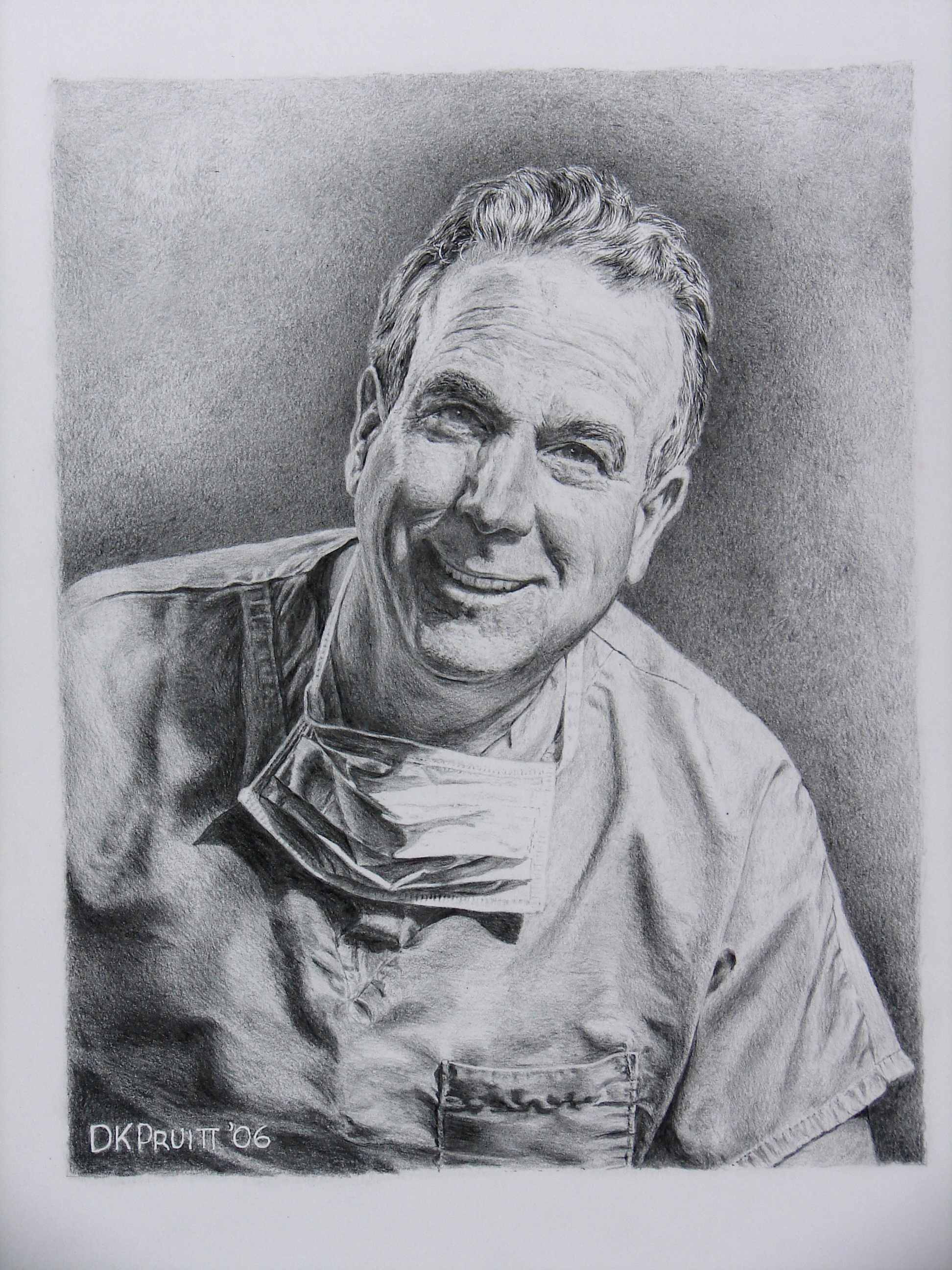 Dear Diane Rehm,
I always enjoy your show.
You add value to my drive to work.
As a dentist, I was especially interested in your March 10 show “Electronic Medical Records.”
In all the excitement that surrounds the 19 billion dollars our grandchildren have unwittingly granted to physicians and hospitals for “meaningful” adoption of certified eMRs, you probably haven’t noticed that nobody is talking about including dentistry in the conversion from paper to digital. Do you find that odd?
Small and Mid Sized Practices
Like small and mid sized physicians’ practices, small dental practices are intended to be part of the federal mandate for interoperable eMR adoption – even without the help from stimulus money that physicians receive. You probably weren’t aware that the stimulus money will run out before HHS gets around to defining “meaningful use” of eMRs in dental office. That would be impossible, but nevertheless, I anticipate that the attempts will be entertaining. Physicians in small practices typically have tens of thousands of paper charts as thick as phone books. On the other hand, a busy solo dental practice, like the majority of practices in the US, might have 5,000 files that are very thin in comparison to files that involve the whole body instead of just the bottom third of the face. That makes sense, doesn’t it?
Marginal Benefits May Not Exceed Marginal Costs
I listened to your guest Dr. Carol Horn, who practices internal medicine in private practice, as well as others involved in the actual delivery of healthcare. They list not only the benefits of eMR adoption, but in fairness, they also described the expense and liability of digital records that continue long after the tedious and dangerous conversion from paper to digital. In other words, it appears that the benefits for physicians barely make the effort worth the price, even with 19 billion dollars in help.
Editor’s Note: In economics, we say that the marginal benefits may not exceed the marginal costs; all things being equal.
Assessment
And so, it occurs to me that if dentists are to be included in the plans for digital interoperability, we will be very, very slow adopters for natural reasons: like eMRs in physicians’ offices, eMRs in dentists’ offices are more expense and trouble than they are worth – even before considering the bankruptcy-level liability of a data breach.
Most of those who champion eMRs for the entire healthcare system in the nation don’t realize that the bottleneck in dental offices isn’t the front desk. It’s the dentist who is hopefully taking his or her time providing care with those hands instead of working a keyboard.
Conclusion
Your thoughts and comments on this ME-P are appreciated. Feel free to review our top-left column, and top-right sidebar materials, links, URLs and related websites, too. Then, subscribe to the ME-P. It is fast, free and secure.
Link: http://feeds.feedburner.com/HealthcareFinancialsthePostForcxos
Speaker: If you need a moderator or speaker for an upcoming event, Dr. David E. Marcinko; MBA – Publisher-in-Chief of the Medical Executive-Post – is available for seminar or speaking engagements. Contact: MarcinkoAdvisors@msn.com
OUR OTHER PRINT BOOKS AND RELATED INFORMATION SOURCES:
- DICTIONARIES: http://www.springerpub.com/Search/marcinko
- PHYSICIANS: www.MedicalBusinessAdvisors.com
- PRACTICES: www.BusinessofMedicalPractice.com
- HOSPITALS: http://www.crcpress.com/product/isbn/9781466558731
- CLINICS: http://www.crcpress.com/product/isbn/9781439879900
- ADVISORS: www.CertifiedMedicalPlanner.org
- BLOG: www.MedicalExecutivePost.com
- FINANCE:Financial Planning for Physicians and Advisors
- INSURANCE:Risk Management and Insurance Strategies for Physicians and Advisors


Share this:

Filed under: Information Technology, Pruitt's Platform | Tagged: ADA, ARRA, carol horn, CCHIT, Darrell Pruitt, DDS, dentists, diane rehm, eDRs, electronic dental records, electronic medical records, EMRs, HHS, HIMSS, HITECH Act, meaningful use |
 The Leading Business Education Network for Doctors, Financial Advisors and Health Industry Consultants
Larry Emmott DDS and D. Kellus Pruitt DDS discuss “paperless”
Yesterday, Dr. Larry Emmott offered to take part in unprecedented discussion of Electronic Dental Records on his Emmott on Technology Facebook page under “Notes.”
http://www.facebook.com/notes/emmott-on-technology-llc/paperless-dental-records-by-2014/385113214584
Dr. Emmott’s Facebook bio says that he is one of the most entertaining speakers in dentistry and is considered the leading dental high tech authority in the country. He also has over thirty years of experience as a practicing general dentist in Phoenix, AZ.
Thank you for speaking up, Dr. Larry Emmott. This is exactly what dentistry needs: An open discussion between HIT stakeholders like you and dentists like me concerning the risks and rewards of going “paperless.” Along with others in the industry, I look forward to our conversation simply because everyone else avoids talking about the subject. I also intend to share this on my blog, Pruitt’s Platform, which is featured by Dentistry iQ.
http://community.pennwelldentalgroup.com/forum/topics/larry-emmott-dds-and-d-kellus
Dr. Emmott writes: “Have you heard that there is a new government regulation that requires dentists to have electronic records by the year 2014? I have heard or read a number of variations on this theme in the last month along with various rants and dire warnings regarding the alleged new rules.”
Larry, let me begin by saying that I am in full agreement with the points you made in your opening statement. I proudly accept full personal accountability for being the one responsible for the “various rants and dire warnings.” Thanks for recognizing me. I also agree that there is not a law that says dentists will not be permitted to practice dentistry without EDRs. But you need to tell that to the American Dental Association. Here is what a former ADA President said about digital records:
“The electronic health record may not be the result of changes of our choice. They are going to be mandated. No one is going to ask, ‘Do you want to do this?’ No, it’s going to be, ‘You have to do this.’ That’s why we absolutely need the profession to be represented in the discussions about EHR to make sure our ideas are enacted to the greatest extent possible.” – Dr. John Findley, ADA President-elect, September, 2008.
Current ADA President Dr. Ron Tankersley – who should have an ADA representative right in the middle of this conversation – refuses to permit any discussion at all about EDRs with ADA members. So who knows where our leaders are on this issue. And that is a major problem in dentistry right now.
Dr. Emmott: “However, as a dental practice consultant, setting up an electronic dental record (EDR) or what is commonly called “paperless” dental records makes sense for many reasons even if the law does not yet require it. Paperless records are: faster, more accurate and less expensive than traditional paper records.
I agree with your point that “paperless records are faster” for at least a few things… unless a computer crashes, or a monitor is dropped, or one can’t pull up the friggin’ screen needed, or there is a power outage… (paper records can be read with a flashlight). But what if “fast” in relation to “reliable” in dentistry is found to be over-rated, and it’s too late to turn back? How fast does paperwork have to move in a dentist’s office? We aren’t exactly emergency rooms. Another thing fast about EHRs is how fast they slip out of the office. We discussed that liability earlier.
Are paperless dental records indeed more accurate? If EMRs have yet to prove that they are any more accurate than physicians’ paper records, I find your claim simply hard to believe. Do you have any studies to back up that statement?
Are paperless dental records less expensive than paper? Once again, I would like to see your studies that confirm this claim. I personally think it sounds more like another sales pitch rather than a statement based on fact – but you are in the business of EDRs, not me. For one thing, even with the stimulus money help from our grandchildren, physicians are still not finding EMRs worth buying into.
Skipping down to a later point in your article, you said “I assume dentists could get in on this federal stimulus give-away although it is obviously designed for hospitals and physicians.” It is very unlikely that dentists will ever see any help in purchasing EDRs, so your product will have to make it in the free market just like dentists’ do every day using only telephones, fax machines and the US Mail.
Dr. Emmott: “EDR are in essence part of the complete electronic medical record or EMR. This is good as dental health is of course part of overall health and many general medical conditions are important to dentistry and dental conditions affect general health. On the other hand, it is bad as dentistry has become lost in the much larger battle over creation of an EMR which has many more players and much more money involved than we have in dentistry.”
Once again, you have a tool looking for a use. These advantages you cite only require better communications, not HIPAA. Virtually all dentists in the nation already have telephones, fax machines and postmen. Please don’t screw up our communications in the name of progress any more than other HIT stakeholders have already have done. It’s much more difficult to get dentists to release x-rays because of HIPAA than ever before in the history of dentistry! Why??? Only their name is on the radiographs, for crying out loud. That is expensive silly, Larry, and you know it.
Dr. Emmott: “All of this is made more complicated by the political circus that has become healthcare ‘reform’. Bureaucrats are meeting to come up with the actual rules and the speculation is that some deadline will be imposed. When that will be and what the rules will be is anyone’s guess. In the meantime don’t wait around for some bureaucrat to tell you what to do, develop EDR for your office just because it is the right thing to do.”
You are still far short on convincing me, Larry. If EDRs make dentistry more expensive and endangers patients, how can that be the right thing to do?
Here is my question should you want to continue with this dialogue: What is the NPI number, and more importantly, what is its purpose?
Thanks. I hope you hang with me a little longer. We are making tangible progress.
D. Kellus Pruitt; DDS
LikeLike
HIT sales pitch “Just get over it”
It’s been three days since I responded to Dr. Larry Emmott’s invitation to a Facebook discussion concerning the value of Electronic Dental Records to dental patients who ultimately must pay for them (See “Larry Emmott DDS and D. Kellus Pruitt DDS discuss ‘paperless’”).
http://community.pennwelldentalgroup.com/forum/topics/larry-emmott-dds-and-d-kellus
Since it is difficult to determine who Dr. Emmott addressed yesterday on a subsequent discussion about HIT, I may have indirectly received his final comment on the subject of the cost of paperless practices. “Just get over it” is a scorched earth weapon in the command-and-control defensive arsenal. It reliably stops negotiations cold. It’s a more direct response than the traditional bum’s rush, “Write a letter to … [the editor, your legislator, my big toe …]”
Here is what Dr. Emmott posted yesterday on his Facebook:
http://www.facebook.com/pages/Phoenix-AZ/Emmott-on-Technology-LLC/167616526582?ref=mf#!/notes/emmott-on-technology-llc/just-get-over-it/389991364584
Just Get Over It!
Moore’s Law
Computer power will double every 18 months.
Larry’s Corollary
Every technology product will be better and cheaper in the future…just get over it.
Computers in the office will need to be replaced every three to four years. Computers over four years old can not be relied on to run the current software effectively. Plan to replace one third of the office computers every year and you will always be up to date.
————————————————–
I don’t know about you, but to me, when a vendor tells me “Just get over it,” I look around for a photogenic, proud implant salesman.
Know of any other vendors I can hold accountable today? Vendors and other stakeholders don’t respect American dental patients because American dentists are too passive to protect them. Being traditionally professional is being stoic at all costs. “Image is everything.”
Those who pay me for my services would never let me get away with telling them to “get over it.” I’ve tried. I found it to be a regrettable, short-lived policy.
D. Kellus Pruitt; DDS
LikeLike
Today they’re pulling my chain
Stephen Thorne, President and CEO of Pacific Dental Services, a practice management firm in California posted the usual vague promises about the unproven miracles of eDRs.
http://www.dentistryiq.com/index/display/article-display.articles.dentisryiq.front-office.electronic-dental.html
Here is my reply:
Mr. Stephen Thorne, it’s a pleasure to meet you here on DentistryiQ. You stated incredible claims about eDRs that look to me like sales pitches backed by empirical wishes. But that isn’t what caused me to reply to your press release so quickly.
I had just posted an article on Pruitt’s Platform when I noticed your ad. While you were describing a happy customer’s experience with a trouble-free – even fun transition from paper to digital, I was writing about the difference of opinions between PatientPrivacyRights founder Dr. Deborah Peel, who represents the interests of patients like me, and Mary R. Grealy, President of the Healthcare Leadership Council, a coalition of chief executives from the health-care industry, who represents the interests of vendors… like you.
http://community.pennwelldentalgroup.com/forum/topics/dr-deborah-peel-vs-ms-mary
Dr. Peel contends that if consumers don’t trust the security of their health information, eHRs – including digital health histories in dental patients’ files – will be unreliable and even dangerous. President Mary Grealy on the other hand, argues that Dr. Peel has “overblown” the worry.
What do you think, Stephen Thorne? Should dental patients be worried? You of all people should know.
D. Kellus Pruitt; DDS
LikeLike
Dr. Darrell K. Pruitt,
Well said. So, let us recap with an eDR decision matrix:
*You are a doctor – HE is a layman.
*You are a professional – HE is a middle man.
*You are a “covered entity” – He is not.
*You are subject to HIPAA penalties for security breaches – He is not.
*You will have to use the product – HE will not.
*You will spend money – He will make money.
*eDRs are not covered under ARRA or HI-TECH.
*eDRs do not improve patient care – DOCTORS improve patient care.
Easy call – like shooting fish in a ….
Jay
LikeLike
Dr. Lorne Lavine responds to $40,000 question
I’ve been posting questions about eDRs on the Dental Technology Consultants Facebook for a week or so, and the moderator has been kind enough to respond – most of the time. But until this morning I didn’t know his name. It’s Dr. Lorne Lavine. I haven’t yet put together my reply to Dr. Lavine’s comment which I copied below, but nevertheless, I wanted to quickly give interested readers a heads up. I think this may be the beginning of an unprecedented public discussion of electronic dental records between a vendor and a dentist. If Dr. Lavine hangs in with us long enough, dentists and consumers could find this informative. In the meantime, how deep do you get into Dr Lavine’s reply before you find a problem?
Dental Technology Consultants: “My name is right at the top of the page, Dr. Lorne Lavine. Like most consultants out there, I believe that electronic dental records are more cost effective than paper records. I have no idea where Dr. Emmott gets his numbers from and while they do seem high to me, I’ve known Larry a long time and can say with confidence that he doesn’t propose those numbers just to sell more books.
Patients do need to have confidence in the process but based on the current HIPAA standards, it’s my belief that any system that falls within HIPAA guidelines should be more than adequate. In any event, it’s a moot point…all records will be electronic, sooner than later, and you can either go along willingly or kicking and screaming…the end result will be the same.”
———————
Dr. Larry Emmott’s “numbers” that Dr. Lavine defends refers to Dr. Emmott’s claim that paper records cost dentists $40,000 per year. That is $800 per week, or $20 per hour… for paper dental records. To see Dr. Emmott’s proof, one has to purchase his book for $99. I don’t know about you, but I have a problem with that.
But that’s not the first problem one comes to in Dr. Lavine’s reply. It’s his first sentence: “My name is right at the top of the page.” No it’s not.
D. Kellus Pruitt; DDS
LikeLike
For what it’s worth, Dr. Lavine deleted the above comment from his Facebook and my comments are no longer welcomed.
You can’t really blame the guy. My comments looked bad, and hurt his consulting business.
D. Kellus Pruitt; DDS
LikeLike
Darrell,
Please stay constructive and positive. This is not a dental blog; but I enjoy it nevertheless.
Fraternally.
Steve; DMD
LikeLike
Darrell
Another week – another EMR breach! This time, though, the apparent culprit is not a professional identity thief or a careless employee walking off with a laptop or USB drive, but a disgruntled former employee who also happens to be a physician.
Fired Radiologist Hacks CT Hospital’s PACS
http://www.healthimaging.com/index.php?option=com_articles&view=article&id=21501:radiologist-breaches-data-images-of-nearly-1000-patients-via-pacs
Gosh, how long, heavy and cumbersome would it be to snag 957 traditional analog films – versus mere seconds for PACS [picture archiving and communication systems]?
Just another sign-o-the-times!
Dan
LikeLike
Unexplained interest in eDRs
Here’s something I find interesting: My March 16 article on Medical Executive-Post titled “Electronic Medical Records and Dentistry,” has suddenly become the 7th most popular thread on the Website – which has a quarter of a million readers.
The last time anyone contributed to the thread was April 13. This means that in the last 48 hours a hundred or so individuals somewhere began investigating electronic dental records almost simultaneously. So what do you think has happened to cause this blip? Do you think the interest in eDRs comes from government, academia or the dental industry?
For what it’s worth, I think the sudden interest is from the ADA and HHS and involves Secretary Kathleen Sebelius’ command to define “meaningful use” of interoperable dental records. At this moment, ADA officials are wondering how they can do so without sounding really, really stupid.
Regardless of the electronic health record mandate, in dentistry, the telephone, fax and good ol’ US Mail remain hard to beat and much safer for the welfare of dental patients than digitized Protected Health Information. Data breaches are getting worse, not better. And a stolen computer can bankrupt a dental practice even if it’s self-reported.
D. Kellus Pruitt DDS
LikeLike
Dr. Larry Emmott and paperless dentistry
Those who have followed me might remember Dr. Emmott. He’s recognized by the American Dental Association, Patterson Dental and me as one of organized dentistry’s most knowledgeable health information technology experts. He’s also on my Google alerts because I try to invite Dr. Emmott to openly discuss the pros and cons of electronic dental records every time he pops up on the Internet.
Today, Dr. Emmott posted “Paperless Dental Practice Records by 2014.”
http://www.newhealthcarebillfacts.com/paperless-dental-practice-records-by-2014/
I submitted the following comment, and it is awaiting moderation.
Hello, Dr. Larry Emmott. We meet again.
“Paperless records are: faster, more accurate and less expensive than traditional paper records.”
Dr. Larry Emmott
[March 16, 2010, May 10, 2010 and February 3, 2011].
We know each other pretty well by now, don’t we, Larry? I’ve challenged your consistent sales pitches like these before, yet so far, neither of us has budged from our opinions. (See “Larry Emmott DDS and D. Kellus Pruitt DDS discuss ‘paperless’ on the Medical Executive-Post, March 17, 2010)
As a matter of fact, I first read today’s article on March 16 and then again on May 10 of last year. In all three editions that were posted several months apart, you say you had “heard or read a number of variations on [mandated eDRs by 2014] in the last month along with various rants and dire warnings regarding the alleged new rules.” For the sake of credibility, you might consider updating your material before you repost it.
Please, Larry. Your colleagues deserve more than canned selling points. Let’s talk honestly and openly about the benefits as well as the dangers of eDRs like we have in the past. Since your customers are more than likely naïve about eDRs, that makes transparency crucially important for fairness in your business. It would simply be unethical to persuade trusting dentists to purchase your product – only to find out later that eDRs aren’t necessarily faster, are hardly more accurate and cost much, much more than paper dental records.
As further incentive to be transparent with fellow dentists, the ADA honors you as a keynote speaker at ADA technology symposiums, as well as features you as a lecturer of prestigious ADA continuing education courses concerning electronic dental records: “Podcast, Episode #10: High Tech High Touch Made Simple.”
http://www.ada.org/51.aspx
“This podcast was made possible by an educational grant by CareCredit” – an ADA business partner with a long history of customer complaints and only months ago, the target of numerous attorneys general over allegations of fraud committed against dental patients in several states. That’s transparency.
I listened to your CareCredit/GE-sponsored presentation, and am honestly unsure if the podcast was intended to be a reliable source of information or an infomercial. About a third of the way through, you claim to have documented that dentists can save over $170,000 every year if they go completely paperless. That would mean that my paper charts cost around $700 a day, Larry. I have to be honest with you. That figure sounds so incredible that I hesitate to even ask if such results have been repeated by anyone else, anywhere.
As a matter of fact, recently it has been documented in a few studies that physicians certainly aren’t experiencing positive returns from eMRs even with the help of stimulus money. In fact, it’s common knowledge in the HIT industry that eHRs not only fail to improve care so far, but outside of your dental office (?), eHRs actually appear to increase the cost of healthcare. Once again, it might be a good idea to update your material. EDRs aren’t as shock-and-awe spectacular as they were a few years ago, and dentists are becoming less gullible every day.
D. Kellus Pruitt DDS
LikeLike
Electronic Dental Records
[How much does their protection from scrutiny cost Americans? Is the price worth it?]
It is no accident that very few are aware that on April 26, 2013, Dentrix became the first (and months later, the second) dental software vendor to be issued a warning by the U.S. Department of Homeland Security. (See the statement by a Dentrix apologist which I copied below, featured in a DentistryIQ press release posted three days later: “Department of Homeland Security issues notice regarding Dentrix G5 … what you need to know,” by DentistryIQ Editors, DentistryIQ, undated).
http://www.dentistryiq.com/articles/2013/04/department-of-homeland-security-issues-notice-regarding-dentrix-.html
“What we need to know”
DentistryIQ failed to mention DHS’ second warning to Dentrix, and the American Dental Association never mentioned either one:
“Vulnerability Note VU#948155 Henry Schein Dentrix G5 uses hard-coded database credentials shared across multiple installations.” April 26, 2013
http://www.kb.cert.org/vuls/id/948155
Overview
“Henry Schein Dentrix G5, a dental practice management software suite, uses hard-coded database access credentials that are shared across multiple installation sites. An attacker who is able to obtain the credentials for one site may be able to gain access to other sites using the same credentials.”
“Vulnerability Note VU#900031 Faircom c-treeACE database weak obfuscation algorithm vulnerability.” June 10, 2013.
http://www.kb.cert.org/vuls/id/900031
Overview
“Faircom c-treeACE provides a weak obfuscation algorithm (CWE-327) that may be unobfuscated without knowledge of a key or password. The algorithm was formerly called Faircom Standard Encryption but is now called Data Camouflage.”
Even after DHS warned Dentrix that what they called “encryption” was nothing more than “weak obfuscation,” an ad for Dentrix G5 continued to promise encryption for another 8 months, until the false claim was finally dropped following tremendous resistance to acknowledge the deception. As a result of Dentrix’s lack of transparency with customers, there are an unknown number dentists in the nation who mistakenly assume that their patients’ identities are encrypted by Dentrix, when in fact they aren’t. Imagine the numbers of dental patients who should have been warned of data breaches, but weren’t. We simply cannot keep doing business like this, Doc.
While an unknown number of dentists are tortured every day by the wrenching decision whether or not to notify patients about data breaches – predictably losing their valued trust forever – Dr. Lorne Lavine, founder and president of Dental Technology Consultants, discounts security problems by assuring DentistryIQ editors that identity thefts and bankruptcies are simply part of the price Americans must pay to enjoy the benefits of the digital technology he sells.
Dr. Lavine: “As anyone who writes software is aware, there is no such thing as perfect code or software that is 100% secure. Look at the thousands of programmers who worked on developing Windows, yet it still requires almost weekly patches to plug security holes.”
Look at the Ford Pinto…. or Microsoft, now that you mention it.
D. Kellus Pruitt DDS
LikeLike