






 Support our online development, and advance our onground research initiatives in free market economics, as we seek to showcase the brightest Next-Gen minds.
THE ME-P DISCLAIMER: Posts, comments and opinions do not necessarily represent iMBA, Inc., but become our property after submission. Copyright © 2006 to-date. iMBA, Inc allows colleges, universities, medical and financial professionals and related clinics, hospitals and non-profit healthcare organizations to distribute our proprietary essays, photos, videos, audios and other documents; etc. However, please review copyright and usage information for each individual asset before submission to us, and/or placement on your publication or web site. Attestation references, citations and/or back-links are required. All other assets are property of the individual copyright holder.
Support our online development, and advance our onground research initiatives in free market economics, as we seek to showcase the brightest Next-Gen minds.
THE ME-P DISCLAIMER: Posts, comments and opinions do not necessarily represent iMBA, Inc., but become our property after submission. Copyright © 2006 to-date. iMBA, Inc allows colleges, universities, medical and financial professionals and related clinics, hospitals and non-profit healthcare organizations to distribute our proprietary essays, photos, videos, audios and other documents; etc. However, please review copyright and usage information for each individual asset before submission to us, and/or placement on your publication or web site. Attestation references, citations and/or back-links are required. All other assets are property of the individual copyright holder.


In My Opinion … Hospital Charges Not 4 Me
Dr. David Edward Marcinko; MBA
[Editor-in-Chief]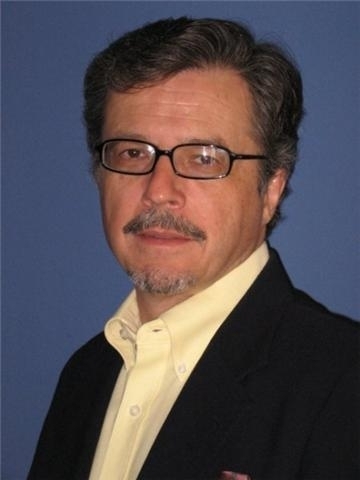
On February 09, 2010, journalist Maggie Mahar posted an excellent op-ed piece on The Health Care Blog. In fact; I am now compelled to address one aspect of it. The essay was titled: “Massachusetts’ Problem and Maryland’s Solution”.
Assuredly, I’ve no beef with Maggie, her economic machinations or reporting. In fact, I am a fan and encourage all ME-P readers and subscribers to “read it and reap.’
Maggie Speaks
In her essay, Maggie says the following to which I agree. It is well known to me as a Balti-moron. For, I lived in the bowels of inner-city Baltimore when this legislation went down, back-in-the-day:
“While health care reformers argue about what it would take to “break the curve” of health care inflation, the state of Maryland has done it, at least when it comes to hospital spending. In 1977, Maryland decided that, rather than leaving prices to the vagaries of a marketplace where insurers and hospitals negotiate behind closed doors, it would delegate the task of setting reimbursement rates for acute-care hospitals to an independent agency, the Maryland Health Services Cost Review Commission. When setting rates, the Commission takes into account differences in labor markets and how much a hospital pays in wages; the amount of charity care the hospital does; and whether it treats a large number of severely ill patients.
For example, the Commission sets the price of an overnight stay at St. Joseph Medical Center in suburban Towson at $984, while letting Johns Hopkins, in Baltimore Maryland, charges $1,555. For a basic chest X-ray, St. Joseph’s asks $81 and Hopkins’ is allowed to charge $155. The differences reflect Hopkins’s higher costs as a teaching hospital and the fact that it cares for generally sicker patients.”
Of Invoices, Charges and Cost Shifting – Oh My!
I do have a beef with the above charges, which are not necessarily costs, which are not necessarily what is ultimately paid by a third-party insurer, or patient. This cost shifting is not unique to JHU, of course, but mention of the “Johns” just caught my eye as I admit that I’ve been away from my hometown of Baltimore, Maryland for 35 years.
Oh my; don’t get me wrong. I loved the place and played stick-ball in JHU’s parking lot on Broadway in Upper Fells Point when I was a kid. I was seen in the ER, at a young age, for a forehead laceration. I even met two of the greatest physicians in the world there.
J. Alex Haller Jr. MD – the world famous Children’s-Surgeon-in-Charge of Johns Hopkins Hospital, and pectus excavatum surgical pioneer, from 1964 until 1997. As well as pediatric heart surgeon Helen Brooke Taussig MD (1898 – 1986), developer of a famous operation to alleviate “blue baby” syndrome, and who first warned the public on the dangers of thalidomide.
Link: https://healthcarefinancials.wordpress.com/2009/09/01/off-road-touring-with-dr-marcinko-part-vii/
However, as a health insurance agent and advocate of HD-HCPs for more than a decade, who has direct economic “skin-in-the-insurance game”, I would rather go to suburban St. Joe’s medical center for non-traumatic, non-emergent care – if I had my druthers. The neighborhood is safer and the quality can’t be much different. After all, a basic chest x-ray … is a basic chest x-ray, and an uncomplicated overnight stay … is an overnight stay etc, ceteris paribus.
RememberParetto’s 80/20 economic principle of the “vital few and trivial many”? Most of us [trivial many] will not need JHU care [vital few]. And, that’s a good thing!
The fact that JHU is a teaching hospital that generally cares for sicker patients has tremendous societal implications with positive “trickle-down” innovative benefits for the masses. But, not for me as one doctor-purchaser of healthcare services who knows better. I refuse to pay freight charges for the “full JHU monty”.
I just can’t afford it under my definition of medical / business school derived quality health care.
The correct diagnosis, necessary care and proper treatment with f/u and ancillaries; at the most convenient venue; by the appropriate level medical provider; in an appropriate time-frame, and at the right price.
Assessment
JHU is an outstanding healthcare entity in Baltimore, but perhaps even more so for the poor and/or rich; not us “tweeners”.
For the middle class, it is expensive care whose reputation for quality may actually be declining.
In fact, some JHU employee’s still living “back in the hood” tell me that it is “getting larger, but not better.”
Quality guru, Bob Wachter MD, where are you?
http://community.the-hospitalist.org/blogs/wachters_world/about.aspx
PS: I am a former CPHQ myself [Certified Physician in Healthcare Quality].
Conclusion
Your thoughts and comments on this ME-P are appreciated. Feel free to review our top-left column, and top-right sidebar materials, links, URLs and related websites, too. Then, subscribe to the ME-P. It is fast, free and secure.
Speaker: If you need a moderator or speaker for an upcoming event, Dr. David E. Marcinko; MBA – Publisher-in-Chief of the Medical Executive-Post – is available for seminar or speaking engagements. Contact: MarcinkoAdvisors@msn.com
OUR OTHER PRINT BOOKS AND RELATED INFORMATION SOURCES:
- DICTIONARIES: http://www.springerpub.com/Search/marcinko
- PHYSICIANS: www.MedicalBusinessAdvisors.com
- PRACTICES: www.BusinessofMedicalPractice.com
- HOSPITALS: http://www.crcpress.com/product/isbn/9781466558731
- CLINICS: http://www.crcpress.com/product/isbn/9781439879900
- ADVISORS: www.CertifiedMedicalPlanner.org
- BLOG: www.MedicalExecutivePost.com
- FINANCE:Financial Planning for Physicians and Advisors
- INSURANCE:Risk Management and Insurance Strategies for Physicians and Advisors


Share this:

Filed under: Health Economics, Health Insurance, Op-Editorials, Quality Initiatives | Tagged: david marcinko, Edward Miller MD, hospital cost shifting, Johns Hopkins University, Maggie Mahar, Maryland Health Services Cost Review Commission, medical care quality, Robert Wachter, The Health Care Blog, www.thehealthcareblog.com |
 The Leading Business Education Network for Doctors, Financial Advisors and Health Industry Consultants
Dr. Marcinko,
Thanks for a very interesting and personal post. Of course, JHU School of Medicine should be commended for indigent care, but does this mean that it does not institute the same cost saving measures to its non-Medicaid, or well insured patients?
Here is a related link by Edward Miller, MD.
Health Reform Could Harm Medicaid Patients
http://www.thehealthcareblog.com/the_health_care_blog/2010/03/health-reform-could-harm-medicaid-patients-.html#comments
Dr. Miller is the Dean and CEO of The Johns Hopkins University Medical School, in Baltimore, MD.
Clarkson
LikeLike
Dr. Marcinko and Clarkson,
Elsewhere in the blogo-sphere, Georges C. Benjamin MD of the American Public Health Association could not disagree more with Dr. Miller. He thinks Maryland will benefit under the health reform proposed in Washington for these three reasons:
1. First, Johns Hopkins like all Maryland hospitals will be paid for all patients under the current all payer system at adequate rates even for Medicaid patients.
2. Second, Maryland physicians will also see reimbursement for a variety of patients that they now get no reimbursement for.
3. Finally, the good news for Maryland’s uninsured citizens is they will not have to go to the Hopkins ER and may now have a “medical home” with a doctor to see them.
Edna
LikeLike
Greetings Edna,
Many thanks for your thoughtful comments, but I am a huge skeptic of the “medical home” concept of colleagues David Kibbe MD and Brian Klepper PhD. However, it is the very collaborative Health 2.0 idea which I applaud. Still, if patients truly were participatory, we wouldn’t need a medical home philosophy in the first place.
Moreover, the last thing far too many of my medical colleagues want is an internet savvy [know-it-all] patient bringing in hordes of random information to treat a [usually] minor problem; if Paretto’s law is to be believed. And, I do believe that many patients get well despite the doctor, rather than because of him/her. After all, medicine is a competitive business.
http://www.medicalhomeinfo.org/
Finally, we Americans are just too transient and mobile. Medical homes just seem to add yet another layer of bureaucracy between doctor and patient. Colleague and ME-P “thought-leader”, Brian J. Knabe MD has a frank take on the issue, as well.
Cordially
Dr. David Edward Marcinko; MBA, CMP™
[Publisher-in-Chief]
LikeLike
Reputation Lost
I just returned from a business trip up North to the Washington DC, Virginia, Maryland and Delaware areas. A ME-P fan caught up with me and presented an EOB from the Wilmer Eye Institute at Johns Hopkins University. It seems his 85 year old father just returned from an examination from Dr. Esen Akpek for a cataract second opinion. Well at the bottom of the form was this imprint which I copied exactly:
“A fee of $15 is charged by most Wilmer providers for completion of MVA forms. Charges for other forms start at $15 depending on complexity, as determined by the provider.”
The fan’s father subsequently went to nearby Union Memorial Hospital and had the surgery done with great success. The fee was cited at causative.
Was it worth it, JHU?
Dr. David Edward Marcinko; MBA
[Editor-in-Chief]
LikeLike
Reputation Euthanized?
Johns Hopkins Hospital has agreed to a $190 million settlement with more than 8,000 patients of a doctor who secretly videotaped them.
http://news.msn.com/us/hopkins-to-pay-dollar190m-after-doc-taped-pelvic-exams
‘All of these women were brutalized by this’
On one hand, there is a difference between institutional and personal goodwill. On the other, these institutions often play off each other as one-in the same.
Dr. David Edward Marcinko; MBA
[Editor-in-Chief]
LikeLike
JHU
The Wall Street Journal has identified dozens of contracts with terms that limit how insurers design plans, involving operators such as Johns Hopkins Medicine in Maryland, the 10-hospital OhioHealth system and Aurora Health Care, a major system in the Milwaukee market. National hospital operator HCA Healthcare Inc. also has restrictions in insurer contracts in certain markets.
https://www.msn.com/en-us/money/healthcare/behind-your-rising-health-care-bills-secret-hospital-deals-that-squelch-competition/ar-BBNvXHB?li=BBnbfcN&ocid=SK2LDHP
Lowden
LikeLike