







 Support our online development, and advance our onground research initiatives in free market economics, as we seek to showcase the brightest Next-Gen minds.
THE ME-P DISCLAIMER: Posts, comments and opinions do not necessarily represent iMBA, Inc., but become our property after submission. Copyright © 2006 to-date. iMBA, Inc allows colleges, universities, medical and financial professionals and related clinics, hospitals and non-profit healthcare organizations to distribute our proprietary essays, photos, videos, audios and other documents; etc. However, please review copyright and usage information for each individual asset before submission to us, and/or placement on your publication or web site. Attestation references, citations and/or back-links are required. All other assets are property of the individual copyright holder.
Support our online development, and advance our onground research initiatives in free market economics, as we seek to showcase the brightest Next-Gen minds.
THE ME-P DISCLAIMER: Posts, comments and opinions do not necessarily represent iMBA, Inc., but become our property after submission. Copyright © 2006 to-date. iMBA, Inc allows colleges, universities, medical and financial professionals and related clinics, hospitals and non-profit healthcare organizations to distribute our proprietary essays, photos, videos, audios and other documents; etc. However, please review copyright and usage information for each individual asset before submission to us, and/or placement on your publication or web site. Attestation references, citations and/or back-links are required. All other assets are property of the individual copyright holder.


What they Are – How they Work
By Staff Reporters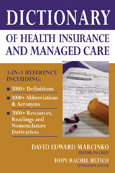
OMAP Unique Procedure Codes*
The HHS [Health and Human Services] Office of Medical Assistance Program’s [OMAP] unique procedure codes were originally listed in the appropriate service guides. The maintenance of these codes was the responsibility of OMAP. These procedure codes were reviewed as needed and deleted either when a program no longer exists or when other Healthcare Common Procedure Coding System [HCPCS] codes are created which fully describe the service. Most of the unique codes were created to meet the needs of specialized services or programs. OMAP’s unique procedure codes were all five character configurations with the following alpha/numeric combinations: four numeric/one alpha (e.g., 7300Y); three numeric, two alpha (e.g., 206EP); two alpha/three numeric (e.g., BA311); or three alpha/two numeric (e.g., VIS01).
Current Dental Terminology (CDT procedure codes)
The American Dental Association’s (ADA) Code on Dental Procedures and Nomenclature is contained in the CDT-3 user guide. The maintenance of these codes is the responsibility of the Council on Dental Benefit Programs with consultation from: Blue Cross and Blue Shield Association, the Health Insurance Association of America, the Health Care Financing Association, National Electronic Information Corporation, and the American Dental Association recognized dental specialty organizations. The ADA updates the user guide approximately every five years. CDT codes are five-character, alpha-numeric configurations (e.g., D2110). Contact the American Dental Association to obtain a current copy of the CDT-3 Users Manual.
* Note: Due to HIPAA (Health Insurance Portability and Accountability Act) requirements, Medicare Local codes and OMAP Unique codes were replaced with national standard procedure codes.

Assessment
For more terminology information, please refer to the Dictionary of Health Economics and Finance.
www.HealthDictionarySeries.com
Conclusion
And so, your thoughts and comments on this Medical Executive-Post are appreciated?
Link: http://feeds.feedburner.com/HealthcareFinancialsthePostForcxos
Speaker: If you need a moderator or speaker for an upcoming event, Dr. David E. Marcinko; MBA – Publisher-in-Chief of the Executive-Post – is available for seminar or speaking engagements. Contact: MarcinkoAdvisors@msn.com or Bio: www.stpub.com/pubs/authors/MARCINKO.htm
Get our Widget: Get this widget!
Our Other Print Books and Related Information Sources:
Practice Management: http://www.springerpub.com/prod.aspx?prod_id=23759
Physician Financial Planning: http://www.jbpub.com/catalog/0763745790
Medical Risk Management: http://www.jbpub.com/catalog/9780763733421
Healthcare Organizations: www.HealthcareFinancials.com
Health Administration Terms: www.HealthDictionarySeries.com
Physician Advisors: www.CertifiedMedicalPlanner.com
Subscribe Now: Did you like this Medical Executive-Post, or find it helpful, interesting and informative? Want to get the latest ME-Ps delivered to your email box each morning? Just subscribe using the link below. You can unsubscribe at any time. Security is assured.
Link: http://feeds.feedburner.com/HealthcareFinancialsthePostForcxos
Share this:

Filed under: "Doctors Only", Book Reviews, Career Development, Glossary Terms, Health Insurance, iMBA, Inc., Practice Management, Recommended Books | Tagged: ADA, American Dental Association, American Dental Association's Code on Dental Procedures and Nomenclature, Blue Cross and Blue Shield Association, CDT, CMS, current dental terminology codes, HCPCS, Health Care Financing Association, Health Insurance Association of America, Healthcare Common Procedure Coding System, HHS, HIPAA, National Electronic Information Corporation, OMAP |
 The Leading Business Education Network for Doctors, Financial Advisors and Health Industry Consultants
CDT Codes = ADA Cash Cow
Today I received an unsolicited package from the ADA Business Resources in the mail that must have cost at least a hundred thousand dollars to send to every ADA member. It is for CareCredit, a dentistry financing company owned not by the ADA, but by GE.
The ad is a multi-page document with impressive graphics and high quality printing on heavy, glossy paper. I read through every word of the ad and noticed that there are two important missing items which ADA members should know about.
First of all, ADA members deserve to be told that the ADA’s partner in this business venture which profits off of members is GE. This has always been a bad business relationship that brings shame to ADA members. If one simply googles “CareCredit complaints,” one can read hundreds of consumer complaints about GE’s heartless financial subsidiary. Is CareCredit as good as the ADA can do? Does the ADA need the kickbacks that desperately? Are the CDT codes no longer bringing in enough income?
(“Gasp! Don’t tell me he’s going after that ADA money maker! First it was ADA/IDM. Now it’s CareCredit/GE. And next, the special bastard is threatening to attack ADA copyrighted material! Tell me it’s not so!”)
Here is the second issue I have with the advertisement that was published using members’ dues, as well as profits from CDT codes. NOWHERE in the ad does it warn dentists that in signing a contract with CareCredit, one signs up for FTC’s Red Flags Rule.
How can our own professional organization do this to its members? The Red Flags Rule compliancy deadline, including its expensive liabilities, is November 1, 2009. Why would one want to sign on for that?
The Journal of the American Dental Association failed to publish my July 28th letter that I posted on Medical Executive-Post titled “Journal of the American Dental Association [Letter to the Editor]”
https://healthcarefinancials.wordpress.com/2009/07/28/journal-of-the-american-dental-association-letter-to-the-editor/
I compared the ADA’s level of leadership accountability to AARP’s. The ADA lost.
I hoped it would be published in the JADA in time for the national meeting in Hawaii. I have been an ADA member since 1982. Nobody even acknowledged receiving my letter. How good is that?
D. Kellus Pruitt; DDS
LikeLike
Hello Darrell,
Ditto for the AMA and their CPT codes; about $6 million dollars annually.
Jennifer
LikeLike
I imagine you underestimate the AMA’s profits by half, Jennifer. I bet nobody from the AMA will ever say so, though.
How will principals, doctors and patients, ever save money on interoperable eHRs with so many silent stakeholders to satisfy?
D. Kellus Pruitt; DDS
LikeLike
Darrell,
Did you know that billing for medical services at a higher reimbursement level than is justified by the services actually provided constitutes a false claim?
In US vs Lorenzo, a dentist billed for a separate oral examination for cancer that was actually only a part of his regular dental check-up examination. So-called “upcoding” is a basis for a False Claims Act charge, and it can take a number of forms.
For example, if a patient comes into the office for a diagnostic test or a session of some therapy that is not personally delivered by a practitioner, and the practitioner tacks on an office visit to the bill, the claim is obviously false.
A more troublesome area of potential liability, however, arises when the code and the actual intensity of care match up but the documentation does not. The practitioner may have done all the care needed to justify the billing code, but if the documentation is lacking, the claim may still be considered false.
Hope Hetico; RN, MHA
http://www.HealthcareFinancials.com
[Managing Editor]
LikeLike
Complications in the transfer of payment always favors stakeholders rather than principals.
The ICD 10 might just raise the national GDP.
Darrell
LikeLike
Recently, a discouraging article titled “Software companies may pass on CDT licensing fee to dentists” was posted on ADA.org. (No byline).
http://www.ada.org/news/6034.aspx
I’ve learned to pay attention to ADA articles that have no byline. Unlike happy articles like those announcing donations from CareCredit and Delta Dental that are fun to sign, the anonymous ones often contain bad news for ADA members that can no longer be kept hidden:
“The Code on Dental Procedures and Nomenclature is valuable ADA intellectual property and a source of non-dues revenue from licensed users.
For many years the ADA has charged a number of different users an annual license fee for their business use of the Code. These users include third-party payers, speakers and practice management system vendors.”
Dr. Christopher Smiley, chair of the ADA Council on Dental Benefit Programs, delivers the bad news: “We’ve recently received calls from dentists who say their practice system vendors have been charging their clients a separate fee for the Code, claiming that the ADA now requires them to pass their licensing costs on.” He adds, “Dentists should know that this is not true—the ADA has never included a cost pass-through in a Code license.”
He doesn’t bother to point out that dentists have always paid the ADA’s licensing fee as part of the price for EDRs. The ADA’s problem is with modern transparency. Not ADA CDT licensees. Nevertheless, Dr. Smiley says “a licensee may decide to unbundle its annual maintenance fee by, for example, separate billing for a Code update. The ADA has no legal right to prevent this.”
ADA non-dues income comes from the same source as dues income – clueless ADA members. In turn, the increased cost in providing dental care is paid by dental patients who are even more clueless than their dentists. And for what?
If my suspicions are correct, the malfeasance committed by ADA officials will eventually come out in the open. And depending on how quickly ADA leaders accept personal accountability for the huge HIPAA blunder, the institution’s abandonment of American dental patients’ interests could even make national news.
Regardless, of what happens in the next few months, do you know what makes me most happy about the imminent conclusion of this 5 year adventure? Four, over-ripened sweet words for ADA officials: I told you so.
D. Kellus Pruitt DDS
LikeLike