







 Support our online development, and advance our onground research initiatives in free market economics, as we seek to showcase the brightest Next-Gen minds.
THE ME-P DISCLAIMER: Posts, comments and opinions do not necessarily represent iMBA, Inc., but become our property after submission. Copyright © 2006 to-date. iMBA, Inc allows colleges, universities, medical and financial professionals and related clinics, hospitals and non-profit healthcare organizations to distribute our proprietary essays, photos, videos, audios and other documents; etc. However, please review copyright and usage information for each individual asset before submission to us, and/or placement on your publication or web site. Attestation references, citations and/or back-links are required. All other assets are property of the individual copyright holder.
Support our online development, and advance our onground research initiatives in free market economics, as we seek to showcase the brightest Next-Gen minds.
THE ME-P DISCLAIMER: Posts, comments and opinions do not necessarily represent iMBA, Inc., but become our property after submission. Copyright © 2006 to-date. iMBA, Inc allows colleges, universities, medical and financial professionals and related clinics, hospitals and non-profit healthcare organizations to distribute our proprietary essays, photos, videos, audios and other documents; etc. However, please review copyright and usage information for each individual asset before submission to us, and/or placement on your publication or web site. Attestation references, citations and/or back-links are required. All other assets are property of the individual copyright holder.


Innovative Funding in Difficult Times
[Staff Reporters]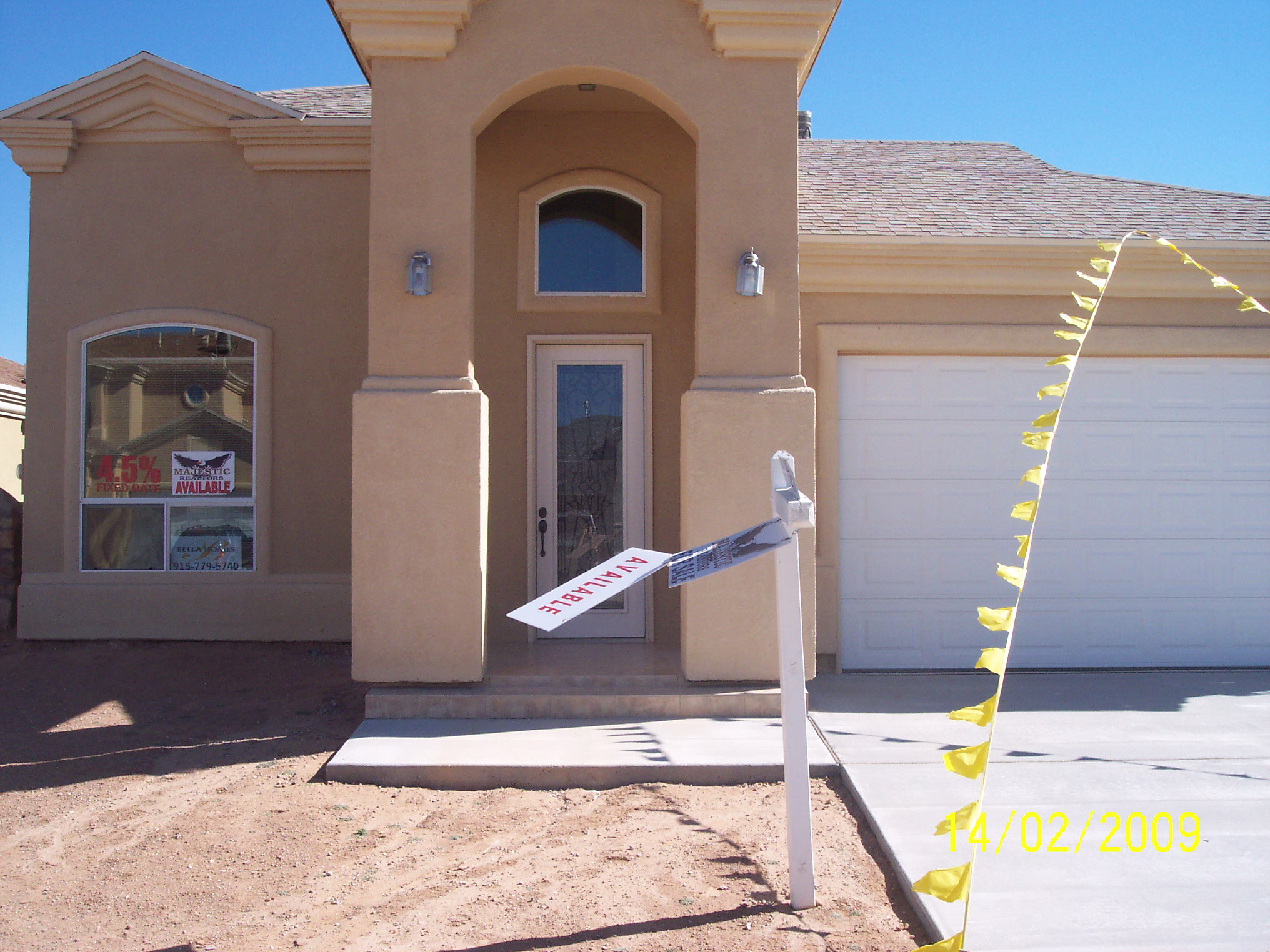
Real estate can be acquired by physician-investors, even in these difficult times, in many different ways. For example, through direct purchase, participation in a real estate partnership vehicle with other investors [such as general partnerships, limited partnerships, various corporate entities, and, in most states, limited liability companies (LLCs), and investments in real estate securities such as Real Estate Investment Trusts (REITs).
Section 1031
Real estate also can be acquired through tax-deferred exchanges under Section 1031 of the IRS Code, in which a client “trades” one investment property for another, deferring the taxes due on the sale of the exchanged property. This allows the doctor to reinvest “pre-tax” dollars in another real estate investment, potentially benefiting from appreciation on the larger investment. The physician may also exchange one larger property into two or several smaller properties and pay tax consequences on each one as those properties are sold as cash is needed.
Tax and Risk Management
The way a physician takes ownership of real estate will affect the tax treatment of income and profit. For example, having an LLC-owned investment property will provide him/her with the same protection from individual liability as a corporation, while allowing him/her to have much more favorable tax treatment. Real estate can be bought directly by purchasing it in the following manners:
1. Paying cash,
2. Paying a cash down payment and acquiring a loan,
3. Paying cash to the seller who is financing, or
4. Financing the purchase by using either new real estate financing, seller financing, or credit borrowing when a lender is willing to loan solely on the strength of, and the financial statement of, the borrower, or a combination of these.
Trading and Secured Loans
Real estate also can be acquired by trading other valuable assets, sometimes in combination with financing. A client can obtain interests in real estate by making loans on real estate assets that are secured by a deed of trust or a mortgage. Another method is to invest as a participating lender. In such an instance the borrower needs to agree to provide equity kickers or participation in cash flow whereby the lender (doctor) can benefit directly from the real estate performance.
Equity Participation Plans
With an equity participation, the physician-investor can profit or gain from the sale of the property, sometimes in a preferential manner (i.e., the money the doctor loaned is returned, with interest, and a predetermined percentage or portion of the gain is given to the owner/borrower before distribution of the sales proceeds). Similarly, the doctor can participate in annual cash flow, giving a fixed or a fluctuating amount depending on the performance of the investment. As a lender, many of the benefits of ownership of real estate are not available to the MD, but the doctor should have a security interest in the property and no direct responsibility for operation of the real estate investment. Also, if possible, the borrower should provide additional guarantees of performance. The borrower could do this by providing additional security, such as the deeds of trust on the borrower’s house, other real-estate, and the acquired property; bank letters of credit; or guarantees of performance from people other than the party to whom the money is originally loaned.
Assessment
If a physician-investor is considering acquiring or lending on real estate, s/he should check with his professional advisors, including accountants and attorneys, before proceeding. The doctor’s attorney should review any contracts or agreements before the client signs anything. The physician also will need a due diligence review to ascertain both the relative values of the real estate on which money is being loaned and the borrower’s track record and background.
Conclusion
Your thoughts and comments on this ME-P are appreciated. Feel free to review our top-left column, and top-right sidebar materials, links, URLs and related websites, too. Then, subscribe to the ME-P. It is fast, free and secure.
Link: http://feeds.feedburner.com/HealthcareFinancialsthePostForcxos
Speaker: If you need a moderator or speaker for an upcoming event, Dr. David E. Marcinko; MBA – Publisher-in-Chief of the Medical Executive-Post – is available for seminar or speaking engagements. Contact: MarcinkoAdvisors@msn.com
OUR OTHER PRINT BOOKS AND RELATED INFORMATION SOURCES:
DICTIONARIES: http://www.springerpub.com/Search/marcinko
- PHYSICIANS: www.MedicalBusinessAdvisors.com
- PRACTICES: www.BusinessofMedicalPractice.com
- HOSPITALS: http://www.crcpress.com/product/isbn/9781466558731
- CLINICS: http://www.crcpress.com/product/isbn/9781439879900
- ADVISORS: www.CertifiedMedicalPlanner.org
- BLOG: www.MedicalExecutivePost.com
- FINANCE:Financial Planning for Physicians and Advisors
- INSURANCE:Risk Management and Insurance Strategies for Physicians and Advisors


Share this:

Filed under: Alternative Investments, Financial Planning, Funding Basics, Investing, Risk Management | Tagged: Alternative Investments, borrowers, credit borrowing, credit ratings, homes, houses, IRS Section 1031, lenders, loans, mortgages, properties, property exchange, real estate financing, real estate investment, real-estate, REITS, seller financing |


Home Buyer Tax Credit Extended to September 30th 2010
With the sharp decline in home values and an increasing number of foreclosures, Congress created a temporary tax credit for first-time buyers of $8,000 and for other purchasers of new homes of $6,500. In order to qualify for the credit, it was necessary to have a signed contract for purchase by April 30, 2010. The initial deadline for closing contracts signed on or before that date was June 30.
Because many home purchasers could not meet this deadline, the House and Senate have passed the Home Buyer Assistance and Improvement Act of 2010 (H.R. 5623). This bill extends the time for closing from June 30 to September 30.
Chief Economist of the National Association of Realtors Lawrence Yun indicated that this extension of the deadline would be very important. He noted that about “180,000 homebuyers who signed a contract in good faith to receive the tax credit may not be able to finalize by the end of June due to delays in the mortgage process, particularly for short sales.”
These individuals with contracts by April 30 will now be able to close by September 30 and receive their tax credits.
Editor’s Note: When the tax credit lapsed for new purchases in May, housing sales declined significantly. Congress hopes that extending the deadline to close and benefit from the credit will help the housing recovery to continue.
Source: Children’s Home Society of Florida Foundation
LikeLike
President Signs Homebuyer Extension
On July 2, 2010, President Obama signed the Homebuyer Assistance and Improvement Act of 2010 (H.R. 5623). The bill permits first-time homebuyers to qualify for the $8,000 credit. It also allows homeowners who have lived for five years in their current residence to purchase a new home and receive a credit of $6,500. In both cases, the buyers must have signed a contract for purchase by April 30.
Following the signature by the President, the IRS published a letter with explanations on how to claim the credit (IR-2010-80). New homeowners will file Form 5405, First-Time Homebuyer Credit and Repayment of the Credit. With this form the new purchaser should submit a copy of the settlement statement, normally Form HUD 1, Settlement Statement. For mobile home purchasers, include a copy of the retail sales contract.
Those existing home buyers who buy a new residence should include Form 1098, Mortgage Interest Statement for the past five years to show their ownership.
Further information on claiming the homebuyer credit is available on http://www.irs.gov and may be helpful to new physicians.
Source: Children’s Home Society of Florida Foundation
LikeLike
Mormons fleeced in $220M investment scam
The SEC Commission claims a father and son team bilked fellow LDS members in a huge real estate scheme.
http://www.investmentnews.com/article/20111216/FREE/111219938
Brad
LikeLike
Key points for healthcare real estate planning
A strategic and centralized approach to healthcare real estate results in significantly better overall financial and operational performance, according to a new report from global real estate services firm Jones Lang LaSalle.
http://www.healthcarefinancenews.com/news/5-key-points-healthcare-real-estate-planning?topic=03,10
Bradley
LikeLike
Surgery centers must keep keen eye on costs
For some physicians, opening their own surgery center is a dream come true.
http://www.lvrj.com/employment/doctors-look-to-control-outcomes-with-own-surgical-centers-staff-151286545.html?ref=545
However, especially in difficult economic times, these freedoms come at a price. Say what?
I owned and operated a private ASC, with 2 ORs and 4 CRNAs, for more than a decade. So, what else is new here?
Dr. David Edward Marcinko MBA
LikeLike
Residential Real Estate
According to The Wall Street Journal, four in 10 home buyers in 2014 paid in cash!
Xavier
LikeLike