







 Support our online development, and advance our onground research initiatives in free market economics, as we seek to showcase the brightest Next-Gen minds.
THE ME-P DISCLAIMER: Posts, comments and opinions do not necessarily represent iMBA, Inc., but become our property after submission. Copyright © 2006 to-date. iMBA, Inc allows colleges, universities, medical and financial professionals and related clinics, hospitals and non-profit healthcare organizations to distribute our proprietary essays, photos, videos, audios and other documents; etc. However, please review copyright and usage information for each individual asset before submission to us, and/or placement on your publication or web site. Attestation references, citations and/or back-links are required. All other assets are property of the individual copyright holder.
Support our online development, and advance our onground research initiatives in free market economics, as we seek to showcase the brightest Next-Gen minds.
THE ME-P DISCLAIMER: Posts, comments and opinions do not necessarily represent iMBA, Inc., but become our property after submission. Copyright © 2006 to-date. iMBA, Inc allows colleges, universities, medical and financial professionals and related clinics, hospitals and non-profit healthcare organizations to distribute our proprietary essays, photos, videos, audios and other documents; etc. However, please review copyright and usage information for each individual asset before submission to us, and/or placement on your publication or web site. Attestation references, citations and/or back-links are required. All other assets are property of the individual copyright holder.


A Medical Inventor and Bio-Engineering Pioneer
By Dr. David Edward Marcinko; FACFAS, MBA, CMP™
[Publisher-in-Chief]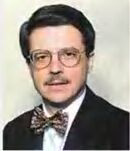
OK; let’s get this right out into the open. Although I did a little reconstructive bone and traumatic joint surgery in my career, I am not a cardio-vascular surgeon, nor am I a cardiologist, or even a nephrologist. But, I did treat more than my share of diabetic, alcoholic or other patients on renal dialysis and was well aware of the immense contributions of Willem Kolff to the profession. Therefore, I was saddened to learn of his recent passing at age 97. You see, Dr. Kolff not only developed the well known blood cleansing process that is now portable; he was also originator of the artificial-heart.
About Willem Johan Kolff; MD
When Willem Johan Kolff began work on the artificial kidney, few believed it possible. To draw a patient’s blood, cleanse it of toxins and return it seemed beyond the expertise of the most sophisticated medical centers. In the beginning, Dr. Kolff had no resources to draw upon. He was the sole internist in a small-town hospital, in the middle of the occupied Netherlands, during wartime. Materials were in short supply. The first 15 patients to receive the treatment failed to recover, but Dr. Kolff persevered. The dialysis treatment he pioneered and since perfected saved the lives, and limbs, of hundreds of thousands of patients, all over the world.
Link: http://www.achievement.org/autodoc/page/kol0int-1
Assessment
Dr. Kolff went on to design the heart-lung machine that made open-heart surgery possible. He pioneered artificial eyes, ears and arms, and for 25 years led the effort to develop the artificial heart. In 1982, a heart designed under his supervision was successfully implanted in Barney Clark, an event that captured the imagination of the world. All this was accomplished before such medical media stars as Dr. Robert Jarvik [Kolff’s student at the University of Utah in 1971] were lauded on TV, and then ignominiously dissed, for never having actually practiced medicine on real patients. In fact, Jarvik never pursued a medical internship, is not licensed to practice and can’t legally prescribe. Just imagine that!
Link: https://healthcarefinancials.wordpress.com/2008/02/14/the-jarvik-affair
Channel Surfing the ME-P
Have you visited our other topic channels? Established to facilitate idea exchange and link our community together, the value of these topics is dependent upon your input. Please take a minute to visit. And, to prevent that annoying spam, we ask that you register. It is fast, free and secure.
Conclusion
Your thoughts and comments on this ME-P are appreciated. Feel free to review our top-left column, and top-right sidebar materials, links, URLs and related websites, too. Then, subscribe to the ME-P. It is fast, free and secure.
Speaker: If you need a moderator or speaker for an upcoming event, Dr. David E. Marcinko; MBA – Publisher-in-Chief of the Medical Executive-Post – is available for seminar or speaking engagements. Contact: MarcinkoAdvisors@msn.com
OUR OTHER PRINT BOOKS AND RELATED INFORMATION SOURCES:
- PRACTICES: www.BusinessofMedicalPractice.com
- HOSPITALS: http://www.crcpress.com/product/isbn/9781466558731
- CLINICS: http://www.crcpress.com/product/isbn/9781439879900
- ADVISORS: www.CertifiedMedicalPlanner.org
- FINANCE: Financial Planning for Physicians and Advisors
- INSURANCE: Risk Management and Insurance Strategies for Physicians and Advisors
- Dictionary of Health Economics and Finance
- Dictionary of Health Information Technology and Security
- Dictionary of Health Insurance and Managed Care


Share this:

Filed under: "Doctors Only", Op-Editorials, Quality Initiatives | Tagged: alcoholism, artificial heart, david marcinko, diabetes, hospitals, nephrologist, renal dialysis, surgery, Willem Kolff | Leave a comment »



 The Leading Business Education Network for Doctors, Financial Advisors and Health Industry Consultants