





 Support our online development, and advance our onground research initiatives in free market economics, as we seek to showcase the brightest Next-Gen minds.
THE ME-P DISCLAIMER: Posts, comments and opinions do not necessarily represent iMBA, Inc., but become our property after submission. Copyright © 2006 to-date. iMBA, Inc allows colleges, universities, medical and financial professionals and related clinics, hospitals and non-profit healthcare organizations to distribute our proprietary essays, photos, videos, audios and other documents; etc. However, please review copyright and usage information for each individual asset before submission to us, and/or placement on your publication or web site. Attestation references, citations and/or back-links are required. All other assets are property of the individual copyright holder.
Support our online development, and advance our onground research initiatives in free market economics, as we seek to showcase the brightest Next-Gen minds.
THE ME-P DISCLAIMER: Posts, comments and opinions do not necessarily represent iMBA, Inc., but become our property after submission. Copyright © 2006 to-date. iMBA, Inc allows colleges, universities, medical and financial professionals and related clinics, hospitals and non-profit healthcare organizations to distribute our proprietary essays, photos, videos, audios and other documents; etc. However, please review copyright and usage information for each individual asset before submission to us, and/or placement on your publication or web site. Attestation references, citations and/or back-links are required. All other assets are property of the individual copyright holder.


About “InQuickER”
[By Dr. David E. Marcinko; MBA, CMP™]
[By Prof. Hope Rachel Hetico; RN, MHA, CMP™]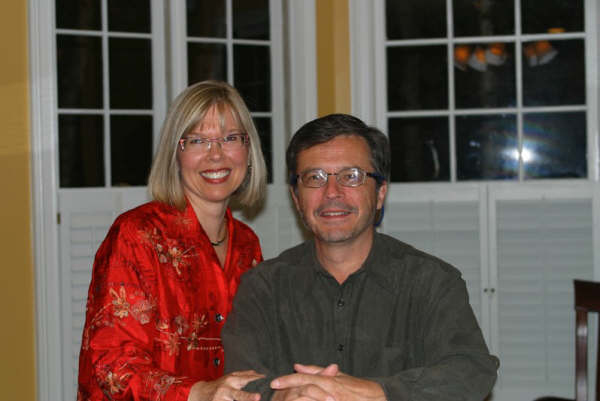
Visits to emergency rooms climbed to a record high of 119.2 million in 2006, up from 115 million in 2005; with an average of 227 visits per minute, according to a new report from the Centers for Disease Control and Prevention [CDC]. So, it’s not surprising that “InQuickER” is a new service of Emory-Adventist Hospital [EAH] in Smyrna, Georgia.
How it Works
According to the hospital’s website, patient may schedule his or her trip to the emergency room through an open access process that takes three steps.
1. Reserve an appointment time through the InQuickER website when emergency care for a non-life-threatening issue exists. The site shows the soonest possible time to be seen. You can either reserve that time or choose another time more convenient for you; up to 6 hours later than the first available time. All you need do is briefly describe the injury or illness, and the ER will waiting for you to arrive.
2. Time is saved by filling-out an online registration with medical history that includes allergies and current medications. This allows patient’s to bypass front-desk registration and go straight to a ready and waiting treatment room upon arriving.
3. A printable appointment confirmation slip, with driving directions, completes the online transaction.
Guaranteed or it’s Free
Be seen in 15 minutes or less — or you don’t pay!
The cost for this premium service is $24.99. Of course, regular charges for diagnosis, treatment, consultants and admission may still apply. Online visitors are admonished to visit the website for additional terms and conditions.
The SIMPLE Button
The average time spent waiting for treatment in an emergency room in a United States is 3.2 hours. So, EAH wants to make life easier by allowing patients to wait in the comfort of their own homes. According to EAH, it’s really that simple.
But, is it really as easy as the SIMPLE button of retail giant, Staples, might suggest? Or, is this an economic operating-room, in-patient, or out-patient-poaching tactic?
Three Key Points
1. Patients don’t always know whether their conditions constitute an emergency.
2. What’s the optimal rate of “inappropriate” ER visits as the surgical analogy of appendicitis comes quickly to mind.
3. How harmful are inappropriate ER visits, as opposed to ER closure due to unfunded EMTALA or other initiatives?
Open-Access Scheduling
The concept of open-access scheduling is not new, and should be embraced more than it is by the medical community. Many feel the public is clamoring for it. But, is it appropriate for emergency room use? Or, is this an artifice just a clocked marketing gimmick.
And, what new term shall we give to “real emergency rooms?” Can the public even marginally discern the term’s meaning, given the gross abuse of other potentially life saving healthcare mechanisms like 911 calls; as demonstrated by one Reginald Peterson, of Florida, who called the service – twice – because his spicy Italian Subway® sandwich was missing its sauce?
One also wonders how local hospital staff members, and surrounding primary care doctors, internists and related front line practitioners; as well as walk-in and retail-clinics feel about this service; competitive threat or community boon? Is the idea of a non-emergent – emergency – an oxy-moron; muck like the term “jumbo-shrimp”?
Patient Computer Access?
Do the usual homeless, tired, hungry and mentally deranged patients typically seen in inner city ERs have computer access, or “homes to wait in comfort?”
And, wasn’t the managed care revolution, with its no and low-cost copays supposed to put an end to “ER-squatters?”
Assessment
We believe this business strategy will work because of its affluent location, in North-West Atlanta. It will save the ER money and earn income for the hospital. Suburban patients and soccer moms will also love it. But, as young students, we worked in the ER admissions departments of the old Cook County Hospital in Chicago; and Pennsylvania Hospital on Pine Street in Center-City Philadelphia [City of Brotherly Love]. And, we don’t think the scheduling concept would work there; then or now; nor here at Grady Memorial Hospital in Atlanta. Please opine and comment.
Conclusion
Your thoughts and comments on this ME-P are appreciated. Feel free to review our top-left column, and top-right sidebar materials, links, URLs and related websites, too. Then, subscribe to the ME-P. It is fast, free and secure.
Link: http://feeds.feedburner.com/HealthcareFinancialsthePostForcxos
Speaker: If you need a moderator or speaker for an upcoming event, Dr. David E. Marcinko; MBA – Publisher-in-Chief of the Medical Executive-Post – is available for seminar or speaking engagements. Contact: MarcinkoAdvisors@msn.com



***
Share this:

Filed under: Career Development, Health Economics, Health Law & Policy, Information Technology, Managed Care, Practice Management | Tagged: ER | 12 Comments »
 The Leading Business Education Network for Doctors, Financial Advisors and Health Industry Consultants