






 Support our online development, and advance our onground research initiatives in free market economics, as we seek to showcase the brightest Next-Gen minds.
THE ME-P DISCLAIMER: Posts, comments and opinions do not necessarily represent iMBA, Inc., but become our property after submission. Copyright © 2006 to-date. iMBA, Inc allows colleges, universities, medical and financial professionals and related clinics, hospitals and non-profit healthcare organizations to distribute our proprietary essays, photos, videos, audios and other documents; etc. However, please review copyright and usage information for each individual asset before submission to us, and/or placement on your publication or web site. Attestation references, citations and/or back-links are required. All other assets are property of the individual copyright holder.
Support our online development, and advance our onground research initiatives in free market economics, as we seek to showcase the brightest Next-Gen minds.
THE ME-P DISCLAIMER: Posts, comments and opinions do not necessarily represent iMBA, Inc., but become our property after submission. Copyright © 2006 to-date. iMBA, Inc allows colleges, universities, medical and financial professionals and related clinics, hospitals and non-profit healthcare organizations to distribute our proprietary essays, photos, videos, audios and other documents; etc. However, please review copyright and usage information for each individual asset before submission to us, and/or placement on your publication or web site. Attestation references, citations and/or back-links are required. All other assets are property of the individual copyright holder.


It’s all about Flow [Part 1]
By Dr. David Edward Marcinko; MBA, CMP™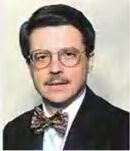
[Publisher-in-Chief]
Most patients don’t have a clue about how doctors get paid; it’s not by magic.
Yet, a number of different steps occur during the processing of a medical claim as can be seen in the flow chart below. Each step within the process can be mapped out and each is subject to claim payment-or-claim abortion or rejection.
The steps can also be subjected to a number of variables, depending on a number of different factors including staff competency, time, outside vendors, information management, management decisions in general, or regulatory requirements.
Flow Chart
Of course, any one of these points could lapse, causing the entire process to break down. Like treating patients, when the process has no variables, the end result is very predictable, such as in the flow chart below. When there are variations the end results can be very different.
Treatment is Only the Beginning
Doctor gets the chart
↓
Doctor evaluates patient
↓
Doctor documents visit
↓
Doctor marks billing slip
↓
Doctor gives slip to patient
↓
Patient gives slip to billing clerk
↓
Billing clerk enters information into computer
↓
Office staff submits claim to insurer
↓
Third party payor/Insurance company receives claim
↓
Insurer adjudicates claim
↓
Reimbursement transmitted (electronic or mail) to practice
↓
Reimbursement entered (posted) into practice management system by office staff.
There are two things that you need understand in order to implement an efficient compliance program.
1] The first is the processes needed to run the organization and the desired outcome of those processes.
2] And second, if the process needs improvement, what can be done to make the process function better?
Office Efficiency Checks
Most small medical and dental practices or clinics have a number of checks and balances in place to control variation.
In an example of an inefficient operation, one practice had the physician-executive open every envelope that came into the office. This was done because of a concern that if someone else did it, then something could go missing.
However, the doctor would then turn the mail over to the payment posting person, who would enter claims into the system. Sometimes the person who entered the claims would become busy with other duties and would not be able to enter claims for a couple of days. This proved to be an inefficient method of managing the billing process for the organization.
Assessment
A possible solution is to have one person in the front office to open the mail, organize the contents based on who needs to deal with the information (such as claims, refusals, or requests), and then distribute them accordingly.
More on how physcians get paid.
Part 2: https://medicalexecutivepost.com/wp-content/uploads/2010/02/how-doctors-get-paid-in-2010.pdf
Conclusion
Your thoughts and comments on this ME-P are appreciated. Feel free to review our top-left column, and top-right sidebar materials, links, URLs and related websites, too. Then, subscribe to the ME-P. It is fast, free and secure.
Link: http://feeds.feedburner.com/HealthcareFinancialsthePostForcxos
Speaker: If you need a moderator or speaker for an upcoming event, Dr. David E. Marcinko; MBA – Publisher-in-Chief of the Medical Executive-Post – is available for seminar or speaking engagements. Contact: MarcinkoAdvisors@msn.com
***


Invite Dr. Marcinko
Share this:

Filed under: Health Economics, Health Insurance, Healthcare Finance, Practice Management | Tagged: super bill | 18 Comments »



 The Leading Business Education Network for Doctors, Financial Advisors and Health Industry Consultants