Some Thoughts While Touring Southeast Asia

[By Rick Kahler CFP® MS ChFC CCIM]
On my recent tour of Southeast Asia, I was taken by the vibrancy of the economies in Hong Kong and Singapore. I knew the 2011 Index of Economic Freedom rated those two countries the first and second most free economies in the world, but experiencing it made a big impact on me.
The Index of Economic Freedom
The index ranks each country on 10 different components including government spending, corruption, labor, and business. While the U.S. is behind Hong Kong and Singapore in most of the categories, our ninth place ranking in the world is largely due to our being far behind in two categories: fiscal freedom (the tax burden) and government spending.
On Tax Brackets
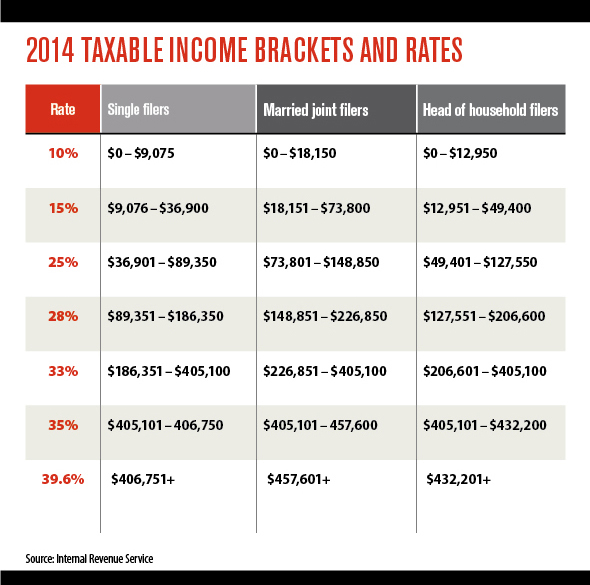
The top tax bracket is 15% in Hong Kong and 20% in Singapore. Since these are city-states, that is equivalent to our local, state, and federal taxes. Local people I talked with—none of whom were in the top 1%—seemed rather proud of that. The top brackets in the U.S. are two to three times higher. Our rates will be significantly above 50% (state and local) on top wage earners a year from now when the tax code reverts to 2001 levels and the Obamacare surtaxes kick in.
That raised the eyebrows of most Asians I spoke with. Their jaws dropped when I explained that growing numbers of Americans view upper income earners with disdain and demand we raise their taxes because they are not paying their “fair share.” One person wondered if America has lost her way.

A Fair-Share!
What is “one’s fair share?” I’ve asked a number of people advocating “the rich need to pay their fair share” exactly how much the top income bracket should be. I usually can’t get them to name a specific number. When they do, the median is usually 50%. When I point out that in most states the top income earners are already paying 50%, they usually harrumph in disbelief.
The bottom line is that if I suggest others need to pay “their fair share” I am simply saying they need to pay more in taxes. Fairness is really not part of the equation. If it was, we would raise taxes on the bottom 50% who contribute just 3% of their income to the national revenue. Would asking them to pay more, too, say 6% or 9%, be asking too much? The answer is obvious. Raising my taxes is bad public and economic policy, but raising your taxes is “fair.”
Speaking of fairness, I will note that the top income earners are paying a lower percentage of their income in taxes than they used to. The wealthiest 0.01% saw their overall federal income taxes fall from 42.9% in 1979 to 31.5% in 2005. (The New York Times, September 21, 2011). That doesn’t change the fact that top income earners pay an exponentially higher amount of their income than those in the lower brackets. Even at today’s lower brackets, they pay two to three times more than their peers in the most economically free countries.
If we wanted to follow the model of Singapore and Hong Kong to more economic prosperity, we would do well to have an informed discussion about fairness; much like informed patient consent for surgery.
The Purpose of Taxation
Maybe it should start with defining the purpose of taxation. If we believe taxes are meant to provide public services like roads and defense that are used by all, we might view “fairness” differently than if we believe taxes are intended to provide services like medical care or even basic income to those who don’t or can’t take care of themselves.
Assessment
In fairness to those at all income levels, this is a discussion all Americans ought to have – even her doctors.
The Author
Rick Kahler, Certified Financial Planner®, MS, ChFC, CCIM, is the founder and president of Kahler Financial Group in Rapid City, South Dakota. In 2009 his firm was named by Wealth Manager as the largest financial planning firm in a seven-state area. A pioneer in the evolution of integrating financial psychology with traditional financial planning profession, Rick is a co-founder of the five-day intensive Healing Money Issues Workshop offered by Onsite Workshops of Nashville, Tennessee. He is one of only a handful of planners nationwide who partner with professional coaches and financial therapists to deliver financial coaching and therapy to his clients. Learn more at KahlerFinancial.com
Conclusion
As always, your thoughts and comments on this ME-P are appreciated. Feel free to review our top-left column, and top-right sidebar materials, links, URLs and related websites, too. Then, subscribe to the ME-P. It is fast, free and secure.
Link: http://feeds.feedburner.com/HealthcareFinancialsthePostForcxos
Speaker: If you need a moderator or speaker for an upcoming event, Dr. David E. Marcinko; MBA – Publisher-in-Chief of the Medical Executive-Post – is available for seminar or speaking engagements. Contact: MarcinkoAdvisors@msn.com
Our Other Print Books and Related Information Sources:
Health Dictionary Series: http://www.springerpub.com/Search/marcinko
Practice Management: http://www.springerpub.com/product/9780826105752
Physician Financial Planning: http://www.jbpub.com/catalog/0763745790
Medical Risk Management: http://www.jbpub.com/catalog/9780763733421
Healthcare Organizations: www.HealthcareFinancials.com
Physician Advisors: www.CertifiedMedicalPlanner.com
Subscribe Now: Did you like this Medical Executive-Post, or find it helpful, interesting and informative? Want to get the latest ME-Ps delivered to your email box each morning? Just subscribe using the link below. You can unsubscribe at any time. Security is assured.
Link: http://feeds.feedburner.com/HealthcareFinancialsthePostForcxos
Sponsors Welcomed: And, credible sponsors and like-minded advertisers are always welcomed.
Link: https://healthcarefinancials.wordpress.com/2007/11/11/advertise



Filed under: Op-Editorials, Taxation | Tagged: Essay on Tax Fairness, Hong Kong, Index of Economic Freedom, marginal tax rates, Rick Kahler CFP®, Singapore, tax brackets. | 1 Comment »





 Support our online development, and advance our onground research initiatives in free market economics, as we seek to showcase the brightest Next-Gen minds.
THE ME-P DISCLAIMER: Posts, comments and opinions do not necessarily represent iMBA, Inc., but become our property after submission. Copyright © 2006 to-date. iMBA, Inc allows colleges, universities, medical and financial professionals and related clinics, hospitals and non-profit healthcare organizations to distribute our proprietary essays, photos, videos, audios and other documents; etc. However, please review copyright and usage information for each individual asset before submission to us, and/or placement on your publication or web site. Attestation references, citations and/or back-links are required. All other assets are property of the individual copyright holder.
Support our online development, and advance our onground research initiatives in free market economics, as we seek to showcase the brightest Next-Gen minds.
THE ME-P DISCLAIMER: Posts, comments and opinions do not necessarily represent iMBA, Inc., but become our property after submission. Copyright © 2006 to-date. iMBA, Inc allows colleges, universities, medical and financial professionals and related clinics, hospitals and non-profit healthcare organizations to distribute our proprietary essays, photos, videos, audios and other documents; etc. However, please review copyright and usage information for each individual asset before submission to us, and/or placement on your publication or web site. Attestation references, citations and/or back-links are required. All other assets are property of the individual copyright holder.







 The Leading Business Education Network for Doctors, Financial Advisors and Health Industry Consultants
