







 Support our online development, and advance our onground research initiatives in free market economics, as we seek to showcase the brightest Next-Gen minds.
THE ME-P DISCLAIMER: Posts, comments and opinions do not necessarily represent iMBA, Inc., but become our property after submission. Copyright © 2006 to-date. iMBA, Inc allows colleges, universities, medical and financial professionals and related clinics, hospitals and non-profit healthcare organizations to distribute our proprietary essays, photos, videos, audios and other documents; etc. However, please review copyright and usage information for each individual asset before submission to us, and/or placement on your publication or web site. Attestation references, citations and/or back-links are required. All other assets are property of the individual copyright holder.
Support our online development, and advance our onground research initiatives in free market economics, as we seek to showcase the brightest Next-Gen minds.
THE ME-P DISCLAIMER: Posts, comments and opinions do not necessarily represent iMBA, Inc., but become our property after submission. Copyright © 2006 to-date. iMBA, Inc allows colleges, universities, medical and financial professionals and related clinics, hospitals and non-profit healthcare organizations to distribute our proprietary essays, photos, videos, audios and other documents; etc. However, please review copyright and usage information for each individual asset before submission to us, and/or placement on your publication or web site. Attestation references, citations and/or back-links are required. All other assets are property of the individual copyright holder.


By Staff Reporters
***
***
Risk-On
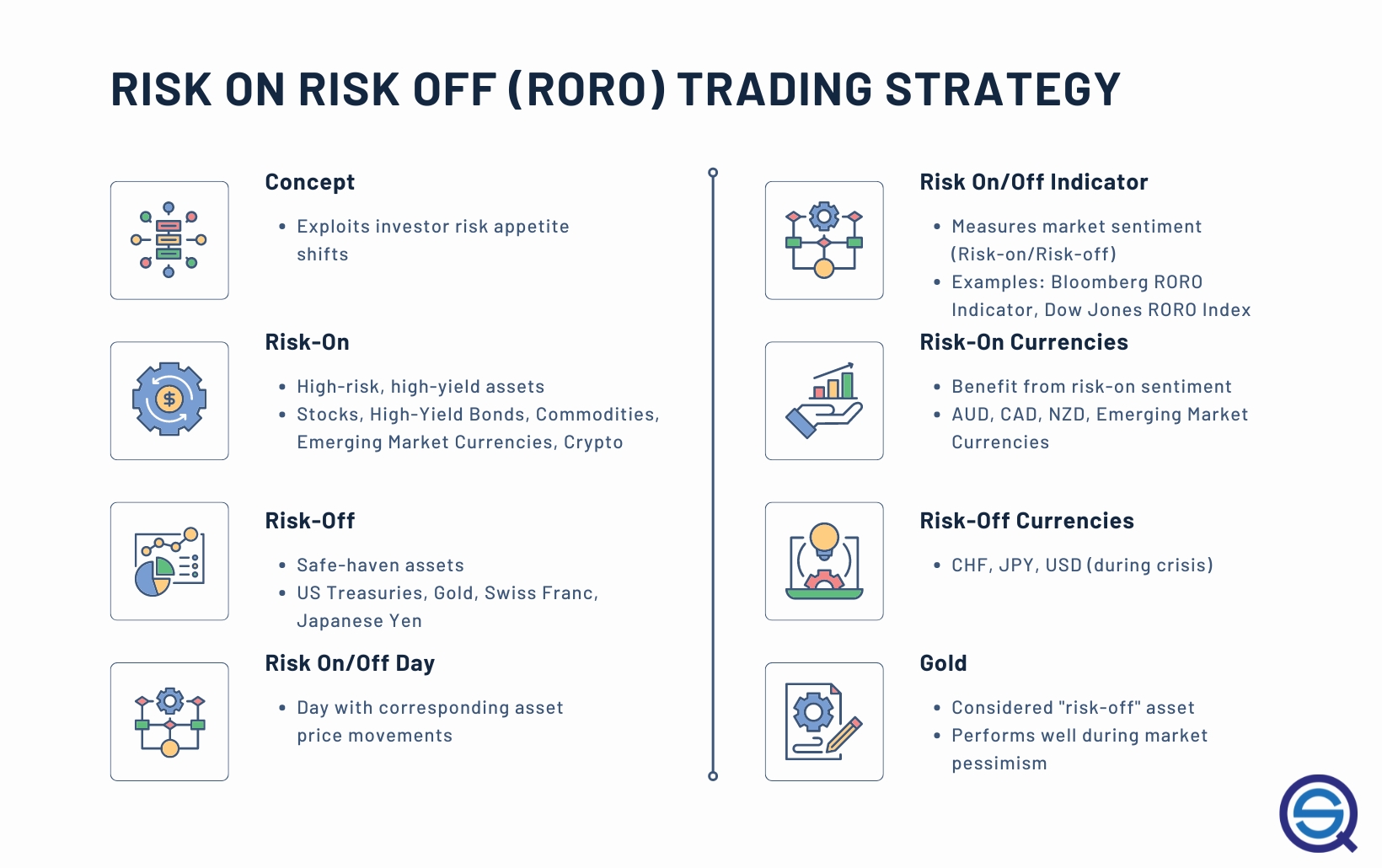
RO = Asset prices commonly follow the risk sentiment of the market. Investors look for changing sentiment through corporate earnings, macro-economic data, and global central bank action. An increase in the stock market or where stocks outperform bonds is said to be a risk-on environment.
Risk-on environments can be carried by expanding corporate earnings, optimistic economic outlook, accommodative central bank policies, and speculation. As the market displays strong influential fundamentals, investors perceive less risk about the market and its outlook.
Risk-Off
ROff = When stocks are selling off, and investors run for shelter to bonds or gold, the environment is said to be risk-off. Risk-off environments can be caused by widespread corporate earnings downgrades, contracting or slowing economic data, and uncertain central bank policy.
Just like the stock market rises in a risk-on environment, a drop in the stock market equals a risk-off environment. Investors jump from risky assets and pile into high grade bonds, U.S. Treasury bonds, gold, cash, and other safe havens
Risk-On Risk-Off?
Risk-on-risk-off investing relies on and is driven by changes in investor risk tolerance. Risk-on-risk-off (RORO) can also sway changes in investment activity in response to economic patterns. When risk is low, investors tend to engage in higher-risk investments. Investors tend to gravitate toward lower-risk investments when risk is perceived to be high.
Note: Thanks to Chat GPT.
COMMENTS APPRECIATED
Subscribe and Refer
***
***
Share this:

Filed under: Funding Basics, Financial Planning, Experts Invited, Glossary Terms | Tagged: Investing, finance, stock market, stocks, risk, stock trading, personal-finance, risk on, risk off, RORO, trading strategies | Leave a comment »
 The Leading Business Education Network for Doctors, Financial Advisors and Health Industry Consultants