






 Support our online development, and advance our onground research initiatives in free market economics, as we seek to showcase the brightest Next-Gen minds.
THE ME-P DISCLAIMER: Posts, comments and opinions do not necessarily represent iMBA, Inc., but become our property after submission. Copyright © 2006 to-date. iMBA, Inc allows colleges, universities, medical and financial professionals and related clinics, hospitals and non-profit healthcare organizations to distribute our proprietary essays, photos, videos, audios and other documents; etc. However, please review copyright and usage information for each individual asset before submission to us, and/or placement on your publication or web site. Attestation references, citations and/or back-links are required. All other assets are property of the individual copyright holder.
Support our online development, and advance our onground research initiatives in free market economics, as we seek to showcase the brightest Next-Gen minds.
THE ME-P DISCLAIMER: Posts, comments and opinions do not necessarily represent iMBA, Inc., but become our property after submission. Copyright © 2006 to-date. iMBA, Inc allows colleges, universities, medical and financial professionals and related clinics, hospitals and non-profit healthcare organizations to distribute our proprietary essays, photos, videos, audios and other documents; etc. However, please review copyright and usage information for each individual asset before submission to us, and/or placement on your publication or web site. Attestation references, citations and/or back-links are required. All other assets are property of the individual copyright holder.


Taking Cloud Computing to a New Level
[By GE Healthcare IT]
American healthcare has by far the most expensive system in the world, but few would argue that it’s also the most efficient. A study published in the Journal of American Medical Association found that almost 40 percent of patients are misdiagnosed in primary care1. Another report by the American College of Physicians discovered that unnecessary testing and medical procedures, and extra days in the hospital caused by wrong diagnosis could add up to $800 billion per year2.
That’s close to a third of all U.S. healthcare costs. “There is a lot of waste in the system,” says Jeanine Banks, general manager of marketing at GE Healthcare IT. “We want to help rein in the costs and make the system far more efficient.”
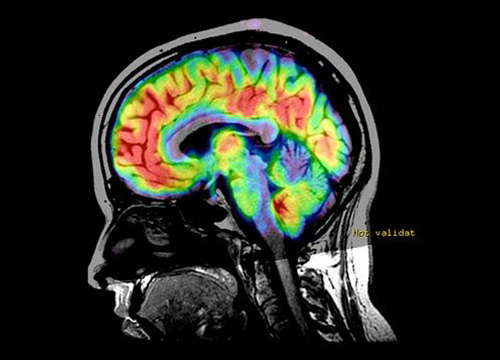
That’s not just talk. Engineers at GE Healthcare IT are developing a new “cloud imaging” solution that will allow doctors to create a professional profile, store patient images and data together in one place, view 3D images from anywhere, and access intuitive analytics. “It’s like LinkedIn professional networking meets diagnostic imaging,” Banks says. “It’s all about virtually limitless computing, storage and collaboration on tough cases to help healthcare teams make more informed decisions.”
***
***
Banks says that the information physicians need to make diagnoses is often fragmented and sits in siloes. The new platform, GE’s Cloud Imaging solution, allows doctors to exchange images and use social digital tools to share cases with each other over a network instead of distributing CDs, as common practice now. “They can open their browser, click on a link and share quickly,” she says.
Banks says that GE intends to give hospitals the flexibility to host the system on their own servers, as a private cloud, or through GE’s public cloud environment. “We are committed to using industry standards to make it easy to connect medical devices, link with existing PACS (picture archiving and communication systems) and EMR (electronic medical records environments), and enable consistent access to a flourishing ecosystem of apps,” she says. “Providers don’t need more silos of data.” GE’s first Cloud Imaging pilot site is the Kadlec Health System in Washington State. Kadlec is helping evaluate the platform ahead of plans to demonstrate the new solution during the annual meeting of the Radiological Society of North America in December. “It’s an opportunity for them to use it inside their health system and give us feedback,” Banks says.
***

***
For Banks, this is the beginning of a new healthcare revolution. “What if together with industry we could help physicians reduce waste?” she asks. “We could process that information, learn from past diagnostic decisions and store the data all in the cloud to inform future decisions. One day, we could tap into knowledge based on cases from around the world.”
Assessment
That’s just brilliant.
Citations:
1 Journal of American Medical Association 2012
2 Reuter’s, citing study by American College of Physicians
Conclusion
Your thoughts and comments on this ME-P are appreciated. Feel free to review our top-left column, and top-right sidebar materials, links, URLs and related websites, too. Then, subscribe to the ME-P. It is fast, free and secure.
Speaker: If you need a moderator or speaker for an upcoming event, Dr. David E. Marcinko; MBA – Publisher-in-Chief of the Medical Executive-Post – is available for seminar or speaking engagements. Contact: MarcinkoAdvisors@msn.com
OUR OTHER PRINT BOOKS AND RELATED INFORMATION SOURCES:
- PRACTICES: www.BusinessofMedicalPractice.com
- HOSPITALS: http://www.crcpress.com/product/isbn/9781466558731
- CLINICS: http://www.crcpress.com/product/isbn/9781439879900
- ADVISORS: www.CertifiedMedicalPlanner.org
- FINANCE: Financial Planning for Physicians and Advisors
- INSURANCE: Risk Management and Insurance Strategies for Physicians and Advisors
- Dictionary of Health Economics and Finance
- Dictionary of Health Information Technology and Security
- Dictionary of Health Insurance and Managed Care


Share this:

Filed under: Health Economics, Information Technology | Tagged: Cloud Imaging, EMRs, GE Healthcare, Jeanine Banks, PACS, Taking Cloud Computing to a New Level | 1 Comment »


 The Leading Business Education Network for Doctors, Financial Advisors and Health Industry Consultants