
My Opinion of eDRs and eDR Vendors
By D. Kellus Pruitt DDS
 Don’t cooperate with those you don’t trust, Doc.
eDR Stakeholders
If you allow Dentrix, the W. K. Kellogg Foundation, the ADA and other ambitious EDR stakeholders talk you into switching from paper dental records to digital before 2014, it will be the most regrettable business decision you have ever made.
PHI Breaches
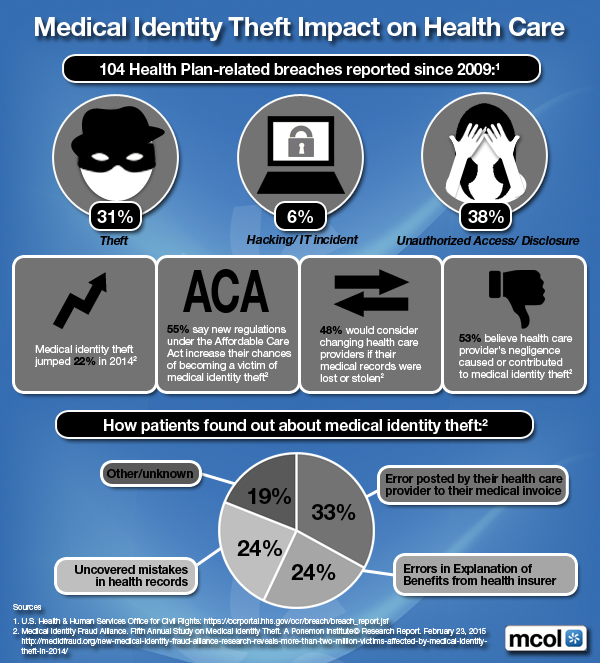
Regardless if a data breach of your patients’ Protected Health Information (PHI) is your fault or not, it can easily cause bankruptcy, and the odds aren’t in your favor. According to a recent Redspin study, the number of breaches doubled between 2010 and 2011. (See “Health data breaches up 97% in 2011” by Diana Manos in Healthcare IT News, February 1, 2012).
http://www.healthcareitnews.com/news/health-data-breaches-97-percent-2011
Procrastination and Late Adopters
So even if unlike Americans who enjoy freedom, professionalism keeps you from publicly expressing an opinion, there’s never been a better time to drag your feet in our usual way. Besides, what have you got to lose by waiting? If consumers prefer EDRs, don’t you think we would see dentists touting their safety in their ads?
RedSpin
Daniel W. Berger, President and CEO of Redspin, is quoted in Diana Manos’ article: “Information security breach is the Achilles’ heel of PHI. Without further protective measures, data breaches will continue to increase and could derail the implementation, adoption and usage of electronic health records.” So why allow selfish EDR stakeholders who cannot be held accountable for harming your patients rush you into buying their favorite technology?
Note that the ineffective “further protective measures” will make EDRs even more expensive compared to paper dental records – allowing paper dentists to charge less than paperless practices, while still making more profit. Indeed, Doc. What have you got to lose by waiting?
Over the last 6 years, virtually all of my predictions about HIPAA have been right, and following the recent Redspin report, I feel even stronger about this one: The national failure of HIPAA will become noticeable in dentistry first.

OCR Culture
Not only is the Rule ineffective at protecting dental patients’ identities, but the tedious, mostly worthless compliancy requirements are so unreasonably time consuming and costly that no dentist can ever be 100% compliant. What’s more, eager HIPAA auditors working on commission to enforce the Office of Civil Rights’ “culture of compliance,” can find a dentist “willfully negligent.” Is that not subjective? The fines for such an auditor’s opinion are obscene. If you unfortunately experience a data breach, you don’t want to lose even more sleep over an audit that you cannot win, do you? Dentists don’t have to take this.
Dentistry Is Billing Simple
Unlike the complex administrative tasks in physicians’ offices, the business of dentistry is simple: Billing involves ten times fewer patients and CDT codes cover fees for procedures only involving the lower third of patients’ faces. Ledger cards, pegboards and lots of carbon paper have functioned adequately and safely for busy dental practices for decades. Besides, computers still haven’t shortened the time it takes to do a technique-sensitive filling in a squirmy kid’s mouth. If the front desk is the bottleneck rather than the speed of the dentist’s hands, someone needs to brush up on their alphabet skills.
If you think you might miss your computer, now is a perfect time to encourage dentistry’s leaders to consider de-identifying EDRs… Or if like me, you aren’t a HIPAA covered entity, we could wait a little longer if you’d like. Within a year, Americans will be noticeably seeking dentists who don’t put their PHI on computers.
Assessment
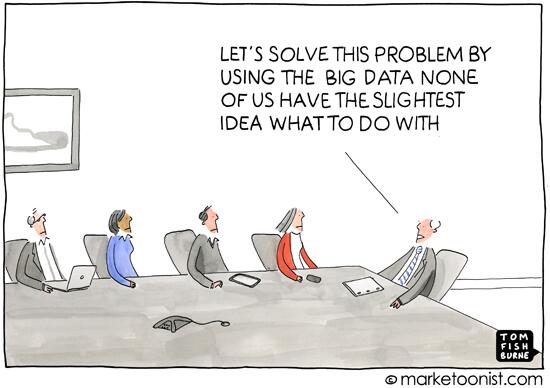
The hope for miracle discoveries derived from safely data-mining interoperable dental data doesn’t have to end like this, but I certainly don’t mind the windfall profits that expensive HIPAA regulations and patients’ fear of identity theft will bring to my practice.
Conclusion
Your thoughts and comments on this ME-P are appreciated. Feel free to review our top-left column, and top-right sidebar materials, links, URLs and related websites, too. Then, subscribe to the ME-P. It is fast, free and secure.
Link: http://feeds.feedburner.com/HealthcareFinancialsthePostForcxos
Speaker: If you need a moderator or speaker for an upcoming event, Dr. David E. Marcinko; MBA – Publisher-in-Chief of the Medical Executive-Post – is available for seminar or speaking engagements. Contact: MarcinkoAdvisors@msn.com
OUR OTHER PRINT BOOKS AND RELATED INFORMATION SOURCES:
DICTIONARIES: http://www.springerpub.com/Search/marcinko
PHYSICIANS: www.MedicalBusinessAdvisors.com
PRACTICES: www.BusinessofMedicalPractice.com
HOSPITALS: http://www.crcpress.com/product/isbn/9781466558731
CLINICS: http://www.crcpress.com/product/isbn/9781439879900
BLOG: www.MedicalExecutivePost.com
FINANCE: Financial Planning for Physicians and Advisors
INSURANCE: Risk Management and Insurance Strategies for Physicians and Advisors

Filed under: Information Technology, Pruitt's Platform | Tagged: ADA, D. Kellus Pruitt DDS, Dentrix, Diana Manos, Doc!, Don't cooperate with eDR Vendors, health data breaches, HIPAA, PHI, protected health information, Redspin, W. K. Kellogg Foundation | 25 Comments »





 Support our online development, and advance our onground research initiatives in free market economics, as we seek to showcase the brightest Next-Gen minds.
THE ME-P DISCLAIMER: Posts, comments and opinions do not necessarily represent iMBA, Inc., but become our property after submission. Copyright © 2006 to-date. iMBA, Inc allows colleges, universities, medical and financial professionals and related clinics, hospitals and non-profit healthcare organizations to distribute our proprietary essays, photos, videos, audios and other documents; etc. However, please review copyright and usage information for each individual asset before submission to us, and/or placement on your publication or web site. Attestation references, citations and/or back-links are required. All other assets are property of the individual copyright holder.
Support our online development, and advance our onground research initiatives in free market economics, as we seek to showcase the brightest Next-Gen minds.
THE ME-P DISCLAIMER: Posts, comments and opinions do not necessarily represent iMBA, Inc., but become our property after submission. Copyright © 2006 to-date. iMBA, Inc allows colleges, universities, medical and financial professionals and related clinics, hospitals and non-profit healthcare organizations to distribute our proprietary essays, photos, videos, audios and other documents; etc. However, please review copyright and usage information for each individual asset before submission to us, and/or placement on your publication or web site. Attestation references, citations and/or back-links are required. All other assets are property of the individual copyright holder.












 The Leading Business Education Network for Doctors, Financial Advisors and Health Industry Consultants