







 Support our online development, and advance our onground research initiatives in free market economics, as we seek to showcase the brightest Next-Gen minds.
THE ME-P DISCLAIMER: Posts, comments and opinions do not necessarily represent iMBA, Inc., but become our property after submission. Copyright © 2006 to-date. iMBA, Inc allows colleges, universities, medical and financial professionals and related clinics, hospitals and non-profit healthcare organizations to distribute our proprietary essays, photos, videos, audios and other documents; etc. However, please review copyright and usage information for each individual asset before submission to us, and/or placement on your publication or web site. Attestation references, citations and/or back-links are required. All other assets are property of the individual copyright holder.
Support our online development, and advance our onground research initiatives in free market economics, as we seek to showcase the brightest Next-Gen minds.
THE ME-P DISCLAIMER: Posts, comments and opinions do not necessarily represent iMBA, Inc., but become our property after submission. Copyright © 2006 to-date. iMBA, Inc allows colleges, universities, medical and financial professionals and related clinics, hospitals and non-profit healthcare organizations to distribute our proprietary essays, photos, videos, audios and other documents; etc. However, please review copyright and usage information for each individual asset before submission to us, and/or placement on your publication or web site. Attestation references, citations and/or back-links are required. All other assets are property of the individual copyright holder.


By Dr. David Edward Marcinko; MBA MEd
SPONSOR: http://www.MarcinkoAssociates.com
***
***
A Comparative Essay
Search visibility has become one of the defining forces shaping how individuals discover information, services, and businesses. Two major frameworks—Search Engine Optimization (SEO) and Geolocation Optimization (GEO)—play central roles in this landscape. Although they share the common goal of increasing discoverability, they operate through different mechanisms and influence different user behaviors. Understanding the distinctions between SEO and GEO is essential for recognizing how each contributes to digital strategy and how they function together rather than in opposition.
SEO, or Search Engine Optimization, focuses on improving a website’s position within search engine results pages. Its foundation lies in aligning content with user intent, enhancing technical performance, and building authority through relevance and trust. SEO is fundamentally content‑driven. It rewards depth, clarity, and usefulness. When a user searches for broad topics—such as how to solve a problem, compare products, or learn a concept—SEO determines which pages appear first. The process involves optimizing keywords, structuring pages for readability, improving site speed, and ensuring that search engines can easily crawl and index content. In this sense, SEO is a long‑term strategy that builds visibility across wide audiences, unconstrained by geography.
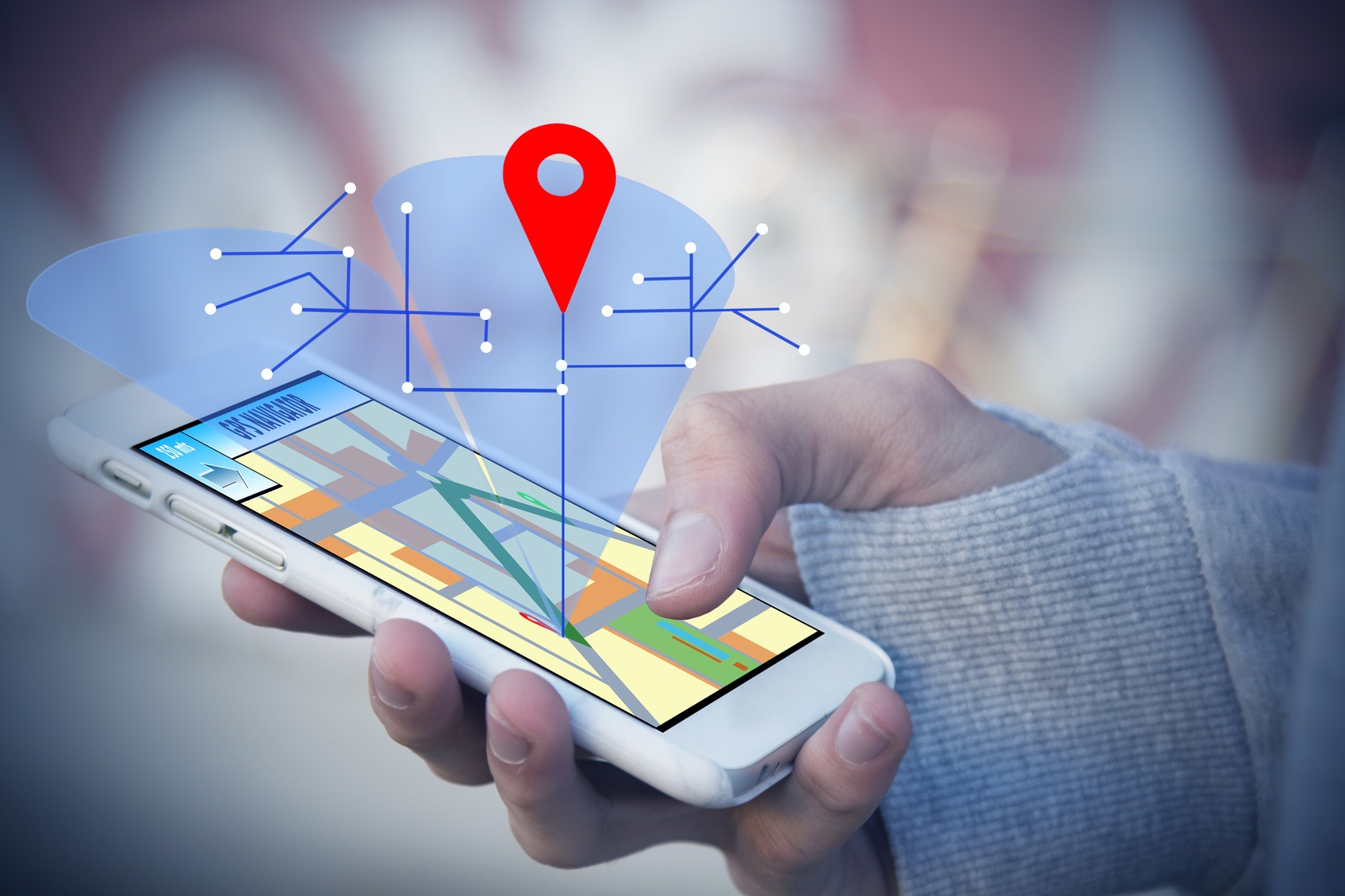
GEO, or Geolocation Optimization, operates on a different axis. Instead of prioritizing content authority, GEO prioritizes proximity. It determines which businesses or services appear when a user performs a location‑based search, whether explicitly (“restaurants near me”) or implicitly (“coffee shop”). GEO relies on signals such as GPS data, IP addresses, mobile device location, and local business listings. It emphasizes accuracy of business information, consistency across directories, and relevance to the user’s immediate surroundings. GEO is therefore indispensable for physical businesses, service providers, and any organization that depends on local engagement. While SEO casts a wide net, GEO narrows the focus to the user’s physical context.
The contrast between SEO and GEO becomes clearer when examining the types of user intent they serve. SEO caters to informational and transactional intent that is not tied to a specific location. A user researching a topic, comparing software tools, or reading product reviews is engaging with content that SEO elevates. GEO, by contrast, serves immediate, action‑oriented intent. A user looking for a nearby mechanic, pharmacy, or restaurant is not seeking extensive content but rather the closest and most relevant option. This difference in intent shapes the ranking factors each system values. SEO rewards authority, depth, and relevance, while GEO rewards proximity, accuracy, and local engagement.
Another distinction lies in the competitive environment each creates. SEO places a website in competition with the entire internet. A business must outperform global competitors to rank highly for broad queries. GEO, however, creates a smaller competitive field. A business competes primarily with others in its geographic radius. This localized competition means that even small businesses can achieve strong visibility if their local signals are well‑optimized. Yet this also means that GEO is highly sensitive to real‑time factors such as user movement, time of day, and device location.
Despite these differences, SEO and GEO are not opposing forces. In practice, they reinforce each other. Strong SEO enhances a business’s credibility, which can indirectly support GEO performance by signaling trustworthiness. Likewise, strong GEO signals—such as positive local reviews and accurate business information—can strengthen a site’s overall authority, benefiting SEO. Together, they create a comprehensive visibility strategy: SEO attracts broad audiences, while GEO captures nearby users ready to take immediate action.
A deeper shift is occurring as search engines increasingly personalize results. Even general queries now incorporate location‑based filtering. This means GEO is no longer a niche tactic but a default layer of search behavior. Businesses must therefore treat GEO as an integral part of their visibility strategy, not an optional addition. At the same time, SEO remains essential for building long‑term authority and reaching audiences beyond a local radius. The interplay between the two reflects the evolving nature of search itself, where relevance is determined not only by content quality but also by context.
In conclusion, SEO and GEO represent two complementary dimensions of digital discoverability. SEO builds reach, authority, and long‑term organic growth by optimizing content for broad search intent. GEO captures immediate, location‑driven demand by aligning visibility with the user’s physical environment. Understanding their differences clarifies why both are necessary. SEO brings people to the brand, while GEO brings people to the door. Their combined strength forms a complete strategy for navigating the modern search ecosystem.
COMMENTS APPRECIATED
SPEAKING: Dr. Marcinko will be speaking and lecturing, signing and opining, teaching and preaching, storming and performing at many locations throughout the USA this year! His tour of witty and serious pontifications may be scheduled on a planned or ad-hoc basis; for public or private meetings and gatherings; formally, informally, or over lunch or dinner. All medical societies, financial advisory firms or Broker-Dealers are encouraged to submit an RFP for speaking engagements: CONTACT: Ann Miller RN MHA at MarcinkoAdvisors@outlook.com -OR- http://www.MarcinkoAssociates.com
Like, Refer and Subscribe
HOSPITALS: http://www.crcpress.com/product/isbn/9781466558731
CLINICS: http://www.crcpress.com/product/isbn/9781439879900
ADVISORS: www.CertifiedMedicalPlanner.org
FINANCE:Financial Planning for Physicians and Advisors
INSURANCE:Risk Management and Insurance Strategies for Physicians and Advisors
Dictionary of Health Economics and Finance
Dictionary of Health Information Technology and Security
Dictionary of Health Insurance and Managed Care
***
Share this:

Filed under: iMBA, Inc. | Tagged: AI, digital marketing, geo, keyword-research, Marcinko, marketing, seo | Leave a comment »

