







 Support our online development, and advance our onground research initiatives in free market economics, as we seek to showcase the brightest Next-Gen minds.
THE ME-P DISCLAIMER: Posts, comments and opinions do not necessarily represent iMBA, Inc., but become our property after submission. Copyright © 2006 to-date. iMBA, Inc allows colleges, universities, medical and financial professionals and related clinics, hospitals and non-profit healthcare organizations to distribute our proprietary essays, photos, videos, audios and other documents; etc. However, please review copyright and usage information for each individual asset before submission to us, and/or placement on your publication or web site. Attestation references, citations and/or back-links are required. All other assets are property of the individual copyright holder.
Support our online development, and advance our onground research initiatives in free market economics, as we seek to showcase the brightest Next-Gen minds.
THE ME-P DISCLAIMER: Posts, comments and opinions do not necessarily represent iMBA, Inc., but become our property after submission. Copyright © 2006 to-date. iMBA, Inc allows colleges, universities, medical and financial professionals and related clinics, hospitals and non-profit healthcare organizations to distribute our proprietary essays, photos, videos, audios and other documents; etc. However, please review copyright and usage information for each individual asset before submission to us, and/or placement on your publication or web site. Attestation references, citations and/or back-links are required. All other assets are property of the individual copyright holder.


By Staff Reporters
***
***
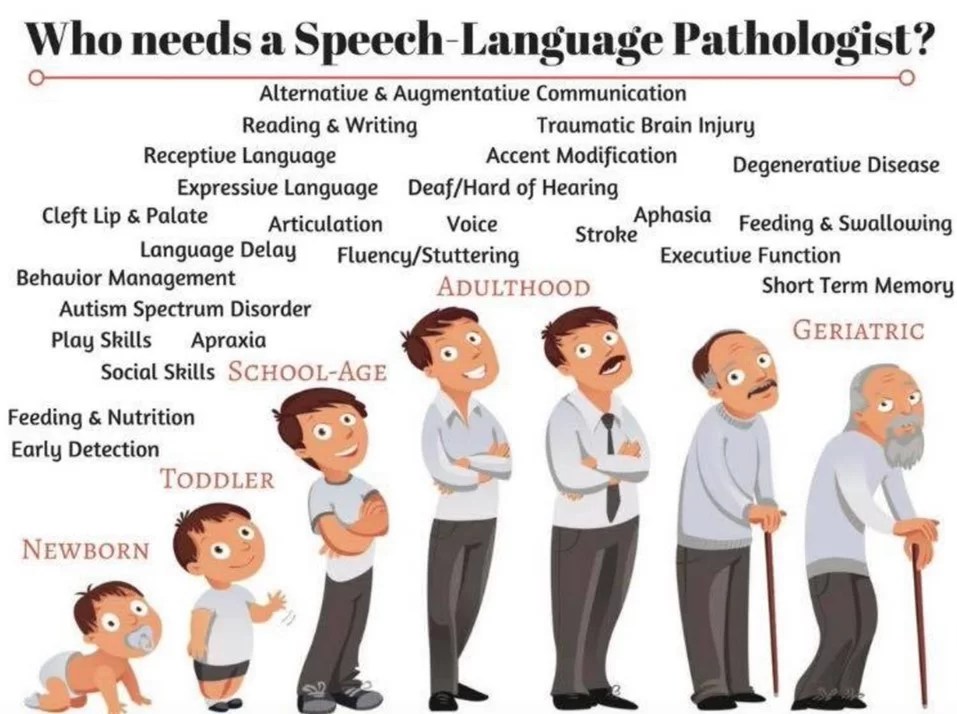
Becoming a speech language pathologist requires earning a master’s degree accredited by ASHA (American Speech-Language-Hearing Association). A doctorate will take a minimum of three years to complete in addition to the master’s degree. These subjects are typically studied:
- Aphasia
- Fluency disorders
- Craniofacial disorders
- Augmentative communication
- Disorders of phonology and articulation
- Swallowing disorders
- Cognitive effects on language
In speech pathology, there are several different choices when it comes to the most advanced degrees in the business:
- Doctor of Philosophy in Speech Pathology (PhD) – A PhD is the oldest and most traditional type of doctoral degree. This path is most closely associated with research and academic study of speech pathology. PhDs may be heavily invested in becoming professors in SLP or in performing high-level research that drives the field forward with groundbreaking new therapies or diagnostic programs.
- Doctor of Clinical Speech Pathology (SLP-D) – The SLP-D is the clinical doctorate in speech pathology. The education is just as advanced and in-depth as in a PhD program, but the focus is more on treatment and working directly with patients than with research and academics.
- Doctor of Education (EdD) – Although an EdD is not technically a degree specific to speech pathology, many practitioners consider earning an EdD as their most advanced degree. That’s because so many speech pathologists practice in education specifically. According to ASHA, 43 percent of SLPs work in schools.
The US Department of Labor [USDOL] does not track the specific salaries offered to doctoral-level speech pathologists. But according to 2020 data, the top ten percent in the profession can make more than $122,790 per year.
Again, while a PhD, EdE or SLP-D may use the title “Dr,” they are different than an MD/DO/DPM/DDS/DMD as they cannot write prescriptions or perform surgery.
COMMENTS APPRECIATED
Refer and Subscribe
***
***
Share this:

Filed under: "Doctors Only", Career Development, Ethics, Experts Invited, Glossary Terms, mental health | Tagged: (American Speech-Language-Hearing Association, aphasia, articulation, ASHA, cognitive language, EdD, fluency, Hearing Association, mental health, PhD, phonology, SLP-D, Speech Language, speech pathologist, swallowing, USDOL | Leave a comment »


 The Leading Business Education Network for Doctors, Financial Advisors and Health Industry Consultants