







 Support our online development, and advance our onground research initiatives in free market economics, as we seek to showcase the brightest Next-Gen minds.
THE ME-P DISCLAIMER: Posts, comments and opinions do not necessarily represent iMBA, Inc., but become our property after submission. Copyright © 2006 to-date. iMBA, Inc allows colleges, universities, medical and financial professionals and related clinics, hospitals and non-profit healthcare organizations to distribute our proprietary essays, photos, videos, audios and other documents; etc. However, please review copyright and usage information for each individual asset before submission to us, and/or placement on your publication or web site. Attestation references, citations and/or back-links are required. All other assets are property of the individual copyright holder.
Support our online development, and advance our onground research initiatives in free market economics, as we seek to showcase the brightest Next-Gen minds.
THE ME-P DISCLAIMER: Posts, comments and opinions do not necessarily represent iMBA, Inc., but become our property after submission. Copyright © 2006 to-date. iMBA, Inc allows colleges, universities, medical and financial professionals and related clinics, hospitals and non-profit healthcare organizations to distribute our proprietary essays, photos, videos, audios and other documents; etc. However, please review copyright and usage information for each individual asset before submission to us, and/or placement on your publication or web site. Attestation references, citations and/or back-links are required. All other assets are property of the individual copyright holder.


Dr. David Edward Marcinko; MBA MEd
SPONSOR: http://www.MarcinkoAssociates.com
***

***
Relevance in Investment Scenarios
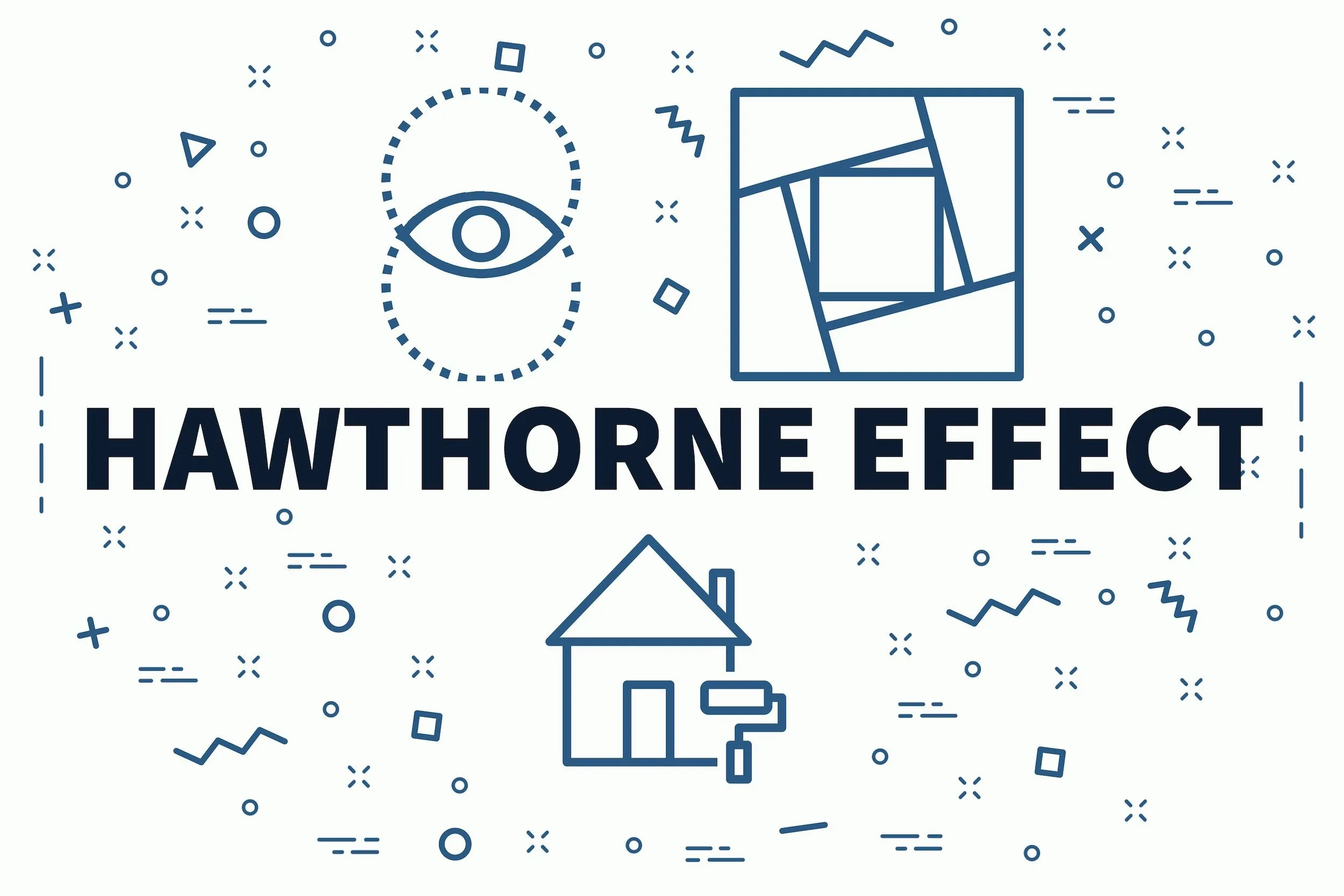
The Hawthorne effect is one of the most enduring concepts in behavioral science, often cited to explain how human behavior changes when individuals know they are being observed. Originating from studies conducted at the Western Electric Hawthorne Works in the 1920s and 1930s, the effect describes a phenomenon in which workers temporarily improved their performance simply because they were receiving attention from researchers. Although the original studies have been debated and reinterpreted over time, the core idea remains influential: observation itself can alter behavior. While the Hawthorne effect is typically discussed in organizational psychology and workplace productivity, its implications extend far beyond factory floors. One domain where its influence is surprisingly relevant is investment behavior.
At its heart, the Hawthorne effect is about awareness—specifically, the awareness of being monitored or evaluated. In investment contexts, this awareness can manifest in several ways. Investors, whether individuals or institutions, rarely operate in a vacuum. Their decisions are shaped not only by market data and financial models but also by social pressures, perceived scrutiny, and the expectations of others. When investors believe their actions are being watched—by peers, analysts, clients, or even the broader market—they may behave differently than they would in private. This shift in behavior can influence risk tolerance, decision‑making speed, asset selection, and even long‑term strategy.
***
***
One of the clearest examples of the Hawthorne effect in investing appears in the behavior of professional fund managers. These individuals are constantly evaluated through performance reports, rankings, and client reviews. Knowing that every decision is subject to scrutiny can lead to what is often called “window dressing,” where managers adjust their portfolios near reporting periods to create the appearance of prudent or successful investing. This behavior is not necessarily aligned with optimal long‑term strategy, but it reflects the psychological pressure of being observed. In this sense, the Hawthorne effect can distort investment decisions, pushing managers toward choices that are more about optics than outcomes.
Individual investors are not immune to similar pressures. The rise of social trading platforms, investment forums, and public portfolio‑sharing tools has created an environment where personal investment decisions can become performative. When investors know that others can see their trades or track their performance, they may take actions designed to impress or conform rather than actions grounded in their own risk preferences. This can lead to herd behavior, excessive trading, or reluctance to exit losing positions for fear of appearing incompetent. The awareness of observation subtly shifts the investor’s mindset from private decision‑making to public impression‑management.
Another area where the Hawthorne effect may appear is in experimental or educational investment settings. For example, when participants in a study or training program know their investment decisions are being monitored, they may behave more cautiously or more aggressively depending on what they believe the observers expect. This can skew the results of investment research, making it difficult to determine whether observed behaviors reflect genuine preferences or simply reactions to being watched. In this way, the Hawthorne effect can complicate the interpretation of financial experiments and simulations.
***
***
However, the influence of the Hawthorne effect in investment scenarios is not always negative. In some cases, the awareness of being observed can encourage more disciplined and thoughtful behavior. For instance, investors who know their performance is being tracked may be more diligent about research, more consistent in applying their strategies, or more cautious about impulsive decisions. This mirrors the original Hawthorne findings, where attention and monitoring led to temporary improvements in performance. In investing, the effect can serve as a form of accountability, nudging individuals toward better habits.
Still, the Hawthorne effect has limits. Financial markets are complex, and investment outcomes depend on countless variables beyond psychological awareness. While observation can influence behavior, it cannot override fundamental market forces or eliminate risk. Moreover, not all investors are equally sensitive to being watched. Experienced professionals may be less affected by scrutiny than novices, and some individuals may even thrive under observation. The effect is also difficult to measure precisely, especially in real‑world investment environments where countless factors interact simultaneously.
Despite these limitations, the Hawthorne effect offers a useful lens for understanding certain patterns in investment behavior. It highlights the social and psychological dimensions of financial decision‑making, reminding us that investors are human beings influenced by perception, attention, and social context. In a world where transparency, data tracking, and public performance metrics are increasingly common, the awareness of being observed is becoming a more significant factor in how people invest.
In conclusion, the Hawthorne effect does have relevance in investment scenarios, though its influence varies depending on context and individual differences. It can lead to distortions in behavior, such as performance‑driven portfolio adjustments or herd‑like trading patterns, but it can also promote discipline and accountability. Ultimately, understanding the Hawthorne effect helps illuminate the subtle ways in which observation shapes human behavior—even in the seemingly rational world of finance.
COMMENTS APPRECIATED
SPEAKING: Dr. Marcinko will be speaking and lecturing, signing and opining, teaching and preaching, storming and performing at many locations throughout the USA this year! His tour of witty and serious pontifications may be scheduled on a planned or ad-hoc basis; for public or private meetings and gatherings; formally, informally, or over lunch or dinner. All medical societies, financial advisory firms or Broker-Dealers are encouraged to submit an RFP for speaking engagements: CONTACT: Ann Miller RN MHA at MarcinkoAdvisors@outlook.com -OR- http://www.MarcinkoAssociates.com
Like, Refer and Subscribe
***
***
Share this:

Filed under: iMBA, Inc. | Tagged: david marcinko |
 The Leading Business Education Network for Doctors, Financial Advisors and Health Industry Consultants
Leave a comment