







 Support our online development, and advance our onground research initiatives in free market economics, as we seek to showcase the brightest Next-Gen minds.
THE ME-P DISCLAIMER: Posts, comments and opinions do not necessarily represent iMBA, Inc., but become our property after submission. Copyright © 2006 to-date. iMBA, Inc allows colleges, universities, medical and financial professionals and related clinics, hospitals and non-profit healthcare organizations to distribute our proprietary essays, photos, videos, audios and other documents; etc. However, please review copyright and usage information for each individual asset before submission to us, and/or placement on your publication or web site. Attestation references, citations and/or back-links are required. All other assets are property of the individual copyright holder.
Support our online development, and advance our onground research initiatives in free market economics, as we seek to showcase the brightest Next-Gen minds.
THE ME-P DISCLAIMER: Posts, comments and opinions do not necessarily represent iMBA, Inc., but become our property after submission. Copyright © 2006 to-date. iMBA, Inc allows colleges, universities, medical and financial professionals and related clinics, hospitals and non-profit healthcare organizations to distribute our proprietary essays, photos, videos, audios and other documents; etc. However, please review copyright and usage information for each individual asset before submission to us, and/or placement on your publication or web site. Attestation references, citations and/or back-links are required. All other assets are property of the individual copyright holder.


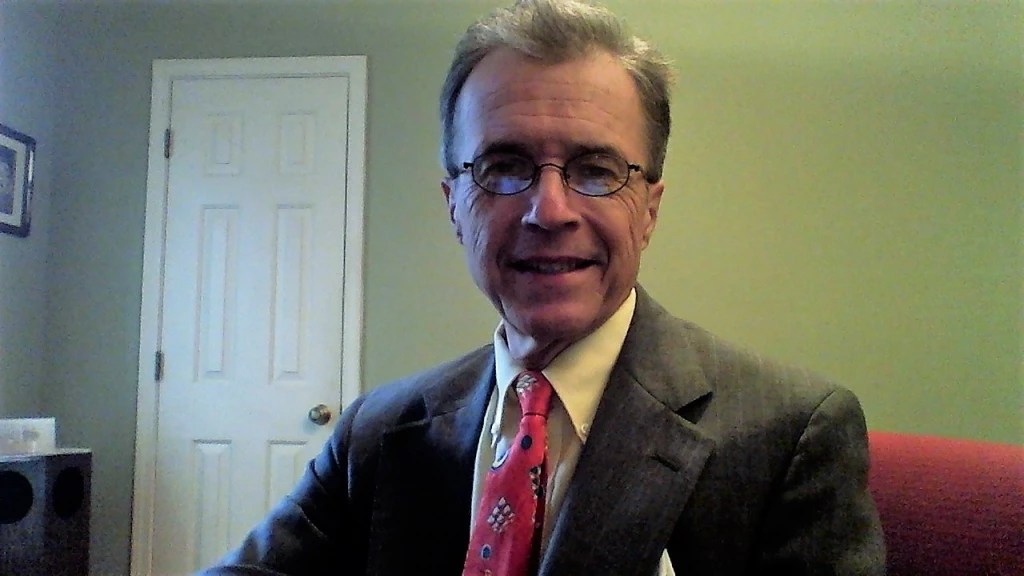
Dr. David Edward Marcinko; MBA MEd
SPONSOR: http://www.HealthDictionarySeries.org
***
***
Understanding Exchange in Modern Systems
Transactional economics centers on the idea that economic life is fundamentally built on exchanges—of goods, services, information, labor, and even social capital. Rather than treating markets as abstract systems governed solely by supply and demand curves, transactional economics focuses on the interactions between individuals and institutions, the incentives that shape those interactions, and the costs and benefits embedded in every exchange. It is a lens that brings the human element of economics into sharper focus, revealing how relationships, trust, and negotiation shape outcomes just as much as prices and quantities do.
At its core, transactional economics begins with the premise that every economic action is a transaction. A transaction is not merely the transfer of money for a product; it is a structured interaction that requires agreement, coordination, and mutual expectations. This perspective highlights the importance of transaction costs—the time, effort, and resources required to initiate, negotiate, and enforce an exchange. These costs can be as simple as the time spent comparing prices or as complex as the legal structures needed to enforce a contract. When transaction costs are high, markets become less efficient, and alternative forms of organization—such as firms, long‑term contracts, or informal networks—emerge to reduce friction.
***
***
One of the most compelling insights of transactional economics is how institutions evolve to minimize these costs. Firms exist not only to produce goods but also to streamline transactions. Within a firm, employees do not negotiate every task or responsibility; instead, authority structures and routines reduce the need for constant bargaining. Similarly, legal systems, regulatory frameworks, and cultural norms all function as tools that lower uncertainty and make transactions smoother. When rules are clear and enforcement is reliable, individuals and businesses can engage in exchanges with greater confidence, expanding the scope of economic activity.
Trust plays a central role in this framework. While traditional economic models often assume rational actors operating with perfect information, transactional economics acknowledges that real‑world exchanges are riddled with uncertainty. Trust reduces the need for costly monitoring and enforcement. A handshake agreement between long‑time partners can be more efficient than a detailed contract between strangers. In this sense, social relationships become economic assets. Communities with high levels of trust and strong social networks often experience more vibrant economic activity because the invisible infrastructure of cooperation lowers the cost of doing business.
Information is another critical component. Transactions require knowledge—about prices, quality, reliability, and alternatives. When information is unevenly distributed, one party may exploit the other, leading to market failures. Transactional economics highlights how mechanisms such as warranties, brand reputations, and third‑party certifications emerge to bridge information gaps. These tools help align expectations and reduce the risk of opportunistic behavior. In digital markets, platforms like online marketplaces or ride‑sharing apps serve as intermediaries that manage information flows, enforce rules, and build trust between anonymous participants.
***
***
The rise of digital technology has transformed transactional economics in profound ways. Online platforms dramatically reduce transaction costs by automating search, comparison, payment, and verification processes. They also create new forms of value by aggregating data and facilitating interactions at scale. However, these efficiencies come with new challenges. Platforms often gain disproportionate power, shaping the terms of transactions and extracting value through fees or data collection. The balance between efficiency and fairness becomes a central concern, as the structure of digital transactions can influence competition, labor conditions, and consumer autonomy.
Transactional economics also sheds light on the behavior of individuals within markets. People do not always act as perfectly rational agents; they rely on heuristics, emotions, and social cues. Negotiation, reciprocity, and reputation influence outcomes in ways that traditional models struggle to capture. By examining the micro‑level dynamics of exchange, transactional economics provides a richer understanding of how people actually behave when making economic decisions.
COMMENTS APPRECIATED
SPEAKING: Dr. Marcinko will be speaking and lecturing, signing and opining, teaching and preaching, storming and performing at many locations throughout the USA this year! His tour of witty and serious pontifications may be scheduled on a planned or ad-hoc basis; for public or private meetings and gatherings; formally, informally, or over lunch or dinner. All medical societies, financial advisory firms or Broker-Dealers are encouraged to submit an RFP for speaking engagements: CONTACT: Ann Miller RN MHA at MarcinkoAdvisors@outlook.com -OR- http://www.MarcinkoAssociates.com
Like, Refer and Subscribe
***
***
Share this:

Filed under: iMBA, Inc. | Tagged: david marcinko |
 The Leading Business Education Network for Doctors, Financial Advisors and Health Industry Consultants
Leave a comment