







 Support our online development, and advance our onground research initiatives in free market economics, as we seek to showcase the brightest Next-Gen minds.
THE ME-P DISCLAIMER: Posts, comments and opinions do not necessarily represent iMBA, Inc., but become our property after submission. Copyright © 2006 to-date. iMBA, Inc allows colleges, universities, medical and financial professionals and related clinics, hospitals and non-profit healthcare organizations to distribute our proprietary essays, photos, videos, audios and other documents; etc. However, please review copyright and usage information for each individual asset before submission to us, and/or placement on your publication or web site. Attestation references, citations and/or back-links are required. All other assets are property of the individual copyright holder.
Support our online development, and advance our onground research initiatives in free market economics, as we seek to showcase the brightest Next-Gen minds.
THE ME-P DISCLAIMER: Posts, comments and opinions do not necessarily represent iMBA, Inc., but become our property after submission. Copyright © 2006 to-date. iMBA, Inc allows colleges, universities, medical and financial professionals and related clinics, hospitals and non-profit healthcare organizations to distribute our proprietary essays, photos, videos, audios and other documents; etc. However, please review copyright and usage information for each individual asset before submission to us, and/or placement on your publication or web site. Attestation references, citations and/or back-links are required. All other assets are property of the individual copyright holder.


Now Apple must show what’s next after iPhone X

By Vitaliy Katsenelson CFA
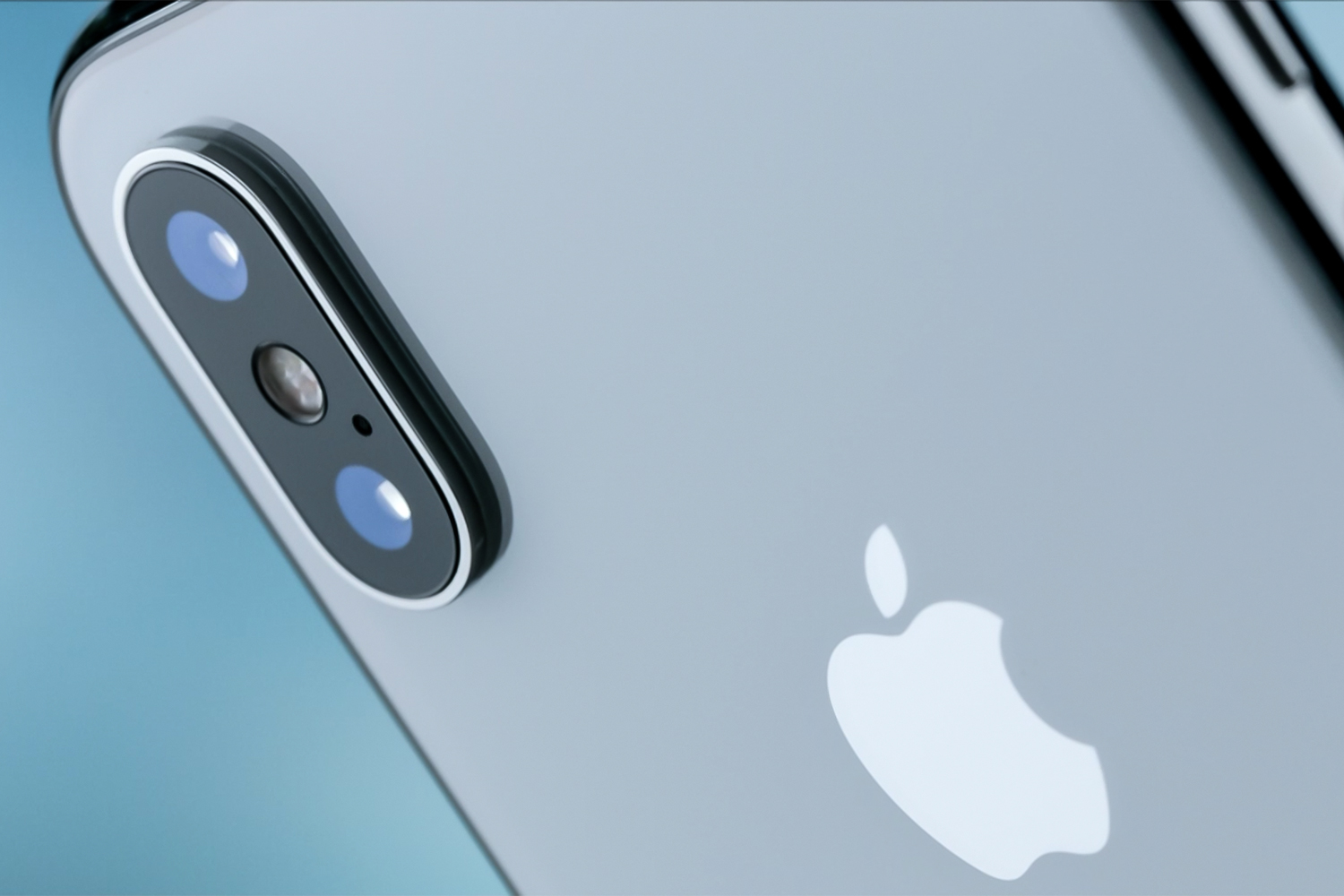
The iPhone X is likely to be a phenomenal success for Apple. But its success will not be driven by anything new that the new phone packs inside. Instead, its success will be based on the phone’s screen size. Essentially, iPhone X provides the same screen real-estate as an iPhone Plus, but with the sleeker form factor of the iPhone 7 or 8.
Apple has done a great job at changing the paradigm of our thinking about the iPhone. If you only care about making phone calls, then an iPhone 4 is good enough. Why pay for more? You probably don’t even need to upgrade your phone for years, as long as the battery keeps holding its charge. However, for most, the actual “phone” function is the least important of the iPhone.
Earnings
From an earnings perspective, iPhone X will be a tremendous boost. It will increase the average selling price per unit by a few hundred dollars, which should help not just sales, but profit margins as well. This is actually healthy for both Apple and the entire iPhone ecosystem (including DRAM and solid state drive makers — for example, we still have a large position in Micron Technology). People were also postponing buying new iPhones while waiting for the iPhone X; thus, the number of units sold will probably exceed most optimistic expectations.
What is next?
Then the question becomes, What is next? Higher-priced iPhones will also change the dynamics of the upgrade cycle. Apple is going to have a harder time convincing iFanatics to shell out $1,000-$1,200 every year (or even every two years). The upgrade cycle will likely be elongating to three or four years.
***
***
Thus, any blow-out success of iPhone X in 2017 and early 2018 will be coming at the expense of future years. Even if you are a loyal Apple shareholder, you have to be prepared for this.
Assessment
Absent a new category of products, Apple is turning into a fully ripe stock. Yes, it will look statistically cheap based on 2018 earnings, but that will not be the case if you look at 2019 or 2020 earnings.
As all the excitement subsides, Apple stock will have to answer an extremely important question: What is next? After all, the value of any business is a lot more than the earnings generated next year, but far beyond that.
Conclusion
Your thoughts and comments on this ME-P are appreciated. Feel free to review our top-left column, and top-right sidebar materials, links, urls and related websites, too. Then, subscribe to the ME-P. It is fast, free and secure.
Speaker: If you need a moderator or speaker for an upcoming event, Dr. David E. Marcinko; MBA – Publisher-in-Chief of the Medical Executive-Post – is available for seminar or speaking engagements.
Contact: MarcinkoAdvisors@msn.com
Subscribe: MEDICAL EXECUTIVE POST for curated news, essays, opinions and analysis from the public health, economics, finance, marketing, I.T, business and policy management ecosystem.
***
Share this:

Filed under: Breaking News, Experts Invited, Investing, Op-Editorials | Tagged: Apple computer, iPhone X, Vitaliy Katsenelson CFA |
 The Leading Business Education Network for Doctors, Financial Advisors and Health Industry Consultants
APPLE
Our firm bought Apple shares for clients’ portfolios in 2013, and we are used to being a contrarian voice when it comes to the stock (read here and here) — we loved it when it was hated. Now we are contrarian again — this time going against the company’s faithful.
Here are key reasons why we sold our entire Apple stake:
The iPhone, though indispensable, is a mature product. Since introduction of the iPhone X, as been raising prices on iPhones. For instance, last quarter iPhone sales jumped 24% despite the number of iPhones sold not changing — all growth came from higher iPhoneprices. Smartphone penetration is high globally, and thus most of the growth currently comes from replacement phones. Higher prices and lack of significant incremental improvements will likely lead to elongation of the replacement cycle from two years to three(or possibly four).
Recently Apple announced that it will stop disclosing iPhone and iPad shipments. There is only one way to read this news: The iPhone is a mature, middle-aged product with a wife and two kids. Apple’s management is desperately trying to create the narrativethat it is becoming a service company. The second line of Apple’s quarterly press release says, “Services Revenue of $10 Billion Reaches New All-Time High.” Apple is trying to monetize its enormous installed base of iPhones, iPads, and Macs by selling digitalgoods and services to their owners.
This is where we lost optimism further. Apple has done a good job of selling digital goods (apps, movies, music, space) in its digital store, but so far it has proved to be a lousy services company. Its iCloud (email, calendar, data storage) and Apple Mapshave been either outright failures or much-inferior products. Apple’s email (originally known as MobileMe) and iCloud data-storage service were basically rendered irrelevant by Google’s Gmail and Google Drive (and Dropbox). Apple Maps is only in business becauseit is the default map software in the iPhone. Google is light years ahead in accuracy when it comes to maps — just ask anyone who ever tried using Apple Maps.
In addition to Google, Apple competes in services with another giant, Amazon.com, which is spending hundreds of millions of dollars on movies and music. Apple’s streaming music service was initially a disaster. In all fairness, it has improved, but today itis fighting an uphill battle because Apple’s walled-garden approach doesn’t allow Apple Music to work on Amazon’s and Google’s speakers. This gave plenty of breathing room for competitors, who otherwise would not have had a chance.
Then there is Siri. In the beginning it was the smartest digital voice assistant, but not anymore. Not to be disrespectful to Siri, but its IQ has been dropping rapidly in comparison to Amazon’s and Google’s assistants. Google and Amazon opened the APIs (applicationprogramming interfaces) of their digital voice assistants to other developers, and soon every appliance in your house will be responding to “Hey Google” and “Alexa.”
There are several reasons why Apple has done so poorly in services. First, it’s a product company. Macs, iPhones, and iPads are incredibly complex devices that, though they are packed with software, are released every year or every few years. Services are software — they almost require gradual, even daily improvement. You release an imperfect product and then keep improving it with continual releases. This approach seems to go against Apple’s DNA.
The second and even more important point is that Apple is facing innovator’s dilemma: Today two-thirds of Apple revenues come from the iPhone, and for that beast to survive it requires a walled garden. This is why Apple’s music doesn’t work on Amazon’sor Google’s speakers. Oh, and what about Apple’s speakers? Apple predictably took a “premium” strategy with its speakers, a strategy that worked great with Macs, iPhones, and iPads. However, the strategy has failed in the case of speakers because Apple’s productis several times more expensive than the “good enough” offerings from Google and Amazon.
Moreover, the walled-garden strategy has backfired here. For instance, Apple speakers will not play Spotify, an incredibly popular music service with 75 million paying users and 150 million active users that competes with Apple’s Music. Thus, to protect itsiPhone cash cow, Apple services is fighting with one arm tied behind its back.
As shareholders, we became concerned about future sales of the iPhone and not highly confident that Apple’s service strategy will bear fruit, and herein lies the biggest problem for Apple: It needs a new huge product category. (The Apple Watch was a mildlysuccessful product, but in the context of $265 billion of sales, it was a rounding error.) A car was supposed to be that category — it’s the largest product category globally — but, according to the New York Times, Apple has changed its car strategy severaltimes and has basically given up on that category.
When Apple stock was lower, we did not have to worry as much about slower growth, but now we do — so we got out.
Vitaliy Katsenelson CFA
LikeLike
Apple Stock
Apple’s drop costs Warren Buffett about $2.8 billion, adding to struggles for Berkshire portfolio.
http://www.msn.com/en-us/money/companies/apples-drop-costs-warren-buffett-about-dollar28-billion-adding-to-struggles-for-berkshire-portfolio/ar-BBRJg9q?li=BBnbfcL
Any thoughts?
Aeida
LikeLike
APPLE UDPATE
Now, Apple reporting what analysts considered “disappointing” numbers for eight sequential quarters (three lifetimes on Wall Street) leading up to 2007.
During that time, Apple is pouring every ounce of its resources into R&D and coming up withthe iPhone. It cannot hire the right engineers fast enough and thus must pull in engineers who had been working on the Macintosh (then Apple’s bread and butter), which results in delaying the introduction of new computers by a few quarters (this did happen).
Did those negative short-term results subtract from the value of the company, or were they instrumental in adding trillions of dollars of revenue to Apple?
Vitaliy Katsenelson CFA
LikeLike