ME-P SYNDICATIONS:
WSJ.com,
CNN.com,
Forbes.com,
WashingtonPost.com,
BusinessWeek.com,
USNews.com, Reuters.com,
TimeWarnerCable.com,
e-How.com,
News Alloy.com,
and Congress.org


BOARD CERTIFICATION EXAM STUDY GUIDES
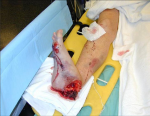
Lower Extremity Trauma
[Click on Image to Enlarge]
The “Medical Executive-Post” is about connecting doctors, health care executives and modern consulting advisors. It’s about free-enterprise, business, practice, policy, personal financial planning and wealth building capitalism. We have an attitude that’s independent, outspoken, intelligent and so Next-Gen; often edgy, usually controversial. And, our consultants “got fly”, just like U. Read it! Write it! Post it! “Medical Executive-Post”. Call or email us for your FREE advertising and sales consultation TODAY [678.779.8597] E-mail: MarcinkoAdvisors1738@outlook.com



ePodiatryConsentForms.com
Suite #5901 Wilbanks Drive, Norcross, Georgia, 30092 USA [1.678.779.8597]. Our location is real and we are now virtually enabled to assist new long distance clients and out-of-town colleagues.
If you want the opportunity to work with leading health care industry insiders, innovators and watchers, the “ME-P” may be right for you? We are unbiased and operate at the nexus of theoretical and applied R&D. Collaborate with us and you’ll put your brand in front of a smart & tightly focused demographic; one at the forefront of our emerging healthcare free marketplace of informed and professional “movers and shakers.” Our Ad Rate Card is available upon request [678-779-8597].

“Providing Management, Financial and Business Solutions for Modernity”
Whether you’re a mature CXO, physician or start-up entrepreneur in need of management, financial, HR or business planning information on free markets and competition, the "Medical Executive-Post” is the online place to meet for Capitalism 2.0 collaboration.

Support our online development, and advance our onground research initiatives in free market economics, as we seek to showcase the brightest Next-Gen minds.
THE ME-P DISCLAIMER: Posts, comments and opinions do not necessarily represent iMBA, Inc., but become our property after submission. Copyright © 2006 to-date. iMBA, Inc allows colleges, universities, medical and financial professionals and related clinics, hospitals and non-profit healthcare organizations to distribute our proprietary essays, photos, videos, audios and other documents; etc. However, please review copyright and usage information for each individual asset before submission to us, and/or placement on your publication or web site. Attestation references, citations and/or back-links are required. All other assets are property of the individual copyright holder.





Health reform could ‘rock the business landscape’
As noted in our book, and this essay, while politicians and consumers debate the effect of healthcare reform on the patient population, industry leaders are turning their attention to how it will impact the business of healthcare; especially for doctors and hospitals.
• http://venturebeat.com/2012/07/23/start-me-up-how-the-affordable-care-act-will-stimulate-new-industries/
• http://www.fiercehealthcare.com/slideshows/winners-and-losers-health-reform-ruling
Ann Miller RN MHA
[Executive-Director]
LikeLike
Individual Insurance Under Healthcare Reform: A Boon For Policyholders
A recent study of health insurance coverage under individual insurance plans indicates that more generous insurance coverage is associated with a lower risk of high out-of-pocket spending, and that the probability of very high out-of-pocket spending is expected to be reduced for everyone who purchases insurance through a health insurance exchange mandated under the ACA.
Click to access ins.pdf
Robert James Cimasi MHA AVA CMP™
http://www.HealthCapital.com
via Ann Miller RN MHA
LikeLike
Obama vs. Romney
[A Detailed Analysis of Mitt Romney’s Health Care Reform Plan]
We encourage all ME-P readers to take a look at Mitt Romney’s Health Care plan using his own outline (“Mitt’s Plan”) on his website.
http://www.mittromney.com/issues/health-care
Ann Miller RN MHA
LikeLike
Through the Affordable Care Act, Americans with Medicare will save $5,000 through 2022
[5.5 million seniors saved money on prescription drugs and 19 million got free preventive care in 2012]
Because of the health care law – the Affordable Care Act – the average person with traditional Medicare will save $5,000 from 2010 to 2022, according to a report today from the U.S. Department of Health and Human Services. People with Medicare who have high prescription drug costs will save much more – more than $18,000 – over the same period.
HHS Secretary Kathleen Sebelius also announced that, because of the health care law, more than 5.5 million seniors and people with disabilities saved nearly $4.5 billion on prescription drugs since the law was enacted. Seniors in the Medicare prescription drug coverage gap known as the donut hole have saved an average of $641 in the first eight months of 2012 alone. This includes $195 million in savings on prescriptions for diabetes, over $140 million on drugs to lower cholesterol and blood pressure, and $75 million on cancer drugs so far this year. Also in the first eight months of 2012, more than 19 million people with original Medicare received at least one preventive service at no cost to them.
“I am pleased that the health care law is helping so many seniors save money on their prescription drug costs,” Secretary Sebelius said. “A $5,000 savings will go a long way for many beneficiaries on fixed incomes and tight budgets.”
The health care law includes benefits to make Medicare prescription drug coverage more affordable. In 2010, anyone with Medicare who hit the prescription drug donut hole received a $250 rebate. In 2011, people with Medicare who hit the donut hole began receiving a 50 percent discount on covered brand-name drugs and a discount on generic drugs. These discounts and Medicare coverage gradually increase until 2020, when the donut hole will be closed.
The health care law also makes it easier for people with Medicare to stay healthy. Prior to 2011, people with Medicare had to pay for many preventive health services. These costs made it difficult for people to get the health care they needed. For example, before the health care law passed, a person with Medicare could pay as much as $160 for a colorectal cancer screening. Because of the Affordable Care Act, many preventive services are now offered free to beneficiaries (with no deductible or co-pay) so the cost is no longer a barrier for seniors who want to stay healthy and treat problems early.
In 2012 alone, 19 million people with traditional Medicare have received at least one preventive service at no cost to them. This includes 1.9 million who have taken advantage of the Annual Wellness Visit provided by the Affordable Care Act – almost 600,000 more than had used this service by this point in the year in 2011. In 2011, an estimated 32.5 million people with traditional Medicare or Medicare Advantage received one or more preventive benefits free of charge.
For state-by-state information on savings in the donut hole, please visit: http://downloads.cms.gov/files/Summary-Chart-2010-2012.pdf
For state-by-state information on utilization of free preventive services, please visit: http://downloads.cms.gov/files/preventive-services-data.pdf
For more information on the estimate that the average Medicare beneficiary will save $5,000 from 2010 to 2022 as a result of the health care law, please visit: http://aspe.hhs.gov/health/reports/2012/beneficiarysavings/ib.shtml
Hope Rachel Hetico RN MHA
LikeLike
What’s on Deck for the ACA in 2013
Although most of the coverage expansions and insurance reforms under the Affordable Care Act don’t kick in until 2014, several key ACA provisions are scheduled to take effect next year, including:
•Medicaid payments to primary care physicians for primary care services will increase to 100% of Medicare rates for two years.
•States that offer Medicaid coverage with no patient cost-sharing for recommended preventive services will receive a one percentage point increase in federal matching payments.
•Medicare will test bundled payments for physician services, acute inpatient hospital services, outpatient hospital services, and post-acute care services for a patient’s episode of care.
•The federal government will impose an excise tax of 2.3% on the sale of taxable medical devices.
•Reductions will begin on disproportionate share hospital payments under Medicare and Medicaid.
•Non-profit, member-run health insurance companies known as Consumer Operated and Oriented Plans (CO-OPs) will launch.
Source: Kaiser Family Foundation Health Reform Implementation Timeline via aMednews [11/19/12]
LikeLike
Health Insurance – Are you sure?
http://money.msn.com/health-and-life-insurance/news.aspx?feed=AP&date=20130313&id=16230977
Insurers warn of overhaul-induced sticker shock.
Barbara
LikeLike
CO-OP Health Insurance Program: October 2013 Implementation
The Affordable Care Act of 2010 created funding for the creation of Consumer Operated and Oriented Plan (CO-OP) programs in every state in lieu of a public health insurance option. The intent of CO-OPs is to expand consumer options and enhance competition and accountability among insurance carriers.
Click to access COOP.pdf
However, recent legislation passed on January 1, 2013 rescinded all but 10 percent of unobligated CO-OP funds, presenting significant financial hurdles for CO-OPs scheduled to begin consumer enrollment on October 1, 2013
Ann Miller RN MHA
via http://www.HealthCapital.com
LikeLike
ACA
Recent polls by the Kaiser Family Foundation found that more than two-thirds (67 percent) of uninsured Americans age 65 and younger and 57 percent of the overall population say they do not understand how the Affordable Care Act will affect their lives.
And, 42 percent of us are still unaware that health care reform has been the law of the land since 2010.
Dr. Morgan
LikeLike
Many thanks to our text book purchasers!
This book has been rocketing up the rankings, of late, and sales are expanding.
So, thanks to all ME-P readers and subscribers for getting the word out.
We are working hard, for you.
Hope Rachel Hetico RN MHA
LikeLike
Moody’s
http://www.amednews.com/article/20130902/business/130909998/7/
Predicts more bad news for nonprofit hospitals.
Justin
LikeLike
I just purchased it!
Financial Management Strategies for Hospitals and Healthcare Organizations: Tools, Techniques, Checklists and Case Studies
http://www.crcpress.com/product/isbn/9781466558731
Will send in a review after received and read.
Mary
LikeLike
The Median Fiscal and Operational Performance of US Hospitals
2009 2010 2011 2012 Change 2011-2012 Change 2009-2012 Average Annual Change
* Net Operating Revenue $7,656 $7,635 $7,870 $7,906 0.5% 3.3% 1.1%
* Total Expense per Discharge $7,198 $7,243 $7,477 $7,547 0.9% 4.8% 1.6%
* Total Margin 3.35% 5.67% 6.04% 5.53% -8.4% 65.2% 16.7%
Publication Source: HealthLeaders Media, September 2013
Data Source: Truven Health Analytics
LikeLike
Moody’s upgrades hospital outlook
Because health system operators reacted quickly to manage payment cuts and lower patient volumes, Moody’s Investors Service has upgraded its for-profit hospital outlook to positive from stable.
http://www.healthcarefinancenews.com/news/moodys-upgrades-hospital-outlook?topic=,21,22
Charles
LikeLike
Hospital business model threatened – But the retail medicine outlook looks bright
The currents of health reform and consumerism are getting more treacherous for incumbent hospital businesses, according to a new report by Standard and Poor’s Rating Services.
http://www.healthcarefinancenews.com/news/hospital-business-model-threatened-retail-outlook-bright?mkt_tok=3RkMMJWWfF9wsRonuKrAZKXonjHpfsX56O0kXK6zlMI%2F0ER3fOvrPUfGjI4AScJmI%2BSLDwEYGJlv6SgFQ7LHMbpszbgPUhM%3D
Brenda
LikeLike
Just-in-time
(JIT) is an inventory-light manufacturing practice of sourcing materials right when you need them. It has been the industry standard for five decades.
OK, now terminate your emotional connection with JIT.
Once upon a time—as in, last year—automakers (and many other makers like medical ventilators) were card-carrying just-in-timers. The term is now taboo, as companies struggle to procure inventory.
The new term: Stock-pile it.
Brenda
LikeLike