





 Support our online development, and advance our onground research initiatives in free market economics, as we seek to showcase the brightest Next-Gen minds.
THE ME-P DISCLAIMER: Posts, comments and opinions do not necessarily represent iMBA, Inc., but become our property after submission. Copyright © 2006 to-date. iMBA, Inc allows colleges, universities, medical and financial professionals and related clinics, hospitals and non-profit healthcare organizations to distribute our proprietary essays, photos, videos, audios and other documents; etc. However, please review copyright and usage information for each individual asset before submission to us, and/or placement on your publication or web site. Attestation references, citations and/or back-links are required. All other assets are property of the individual copyright holder.
Support our online development, and advance our onground research initiatives in free market economics, as we seek to showcase the brightest Next-Gen minds.
THE ME-P DISCLAIMER: Posts, comments and opinions do not necessarily represent iMBA, Inc., but become our property after submission. Copyright © 2006 to-date. iMBA, Inc allows colleges, universities, medical and financial professionals and related clinics, hospitals and non-profit healthcare organizations to distribute our proprietary essays, photos, videos, audios and other documents; etc. However, please review copyright and usage information for each individual asset before submission to us, and/or placement on your publication or web site. Attestation references, citations and/or back-links are required. All other assets are property of the individual copyright holder.


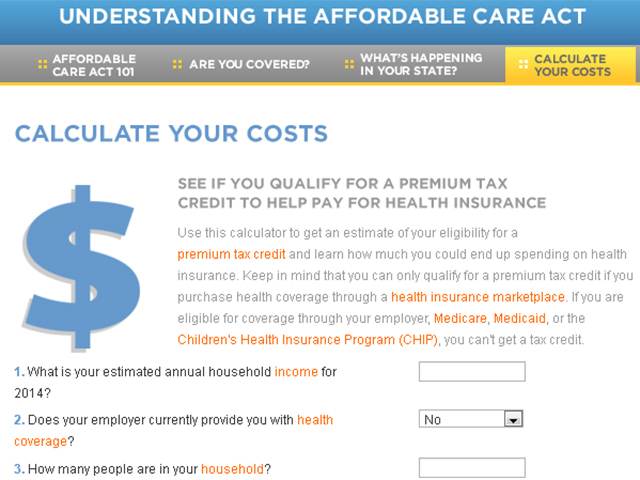
Calculate your costs
[By Staff Reporters]
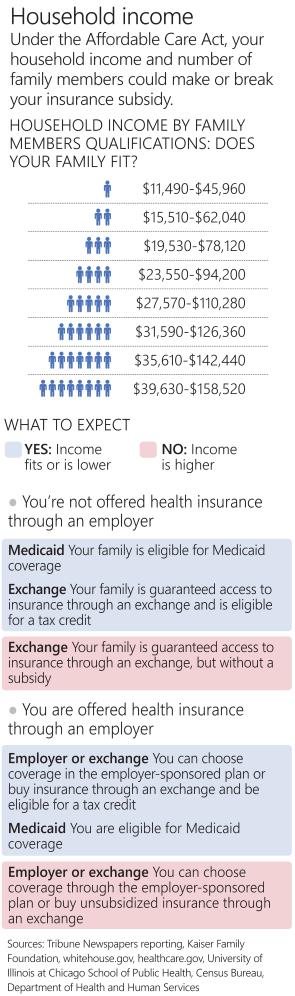
The Affordable Care Act is going to change health care for tens of millions of Americans.
But, what about the cost?
LET’S BEGIN
###
NOW CALCULATE
Whether you’re an individual who has health insurance or needs it, or a small business owner, you need to know how health care reform affects you.
What’s it going to cost? What’s happening in your state?
### 
###
Conclusion
Your thoughts and comments on this ME-P are appreciated. Feel free to review our top-left column, and top-right sidebar materials, links, URLs and related websites, too. Then, subscribe to the ME-P. It is fast, free and secure.
Link: http://feeds.feedburner.com/HealthcareFinancialsthePostForcxos
Speaker: If you need a moderator or speaker for an upcoming event, Dr. David E. Marcinko; MBA – Publisher-in-Chief of the Medical Executive-Post – is available for seminar or speaking engagements. Contact: MarcinkoAdvisors@msn.com
OUR OTHER PRINT BOOKS AND RELATED INFORMATION SOURCES:
Health Dictionary Series: http://www.springerpub.com/Search/marcinko
Practice Management: http://www.springerpub.com/product/9780826105752
Physician Financial Planning: http://www.jbpub.com/catalog/0763745790
Medical Risk Management: http://www.jbpub.com/catalog/9780763733421
Hospitals: http://www.crcpress.com/product/isbn/9781439879900
Physician Advisors: www.CertifiedMedicalPlanner.org




Share this:

Filed under: Health Economics, Health Insurance, Health Law & Policy, Taxation | Tagged: ACA, Affordable Care Act., How affordable is new health care law?, Patient Protection and Affordable Care Act, PP-ACA |
 The Leading Business Education Network for Doctors, Financial Advisors and Health Industry Consultants
Healthcare Information Technology – Obamacare’s dangerous bastard
The disreputable intimacy between Obamacare and the increasingly unpopular HIT industry is destined to create an embarrassment to both.
“A provision in ObamaCare requiring medical providers to switch from paper patient charts to electronic records by 2015 is intended to reduce costs and improve care. But, privacy advocates fear the transition is too fast for security measures to keep pace.” (See “ObamaCare reg on digital patient records raises security concerns,” by Jonathan Serrie, October 2, 2013, FoxNews).
http://www.foxnews.com/politics/2013/10/02/obamacare-reg-on-digital-patient-records-raises-security-concerns/
If shutting down the government cannot not stop Obamacare, wary Americans who lose faith in its security will. If you didn’t see this coming, you should perhaps consider reading me more often:
“In my opinion, if informed Americans are given the choice of volunteering to risk identity theft, HIEs won’t be around a year from now, and neither will Obamacare. If informed Americans are not given a choice, the costs are even greater. Americans deserve honesty.” (See “Did the NSA end Obamacare?” by D. Kellus Pruitt, September 9, 2013, Medical Executive-Post).
Those with interests in uninformed EDR sales keep getting blindsided by bad news about products they no longer risk misrepresenting on the internet …. My pleasure.
As it becomes increasingly obvious that EDRs are costlier and more dangerous than paper dental records, have you also noticed that stakeholders no longer mention dentists’ bad handwriting as a swell reason to invest in paperless solutions?
Following years of asking, it is unfortunate that not a single EDR vendor has responded to my invitations to discuss the feasibility of de-identification of electronic dental records. (I wonder how much longer Dentrix officials will pretend they can’t hear me?) Their unresponsiveness is easy to explain:
Stakeholders don’t care for dental patients, and cannot be held accountable for harm they cause. They have little incentive to respond to dentists’ and patients’ concerns. So they don’t.
D. Kellus Pruitt DDS
LikeLike
3.3 Million Expected to Spend $7,202 in Out-of-Pocket Medical Costs in 2016 Under the ACA
According to a RAND Corporation study, Out-of-pocket medical expenses will decline for most consumers who become newly insured or change their source of health insurance under the federal Affordable Care Act.
The largest reduction in out-of-pocket spending will be for the 11.5 million consumers who become newly insured under an expanded Medicaid program, with the analysis predicting their annual out-of-pocket medical costs will fall from $1,463 to $34.
The largest increase in overall health costs is expected to be among people who become newly insured on the individual market and have incomes more than four times the federal poverty level. An estimated 3.3 million consumers are expected to spend $7,202 in 2016 under the Affordable Care Act, compared to $5,368 if the law was not in place.
Some low-income people in states that do not expand Medicaid could see higher health spending compared what would happen if Medicaid was expanded. For example, a Texas resident with an income below the federal poverty level who does not qualify for Medicaid will face costs of $1,831 per year, compared to $28 if they were covered by Medicaid.
Nationally, the 11.5 million people who become newly insured by Medicaid will see their risk of spending at least 10 percent of their income on medical costs drop from 45 percent to 5 percent.
Source: RAND Corporation
http://www.rand.org/news/press/2013/10/01.html
LikeLike
15 Key Health Care Act Provisions That Begin in 2014
The PP-ACA was signed in 2010, but 2014 is the year when most core pieces might start to effect many of your clients’ health care financial planning needs.
http://www.thinkadvisor.com/2013/10/07/15-key-health-care-act-provisions-that-begin-in-20?t=the-wealth-manager
Hope R. Hetico RN MHA CMP™
http://www.CertifiedMedicalPlanner.org
LikeLike
Website cost estimates
According to colleague Austin Frakt PhD, high-end cost estimates for the healthcare.gov infrastructure is $600 million.
http://theincidentaleconomist.com/wordpress/the-shutdown-could-have-bought-healthcare-gov-40-times-over/
And, the estimated economic loss from 15 days of government shutdown is $24 billion.
Ann Miller RN MHA
LikeLike
Should the Obamacare Exchanges Be Shut Down?
http://thehealthcareblog.com/blog/2013/10/19/should-the-obamacare-exchanges-be-shut-down/
Any thoughts?
Kurt
LikeLike
What about health insurance agents and brokers?
Insurance brokers are frustrated with the new health care law.
http://money.msn.com/health-and-life-insurance/news.aspx?feed=AP&date=20131024&id=17032555
HI Agent Man
LikeLike
Young Adult Options in The Marketplace and Medicaid
A report from the U.S. Department of Health and Human Services that examined data from the 34 Federally-facilitated and State Partnership Marketplaces finds that out of 2.9 million single young adults ages 18 to 34 who may be eligible for coverage in the Marketplace, 1.3 million (46 percent) could purchase a bronze plan for $50 per month or less after tax credits. In the 34 states, a total of 1.9 million young adults, representing nearly 7 in 10 (66 percent) of the potentially Marketplace-eligible uninsured ages 18 to 34, may be able to pay $100 or less for coverage in 2014.
According to the report, an additional 1 million eligible uninsured single young adults may qualify for Medicaid in the states that have opted to expand the program in 2014. Today’s report also shows that if each of the 34 states expanded its Medicaid program, the proportion of young adults who could obtain low-cost coverage would be even greater. If each of the 34 states expanded its Medicaid program, 4.9 million uninsured single young adults would be eligible for Medicaid.
Source: US Department of Health and Human Services
LikeLike
How much healthcare reform can Americans afford?
This morning, I had to call a pharmacy to prescribe medication for a patient and was asked to record my 9-digit DEA number, my 8-digit DPS number and my 10-digit NPI number.
Guess which of the three numbers dentists were told whose only purpose was to simplify providing care.
Here are some clues: it is the most recently added to the list of numbers, it is the longest of the three and it’s required by HIPAA – even if the provider is not a HIPAA-covered entity.
Only providers can be held responsible for patient harm indirectly caused by healthcare stakeholders. The unaccountability naturally entices huge institutions to lie to providers as well as patients – the healthcare principals.
For example, even though the “ACA” stands for “Affordable Care Act,” my insurance premium went up 13%. And I’m lucky. At least I didn’t lose it when Obama made insurance more affordable for someone other than me.
D. Kellus Pruitt DDS
LikeLike
Small Business HI Premiums Costs and Deductible
According to a survey of 921 small-business owners and operators from around the country by the National Federation of Independent Business, 64 percent reported that they pay more for insurance premiums per employee in 2013 than they did in 2012.
According the NFIB’s study, Small Business’s Introduction to the Affordable Care Act, the health insurance premium costs incurred by small businesses (employer and employee shares) average $6,721 a month ($80,652 a year). The median cost is about $3,500 every 30 days. Deductibles for beneficiaries of small-business health insurance products also rose in 2013.
While two of three (67 percent) of plans maintained deductibles at the prior year’s level, another 28 percent increased deductibles; only 4 percent lowered deductibles in their plans.
Source: National Federation of Independent Business
LikeLike
Obama Care
Only 26,000 people managed to buy health insurance on HealthCare.gov in October, the first month the website was open, the Health and Human Services Department just reported.
Ha! Ha!
Nelson Muntz
LikeLike
Results of The First Reporting Period (Oct. 1-Nov. 2, 2013) of The Health Insurance Marketplace’s Open Enrollment
According to results of the first reporting period (Oct. 1-Nov. 2, 2013) of the Health Insurance Marketplace’s Open Enrollment, 106,185 individuals have selected plans from the Marketplace, and another 975,407 have made it through the process by applying and receiving an eligibility determination, but have not yet selected a plan.
An additional 396,261 have been determined or assessed eligible for Medicaid or the Children’s Health Insurance Program (CHIP).
Of the people who have selected a plan, 79,391 (74.8 percent) enrolled though a state-based Marketplaces (SBM), while the other 26,794 people (25.2 percent) enrolled through the Federally-facilitated Marketplace (FFM).
Moreover, of the 396,261 Americans who have been assessed or determined eligible for Medicaid or CHIP, SBMs that provided data for the report accounted for 212,865 (53.7 percent) of those determinations, while the FFM accounted for 183,396 (46.3 percent) of them.
Source: U.S. Department of Health & Human Services
LikeLike
Breakdown of Americans That Selected a Qualified Health Plan Through the Marketplace During the First Reporting Period of Open Enrollment
* 106,185 Americans selected a Qualified Health Plan (QHP) through the Marketplace
* Of the people who have selected a plan, 79,391 (74.8 percent) enrolled though a state-based Marketplaces
* Of the people who have selected a plan, 26,794 people (25.2 percent) enrolled though a Federally-facilitated Marketplace
Source: U.S. Department of Health & Human Services
LikeLike
Will Doctors Bear the Financial Risk of Treating Patients?
A little known rule in the ACA could pose financial risk to doctors.
http://www.kevinmd.com/blog/2013/11/rule-aca-pose-financial-risk-doctors.html
Seriously?
Hope R. Hetico RN MHA CMP™
http://www.CertifiedMedicalPlanner.org
LikeLike