





 Support our online development, and advance our onground research initiatives in free market economics, as we seek to showcase the brightest Next-Gen minds.
THE ME-P DISCLAIMER: Posts, comments and opinions do not necessarily represent iMBA, Inc., but become our property after submission. Copyright © 2006 to-date. iMBA, Inc allows colleges, universities, medical and financial professionals and related clinics, hospitals and non-profit healthcare organizations to distribute our proprietary essays, photos, videos, audios and other documents; etc. However, please review copyright and usage information for each individual asset before submission to us, and/or placement on your publication or web site. Attestation references, citations and/or back-links are required. All other assets are property of the individual copyright holder.
Support our online development, and advance our onground research initiatives in free market economics, as we seek to showcase the brightest Next-Gen minds.
THE ME-P DISCLAIMER: Posts, comments and opinions do not necessarily represent iMBA, Inc., but become our property after submission. Copyright © 2006 to-date. iMBA, Inc allows colleges, universities, medical and financial professionals and related clinics, hospitals and non-profit healthcare organizations to distribute our proprietary essays, photos, videos, audios and other documents; etc. However, please review copyright and usage information for each individual asset before submission to us, and/or placement on your publication or web site. Attestation references, citations and/or back-links are required. All other assets are property of the individual copyright holder.


A Viable Alternate Investment Class for Physicians?
By Dennis Bethel MD www.nesteggrx.com
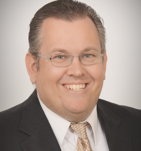 I’ve worked as an Emergency Medicine Physician for over a decade now.
Most of that time, I’ve also been investing in real estate.
Real estate has been good to me and I’ve been asked to share my story with this ME-P
RESIDENTIAL REAL ESTATE
Not long after graduating from residency in 2002, I began investing in real estate. I watched my father-in-law make some money in residential real estate (1 – 4 units), read some books, and jumped in feet first. I purchased and rented out single family homes, a triplex, and multiple four-plexes (quads). What I didn’t realize at the time was that I made two critical errors.
My First Mistake
The first mistake was that I purchased residential real estate when I should have gone bigger and purchased commercial multifamily. I had limited resources and I thought bigger properties were out of my reach. At that time, I had not heard of fractional investing.
My Second Mistake
The second error, that is inherent to residential real estate, is that I became a landlord. At times I managed properties and at other times I employed a property manager and limited myself to managing the manager. Regardless, I was putting in a significant amount of time at my unintended second career as a landlord without the desired compensation.
Not Scaleable
Since there are no economies of scale with residential real estate the cash flow is small and unpredictable. I was on the long, hard path to financial freedom. The rents from my properties would someday replace my income as a physician, however, that wasn’t going to happen until I paid off the mortgages completely. Until then it was going to be too inconsistent and I would have to ride several market cycles including the very painful down-turns.
THE MOVE TO COMMERCIAL REAL ESTATE
Unfortunately, chronic understaffing in the ER coupled with increased regulation and the rigors of shift-work had begun to catch up to me. I was beginning to feel the effects of burnout. I began to question whether I could make it 30 years. I began to see earned-income as a trap in which you trade your valuable time for heavily-taxed income.
Then some devastating news, my wife tested positive for the BRCA (breast cancer) gene mutation. That was a game changer. I could no longer rest on my laurels, slowly burning out waiting for a comfortable retirement. The future was uncertain, and I needed to ensure our wealth. Come what may, I was determined that she would get the best health care money could buy.
I knew real estate was an incredible wealth building investment vehicle and my path to financial freedom. In fact, 90% of the Forbes 400 (wealthiest people in the US) either made or retain their wealth in real estate. While I was doing far better than my colleagues who invested in the stock market, I knew that I could do better.
My New Mission
I made it my mission to become an expert in real estate. I read even more books as well as attended numerous conferences and seminars. I invested heavily in my education, took advanced real estate investing classes, retained mentors, and developed networks. I also grew my experience, buying and selling more properties.
I learned that although real estate won’t make you rich overnight, it needn’t take 30 years either. I needed to transition out of residential real estate and go bigger into commercial multifamily. I ultimately landed on multifamily, because shelter is a basic need. People will give up their luxuries long before they give up the roof over their head. The difference is that I now look for properties that are between 80 – 250 units. These types of properties afford the investor true economies of scale that provide for predictable multisource income. I invest in these properties fractionally, pooling my money with other like-minded investors.
MULTISOURCE INCOME
Real estate is the only investment I know of in which the investor makes his or her money in four different ways.
- Cash Flow (monthly, quarterly, or yearly distributions of net profits)
- Appreciation (increasing value of the property as net operating income increases)
- Tax Benefits (can result in little to no taxes on income and gains)
- Principal Pay Down (Increased equity as the loan gets paid down by the residents)
Multisource income is an incredible benefit of multifamily commercial real estate investing. In fact, in all of my commercial properties, I have been able to obtain double-digit returns year after year. Making money and compounding those gains is what investing is all about.
###

###
SAFETY PROFILE
While all investments have risk, the safety profile of multifamily commercial real estate is impressive. Let’s compare it to business. We’ve all heard that 9 out of every 10 businesses fail. These failures are not just limited to small business. Every year, many big businesses fail as well. Names like Circuit City, Hostess, Borders, and Mervyns just to name a few. Many other, well known, national brands teeter on the brink of insolvency.
In contrast, the commercial multifamily properties I invest in meet current Fannie Mae underwriting standards. Nationally these properties have a paltry 1% – 2% foreclosure rate. That rate is even lower in the best markets. In the hands of a quality syndicator, in thriving markets, utilizing proven property management these properties are FAR safer than stocks for capital preservation, equity growth, and current income.
Additional safety measures include the use of non-recourse lending, the ability to insure against loss, and the use of sole purpose entity structures to eliminate any liability risk.
The “Conversation”
Switching from residential real estate to commercial has enabled me to provide for my family and has allowed me to work only part-time in the emergency department. A few years ago, I walked into the physician lounge and overheard a conversation between two colleagues. Both around 20 years my senior, were lamenting their inability to retire. They had each invested heavily in the stock market without any diversification into real estate. They bemoaned the fact that they had each worked 25 – 30 years in medicine and were nowhere close to retirement. They wondered how I could afford to work so many fewer shifts than them with two young boys to raise.
An Eye-Opener
This interaction was eye-opening. I was grateful for the decisions I had made but saddened by the fate of my 60 year old colleagues. I’ve watched far too many of them push back retirement as the stock market and economic cycles ruined their plans.
Assessment
I knew I could help. I have recently started an educational website intended to demystify the subject of real estate investing. My mission is to help physicians and other health care workers find financial freedom through real estate investing and education.
We also provide quality real estate investments for busy professionals looking to diversify a portion of their portfolio out of the stock market and into commercial multifamily real estate without having to become a landlord. We do this by helping like-minded professionals pool their resources together to buy quality multimillion dollar assets as fractional investors.
I invite you to visit my website at www.nesteggrx.com and explore the content to learn more about real estate and see if it might be right for you.
NOTE: This ME-P is NOT a personal or professional endorsement.
More:
Physician’s Acquiring Real-Estate
Conclusion
Your thoughts and comments on this ME-P are appreciated. Feel free to review our top-left column, and top-right sidebar materials, links, URLs and related websites, too. Then, subscribe to the ME-P. It is fast, free and secure.
Link: http://feeds.feedburner.com/HealthcareFinancialsthePostForcxos
Speaker: If you need a moderator or speaker for an upcoming event, Dr. David E. Marcinko; MBA – Publisher-in-Chief of the Medical Executive-Post – is available for seminar or speaking engagements. Contact: MarcinkoAdvisors@msn.com
OUR OTHER PRINT BOOKS AND RELATED INFORMATION SOURCES:
DICTIONARIES: http://www.springerpub.com/Search/marcinko
PHYSICIANS: www.MedicalBusinessAdvisors.com
PRACTICES: www.BusinessofMedicalPractice.com
HOSPITALS: http://www.crcpress.com/product/isbn/9781466558731
CLINICS: http://www.crcpress.com/product/isbn/9781439879900
BLOG: www.MedicalExecutivePost.com
FINANCE: Financial Planning for Physicians and Advisors
INSURANCE: Risk Management and Insurance Strategies for Physicians and Advisors




Share this:

Filed under: Alternative Investments, Investing, Op-Editorials | Tagged: Alternative Investments, commercial real estate, Commercial Real Estate Education and Investing, Dennis Bethel MD |


Dennis,
Real estate leases are among the most onerous, one-sided contracts that physicians must sign.
They rank with HMO provider agreements and bank financing documents in terms of fine print and lack of protection for the physician.
However, they can and should be negotiated. If the physician-lessee simply signs on the dotted line, he or she will be living with the consequences for years to come.
Hiram
LikeLike
The New Real Estate Asset
It seems the real estate market has tightened up tremendously over the last 12 months. Many investors are saying …”it’s harder to find good deal nowadays”.
Dennis – It really doesn’t matter which state you live in today, the REO market is diminishing!
Any thoughts?
Lenny
LikeLike
Real Estate
What I am seeing in my accounting practice is that significant accumulations in younger physician portfolio growth not happening as it once was.
Partially because confidence in the market is still not what it was but I also I think that doctors are looking for better solutions to support their reduced income.
I see older doctors have about a 25 percent of their wealth in the market and even in retirement years do not rely much on that accumulation to live on. Of this 25 percent about 80 percent is in their retirement plan, tax breaks for funding are just too good to ignore (as you chapter clearly indicates)
What I do see is that about 50 percent of the senior doctors wealth is in rental real estate, both in a private residence that has a rental component and mixed use properties, it is this that provides a good portion on income in retirement.
Could I add dialog about real estate as a long term solution for retirement? In reading the book chapter provided, it indicates real estate concentration to the amount of 5 percent of portfolio, and in a very passive way, that being through funds that are invested in real estate holding and not directly owning properties.
Today as an option we have the ability to take pension asset accumulation and transfer marketable securities for a rental property to be held inside the pension, collecting rents instead of dividends.
The real estate holding never varies very much, tends to go up modestly and have preferential tax treatment due to depreciation of the property against income.
Thank you again for this opportunity I am enjoying the ME-P effort very much.
NOTE: I purchased “financial planning handbook for physicians and advisors” and think it is a fabulous resource.
Perry D’Alessio, CPA
D’Alessio Tocci & Pell LLP
Certified Public Accountants and Business Advisors
20West 36th St. , 10th Floor
New York, New York 10018
Telephone: (212) 244-6166 Ext 101
Facsimile: (212) 695-2951
Email: Perry@dalecpa.com
Website: dalecpa.com
LikeLike
Affluent Investors Eye Commercial Real Estate
A survey of 500 mass affluent investors by an industry association finds — conveniently — high awareness and use of nontraded REITs.
http://www.financial-planning.com/news/affluent-investors-eye-commercial-real-estate-2688376-1.html?utm_campaign=ria%20iq-feb%2027%202014&utm_medium=email&utm_source=newsletter
Eric
LikeLike
Real Estate Lending Rules
Here are couple rules that I follow regarding real estate investments:
* Must have instant equity. Make sure the property has plenty of room between value and price.
* You must have a clear and concise plan of action. Keep excellent track of who is supposed to do what in the transaction, and make very sure it is clear and admissible in court. You want it clear enough you can show a judge and they will understand exactly what was agreed to.
* Must be able to be financed by a traditional mortgage broker or directly from a bank. It is OK if you finance a property that needs work. In fact that is one of the best ways to get an excellent deal.
* Don’t let your emotions get in the way! The only numbers that matter are the comparable sales, comparable listings, and the amount of money you are making on the deal.
* Always use an escrow officer. I can’t stress this enough. For the couple of hundred dollars it will cost you, not only will you have a professional handling the closing of your investment you will have title insurance.
* Always use a neutral party to keep track of payments made.
Good luck.
Steven Hale
LikeLike