





 Support our online development, and advance our onground research initiatives in free market economics, as we seek to showcase the brightest Next-Gen minds.
THE ME-P DISCLAIMER: Posts, comments and opinions do not necessarily represent iMBA, Inc., but become our property after submission. Copyright © 2006 to-date. iMBA, Inc allows colleges, universities, medical and financial professionals and related clinics, hospitals and non-profit healthcare organizations to distribute our proprietary essays, photos, videos, audios and other documents; etc. However, please review copyright and usage information for each individual asset before submission to us, and/or placement on your publication or web site. Attestation references, citations and/or back-links are required. All other assets are property of the individual copyright holder.
Support our online development, and advance our onground research initiatives in free market economics, as we seek to showcase the brightest Next-Gen minds.
THE ME-P DISCLAIMER: Posts, comments and opinions do not necessarily represent iMBA, Inc., but become our property after submission. Copyright © 2006 to-date. iMBA, Inc allows colleges, universities, medical and financial professionals and related clinics, hospitals and non-profit healthcare organizations to distribute our proprietary essays, photos, videos, audios and other documents; etc. However, please review copyright and usage information for each individual asset before submission to us, and/or placement on your publication or web site. Attestation references, citations and/or back-links are required. All other assets are property of the individual copyright holder.


Human Genes are NOT Patentable
By Karen Matthias RN MBA
[Vice-President of Marketing]
Hayes, Inc kmatthias@hayesinc.com
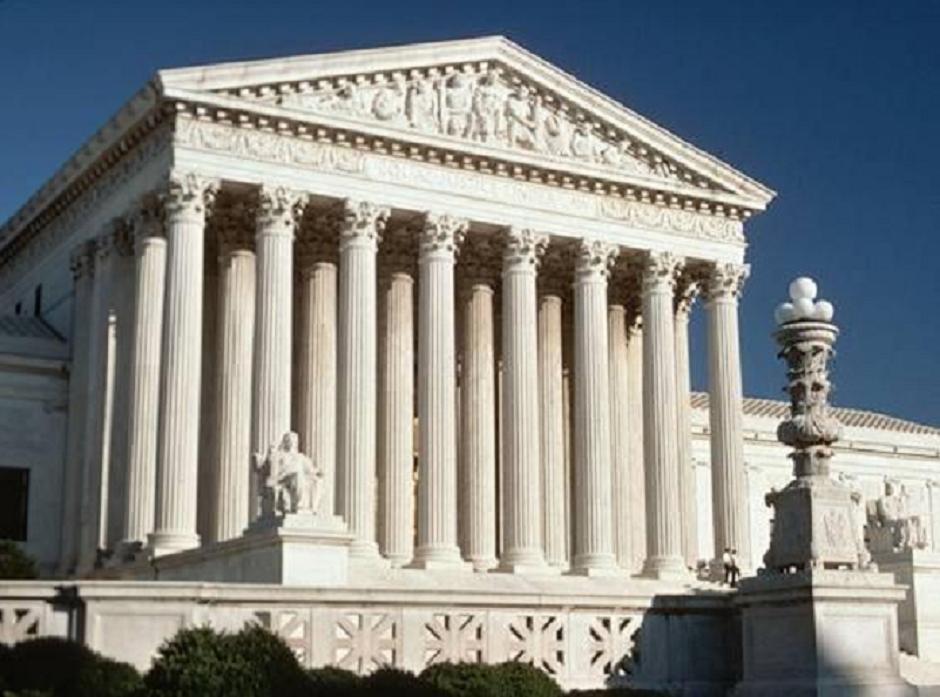
Yesterday, the U.S. Supreme Court unanimously agreed that human genes are not patentable, making a distinction between “natural” DNA found in the human body and the laboratory-created “synthetic” DNA. This opinion reinforces those of many in the genetics community who have argued for years that genes are products of nature rather than inventions.
A Resolution?
But, does the Supreme Court decision completely resolve the gene-patenting issue?
Dr. Diane Allingham-Hawkins, Senior Director, Genetic Test Evaluation Program and Technical Editing at Hayes, Inc., doesn’t think so.
“The Justices compromised somewhat in their decision that while human genes as they exist in nature were ruled not patentable, the opinion allowed that synthetic copies – so-called complementary DNA or cDNA – may be”.
The Court did not rule, however, that cDNA meets all requirements of patent eligibility, just that cDNA would not be considered a ’product of nature’.
Issues Not Addressed
In addition, Dr. Allingham-Hawkins points out what the decision does not address.
“Notably, the opinion clearly stated that it was not ruling on any methods patents related to the two genes or on any applications regarding what Myriad had learned about the genes, leaving the door open for narrower genetic testing patents.
Nevertheless, this is a major victory for the plaintiffs in the case and for patients, who will now have choices related to who performs their genetic testing and options to seek second opinions from independent laboratories.”
###
More
Our new white paper on the history of gene patenting in the United States can be an excellent resource as you search for background information on this topic.
Download a complimentary copy here: http://www.hayesinc.com/hayes/resource-center/white-papers/gene-patenting-in-the-united-states/.
Assessment
Thanks for considering.
Conclusion
Your thoughts and comments on this ME-P are appreciated. Feel free to review our top-left column, and top-right sidebar materials, links, URLs and related websites, too. Then, subscribe to the ME-P. It is fast, free and secure.
Link: http://feeds.feedburner.com/HealthcareFinancialsthePostForcxos
Speaker: If you need a moderator or speaker for an upcoming event, Dr. David E. Marcinko; MBA – Publisher-in-Chief of the Medical Executive-Post – is available for seminar or speaking engagements. Contact: MarcinkoAdvisors@msn.com
OUR OTHER PRINT BOOKS AND RELATED INFORMATION SOURCES:
Health Dictionary Series: http://www.springerpub.com/Search/marcinko
Practice Management: http://www.springerpub.com/product/9780826105752
Physician Financial Planning: http://www.jbpub.com/catalog/0763745790
Medical Risk Management: http://www.jbpub.com/catalog/9780763733421
Hospitals: http://www.crcpress.com/product/isbn/9781439879900
Physician Advisors: www.CertifiedMedicalPlanner.org


Share this:

Filed under: Breaking News, Ethics, Health Law & Policy | Tagged: complementary DNA, Diane Allingham-Hawkins, DNA, gene-patenting, Karen Matthias, U.S. Supreme Court |
 The Leading Business Education Network for Doctors, Financial Advisors and Health Industry Consultants
PRIVACY
If you or a relative have dipped into genetic research, should you be worried about your own privacy?”
“What the Golden State Killer case means for your genetic privacy – Fears about the privacy of our data have become commonplace amid credit monitoring hacks and a political firm accessing Facebook users’ information. A recent arrest takes it one step further, raising questions about how our genetic information is being used and who has access to it.”
POSTED 10:05 AM, APRIL 28, 2018, BY CNN WIRE
http://wtvr.com/2018/04/28/what-the-golden-state-killer-case-means-for-your-genetic-privacy/
Darrell K. Pruitt DDS
LikeLike