





 Support our online development, and advance our onground research initiatives in free market economics, as we seek to showcase the brightest Next-Gen minds.
THE ME-P DISCLAIMER: Posts, comments and opinions do not necessarily represent iMBA, Inc., but become our property after submission. Copyright © 2006 to-date. iMBA, Inc allows colleges, universities, medical and financial professionals and related clinics, hospitals and non-profit healthcare organizations to distribute our proprietary essays, photos, videos, audios and other documents; etc. However, please review copyright and usage information for each individual asset before submission to us, and/or placement on your publication or web site. Attestation references, citations and/or back-links are required. All other assets are property of the individual copyright holder.
Support our online development, and advance our onground research initiatives in free market economics, as we seek to showcase the brightest Next-Gen minds.
THE ME-P DISCLAIMER: Posts, comments and opinions do not necessarily represent iMBA, Inc., but become our property after submission. Copyright © 2006 to-date. iMBA, Inc allows colleges, universities, medical and financial professionals and related clinics, hospitals and non-profit healthcare organizations to distribute our proprietary essays, photos, videos, audios and other documents; etc. However, please review copyright and usage information for each individual asset before submission to us, and/or placement on your publication or web site. Attestation references, citations and/or back-links are required. All other assets are property of the individual copyright holder.


The Treasury Secretaries Opine
By Children’s Home Society of Florida Foundation
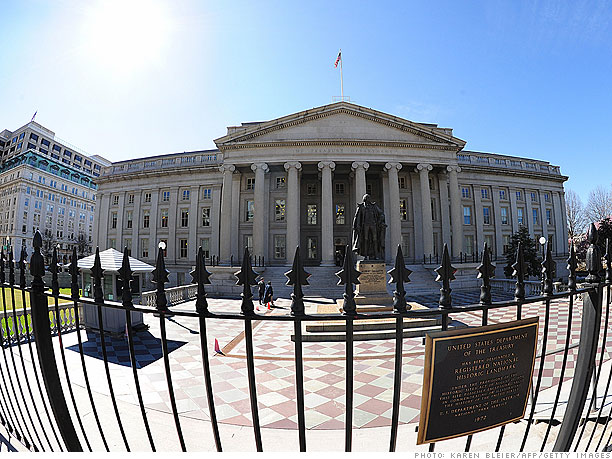
At a meeting in Washington on September 12, former Treasury Secretaries Robert Rubin and James Baker discussed the upcoming “fiscal cliff.” The forum was held in order to discuss the national debt and potential financial solutions. Treasury Secretaries from both parties were invited to discuss future financial options.
Both responded to the Congressional Budget Office (CBO) report that indicates the increased taxes and reduced spending scheduled to take place in January of 2013 could lead to recession. The Washington name for the potential financial challenge to the nation is “fiscal cliff.”
Rubin Speaks
Former Secretary Rubin stated, “It may be that for all kinds of reasons one party or another decides that’s the way to negotiate. But if we go over, we can’t stay over for very long, that’s for sure.” Rubin was referring to the effect of the potential fiscal cliff on negotiations between the parties in the November Congressional session.
Baker Speaks
Former Treasury Secretary James Baker joined by satellite; he stated, “There will be a recognition that we have to move the cliff out … so that we have time to deal with it and deal with it in an effective and orderly way, and I think that’s what’s going to happen.”
Secretary Baker was referring to proposals by Assistant Senate Majority Leader Richard Durbin (D-IL) and others. Durbin has introduced a plan to delay the scheduled changes for six months to enable the Senate Finance Committee and House Ways and Means Committee to develop and pass new legislation.
Boehner Speaks
House Speaker John Boehner (R-OH) was asked this week about the fiscal cliff and whether a compromise is possible. Boehner stated he is “not confident at all” that the House and Senate will be able to act. The House passed the Job Protection and Recession Prevention Act of 2012 (H.R. 8) to extend all tax rates for one year. The House also has passed the Pathway to Job Creation through a Simpler, Fairer Tax Code Act of 2012 (H.R. 6169) to set up a fast-track process for tax reform in 2013.
Assessment
However, the Senate has passed the Middle Class Tax Cut Act (S. 3412) and would increase taxes for upper-income individuals. Senate Majority Leader Harry Reid (D-NV) still indicated that he hopes for a compromise in November.
Conclusion
Your thoughts and comments on this ME-P are appreciated. Feel free to review our top-left column, and top-right sidebar materials, links, URLs and related websites, too. Then, subscribe to the ME-P. It is fast, free and secure.
Link: http://feeds.feedburner.com/HealthcareFinancialsthePostForcxos
Speaker: If you need a moderator or speaker for an upcoming event, Dr. David E. Marcinko; MBA – Publisher-in-Chief of the Medical Executive-Post – is available for seminar or speaking engagements. Contact: MarcinkoAdvisors@msn.com
Our Other Print Books and Related Information Sources:
Health Dictionary Series: http://www.springerpub.com/Search/marcinko
Practice Management: http://www.springerpub.com/product/9780826105752
Physician Financial Planning: http://www.jbpub.com/catalog/0763745790
Medical Risk Management: http://www.jbpub.com/catalog/9780763733421
Hospitals: http://www.crcpress.com/product/isbn/9781439879900
Physician Advisors: www.CertifiedMedicalPlanner.org



Share this:

Filed under: Alerts Sign-Up, Financial Planning, Health Law & Policy | Tagged: CBO, COngressional Budget Office, Fiscal Cliff, James Baker, John Boehner, Richard Durbin, Robert Rubin |
 The Leading Business Education Network for Doctors, Financial Advisors and Health Industry Consultants
The Fiscal Cliff
Many thanks for this post.
I enjoyed it and the cautionary tale.
Dr. Mark
LikeLike
Dr. Mark,
I believe the most likely outcome will be a compromise that consists of relatively modest spending cutbacks and minor changes to the tax code.
It would be enough deficit reduction to avoid the sequester, allowing about half of the $720 billion of the cliff’s contraction to take effect in 2013.
Dr. David Edward Marcinko MBA
http://www.CertifiedMedicalPlanner.org
LikeLike
Senators Seek to Avoid “Fiscal Cliff”
Immediately after the November 6 election, members of Congress will meet on Capitol Hill to discuss potential budget and tax solutions.
A “Gang of Eight” Senators have been meeting to prepare a comprehensive proposal. Four Democratic and four Republican Senators representing the whole spectrum of the Senate are diligently seeking a solution. Democratic Senators Richard J. Durbin (D-IL), Michael Bennet (D-CO), Mark Warner (D-VA) and Kent Conrad (D-ND) are joined by Republican colleagues Tom Coburn (R-OK), Mike Crapo (R-ID), Saxby Chambliss (R-GA) and Mike Johanns (R-NE).
If there is no action, the economy could face a sharp downturn. The National Association of Manufacturers published a statement and noted, “The fiscal cliff has forced manufacturers to plan for a future in which business is down and their tax bills are up. Manufacturers have had to put off plans to expand and hire new workers to protect themselves against an increasingly negative business climate – resulting in slowing economic growth and job loss in the manufacturing community.”
While the “Gang of Eight” is attempting to pursue solutions, Senate rules create obstacles to proceeding directly to a completed bill. The Senate Budget Committee and Senate Finance Committee have both been holding hearings and it requires several months to follow the normal Senate process.
Both Senate leaders are monitoring the actions, but are not actively participating. Sen. Majority Leader Harry Reid (D-NV) indicated that he will listen to proposals by the group. Minority Leader Mitch McConnell (R-KY) also has indicated he will review proposals from the “Gang of Eight.”
Source: Children’s Home Society of Florida Foundation
Editor’s Note: While moving a bill through the Senate will be challenging, the sheer urgency of the economic picture after the elections on November 6 will encourage prompt action. The major negotiations are likely to be between President Barack Obama and Speaker of the House John Boehner (R-OH), with input from Majority Leader Reid and other Congressional leaders. However, the “Gang of Eight” solutions may provide a basis for a compromise budget and tax bill.
LikeLike
Hopes for “Framework” to Avoid Fiscal Cliff
Washington was quiet this week. Both houses of Congress are adjourned for the Thanksgiving holiday recess. Members of Congress will return to start working on the tax and budget bills on November 26th.
Aides for leaders of both parties met to discuss various options. The different strategies for increasing taxes on individuals with upper incomes and the various options for limiting the growth of spending were studied. Aides will discuss options with Members of Congress when they return.
Speaker John Boehner (R-OH) continues to hope that a compromise and a “framework” for a larger tax and budget reform in 2013 can be completed. He has expressed a willingness to consider revenue increases if accompanied by appropriate budget changes.
One of the topics discussed in the Washington meetings is the extension of alternative minimum tax (AMT) exemptions and various tax extenders. House Ways and Means Chair Dave Camp (R-MI) suggested that there would not be separate bills for the AMT exemption and the tax extenders. Rather, these provisions must be included in the comprehensive tax and budget bill designed to address the upcoming fiscal cliff. Camp stated, “Again, I don’t think that will move alone. But I do hope that we’ll address the extenders issues before the end of the year.”
The White House and leaders of Congress hope to have a legislative framework completed by December 1st.
Source: Children’s Home Society of Florida Foundation
Editor’s Note: It is now clear that AMT and the tax extenders will be part of one comprehensive tax and budget bill. It is too difficult to move multiple bills through the Senate this late in the year. While it is still a long way to agreement, both the White House and leaders in Congress appear to be committed to moving forward in this process.
LikeLike
Bowles Says U.S. Fiscal Cliff Deal Unlikely by End of Year
The co-chairman of President Barack Obama’s 2010 fiscal commission said it’s unlikely the president and Congress will reach a deal by the end of this year to avert the so-called fiscal cliff.
So – What do FAs need to know?
http://www.financial-planning.com/news/10-Things-Advisors-Need-to-Know-About-the-Fiscal-Cliff-2681911-1.html?ET=financialplanning:e12298:86235a:&st=email&utm_source=editorial&utm_medium=email&utm_campaign=FP_Daily__112812
Ann Miller RN MHA
LikeLike
It’s all Political
The fiscal cliff is more of a political one; don’t; you think?
Jasper
LikeLike
Will the ‘Fiscal Cliff’ Affect Healthcare and Doctors?
http://www.physiciansnews.com/2012/12/05/how-the-fiscal-cliff-affects-health-care-docs/
It sure will affect me!
Roman
LikeLike
How the ‘Fiscal Cliff’ Affects Healthcare
The impending “fiscal cliff” is a package of automatic spending cuts and tax hikes set to kick in next month unless President Barack Obama and Capitol Hill agree on a way to stop them. Under the series of automatic spending cuts known as “sequestration,” Medicare providers would be subject to an across-the-board 2 percent payment cut, or $11 billion in fiscal 2013.
Physicians who accept Medicare patients would face the 2 percent cut on top of an already scheduled 27 percent reduction in January unless Congress steps in to stop it. Medicaid does not face any automatic cuts starting Jan. 1. The Supreme Court’s ruling made the health law’s Medicaid expansion optional for states, so there’s concern that any reductions in federal Medicaid spending might make governors even more reluctant to expand the federal-state program.
Source: Mary Agnes Carey, Kaiser Health News via Medscape News [12/6/12]
LikeLike
Dr. Marcinko,
Did you know that more than 70 tax breaks enjoyed by individuals, doctors, clinics and medical practices, and businesses expired at the end of 2011?
But, if Congress doesn’t extend them retroactively back to the beginning of this year, a typical middle-class family could face a $4,000 tax increase when it files its’ 2012 return in the spring.
Even more so … for many medical professionals.
Herschel
LikeLike