







 Support our online development, and advance our onground research initiatives in free market economics, as we seek to showcase the brightest Next-Gen minds.
THE ME-P DISCLAIMER: Posts, comments and opinions do not necessarily represent iMBA, Inc., but become our property after submission. Copyright © 2006 to-date. iMBA, Inc allows colleges, universities, medical and financial professionals and related clinics, hospitals and non-profit healthcare organizations to distribute our proprietary essays, photos, videos, audios and other documents; etc. However, please review copyright and usage information for each individual asset before submission to us, and/or placement on your publication or web site. Attestation references, citations and/or back-links are required. All other assets are property of the individual copyright holder.
Support our online development, and advance our onground research initiatives in free market economics, as we seek to showcase the brightest Next-Gen minds.
THE ME-P DISCLAIMER: Posts, comments and opinions do not necessarily represent iMBA, Inc., but become our property after submission. Copyright © 2006 to-date. iMBA, Inc allows colleges, universities, medical and financial professionals and related clinics, hospitals and non-profit healthcare organizations to distribute our proprietary essays, photos, videos, audios and other documents; etc. However, please review copyright and usage information for each individual asset before submission to us, and/or placement on your publication or web site. Attestation references, citations and/or back-links are required. All other assets are property of the individual copyright holder.


Easing the Pain of High Gas Prices
By Dr. David Edward Marcinko MBA CMP®
[Editor-in-Chief]
 We published a popular post on Easter Sunday 2012 about high gas prices. It was well received. So, since medical professionals often drive expensive, and inefficient cars [read expensive gas guzzlers], I thought it might be a good idea to relay my personal driving tips on how medical and all ME-P colleagues [MDs and FAs], can save big [or at least a bit] at the gas pump.
Link: https://medicalexecutivepost.com/2012/04/08/pain-at-the-2012-easter-sunday-pump/
Guilty – as Charged?
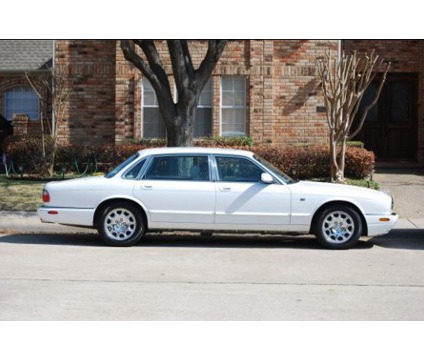
Look, I am a doctor and financial advisor, as well as journalist, editor, surgeon and expert legal witness. I wear many hats and my one indulgence is my pearl white Jaguar XJ-V8-LWB. This classic baby was a gift from my wife who bought it from a singular previous owner [software mogul] in pristine physical and engineering condition after years of meticulous and loving garaged care.
In other words, she let some someone else take the huge depreciation hit on a luxury European touring vehicle that originally sold for up to $100,000 direct from Coventry England. Fortunately, this is not a primary vehicle and I use it only on the weekends, weather permitting. What a joy to drive. Smooth and quiet; just like a hybrid vehicle. And, it is not unusual for nearby folks to stop, stare and even wave at me as I drive by.

Why?
So, if rising gas prices are making a huge dent in your wallet, I have a solution to save you money at the pump! Try these simple tips and you’ll find the savings quickly add up.
Tips and Quips
* At least once a month, make sure your tires are properly inflated according to the vehicle’s specifications. Over-inflating tires by even a pound or two might improve fuel mileage in the short run, but it causes tires to wear prematurely. The money you save in fuel is less than what you would pay to replace the tires. But, I am guilty of this tactic because I have Pirelli tires on my Jag.
* Buy the right octane. Look in your vehicle’s owner’s manual for the correct octane level for your car’s engine. Odds are that it will be regular unleaded. Your vehicle should run just fine on regular if that’s what the manual recommends; and it costs less. Again, I use and need 93 plus Octane.
* An annual full-vehicle inspection, including the air conditioning system, may help you avoid costly repairs. I detail and check out my automobile every quarter.
* Vehicles use less fuel the more slowly they travel. Try dropping your highway speed by 10 mph to see big savings at the pump. Here, I follow the rules.
* Extra weight in your vehicle makes it work harder, hence less fuel mileage. If you have a trunk full of junk, empty it out for better fuel economy and to save money. My Jag weighs 4,800 pounds.
* Nothing can put a damper on spring travel plans more than unpredictable gas prices. Search for the best price before you go to fill up. I use a smart-phone and auto navigation system for this chore.
Assessment
With such gorgeous weather, driving your car with sunroof open might be the first thing on your mind. So, just by taking a few small steps, you’ll save money on your vehicle, meaning more money stays in your wallet – while enjoying it more.
Conclusion
Your thoughts and comments on this ME-P are appreciated. Feel free to review our top-left column, and top-right sidebar materials, links, URLs and related websites, too. Then, subscribe to the ME-P. It is fast, free and secure.
Link: http://feeds.feedburner.com/HealthcareFinancialsthePostForcxos
Speaker: If you need a moderator or speaker for an upcoming event, Dr. David E. Marcinko; MBA – Publisher-in-Chief of the Medical Executive-Post – is available for seminar or speaking engagements. Contact: MarcinkoAdvisors@msn.com
Our Other Print Books and Related Information Sources:
Health Dictionary Series: http://www.springerpub.com/Search/marcinko
Practice Management: http://www.springerpub.com/product/9780826105752
Physician Financial Planning: http://www.jbpub.com/catalog/0763745790
Medical Risk Management: http://www.jbpub.com/catalog/9780763733421
Hospitals: http://www.crcpress.com/product/isbn/9781439879900
Physician Advisors: www.CertifiedMedicalPlanner.org


More photos: DEM’s JAGUAR
Share this:

Filed under: iMBA, Inc., Insurance Matters, Touring with Marcinko | Tagged: Dr. David Marcinko, gas prices, gas shortage, How Smart Doctors Can Save Big at the Pump, Jaguar, octane ratings, oil prices, tire pressure |
 The Leading Business Education Network for Doctors, Financial Advisors and Health Industry Consultants
Dr. Marcinko
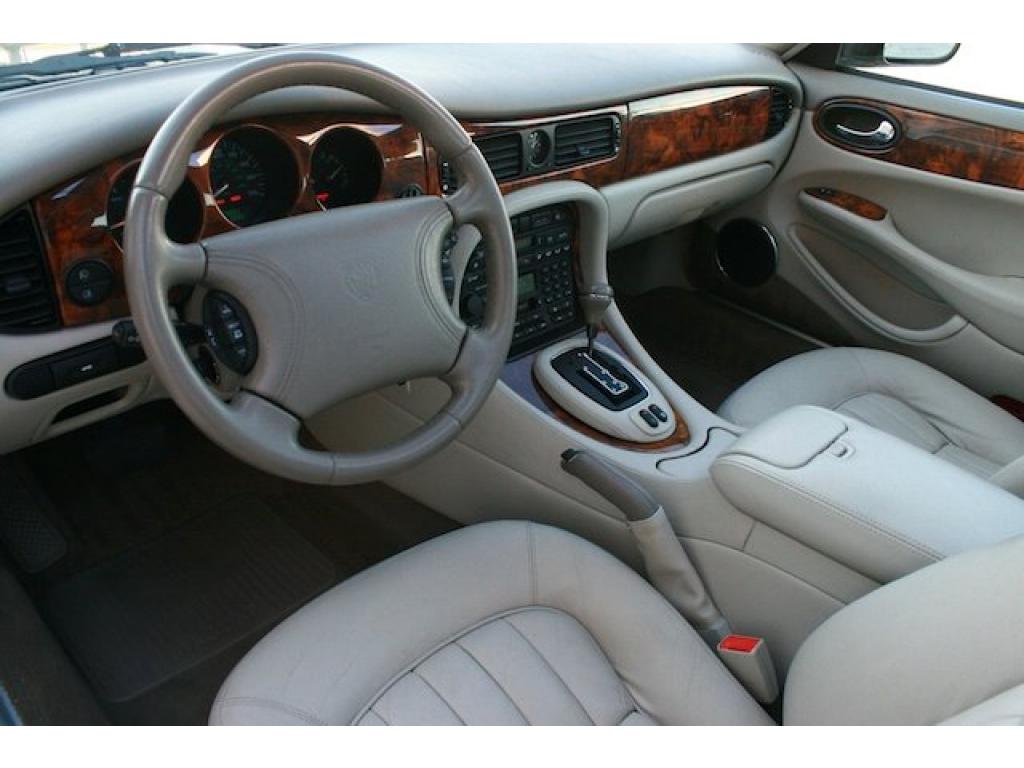
My 2004 XJ series Jaguar V8 has an Alpine premium sound system and six-disc changer, heated front and rear seats, wood and leather steering wheel and gearshift knob, boxwood-inlaid walnut trim, chrome grille and splitter, chrome mirror caps and door handles and special wheels.
I enjoy driving it immensely; as I am sure you do, as well.
Dr. Bradley
LikeLike
Pre-Owned Vehicles
Dr. Marcinko – It seems that you and your wife practice what you preach.
The most expensive miles on a car are the first 10,000. Let someone else drive those for you. Buying used can save a lot of money considering how little value the car has actually lost.
Isaac
LikeLike
History Lesson
I love jaguars, so here is a brief history of the vehicle and company.
Jaguar cars have a long history of elegant styling and sporting performance. The brand was born in the United Kingdom, and for years its vehicles were synonymous with the old-world luxury of the British upper classes. More recently, Jaguar has been under the ownership of other automakers, but Jaguar cars will always bear the unmistakable gleam of traditional English refinement.
The company traces its roots to the Swallow Sidecar Company, founded in 1922 by Bill Lyons and William Walmsley. Based in Blackpool, England, the company produced a popular line of aluminum motorcycle sidecars. Swallow eventually switched its focus to automobile production, changing its name to SS Cars Ltd. in 1933. The first vehicle to carry the Jaguar name was the SS Jaguar 100, released in 1935.
After World War II, SS Cars switched its moniker to Jaguar so as not to be associated with the Nazi paramilitary organization that bore the same initials. Its first postwar offering was 1948’s Mark V. The luxury sedan was joined that year by the XK 120, a sports car that was the fastest production automobile of its day — its name indicating its top speed. The XK 120 proved quite popular, and helped Jaguar establish a strong presence in the sports car market.
By the 1950s, Jaguar had begun exporting luxury vehicles to the United States. Created just for the American market, the Mark VII Saloon was introduced in 1951 and was a hit with stateside motorists. In 1956, the car took the prize at the Monte Carlo Rally. Later in the decade, Jaguar added the Mark VIII and Mark IX to its lineup. Meanwhile, the XK became the XK 140 as performance increased. Then came the XK 150 which was obviously even faster, though not quite as curvaceously alluring as the 120/140 models.
The 1960s saw the launch of one of Jaguar’s most well-known models. The E-Type (or XK-E as it was known in the U.S.) debuted for 1961. The new sports car, available as either a coupe or convertible, provided performance and refinement wrapped up in an undeniably sexy package. The success of groups like the Beatles and the Rolling Stones and icons like Twiggy the fashion model made British culture a hot commodity during the ’60s — a fact that likely had positive implications for Jaguar’s popularity in the U.S.
A decade later, Jaguar introduced the XJ6C and XJ12C coupes to join the sedans. At one point, the XJ12 was the fastest production sedan of its day. By the mid-’70s the lovely E-Type was replaced by the relatively bland XJ-S. The 1980s saw Jaguar continuing to raise the bar in performance with the launch of the XJ-S HE and a true world supercar, the XJ220.
By this time, however, Jaguar’s cars had also built up a reputation for questionable reliability, electrical problems being the chief source of owners’ angst. Increased competition from German automakers and adverse exchange rates didn’t help matters either. Without much capital to work with to improve matters, the company decided to pursue a partnership with another company. This decision ultimately led to a full buyout of Jaguar by Ford in 1990.
Ford’s influence (and financial support) was evident with the 1997 launch of Jaguar’s XK8 and supercharged XKR sports cars. Powering both was Jaguar’s new AJ-V8, a compact yet powerful engine that was also used in certain Land Rover vehicles. A few years later, Jaguar made an effort to broaden its product line with the introduction of a lower-priced, entry-luxury compact sedan known as the X-Type. Unfortunately, this model sold poorly, as its modest European Ford sedan underpinnings proved to be a liability. Around this time, Jaguar’s old-school traditional styling grew stale as competitors moved into the new millennium with cutting-edge, modern designs inside and out.
Sales plummeted, and Jaguar’s financial problems caused further headaches for parent company Ford, which was also experiencing financial turmoil. Ford cut its losses and sold Jaguar (and fellow British premium brand Land Rover) to Indian manufacturer Tata in 2008.
Though reliability still remains a concern, new models like the XF and redesigned icons XK and XJ seem to indicate a bright Jaguar future, as they feature modern designs sprinkled with a fair share of classic Britannic charm.
So – Dr. Marcinko – if you avoid the timing chain and nickel lining engine issues on your curvy XJ-V8-L, you may have a real winner here. I reckon your model is a 2001-05 and a magnificent beauty. Hope it performs well, for you. There is no other automobile like it in the world.
“It ROARS”
Video: http://www.youtube.com/watch?v=2mWzK5KeUL4&feature=related
A Jag Fan
Leland
LikeLike
Dr. Marcinko
Send us some more photographs of your vehicle when you can.
Dwight
LikeLike
Dr. Marcinko,
I too have a Jaguar XJ series, V8, wide body, 2004 model that I love. It not only clicks, it roars, and then purrrrrs!
Ward
LikeLike
Dwight
More photos as requested:
Click to access dems-jaguar.pdf
Dave Marcinko
LikeLike