





 Support our online development, and advance our onground research initiatives in free market economics, as we seek to showcase the brightest Next-Gen minds.
THE ME-P DISCLAIMER: Posts, comments and opinions do not necessarily represent iMBA, Inc., but become our property after submission. Copyright © 2006 to-date. iMBA, Inc allows colleges, universities, medical and financial professionals and related clinics, hospitals and non-profit healthcare organizations to distribute our proprietary essays, photos, videos, audios and other documents; etc. However, please review copyright and usage information for each individual asset before submission to us, and/or placement on your publication or web site. Attestation references, citations and/or back-links are required. All other assets are property of the individual copyright holder.
Support our online development, and advance our onground research initiatives in free market economics, as we seek to showcase the brightest Next-Gen minds.
THE ME-P DISCLAIMER: Posts, comments and opinions do not necessarily represent iMBA, Inc., but become our property after submission. Copyright © 2006 to-date. iMBA, Inc allows colleges, universities, medical and financial professionals and related clinics, hospitals and non-profit healthcare organizations to distribute our proprietary essays, photos, videos, audios and other documents; etc. However, please review copyright and usage information for each individual asset before submission to us, and/or placement on your publication or web site. Attestation references, citations and/or back-links are required. All other assets are property of the individual copyright holder.


Tenant Improvements Can Be Good Investment
By Rick Kahler MS, CFP®, ChFC, CCIM
 Recently I read a news story about a physician [small business owner] whose landlord was not renewing her lease. A chain restaurant was buying the building and intended to raze it. The doctor [business owner] was distraught, as she had recently spent $30,000 to remodel the property.
Dual Perspectives
One common reaction to stories like this is anger at a landlord for unfairly selling a building out from under a tenant.
Another is, “Why would tenants spend so much money remodeling a building they didn’t own?”
Neither response sees the whole story.
I empathized with this doctor’s loss as a result of a bad business decision. The bad decision wasn’t spending $30,000 to remodel a space she didn’t own. Business owners make such “tenant improvements” all the time. Every tenant or doctor’s office you see in a mall has poured thousands of dollars into fixing up and customizing their space. Tenant improvements can range from repainting a space to building a fast food restaurant on leased land.
Poor Decisions
The poor business decision this owner made was not being sure the lease term ran for long enough to recoup the cost of the tenant improvements. The cost of any tenant improvement is a pure expense that needs to be factored in as part of rent and amortized over the life of the lease. This is because when the lease expires, both parties have the right to not renegotiate a new lease. Any tenant improvements become the property of the owner. Landlords who choose to use property for something different when a lease expires aren’t abusing or taking advantage of tenants—they are simply exercising the contractual rights agreed to by both parties.
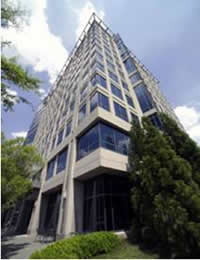
Mall Shells – Not Sea Shells
Most new strip centers or malls lease relatively unimproved spaces, sometimes called shells. Tenants get four walls, a cement floor, and bare girders above. It’s the tenants’ responsibility to finish the spaces in the manner they want. This makes a lot of sense, as usually each retailer is very specific about the floor plan, colors, and building materials they use in their spaces. At the end of the lease the relinquished tenant improvements, with years of wear and tear, are typically worth very little. New tenants will rip them out and finish the space according to their needs.
Example
Let’s take an example of a 5,000-square-foot shell that rents for $8 a square foot annually. Let’s say it will cost $100 a square foot for the retailer to finish the space. If the lease extends for 20 years, the annual cost of the tenant improvements is $5 a square foot ($100 divided by 20 years). This brings the total cost for the leased space to $13 a square foot ($8 shell rent plus $5 for improvements).
With a four-year lease, however, the amortized cost would be $27 a square foot. A one-year lease would cost $108 a square foot. Either one would make the space too expensive. A doctor business owner unable to get a longer term would either substantially reduce the cost of the tenant office improvements, or look elsewhere.
Sometimes a tenant needs to spend a lot to improve a space, but doesn’t want to commit to a long-term lease. In this case the tenant’s best strategy is to get the landlord to improve the space so the tenant isn’t left losing a substantial amount of money if either party doesn’t renew the lease.
Assessment
Medical provides who are business owners need to understand their rights and responsibilities as tenants. They also need to be sure the costs of rent and tenant improvements are reasonable over the life of the lease. It’s a good idea to consult both an attorney and an accountant before signing any lease.
Conclusion
Your thoughts and comments on this ME-P are appreciated. Feel free to review our top-left column, and top-right sidebar materials, links, URLs and related websites, too. Then, subscribe to the ME-P. It is fast, free and secure.
Link: http://feeds.feedburner.com/HealthcareFinancialsthePostForcxos
Speaker: If you need a moderator or speaker for an upcoming event, Dr. David E. Marcinko; MBA – Publisher-in-Chief of the Medical Executive-Post – is available for seminar or speaking engagements. Contact: MarcinkoAdvisors@msn.com
Our Other Print Books and Related Information Sources:
Health Dictionary Series: http://www.springerpub.com/Search/marcinko
Practice Management: http://www.springerpub.com/product/9780826105752
Physician Financial Planning: http://www.jbpub.com/catalog/0763745790
Medical Risk Management: http://www.jbpub.com/catalog/9780763733421
Hospitals: http://www.crcpress.com/product/isbn/9781439879900
Physician Advisors: www.CertifiedMedicalPlanner.org

Share this:

Filed under: "Doctors Only", Practice Management | Tagged: doctor tenants, leases, rick kahler, Some Physicians are Tenants, tenant leases, tenant rights | Leave a comment »
 The Leading Business Education Network for Doctors, Financial Advisors and Health Industry Consultants