





 Support our online development, and advance our onground research initiatives in free market economics, as we seek to showcase the brightest Next-Gen minds.
THE ME-P DISCLAIMER: Posts, comments and opinions do not necessarily represent iMBA, Inc., but become our property after submission. Copyright © 2006 to-date. iMBA, Inc allows colleges, universities, medical and financial professionals and related clinics, hospitals and non-profit healthcare organizations to distribute our proprietary essays, photos, videos, audios and other documents; etc. However, please review copyright and usage information for each individual asset before submission to us, and/or placement on your publication or web site. Attestation references, citations and/or back-links are required. All other assets are property of the individual copyright holder.
Support our online development, and advance our onground research initiatives in free market economics, as we seek to showcase the brightest Next-Gen minds.
THE ME-P DISCLAIMER: Posts, comments and opinions do not necessarily represent iMBA, Inc., but become our property after submission. Copyright © 2006 to-date. iMBA, Inc allows colleges, universities, medical and financial professionals and related clinics, hospitals and non-profit healthcare organizations to distribute our proprietary essays, photos, videos, audios and other documents; etc. However, please review copyright and usage information for each individual asset before submission to us, and/or placement on your publication or web site. Attestation references, citations and/or back-links are required. All other assets are property of the individual copyright holder.


US Defense Department Leads the Way
By Staff Reporters
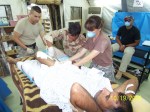 According to Peter Bauxbaum on May 13, 2009, the Defense Health Information Management System [DHIMS] is in the process of deploying AHLTA [Armed Forces Health Longitudinal Technology Application] Dental; a module eDR included with the new AHLTA 3.3 release.
It is the U.S. military’s first integrated dental and medical electronic health record.
Link: http://govhealthit.com/articles/2009/05/13/dod-electronic-dental-record.aspx?s=GHIT_190509
Assessment
And so, when will eHRs for osteopaths [eOsteoRs], podiatrists [ePodRs] and optometrists [eOptRs] become available? Is this an occasion when the military is an early HIT adopter?
Conclusion
Your thoughts and comments on this ME-P are appreciated. Feel free to review our top-left column, and top-right sidebar materials, links, URLs and related websites, too. Then, subscribe to the ME-P. It is fast, free and secure.
Link: http://feeds.feedburner.com/HealthcareFinancialsthePostForcxos
Speaker: If you need a moderator or speaker for an upcoming event, Dr. David E. Marcinko; MBA – Publisher-in-Chief of the Medical Executive-Post – is available for seminar or speaking engagements. Contact: MarcinkoAdvisors@msn.com
OUR OTHER PRINT BOOKS AND RELATED INFORMATION SOURCES:
DICTIONARIES: http://www.springerpub.com/Search/marcinko
PHYSICIANS: www.MedicalBusinessAdvisors.com
PRACTICES: www.BusinessofMedicalPractice.com
HOSPITALS: http://www.crcpress.com/product/isbn/9781466558731
CLINICS: http://www.crcpress.com/product/isbn/9781439879900
BLOG: www.MedicalExecutivePost.com
FINANCE: Financial Planning for Physicians and Advisors
INSURANCE: Risk Management and Insurance Strategies for Physicians


Share this:

Filed under: "Doctors Only", Breaking News, Career Development, Military Medicine, Quality Initiatives, Research & Development | Tagged: AHLTA, AHLTA 3.3, Armed Forces Health Longitudinal Technology Application, DHIMS, EHRs, EMRs, HIT, IT, Military Medicine, Peter Bauxbaum, US Defense Department |
 The Leading Business Education Network for Doctors, Financial Advisors and Health Industry Consultants
They’ll have to draft me first.
D. Kellus Pruitt; DDS
LikeLike
I posted this on Anne Zieger’s FierceHealthIT blog in response to her article, “Spotlight: DoD rolls out dental EMR.”
http://www.fiercehealthit.com/story/spotlight-dod-rolls-out-dental-emr/2009-05-17#comment-715
Digital dental records are less than worthless
Anne Zieger, please permit me to issue an open challenge to anyone, civilian or military, who would like to argue that electronic dental records are a good idea. I declare they are absurd.
Attention IT stakeholders in dentistry: Come on out anonymously if you are short of confidence. I can certainly understand why you might feel inadequate these days. I challenge anyone to give it their best shot. Please give me a chance to help you describe why you are wrong about IT technology. If you don’t have a name, I can assign one.
A week ago, I read Peter Buxbaum’s PR piece about the DoD’s dental electronic health records in GovernmentHealthIT. It is obvious that Air Force Col. Page McNall, the chief dental officer at the Defense Health Information Management System, is excited about the newest and coolest waste of tax dollars that does nothing to improve soldiers’ health. In fact, because the military is notorious for copious and routine data breaches of health information, including patient identifiers, anyone can see that soldiers and their families are much more likely to be harmed by electronic dental records than helped. But what can those in the military say? Not much, because they are in the military.
Meanwhile, back in the real world, where physicians are allowed to drag their feet in adoption of eMRs, eDRs are simply going nowhere. And as digital information becomes increasingly expensive to maintain because of HIPAA and the Red Flags Rule, dentists arguably could start abandoning computers altogether (Gasp!) The price of being HIPAA compliant already gives an unfair market advantage to dentists who do not transmit patient data electronically. What does that say about the value of eDRs? It confirms that they are worse than worthless. But for the military, that’s no big deal. They waste far more tax dollars than this on things that actually make some sense.
I understand why Col. McNall is excited. I’m certain that officers’ interest in IT technology can mean quick advancement opportunities, including perhaps business opportunities in IT fantasy upon retirement. However, the experiment in which the colonel invested his career ultimately dead ends at the junction with the real world. His protected efforts may continue to make sputtering progress in the military ranks, but only because of the momentum of entrenched and politically connected IT sponsors. IT is, in fact, a lie.
In the real world, by comparison, the lie is supported by well connected stakeholders such as Glen Tullman of Allscripts who listen to stockholders for the common good, rather than the doctors who will be bribed, and later threatened, in order to force them to purchase Allscripts’ products that are so transparently inferior that they cannot succeed in the fee market on their own merits. The built-in unaccountability of our nation’s ad hoc $20 billion five-year plan reminds me of the development of the worse automobile ever made – the 1975 Soviet East German Trabant. The difference is that the Trabant is more user-friendly, reliable and has fewer leaks around the doors. In addition, pound-for-pound, the Trabant is also worth more in salvage than eDRs, even though its body is made of non-reusable and environmentally harmful materials that are impossible to dispose of safely. Most importantly, the Trabant killed fewer Americans than contaminated digital health histories will.
Since the military is isolated from the cleansing affect of natural competition as well as liability, Air Force colonels don’t have to listen to anyone who might be hurt by bad military decisions. Orders will simply be obeyed. Period. This means the military’s practicing dentists’ motivations to get along are far different than the marketplace influences in civilian practice. While captains in the dental corps say things like, “Yes, Sir. Right away, Sir.” to colonels, we obey consumers. Which brings me to a wonderful chunk of irony in this Memorial Day story: I am always grateful for the selfless, brave protection of US soldiers. For one thing, their proven professionalism and courage in battle allows me to say far less respectable things to national leaders without fear of endangering me or my family. Not all citizens, even in the western hemisphere and as close as Cuba, enjoy the freedoms that our soldiers defend.
Allow me to give you an example of what it means to be an American: I have the Constitutional freedom to say, “Glen Tullman, you can take your worthless IT crap and just move on down the road and don’t look back. There is nothing in my neighborhood that would interest you, so try not to embarrass yourself in front of your stockholders.” In turn, Tullman has the freedom not to respond, and he’d be wise to take advantage of that freedom.
Col. McNall says that because of interoperable eDRs, “medical providers and dental professionals can now share information that is relevant to their treatment of patients.”
Come on now, Colonel. It that the best you’ve got? Have you never heard of the telephone, the fax machine or even the US mail? Improvise, for crying out loud. Don’t make lame rationalizations.
I wish the colonel and I could have a sincere nose-to-nose discussion somewhere on the Internet about the merits of eDRs. If he has any fight in him, I think we could draw a crowd. I can easily bring along some sports fans I know.
Colonel McNall should bring a ladder and a sack lunch.
D. Kellus Pruitt; DDS
LikeLike
Thanks for responding on the Internet, whoever you are. I think Col. McNall can find something to respond to if he follows this link to my comment on Medical Executive-Post.
https://healthcarefinancials.wordpress.com/2009/05/21/military-electronic-dental-records-edrs/#comment-4172
It is very easy for him to respond, if he is so inclined. I think the publisher, Dr. David Macinko, would be thrilled to hear from him.
Sincerely,
D. Kellus Pruitt; DDS
_____________________________________________
From: MilHealth Healthdotmil [mailto:milhealth@live.com]
Sent: Tuesday, May 26, 2009 2:22 PM
To: darrelldk@tx.rr.com
Subject:
Darrell,
Thank you for contacting the MHSOCIO Twitter account. Please let me know what questions you have about digital dental records. Col. Page McNall is not available to respond to your request.
Best regards,
Military Health System
Office of the Chief Information Officer
LikeLike
Prodding Col. Page McNall
I posted this on Twitter today.
@mhsocio Still have not heard from Col. Page McNall. I say eDRs are expensive and dangerous and don’t improve care. What’s he have to say?
Darrell K. Pruitt; DDS
LikeLike
I heard from the Air Force a few minutes ago. How about that? Here is their comment, preceded by my response. (I didn’t want to look too impressed).
________________________________________
From: Darrell [mailto:darrelldk@tx.rr.com]
Sent: Thursday, May 28, 2009 1:22 PM
To: ‘MilHealth Healthdotmil’
Subject: RE: Digital Dental Records
Thanks, whoever you are. Darrell
________________________________________
From: MilHealth Healthdotmil [mailto:milhealth@live.com]
Sent: Thursday, May 28, 2009 11:42 AM
To: darrelldk@tx.rr.com
Subject: Digital Dental Records
Darrell,
The MHS Office of the Chief Information Officer is reviewing your blog post on digital dental records and will contact you with information about the military’s digital dental records initiatives. Thank you for contacting the MHS OCIO Twitter account.
Best regards,
Military Health System
Office of the Chief Information Officer
LikeLike
Dr. Pruitt,
So, this is what socialized [nationalized] governmental medicine will be like; correspondences from nameless and faceless bureaucrats? Thanks for the heads-up!
A Civilian
LikeLike
Thanks, Civi.
I think your point concerning the level of respect patients and providers can anticipate from socialized medicine is astute and timely, unfortunately. I would like to add that eDRs, aided by HIPAA, is the tool that can make your fears a reality in a dental chair if monsters like Delta Dental and BCBSTX have their way with HIPAA’s national NPI requirements – which legally provide for pay-for-performance based on FOIA-discloseable claims records (That was probably far too much information stuffed into one paragraph. Sorry).
Interoperable digital records as mandated by the 1996 HIPAA Rule are clearly not being demanded by the principals in dental care – dental patients and dentists – for the same reason that CCHIT hasn’t a clue that dentists are also licensed healthcare providers: There is no money to be made in digital dental records because they are simply of no benefit to the principals. Duh.
Worthlessness has everything to do with why eDRs are being attempted in the military. Civilian dentists just don’t want them. And that is a shameful loss for the nation’s future health care. Imagine the Evidence-Based discoveries that might have already been uncovered if control of clinical data had not been granted to stakeholders over a decade ago in exchange for political contributions. There are so many common sense ways to introduce eDRs to dentistry, but unfortunately they aren’t CCHIT-certified because applications like computer interfaces with fax machines are not at all what insurance companies demand. Forget about dentists’ and patients’ concerns about privacy.
If the natural, consumer-friendly and traditional business model of dentistry is driven further from unimpeded fair competition that exists only in a free market – patients’ rights to free choices in providers will be eliminated according to cost-effectiveness as determined by adjustable algorithms in stakeholders’ computers. Like casino odds, fuzzy actuary science creates complicated insurance rules that always favor managed care – including universal care or any other single-payer type plan yet to be rolled out.
Today, the military’s AHLTA software is the most widely implemented eDR system in the nation. If civilian dentists don’t wake up soon, they could be forced to purchase eDRs similar to the ones Air Force colonels like (I think I smell Delta Dental). That is why I think my challenge to Col. Page McNall is very important, regardless of what a committee tells him to say.
I bet five dollars against the kitty that Col. McNall can’t fly anything over my head that I have not already shot down at least a half a dozen times and in as many ways. I hope he knows that he should leave talking points in the hangar. They’ll boomerang.
From years of experience at this, I can tell you that most command-and-control entities outside the military refuse to publicly engage me because it is so easy to see that my barbaric approach is blatantly unprofessional. I want the Air Force brass to know that I conveniently provide this excuse for anyone who needs it. I offer that because I am aware that some feel very strongly that image is everything.
D. Kellus Pruitt; DDS
LikeLike
My apologies to Col. McNall
I was just informed this morning that Col. Page McNall is a woman. My apologies to Col. McNall and all female soldiers. I meant no disrespect.
In my defense of the faux pas, I would suggest that Col. McNall could have spoken up in the last week or so to correct me if she thought accuracy was important. But then, that is in fact where everything breaks down. How can she possibly defend eDRs in the military when she won’t bother to defend her own identity?
D. Kellus Pruitt; DDS
LikeLike
Indeed, we have a small, but [hopefully] growing military channel on the ME-P.
https://healthcarefinancials.wordpress.com/category/military-medicine/
Ann Miller; RN, MHA
[Executive Director]
LikeLike
A friend of mine who is in the military took exception to my raw opinion of Col. Page McNall’s intentions. He closed the email he sent today with this noble attempt at defending a fellow officer:
“She’s just doing her job trying to figure out a way to improve DoD dental care in a very complicated world, one which is just as ‘real’ as the one in which you reside and one about which you are no expert. I recommend that until you’ve ‘been there, done that,’ you steer clear of the military as a target. Stick with the ‘real world’ which you understand.”
I understand the point he is trying to make, and I am grateful that I have friends who feel comfortable enough in their relationships with me that they give me their best shots. Here is my response to my friend, LT. (Edited for profanity and other good reasons.)
——————————————————————————–
Thanks, LT. Even though I am grateful that you confirmed that my taunts at least have the potential to cause one solitary person in the nation to respond, if privately, I do hope you are not sincerely angry with me. If so, you misinterpret the reason I’m such a butt.
By now you should already know that my primary objective of transparency, after three years of attempting everything from excuse-me polite to in-your-face rude, is unchanged. And I discovered that if I am going to be ignored anyway, I am oh so fond of in-your-face rude, which is much more fun than the approved chain of command for trouble makers. Did you know that my officially designated TDA rep, who is a member of my local dental society, was the first good ol’ boy to give me the bum’s rush when I told him in February of 2006 that I had questions about the appropriateness of the HIPAA Rule in dentistry? He told me that nobody at state level was concerned about HIPAA, and if I wanted to pursue it, I was “on my own.” Does that not scare you just a little bit? And what gives the gatekeeper who practices in Weatherford the right to be officially rude to me? Don’t we both pay the same amount in dues each year?
Currently, I am trying to bring the discussion of the merits of eDRs into the open so others can see that at least in private practice, they are a dangerous waste of money (unless they become de-identified). As a nation, we simply must defeat biased IT/insurance/government alliances such as HIMSS and CCHIT. Otherwise, our grandchildren will pay dearly to reimburse China for loaning us billions of dollars that will be wasted on fantasy in dentistry – just because bone-headed enthusiasts inside and outside the military think digital health records are cool. Politically-inclined, clueless dentists who are successfully elected to positions they cannot handle, are part of the problem in the ADA.
Come on, LT. So what if I know nothing about the military? Big deal! Since I represent only myself, and since my career is worlds apart from those I am prodding into defending themselves, I think you can see that I really don’t really care what people think of my Internet persona. My family and friends don’t even seem to mind. Those few who are paying attention vicariously enjoy my adventure, actually.
So what if I’m misinformed? I’m actually hoping my lack of knowledge makes me an easy target to someone who assembles enough courage to recklessly protect an IT hobby. That would be wonderful. It’s sort of like fishing, and I would love to publicly set the hook deep in the belly of whoever aggressively and confidently swallows that chunk of bait.
And even though you present military reasons for digital dental records that superficially appear sound, I still argue that floating even more identifiable information on the Internet is an unnecessary risk of military families’ welfare, not just soldiers’. Face it, LT, like civilian leaders in IT such as Newt Gingrich, leaders in the military, like Col. Page McNall, envision technology as the goal, and information the tool – not the other way around. She is as guilty as Newt, in my opinion. And I would love for her to correct me about her actual motives. I’ll crush them one by one in front of everyone.
As for Gingrich, if he had any confidence, he would have said something long ago when my critical comment “Beware of the Newt – neither patients’ nor dentists’ friend,” from October remained on his first page for months.
http://community.pennwelldentalgroup.com/forum/topic/show?id=2013420%3ATopic%3A14080
Super-stakeholder Newt Gingrich simply has no backbone
What’s more, the harmful effects of McNall’s blind enthusiasm don’t end with the military, and that is the reason my pre-emptive attack is so necessary for the future of the profession. You are probably unaware that a couple of months ago, Delta Dental stepped up its lobbying efforts to persuade Congress to mandate universal adoption of eDRs like AHLTA as part of the stimulus package. Delta leaders are keeping close track of the military’s progress because controlling information using the voluntary but irreversible NPI number as the legal key, means control of dentist-patient relationships for Delta. On principle alone, based on getting to know the sleazy organization up close, whatever Delta Dental is for, I am solid against. Delta Dental is evil and I will do everything possible to crush anything that company promotes – even if it means taking on their favorite eDR lie before it has a chance to gain political and bureaucratic momentum. Why do you think Delta goes to congress to shop their ideas about interoperability in dentistry, yet refuses to discuss digital records with those who will have to pay for them? Forget about dentists’ interests. What about their patients’ interests? Without representation from dentists like me, dental patients have NO representation, especially in the military.
Let me show you more about the danger of helping Delta Dental sleaze to the control of our profession: Dr. Kathleen O’Loughlin, the new executive director of the ADA who will take charge in a day or so, served as President and CEO of Dental Services of Massachusetts (Delta Dental) from 2002-2007. Through her leadership, the company doubled its reserves, grew membership by 400% and executed a dramatic five-year growth plan. Now she has been chosen by the House of Delegates to be the executive director of the ADA. How many dentists will she be able to sign on with Delta now?
Did you know that there were over 200 viable candidates for the highest paid position in the ADA, yet dental members will have to settle for the ethics of Delta Dental’s Dr. Kathleen O’Loughlin? Let me repeat. She was at the very top of the Delta organization during their sleaziest years ever.
LT, if you are one of those who think honest discussion of eDRs might have a chance to take place if I would only behave myself and follow traditional rules of civil engagement by writing polite letters to my Congressman, then you are one who is naïve about the dangers of civilian life.
Above everything else, thanks for caring, and thanks for being open with me. I welcome challenges like yours. They help me prepare for the inevitable battles that I will continue to win in entertaining ways.
Darrell K. Pruitt; DDS
LikeLike
Retraction with apology
Recently, I posted careless remarks concerning the motivations of an Air Force Colonel named Dr. Page McNall. My behavior was inexcusable. I allowed my acknowledged bitterness toward those who cheat my patients to extend beyond my knowledge of the world – causing frustration for an innocent person who serves our country with honor and did nothing wrong.
In the time since my remarks, I have heard from some who know her and are proud of her. I was clearly out of line in my rushed judgment.
Even my own son advised that in all fairness, I should back off. He pointed out that the military has to email soldiers’ electronic Medical Records anyway. Had I not been out of control, I might have realized that adding a few bits to the eMR concerning soldiers’ oral health will only increase the risk of identity theft a miniscule amount above the current risk, while saving millions of dollars in portability.
The military’s need for portability over dental homes is where my naivety caused me to stumble. In the civilian world, it is well known that the best way to deliver prevention-oriented care is through a consistent relationship with the provider of a patient’s own choice. That is simply not possible in the military.
I learned a lesson in manners, and I apologize Col. Page McNall. I was wrong.
And, I also posted this on PennWell.
Darrell K. Pruitt; DDS
LikeLike
eDRs Spike in Popularity
Keeping track of the popularity of the articles on the Medical Executive-Post interests me. It raises even more questions about why one topic suddenly becomes more popular than others.
In the past, before the ME-P viewership started expanding exponentially, I was able to pop my own articles into the ME-P’s list of the top dozen most popular by simply providing a link or two on other venues. Because the ME-P editor has cultivated fair competition among contributors, the resultant appeal of the professional, unbiased source of reliable information naturally increased ME-P’s quality threshold for content.
Free market competition for the attention of a limited, sophisticated audience naturally displaces the riff-raff among writers that happen along. And, I arguably push that envelope on occasions.
Recently, I’ve noticed that an article I posted on March 16th titled “Electronic Medical Records and Dentistry – A Note to Diane Rehm,” has steadily climbed to the 4th most popular on ME-P without any linkage help from me – until now:
All I can tell about this sudden popularity is that somewhere, several people are interested in Electronic Dental Records. So what does that mean?
D. Kellus Pruitt; DDS
LikeLike