







 Support our online development, and advance our onground research initiatives in free market economics, as we seek to showcase the brightest Next-Gen minds.
THE ME-P DISCLAIMER: Posts, comments and opinions do not necessarily represent iMBA, Inc., but become our property after submission. Copyright © 2006 to-date. iMBA, Inc allows colleges, universities, medical and financial professionals and related clinics, hospitals and non-profit healthcare organizations to distribute our proprietary essays, photos, videos, audios and other documents; etc. However, please review copyright and usage information for each individual asset before submission to us, and/or placement on your publication or web site. Attestation references, citations and/or back-links are required. All other assets are property of the individual copyright holder.
Support our online development, and advance our onground research initiatives in free market economics, as we seek to showcase the brightest Next-Gen minds.
THE ME-P DISCLAIMER: Posts, comments and opinions do not necessarily represent iMBA, Inc., but become our property after submission. Copyright © 2006 to-date. iMBA, Inc allows colleges, universities, medical and financial professionals and related clinics, hospitals and non-profit healthcare organizations to distribute our proprietary essays, photos, videos, audios and other documents; etc. However, please review copyright and usage information for each individual asset before submission to us, and/or placement on your publication or web site. Attestation references, citations and/or back-links are required. All other assets are property of the individual copyright holder.


The IRS Sounds-Off
Staff Reporters
According to the Internal Revenue Service [IRS], a survey of nearly 500 not-for-profit hospitals in 2006 revealed that 9 percent total revenues were dedicated to community benefit. The just finalized 2006 report warned that attempts to set a percentage threshold for determining compliance may have a
“disproportionate impact on hospitals, depending upon their size, where they are located their community benefit mix, and other hospital and community demographics.”
Link: http://greisguide.com/?p=1059
Definition
The current “community benefit” standard was established by the IRS in 1969 in Revenue Ruling 69-545. The standard sets out factors to be considered in measuring community benefit, including: (i) a board made up of a broad base of community members; (ii) an open medical staff; (iii) participation in Medicare and Medicaid; (iv) application of surplus funds toward improving facilities, equipment, patient care, medical training, research, and education; and (v) a full-time emergency room open to all regardless of ability to pay (the emergency room standard applies differently to tax-exempt Long Term and Acute Care Hospitals [LTACH] that do not maintain a full array of emergency department services). Under the current community benefit standard, individual hospitals are given flexibility to determine what services will-best serve their communities.
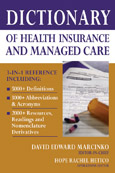
www.HealthDictionarySeries.com
Assessment
Some pundits suggest that if Congress doesn’t establish new charity care requirements, the IRS should revert to its community benefit standard last in force in 1969.
Interim Report: http://greisguide.com/wp-content/uploads/2009/02/eo_interim_hospital_report_072007.pdf
Conclusion
And so, your thoughts and comments on this Medical Executive-Post are appreciated? Then, subscribe to the ME-P. It is fast, free and secure.
Link: http://feeds.feedburner.com/HealthcareFinancialsthePostForcxos
Speaker: If you need a moderator or speaker for an upcoming event, Dr. David E. Marcinko; MBA – Publisher-in-Chief of the Executive-Post – is available for seminar or speaking engagements. Contact: MarcinkoAdvisors@msn.com or Bio: www.stpub.com/pubs/authors/MARCINKO.htm
Get our Widget: Get this widget!
Our Other Print Books and Related Information Sources:
Practice Management: http://www.springerpub.com/prod.aspx?prod_id=23759
Physician Financial Planning: http://www.jbpub.com/catalog/0763745790
Medical Risk Management: http://www.jbpub.com/catalog/9780763733421
Healthcare Organizations: www.HealthcareFinancials.com
Health Administration Terms: www.HealthDictionarySeries.com
Physician Advisors: www.CertifiedMedicalPlanner.com
Subscribe Now: Did you like this Medical Executive-Post, or find it helpful, interesting and informative? Want to get the latest ME-Ps delivered to your email box each morning? Just subscribe using the link below. You can unsubscribe at any time. Security is assured.
Link: http://feeds.feedburner.com/HealthcareFinancialsthePostForcxos
Share this:

Filed under: Glossary Terms, Health Economics, Health Insurance, Health Law & Policy, Healthcare Finance, Quality Initiatives | Tagged: community benefit, congress, IRS, LTACH, Medicaid, medicare, non-profit hospitals, not-for-profit hospitals, Revenue Ruling 69-545, www.healthdictionaryseries.com |
 The Leading Business Education Network for Doctors, Financial Advisors and Health Industry Consultants
Did you know that hospital fees this year were 2.4 percent higher than they were in April 2008, according to a new report by the federal Bureau of Labor Statistics [BLS]?
Sam
LikeLike
Don’t forget that Rich Umbdenstock is President and CEO of the AHA
About AHA [AHA.org]
The AHA is a not-for-profit association of health care provider organizations and individuals that are committed to the improvement of health in their communities. The AHA is the national advocate for its members, which includes more than 5,000 member hospitals, health systems and other health care organizations, and 38,000 individual members. Founded in 1898, the AHA provides education for health care leaders and is a source of information on health care issues and trends.
Dexter
LikeLike
A new study of community benefit spending by Maryland’s nonprofit hospitals, published in Health Affairs, suggests caution is needed before requiring that nonprofit healthcare providers spend a certain amount on activities to benefit their communities in order to retain their tax exemptions.
http://www.healthcarefinancenews.com/news/study-many-nonprofit-hospitals-would-not-meet-proposed-community-benefit-thresholds
Robert
LikeLike
Sam, Dexter and Robert
A new study of 143 non-profit healthcare organizations participating in the Commonfund Institute’s review of non-profit financial performance has concluded that non-profits had an average investment return of negative 21.2 percent during fiscal 2008. This is a huge change from previous years, in which returns ranged between 6 percent and 10 percent.
http://www.commonfund.org/Commonfund/Archive/CF+Institute/2009+0921+CBS+Healthcare+Press+Release.htm
Wilkinson
LikeLike
More On Non-Profits
The biggest disadvantage of a non-profit hospital is that it has no investors. To raise money for modern medical facilities, a nonprofit has only two choices: get donations or get loans.
We call this the “beg” or “borrow” business model, but now is not the right time for either strategy.
Dr. David Edward Marcinko; MBA
[Editor-in-Chief]
LikeLike
Not-for-profit hospitals to face increased pension funding needs
Not-for-profit hospitals and health systems in the United States will likely face increased pressure over the next several years on their pension funds, according to Standard & Poor’s Ratings Services
http://www.healthcarefinancenews.com/news/not-profit-hospitals-face-increased-pension-funding-needs
Tom
LikeLike
Tax status changes could threaten nonprofit hospital services
Did you know that several new fiscal barriers created by state and local governments are reducing the ability of nonprofit hospitals to provide needed services, according to the Association for Healthcare Philanthropy.
http://www.healthcarefinancenews.com/news/tax-status-changes-could-threaten-nonprofit-hospital-services
Chet
LikeLike
What Community Benefit?
[Hospital CEO gets 6-figure payout amid bankruptcy filing]
Thanks to lowered reimbursements, some struggling hospitals will be forced to shut their doors.
Yet, weeks before city-owned Hoboken (N.J.) University Hospital filed for bankruptcy, it gave its CEO a six-figure payout upon resignation, reports The Star-Ledger.
http://www.fiercehealthcare.com/story/hospital-ceo-gets-6-figure-payout-amid-bankruptcy-filing/2011-08-09?utm_medium=nl&utm_source=internal
Linda
LikeLike