





 Support our online development, and advance our onground research initiatives in free market economics, as we seek to showcase the brightest Next-Gen minds.
THE ME-P DISCLAIMER: Posts, comments and opinions do not necessarily represent iMBA, Inc., but become our property after submission. Copyright © 2006 to-date. iMBA, Inc allows colleges, universities, medical and financial professionals and related clinics, hospitals and non-profit healthcare organizations to distribute our proprietary essays, photos, videos, audios and other documents; etc. However, please review copyright and usage information for each individual asset before submission to us, and/or placement on your publication or web site. Attestation references, citations and/or back-links are required. All other assets are property of the individual copyright holder.
Support our online development, and advance our onground research initiatives in free market economics, as we seek to showcase the brightest Next-Gen minds.
THE ME-P DISCLAIMER: Posts, comments and opinions do not necessarily represent iMBA, Inc., but become our property after submission. Copyright © 2006 to-date. iMBA, Inc allows colleges, universities, medical and financial professionals and related clinics, hospitals and non-profit healthcare organizations to distribute our proprietary essays, photos, videos, audios and other documents; etc. However, please review copyright and usage information for each individual asset before submission to us, and/or placement on your publication or web site. Attestation references, citations and/or back-links are required. All other assets are property of the individual copyright holder.


Why Benchmarks are Out – and Scrutiny is In
By Dr. David Edward Marcinko; MBA, CMP™
Publisher-in-Chief
CEO: www.MedicalBusinessAdvisors.com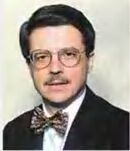
As discussed elsewhere on this ME-P, the medical practice appraiser’s primary goal is to determine the value of the business based on its expected earnings or cash flow. To accomplish this, the medical practice appraiser looks to the company’s historical financial statements to see how it has been reporting its earnings. Because of differences in accounting practices across organizations, the appraiser must analyze how the medical practice’s financial statements differ from those of other practices and how those differences might have an effect on the practice’s value. This is particularly true when the appraiser is comparing the performance of the medical practice company being valued with those of so-called industry benchmarks. In all instances, it is important that the appraiser compare numbers that have been accounted for in the same way. Below is a discussion of the most common adjustments.
Nonrecurring or Extraordinary Items
Nonrecurring or extraordinary items of income or expense reported by the practice will be eliminated from the profit and loss statement. These include the following:
• Insurance settlements (income or expense) or life insurance proceeds on the death of the key physician-partner.
• Large payments in settlement of lawsuits (either as income or as expense).
• The gain or loss on the sale of certain assets or portions of the practice which are not likely to be repeated.
• Expenses related to the start-up or discontinuance of a new or old segment of the practice.
• Moving and related expenses.
• Expenses relating to fire or flood damage not covered by insurance.
• Adjustments to prior years’ financial statements when the practice discontinued an employee benefit (such as eliminating the company’s pension or profit-sharing plan).
• Adjustments for income and/or expenses related to non-operating assets, such as a portfolio of marketable securities not used in the practice or medical real estate held for investment purposes.
Valuation Calculations
The appraiser needs to gather the following facts regarding the financial statements of the practice and may need to make adjustments to account for these differences. The information will give the appraiser an understanding of the company’s normalized earnings and will be used to make valuation calculations.
• How does a specialty practice [such as physiatry’s DME] value its inventory—LIFO or FIFO? In certain specialties, inventory is accounted for on the LIFO or “last-in, first-out” basis. When prices are rising, profits are reduced because the DME items being sold are presumably bought most recently at higher prices. The “old” or lower-cost inventory is held in reserve while the higher-cost inventory is sold off. This situation may reverse in times of recession and low or no inflation. At that point, profits will be distorted by the low-cost items. Recognizing these facts, practice owners have more commonly used FIFO or “first-in, first-out,” inventory accounting to value their inventory.
• What kind of reserves has the practice been taking for doubtful accounts receivable? Some doctors will not – or very slowly – write off bad debts or take reserves for them, and thus the income is improperly overstated. The appraiser will look at the actual bad debt expenses relative to the doubtful accounts receivable booked to determine if the practice’s adjustments are reasonable.
• How does the practice depreciate its hard assets? A variety of approved methods are used to depreciate assets over their useful lives. It is important for the appraiser to recognize the impact these methods have on corporate earnings. Some assets can be depreciated over a short time frame, which will mean higher annual write-offs; others, such as real estate, must be depreciated over a much longer period and thus will have a smaller impact on annual expenses.
Asset-Related Issues
The appraiser must address asset-related issues, such as:
• Has the practice’s assets been valued recently? If not, will current appraisals be required?
• Are any non-operating assets carried on the books of the practice? These assets may have to be valued separately and added to the operating value of the business.
Assessment
In our experience valuating medical practices, adjustments made for excess compensation and perquisites paid to the physician-owner and other family members, are the most common items of contention between buyer and seller.
For example, above average physician income usually equates to lower medical practice transferrable enterprise value; and vice versa.
Link: https://healthcarefinancials.wordpress.com/2007/11/30/90
Channel Surfing the ME-P
Have you visited our other topic channels? Established to facilitate idea exchange and link our community together, the value of these topics is dependent upon your input. Please take a minute to visit. And, to prevent that annoying spam, we ask that you register. It is fast, free and secure.
Conclusion
Your thoughts and comments on this ME-P are appreciated. Feel free to review our top-left column, and top-right sidebar materials, links, URLs and related websites, too. Then, subscribe to the ME-P. It is fast, free and secure.
Speaker: If you need a moderator or speaker for an upcoming event, Dr. David E. Marcinko; MBA – Publisher-in-Chief of the Medical Executive-Post – is available for seminar or speaking engagements. Contact: MarcinkoAdvisors@msn.com
OUR OTHER PRINT BOOKS AND RELATED INFORMATION SOURCES:
- PRACTICES: www.BusinessofMedicalPractice.com
- HOSPITALS: http://www.crcpress.com/product/isbn/9781466558731
- CLINICS: http://www.crcpress.com/product/isbn/9781439879900
- ADVISORS: www.CertifiedMedicalPlanner.org
- FINANCE: Financial Planning for Physicians and Advisors
- INSURANCE: Risk Management and Insurance Strategies for Physicians and Advisors
- Dictionary of Health Economics and Finance
- Dictionary of Health Information Technology and Security
- Dictionary of Health Insurance and Managed Care


Share this:

Filed under: "Advisors Only", "Doctors Only", Accounting, Career Development, Managed Care, Practice Management, Practice Worth, Professional Liability, Taxation |
 The Leading Business Education Network for Doctors, Financial Advisors and Health Industry Consultants
Breaking up is hard to do — especially for medical practices
Valuation, typically the prevailing concern for all parties, can be a complex, expensive and often painful ordeal when accomplished through litigation.
http://www.medicalpracticeinsider.com/best-practices/breaking-hard-do-especially-physician-practices?email=MARCINKOADVISORS@MSN.COM&GroupID=116654
Here’s why even harmonious groups should consider updating their legal agreements.
Hope Rachel Hetico RN MHA CMP™
http://www.CertifiedMedicalPlanner.org
LikeLike