







 Support our online development, and advance our onground research initiatives in free market economics, as we seek to showcase the brightest Next-Gen minds.
THE ME-P DISCLAIMER: Posts, comments and opinions do not necessarily represent iMBA, Inc., but become our property after submission. Copyright © 2006 to-date. iMBA, Inc allows colleges, universities, medical and financial professionals and related clinics, hospitals and non-profit healthcare organizations to distribute our proprietary essays, photos, videos, audios and other documents; etc. However, please review copyright and usage information for each individual asset before submission to us, and/or placement on your publication or web site. Attestation references, citations and/or back-links are required. All other assets are property of the individual copyright holder.
Support our online development, and advance our onground research initiatives in free market economics, as we seek to showcase the brightest Next-Gen minds.
THE ME-P DISCLAIMER: Posts, comments and opinions do not necessarily represent iMBA, Inc., but become our property after submission. Copyright © 2006 to-date. iMBA, Inc allows colleges, universities, medical and financial professionals and related clinics, hospitals and non-profit healthcare organizations to distribute our proprietary essays, photos, videos, audios and other documents; etc. However, please review copyright and usage information for each individual asset before submission to us, and/or placement on your publication or web site. Attestation references, citations and/or back-links are required. All other assets are property of the individual copyright holder.


A Really Scary Tale
By D. Kellus Pruitt; DDS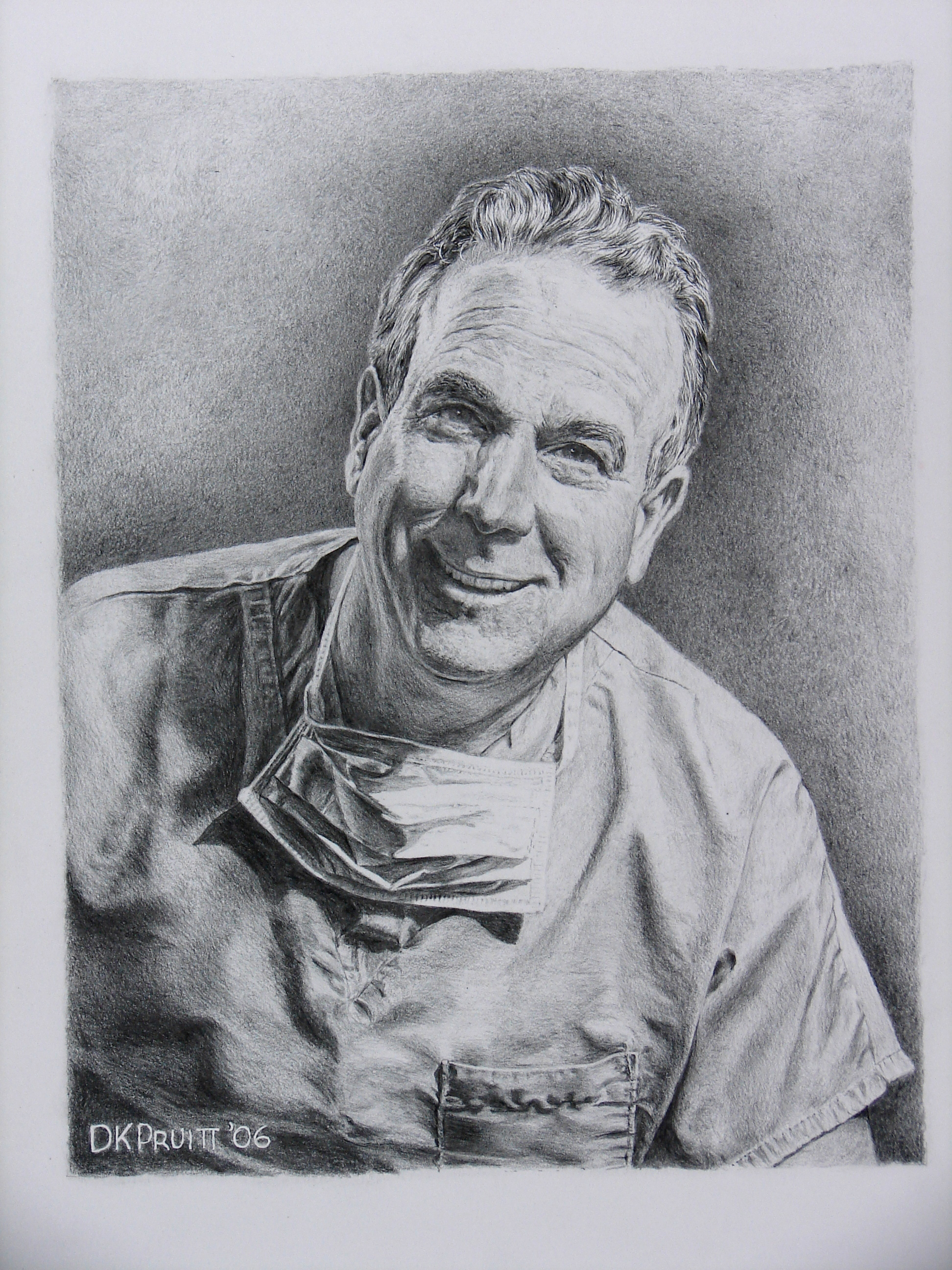
Upon arriving at the office early one morning recently, Dr. Smith logged on to the Internet to check her email. Among the usual pieces of junk email, one from Nigeria caught her eye. She recognized the name of one of her patients, written in bold letters. She thought, “That’s odd.” Smith opened the email to read more.
The Threat
“I am revealing the name of your patient, who lives on Oak Street, as proof that your computer has been hacked. I have social security numbers, birthdates, insurance information … You name it, and I’ve got it. It will go on the market in 24 hours if you do not do exactly what I say …” (This is the start of price negotiations – for the first time).
The Decision
What will Dr. Smith do? At the very best, she can hope that it’s a bluff. Nevertheless she must contact not only the FBI, but every one of her patients who are at risk of identity theft. That alone will bankrupt her practice because a large portion of her patients will never return. They will look for dentists with paper records. The very worse thing she could do is pay the ransom. In the end, how much did the bad guy risk to destroy a wonderful career, even if it was a bluff, or a devastatingly mean trick? You can relax now; this story is fiction. Here is the non-fiction.
NEWS FLASH!
“Script said the new letters were received by Express Script clients in recent days and is similar to the letter it first received. That letter included personal information on 75 people covered by Express Scripts, including birth dates, social security numbers and prescription information. The sender demanded money from the company, under the threat of exposing records of millions of patients.” – BusinessWeek [11.11.08]
More: http://www.businessweek.com/ap/financialnews/D94CVLJO0.htm
Lose the Threat
Dentists must lose this danger or lose their computers. Let’s temporarily put aside our dreams about how wonderful technology might become and open our minds to ways to go around insurmountable obstacles instead of pretending everything is wonderful in stakeholder land. For once, let’s seriously look into de-identifying our patients’ electronic dental records already. Forget about HIPAA and inspections. Forget about AHIC Successor Inc. Forget about CCHIT, CMS and even the HHS. Forget about Newt Gingrich and the past, present and future Presidents of the American Dental Association who prefer to be irrelevant than to discuss anything bad about electronic dental records. And especially forget, with prejudice, executives of dental insurance companies who demand interoperability on their NPI-driven terms. Let’s sidestep the biggest mistake in healthcare history. It does not have to be ours.
More Info: Dictionary of Health Information Technology and Security
www.HealthDictionarySeries.com
Not a Fete’ Accompli
Some leaders who have poor understanding of the modern marketplace would lead ADA members to believe that there is nothing that can be done to stop eHRs in the United States of America, no matter how expensive, dangerous and lousy stakeholder interests make them. Why; “cause I said so?”
Example:
Let me give you an example: “If we don’t participate, then who knows what will happen regarding the dental part of the eHR? eHR is on the way.” – Dr. John S. Findley, President of the ADA in “President-Elect’s Interview: Part 2,” ADA News Online (ADA members only).
More: http://adabei.com/members/resources/pubs/adanews/081006_findley.asp
If we don’t participate, Dr. Findley, dentistry will proceed with safe paper records like it has for a century or so. I have clearly shown that far worse things could happen. Shouldn’t we “first do no-harm” to our dental patients? What happened to the ethics of the American Dental Association?
Stakeholder Optimism
Even though optimistic stakeholders, hobbyists and hangers-on disagree with me, electronic dental records are not inevitable. At least they are not inevitable in the next decade or so. They can easily become so lousy and so mistrusted by doctors and patients alike that they will set back miracles from Open Source Evidence-Based Dentistry forever. They are almost there already because of ambitious stakeholders, hobbyists and slow-moving hangers-on; like Dr. John S. Findley.
Assessment
Remember, decades ago the US was supposed to be on the metric system. Sometimes inevitability takes so long that you might as well just forget about it. And, the metric system even makes sense.
Conclusion
Unlike medical records which must remain secure even if de-identified, nobody, I repeat, nobody cares about breached dental histories. Physicians may have no choice. Dentists do! As always, your thoughts and comments on this Executive-Post are appreciated.
Related Information Sources:
Practice Management: http://www.springerpub.com/prod.aspx?prod_id=23759
Physician Financial Planning: http://www.jbpub.com/catalog/0763745790
Medical Risk Management: http://www.jbpub.com/catalog/9780763733421
Healthcare Organizations: www.HealthcareFinancials.com
Health Administration Terms: www.HealthDictionarySeries.com
Physician Advisors: www.CertifiedMedicalPlanner.com
Speaker: If you need a moderator or speaker for an upcoming event, Dr. David E. Marcinko; MBA – Publisher-in-Chief of the Executive-Post – is available for seminar or speaking engagements. Contact: MarcinkoAdvisors@msn.com or Bio: www.stpub.com/pubs/authors/MARCINKO.htm
Subscribe Now: Did you like this Executive-Post, or find it helpful, interesting and informative? Want to get the latest E-Ps delivered to your email box each morning? Just subscribe using the link below. You can unsubscribe at any time. Security is assured.
Link: http://feeds.feedburner.com/HealthcareFinancialsthePostForcxos
Share this:

Filed under: Drugs and Pharma, Health Law & Policy, Information Technology, Professional Liability | Tagged: AHIC, CCHIT, Express Scripts, HHS, HIT, NPI |
 The Leading Business Education Network for Doctors, Financial Advisors and Health Industry Consultants
The Misplaced eMRs and HIT Movement
According to David C. Kibbe MD, from this external post, http://www.thehealthcareblog.com/the_health_care_blog/2008/12/index.html
“I confess” my own misplaced hope in the EMR movement, and that I’m finally embracing the reality that most investments in health IT have not met expectations. My broad message is that the key lesson of this failure has been that adoption of health IT without understanding the fundamental interactions between people, business process, and technology wastes both human and economic capital.”
Think about this informed opinion in light of the frequent posts of Dr. Darrell Pruitt; DDS.
-Ann
LikeLike
De-identification or bust
New readers may not be aware that I’ve been itching for marketplace discussion concerning the true value of electronic dental records long before Facebook made conversation so much easier. I recognized EDRs as being an organized bureaucracy goal four years ago – back in the giddy days when the ADA Department of Dental Informatics regularly posted self-serving, biased news about HIPAA and the NPI number. That was back when ADA Senior Vice Presidents dismissed troublemakers by saying, “If I haven’t answered your question about the NPI, write a letter to the editor. And quit bothering the help.”
For an incorrigible wise-ass troublemaker like me who doesn’t really mind sitting out in the hall, the timing of the arrival of social networks such as Twitter and Facebook could not have been better. I think the more marketplace discussions dentists have with vendors and other stakeholders, the cheaper dentistry will become. Communication never hurts…. Well, sometimes it does. Transparency can be a hard-driving boss if one resists the demands of consumers.
You may have noticed that I’ve found a cutting-edge way to invite technology vendors to discuss their wares in front of dentists instead of swapping happy tales with PR buddies. On Wednesday I went on Dr. Larry Emmott’s EOT Facebook and pruned claims he posted about the cost and safety of the EDRs he sells. I’ll be very impressed with the man’s courage if he attempts to counter my arguments. His position is clearly indefensible, and he knows it.
A week ago, I started a discussion with an anonymous representative of Dental Technology Consultants on their Facebook, which I think I concluded today with a teaser.
http://www.facebook.com/DentalTechnologyConsultants?v=feed&story_fbid=370541909209
Darrell Pruitt: Do you know of any dental practice that has suffered a data breach recently? If so, do you know how much it cost them? Did they lose any patients?
Monday
Dental Technology Consultants: Not really, because we handle security and data backup for most of our clients.
Thursday
Darrell: Then would you say that perhaps the risk of data breaches from dental offices is overblown?
Friday
DTC: No, the risk for OUR clients is overblown because we handle their security. In general, yes, dental offices are not the target of most hackers, but that doesn’t mean that you shouldn’t employ a high level of security, especially since it doesn’t cost much.
Today
Darrell: Dear Dental Technology Consultants:
Since I know nothing about the security you sell, I must accept your word that you adequately protect your clients from data breaches for a very low cost. Furthermore, if you have found a way to provide effective security for your clients, the nation desperately needs your talents. It is this very issue of patient privacy that is holding back progress in paperless dental practices. Both professional and consumer confidence in EHRs is slipping away fast, and once gone, it can never be recovered.
I have heard that more than half of healthcare businesses have experienced “reportable” data breaches in the last year, and some have suffered more than one. I’m sure you know that hackers are only one way identities can be stolen from a dental office.
The argument could be made that identities are already being lost from dental offices at least as much as from other healthcare businesses in the US. Basic economics tells us that as identities become increasingly valuable on the black market, there will be even more employee thefts that you are powerless to stop with technology, Dental Technology Consultants. Just this month, Dallas authorities arrested Tracy Thomas, an employee at UT Southwestern Medical Center, after she allegedly stole hundreds of patents’ personal information – including birth dates, addresses, phone numbers and financial data – which she sold to a third party. How can you protect your clients against that? You can’t.
http://www.wfaa.com/news/crime/UT-Southwestern-employee-accused-of-se-86684637.html .
Are we adults here?
Although I find it amazing that nobody in the ADA or the Texas Dental Association is discussing the risk of data breaches, much less tracking its occurrence in the profession, it appears to me that breaches are occurring much more than dentists admit. Why? If a dentist suffers a breach affecting more than 500 patients and properly notifies them that their IDs have been fumbled, it will mean unavoidable bankruptcy for all but the largest practices. And even the huge practices will never regain their respect in the community. If the breach involves more than 500 individuals, the unfortunate incident must be reported to local news media as a press release.
To me, this career-ending but avoidable danger makes not only EDRs increasingly risky for dentists, but it also threatens basic computerization of dentists’ business offices. Unless you’ve indeed discovered a unique secret to security, just like 95% of the dentists in the nation, your clients are at tremendous risk right now. I’m afraid you cannot protect them. And they cannot protect themselves as long as patient identifiers are included in their digital dental records.
Thanks for your time, Dental Technology Consultants.
D. Kellus Pruitt; DDS
LikeLike