





 Support our online development, and advance our onground research initiatives in free market economics, as we seek to showcase the brightest Next-Gen minds.
THE ME-P DISCLAIMER: Posts, comments and opinions do not necessarily represent iMBA, Inc., but become our property after submission. Copyright © 2006 to-date. iMBA, Inc allows colleges, universities, medical and financial professionals and related clinics, hospitals and non-profit healthcare organizations to distribute our proprietary essays, photos, videos, audios and other documents; etc. However, please review copyright and usage information for each individual asset before submission to us, and/or placement on your publication or web site. Attestation references, citations and/or back-links are required. All other assets are property of the individual copyright holder.
Support our online development, and advance our onground research initiatives in free market economics, as we seek to showcase the brightest Next-Gen minds.
THE ME-P DISCLAIMER: Posts, comments and opinions do not necessarily represent iMBA, Inc., but become our property after submission. Copyright © 2006 to-date. iMBA, Inc allows colleges, universities, medical and financial professionals and related clinics, hospitals and non-profit healthcare organizations to distribute our proprietary essays, photos, videos, audios and other documents; etc. However, please review copyright and usage information for each individual asset before submission to us, and/or placement on your publication or web site. Attestation references, citations and/or back-links are required. All other assets are property of the individual copyright holder.


Don’t Give up Medical Practice; Just Yet!
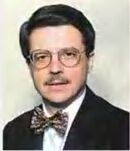
Dr. David Edward Marcinko; MBA, CMP™
[Publisher-in-Chief]
 By now, all physicians, medical practitioners, nurses and healthcare executives know that in 2006 the Medicare Trustees Report projected a 4.7% reduction in physician reimbursement for 2007, and 37% in cumulative cuts over the next nine years.
It also noted that each year in the next decade will feature a 5% cut in doctors’ pay, while physician costs will increase 2% annually www.ama-assn.org/ama/pub/category/16221.html
The Bush administration also called for $36 billion in Medicare reductions over five years, in 2008, and advocated pay-for-performance [P4P] reimbursement metered against predetermined quality standards.
Alarming Trends
As regular readers and subscribers to the Executive-Post realize, the direct results on physician compensation are predictable, but other trends may be even more alarming.
For example, medical student debt burdens (averaging $100,000-$250,000) are economically devastating.
In FY 2000, the federal Health Education Assistance Loan (HEAL) program squeezed significant repayment settlements from its Top 3 deadbeat doctor debtors, and excluded 303 practitioners from Medicare and other federal/state programs; even more occurred thru 2001-07.
And, the flight of doctors out of states like California and Massachusetts; and/or taking early retirement, is particularly noteworthy.
“Don’t Give Up”
Dr. Regina E. Herzlinger, the Nancy R. McPherson professor of business administration and chair at Harvard Business School, and mother of a physician-daughter, opines that there is little wonder that some physicians become depressed and want to give up their careers entirely when pondering the future of medicine, managed care and related compensation issues.
Nevertheless, Herzlinger implores in her classic book, Market Driven Healthcare, “don’t give up practice, yet.”
Pragmatically, the future is bright and offers great opportunity to early adaptors who have the foresight to change medicine for the better and be handsomely compensated, too!
But, physicians’ inability to deal with competitive market forces – and HIT – is well known and many are loath to deal with them.
Assessment
One way is to seek additional management education through a traditional Master’s Degree in Business Administration (MBA), or use an online distance-education resource like www.CertifiedMedicalPlanner.com And, tuition, textbooks and fees may be tax deductible.
In this way, doctors may hope to maintain their place as salary and compensation leaders in the U.S. labor force.
Another way is to read, post, and comment, opine and subscribe to in the Executive-Post. Make it your professional health economics social network-of-choice.
Conclusion
-
Will you stay the course, or retire from medical practice early?
-
Will you re-educate and re-engineer; or just give up on medicine?
-
Is medicine a viable career option for your children, or grand-children?
Please opine. Your comments are appreciated.
Related Information Sources:
Practice Management: http://www.springerpub.com/prod.aspx?prod_id=23759
Physician Financial Planning: http://www.jbpub.com/catalog/0763745790
Medical Risk Management: http://www.jbpub.com/catalog/9780763733421
Healthcare Organizations: www.HealthcareFinancials.com
Health Administration Terms: www.HealthDictionarySeries.com
Physician Advisors: www.CertifiedMedicalPlanner.com
Speaker: If you need a moderator or speaker for an upcoming event, Dr. David E. Marcinko; MBA – Publisher-in-Chief of the Executive-Post – is available for seminar or speaking engagements. Contact him at: MarcinkoAdvisors@msn.com or Bio: http://www.stpub.com/pubs/authors/MARCINKO.htm
Subscribe Now: Did you like this Executive-Post, or find it helpful, interesting and informative? Want to get the latest E-Ps delivered to your email box each morning? Just subscribe using the link below. You can unsubscribe at any time. Security is assured.
Link: http://feeds.feedburner.com/HealthcareFinancialsthePostForcxos



Share this:

Filed under: Career Development, Practice Management | Tagged: Career Development | 11 Comments »


 The Leading Business Education Network for Doctors, Financial Advisors and Health Industry Consultants