







 Support our online development, and advance our onground research initiatives in free market economics, as we seek to showcase the brightest Next-Gen minds.
THE ME-P DISCLAIMER: Posts, comments and opinions do not necessarily represent iMBA, Inc., but become our property after submission. Copyright © 2006 to-date. iMBA, Inc allows colleges, universities, medical and financial professionals and related clinics, hospitals and non-profit healthcare organizations to distribute our proprietary essays, photos, videos, audios and other documents; etc. However, please review copyright and usage information for each individual asset before submission to us, and/or placement on your publication or web site. Attestation references, citations and/or back-links are required. All other assets are property of the individual copyright holder.
Support our online development, and advance our onground research initiatives in free market economics, as we seek to showcase the brightest Next-Gen minds.
THE ME-P DISCLAIMER: Posts, comments and opinions do not necessarily represent iMBA, Inc., but become our property after submission. Copyright © 2006 to-date. iMBA, Inc allows colleges, universities, medical and financial professionals and related clinics, hospitals and non-profit healthcare organizations to distribute our proprietary essays, photos, videos, audios and other documents; etc. However, please review copyright and usage information for each individual asset before submission to us, and/or placement on your publication or web site. Attestation references, citations and/or back-links are required. All other assets are property of the individual copyright holder.


National Institute for Health Care Management Foundation
By Nancy Chockley, PhD
President & CEO
NIHCM Foundation
The U.S. Federal debt is exploding to levels not seen since World War II, and some say this threatens our living standards, compromises our independence in domestic and foreign policy, and leaves future generations with a staggering financial burden. One needs to look no further than the situation in Greece to witness the crippling effects of excessive debt.
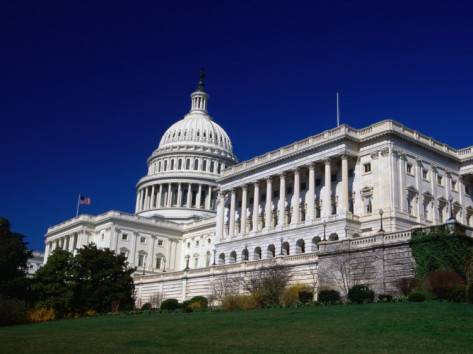
The Fiscal Essay
In her essay, Maya MacGuineas, President of the Committee for a Responsible Federal Budget and Director of the Fiscal Policy Program at the New America Foundation, reviews the budget projections and comments on Administration proposals for addressing the fiscal crisis.
Assessment
She also describes a new set of recommendations from the Peterson-Pew Commission on Budget Reform calling for immediate and bold steps designed to stabilize our federal debt at 60 percent of GDP by 2018.
Conclusion
Your thoughts and comments on this ME-P are appreciated. Feel free to review our top-left column, and top-right sidebar materials, links, URLs and related websites, too. Then, subscribe to the ME-P. It is fast, free and secure.
Speaker: If you need a moderator or speaker for an upcoming event, Dr. David E. Marcinko; MBA – Publisher-in-Chief of the Medical Executive-Post – is available for seminar or speaking engagements. Contact: MarcinkoAdvisors@msn.com
OUR OTHER PRINT BOOKS AND RELATED INFORMATION SOURCES:
- PHYSICIANS: www.MedicalBusinessAdvisors.com
- PRACTICES: www.BusinessofMedicalPractice.com
- HOSPITALS: http://www.crcpress.com/product/isbn/9781466558731
- CLINICS: http://www.crcpress.com/product/isbn/9781439879900
- ADVISORS: www.CertifiedMedicalPlanner.org
- BLOG: www.MedicalExecutivePost.com
- FINANCE: Financial Planning for Physicians and Advisors
- INSURANCE: Risk Management and Insurance Strategies for Physicians and Advisors


Share this:

Filed under: Accounting, Alerts Sign-Up, Health Economics, Op-Editorials, Taxation | Tagged: Budget Reform, Committee for a Responsible Federal Budget, fiscal crisis, Maya MacGuineas, Nancy Chockley, National Institute for Health Care Management Foundation, New America Foundation, NIHCM Foundation, Peterson-Pew Commission, U.S. Federal debt |
 The Leading Business Education Network for Doctors, Financial Advisors and Health Industry Consultants
Excellent Post,
Yep, the stock market is falling, Europe is in financial crisis, we are opening our borders to illegals, not fighting the terrorists, few jobs and underperforming public schools, providing too many entitlement programs and are 13 trillion dollars in debt … Well said.
Kramer
LikeLike
The Certified Medical Planner™ Program
Kramer, did you know that every crisis is a two-sided coin: problem versus opportunity?
Today, the global economic crisis and changing [collapsing] healthcare industrial complex, certainly serves as a wake-up call of ongoing challenge, but the opportunity is uncanny.
Why? Because; it is disguised within the very nature of the wake-up call.The more the media beats the drums of financial turmoil and healthcare doom, the more this crisis spreads its tentacles, which provides the media the fuel to beat the drums of panic, and the more nervous doctors and Wall Street becomes; in a vicious cycle of despair and ignorance.
All of which heightens their awareness of the need for first-rate professional financial advice, medical practice management assistance and fiduciary guidance for our integrated niche space; here at the ME-P. And, fear not. This is the greatest nation on earth.
So, considering joining us – Kramer.
Fraternally
Ann Miller RN, MHA
[Executive Director]
http://www.CertifiedMedicalPlanner.com
LikeLike
More on the US Budget
By a vote of 215 to 210, the House of Representatives passed a one-year budget enforcement resolution. While it is rare in election years for the House to pass a full budget resolution, the urgency of the fiscal situation in the nation caused the House to pass the one-year plan.
House Budget Chair John Spratt Jr. (D-SC) drafted the plan. He stated, “I am pleased to be introducing the budget enforcement resolution for fiscal year 2011. This resolution sets an overall limit of $1.12 trillion on discretionary spending in next year’s appropriations bills. This limit is well below the comparable request made by the President and $3 billion below the resolution approved by the Senate Budget Committee.”
The comments by Rep. Spratt follow observations during the budget committee hearings by Congressional Budget Office Director Douglas Elmendorf. He indicated that it would not be possible in a fiscally responsible manner to extend the 2001 and 2003 tax cuts for middle-income Americans. In response to his comments, House Majority Leader Steny Hoyer (D-MD) suggested that the middle-class tax cuts enacted in 2001 and 2003 could be extended for one year.
The Ranking Republican on the House Budget Committee is Rep. Paul Ryan (R-WI). He noted, “This Congress has failed to even produce a budget and it has refused to consider the tough choices to deal with our massive debt burdens – a debt burden growing exponentially larger with each kick of the can further down the road.”
In addition to the limit of $1.12 trillion for discretionary programs, the budget resolution reaffirms the “pay-go” rules that are designed to require any additional tax reductions to be offset with tax increases. The resolution also states that the national debt-to-gross domestic product ratio needs “to be stabilized once the economy recovers.”
Editor’s Note: With the increase in expenditures and reduced taxes during the past two years, the government debt as a percentage of the economy has increased substantially. The passage of the one-year budget resolution is a small step toward stabilizing our national finances.
Source: Children’s Home Society of Florida Foundation
LikeLike