







 Support our online development, and advance our onground research initiatives in free market economics, as we seek to showcase the brightest Next-Gen minds.
THE ME-P DISCLAIMER: Posts, comments and opinions do not necessarily represent iMBA, Inc., but become our property after submission. Copyright © 2006 to-date. iMBA, Inc allows colleges, universities, medical and financial professionals and related clinics, hospitals and non-profit healthcare organizations to distribute our proprietary essays, photos, videos, audios and other documents; etc. However, please review copyright and usage information for each individual asset before submission to us, and/or placement on your publication or web site. Attestation references, citations and/or back-links are required. All other assets are property of the individual copyright holder.
Support our online development, and advance our onground research initiatives in free market economics, as we seek to showcase the brightest Next-Gen minds.
THE ME-P DISCLAIMER: Posts, comments and opinions do not necessarily represent iMBA, Inc., but become our property after submission. Copyright © 2006 to-date. iMBA, Inc allows colleges, universities, medical and financial professionals and related clinics, hospitals and non-profit healthcare organizations to distribute our proprietary essays, photos, videos, audios and other documents; etc. However, please review copyright and usage information for each individual asset before submission to us, and/or placement on your publication or web site. Attestation references, citations and/or back-links are required. All other assets are property of the individual copyright holder.


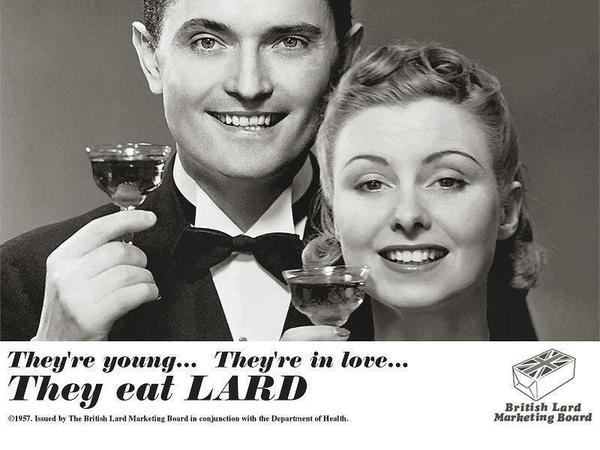
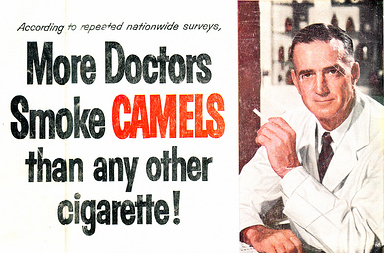
Lard and Nicotine
Via Hend:
According to Wikipedia, a standard of care is a medical or psychological treatment guideline, and can be general or specific. It specifies appropriate treatment based on scientific evidence and collaboration between medical and/or psychological professionals involved in the treatment of a given condition.
Some common examples:
- Treatment standards applied within public hospitals to ensure that all patients receive appropriate care regardless of financial means.
- Standards of Care for the Health of Transsexual, Transgender, and Gender Nonconforming People
1. Diagnostic and treatment process that a clinician should follow for a certain type of patient, illness, or clinical circumstance. Adjuvant chemotherapy for lung cancer is “a new standard of care, but not necessarily the only standard of care”. (New England Journal of Medicine, 2004)
2. In legal terms, the level at which an ordinary, prudent professional with the same training and experience in good standing in a same or similar community would practice under the same or similar circumstances. An “average” standard would not apply because in that case at least half of any group of practitioners would not qualify. The medical malpractice plaintiff must establish the appropriate standard of care and demonstrate that the standard of care has been breached, with expert testimony.
3. A physician also has a “duty to inform” a patient of any material risks or fiduciary interests of the physician that might cause the patient to reconsider a procedure, and may be liable if injury occurs due to the undisclosed risk, and the patient can prove that if he had been informed he would not have gone through with the procedure, without benefit of hindsight. (Informed Consent Rule.) Full disclosure of all material risks incident to treatment must be fully disclosed, unless doing so would impair urgent treatment. As it relates to mental health professionals standard of care, the California Supreme Court, held that these professionals have “duty to protect” individuals who are specifically threatened by a patient. [Tarasoff v. Regents of the University of California, 17 Cal. 3d 425, 551 P.2d 334, 131 Cal. Rptr. 14 (Cal. 1976)].
4. A recipient of pro bono (free) services (either legal or medical) is entitled to expect the same standard of care as a person who pays for the same services, to prevent an indigent person from being entitled to only substandard care.
Source: https://en.wikipedia.org/wiki/Standard_of_care
***
***
***
Assessment
We may not recommend this today, but back in the day…..?
More:
- Will eMRs Raise the Legal Standard of Care and Increase Malpractice Risk?
- Medical Records as Malpractice Defense
- How the ME-P Helps Doctors Avoid Malpractice Lawsuits and Related Litigation
Conclusion
Your thoughts and comments on this ME-P are appreciated. Feel free to review our top-left column, and top-right sidebar materials, links, URLs and related websites, too. Then, subscribe to the ME-P. It is fast, free and secure.
Speaker: If you need a moderator or speaker for an upcoming event, Dr. David E. Marcinko; MBA – Publisher-in-Chief of the Medical Executive-Post – is available for seminar or speaking engagements. Contact: MarcinkoAdvisors@msn.com
OUR OTHER PRINT BOOKS AND RELATED INFORMATION SOURCES:
- PRACTICES: www.BusinessofMedicalPractice.com
- HOSPITALS: http://www.crcpress.com/product/isbn/9781466558731
- CLINICS: http://www.crcpress.com/product/isbn/9781439879900
- ADVISORS: www.CertifiedMedicalPlanner.org
- FINANCE: Financial Planning for Physicians and Advisors
- INSURANCE: Risk Management and Insurance Strategies for Physicians and Advisors
- Dictionary of Health Economics and Finance
- Dictionary of Health Information Technology and Security
- Dictionary of Health Insurance and Managed Care
 8
8
Share this:

Filed under: Professional Liability, Risk Management | Tagged: Malpractice Liability, medical malpractice insurance, standard of care | 1 Comment »


 The Leading Business Education Network for Doctors, Financial Advisors and Health Industry Consultants