
On Overhead and Practice Efficiency
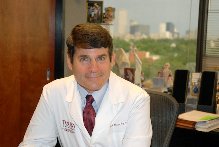
By Neal Baum MD
 As I meet with doctors, other urologists and office managers throughout the country, I am frequently told, “Neil, we don’t need more patients. We need to increase our reimbursement, decrease our overhead, and improve the efficiency of care.”
Introducing Neil H. Baum MD
I will leave the reimbursements to the experts, but now I would like to focus on overhead and practice efficiency.
The Past
In the past we enjoyed the luxury of seeing a relatively few patients and enjoying very juicy, fat profit margins. Today, the situation is reversed. Many of us are seeing a lot more patients and we all know about those razor thin profit margins. As a result we are motivated to become more efficient.
The List
So, in this ME-P article, I will provide you with ten ideas to make your practice more efficient:
- Have the lab results on the patients chart or in the patients electronic medical record before the patient arrives for hisor her appointment. Nothing can slow down your patient flow than to have a patient who had a prostate biopsy in the exam room and not have the pathology report on the chart. Now your nurse or patient coordinator calls the pathologist for the report and has the report faxed to the office. This can 15-30 minutes and a very anxious patient is waiting in the exam room for the report. Or, a worst case scenario is the pathology slides have not been read and the patient makes an unnecessary visit. All of this can be solved by checking the charts the day before the patients arrive to see that all lab and x-ray reports are on the chart.
- Use a scribe. My accounting practice consultant advised me that all of my efforts should be dedicated to doing only what a physician can do and not any other activity that can be accomplished by someone with less training, skills, or compensated a lesser fee than a physician. With that advice, I decided I should not be taking the history of the chief complaint, the review of systems, and past medical history. I have now trained a “scribe” who does all of that for me before I conduct the physical examination. I then report to her the few findings I have found on the physical exam and what are my treatment recommendations which are carried out by the scribe or the nurse. As a result I spend far fewer minutes with each patient but the time that is spent with them is quality, eyeball to eyeball time.
- Effective scheduling. I don’t know of a urology practice that doesn’t have one or two emergencies or urgencies where the patients need to be seen the very day they contact the office. Every morning or afternoon my practice receives a call from an existing patient that needs to be seen immediately or a call from a referring doctor who has a patient in their office that needs immediate urologic care. In the past the patient was told to come in and that they would be worked into the schedule. As a result, patients with scheduled appointments were delayed 15-30 minutes. Today we leave a 15 minute time slot at 10:30 A.M. and another open slot at 2:45 P.M. and these urgencies or emergencies are told to come at those designated times or at the very end of the day. These slots are referred to as “sacred time” and cannot be filled until after 8:30 A.M. on the day we are seeing patients. I have yet to encounter a patient or referring doctor that won’t accept that scheduling option. Now that late morning or late afternoon scheduled appointment is seen in a timely fashion.
- Answer all of your patient’s questions at the time of their visit. It was not uncommon for me to think I was finished with a patient, close their chart, and start to walk out of the room and as soon as my hand touched the door knob, the patient would say, “Dr. Baum, I have one more question.” Frequently, I would have patients interrupt me as I was about to see another patient or they would call to take to me or my nurse after they left the office. Now patients are given a card when they check in which allows them to write down what questions they would like to ask the doctor on this visit. Patients will frequently start thinking about what they want to ask during the visit while they are in the reception (not waiting) room or when they are taken to the exam room. This now avoids the door handle questions and ensures that the patients’ most pressing concerns are answered when the chart or EMR is opened.
- Use videos to explain common urologic conditions and procedures. There are days when I might discuss a topic such as vasectomy three or four times. I found that I could considerably improve my efficiency by making a 5-7 minute video of me explaining the procedure, the complications, the risks, and the post-procedure caveats. After examining the patient, I tell them I would like them to view a video on vasectomy and I would like them to open the door when the video is completed and I will return to provide them with a written summary and to answer any questions that they may have on the procedure. While they are watching the video, I am able to see 1-2 patients. I also write in the chart that the patient has seen the video which makes good medical-legal documentation that patient was informed of the risks, complications, and alternatives of treatment.
- Educate patients before, during, and after their visit to your office. Today there is an abundance of educational materials available to your patients from pharmaceutical and device companies, the Internet, and software companies specializing in patient education. (I use DialogMedical at www.dialogmedical.com.) When a patient calls for an appointment, they are asked the purpose of their visit and they are encouraged to go to our website for educational material or we are happy to send them educational material before they come to the office on the medical condition or problem they may have. They are also provided with educational material during their visit as well as additional information in the “thanks for being our patient” letter that they receive from our office after they have left our office. It has been my experience that an educated patient makes a better patient and less time needs to be delegated to explaining their medical condition. These educational materials are also available in other languages and usually are written at the 10th grade level.
- Never touch a piece of paper or mail twice. So many times I will look at the mail or reports and then place them in another pile to take action on later. It is far more efficient to look at the mail and reports and take action on the paper immediately. You can use Post-It notes if you plan to delegate the action to another staff member.
- Leave your office with all paper work completed. Try to avoid allowing paper work to become a mountain of charts on the back of your desk. You become more efficient if you can do the dictation real time in front of the patient or immediately after each patient encounter. Now you don’t have to rely upon your memory when you review the chart days or weeks later.
- Schedule time for patient call backs. Have your office tell patients that you will be calling them at a designated time at the end of your working day or ask for the number where they can reached at a time when you plan to return calls. Now you avoid playing telephone tag with your patients and avoid them waiting for extended periods of time for you to return their call.
- Use drive time to call patients at home. Most of us live 15+ minutes from our practices. You can make good use of this time by contacting patients that you or your office staff were not able to reach during your business day. I have my staff tell the patient that I will be calling between 6-7 P.M. and would they please be at home and keep the line free so that we avoid telephone tag. Most patients are eager to hear from their doctor and will make themselves available at a time convenient for you.

Assessment
There you have it; a few ideas that can help make you more efficient and allow you to see more patients and improve your bottom line. By the way if you have any other ideas that you have used successfully and would like to share with your colleagues, please let me hear from you.
More:
Out Recent Textbook Foreword by Dr. Baum
Channel Surfing the ME-P
Have you visited our other topic channels? Established to facilitate idea exchange and link our community together, the value of these topics is dependent upon your input. Please take a minute to visit. And, to prevent that annoying spam, we ask that you register. It is fast, free and secure.
Conclusion
Your thoughts and comments on this ME-P are appreciated. Feel free to review our top-left column, and top-right sidebar materials, links, URLs and related websites, too. Then, subscribe to the ME-P. It is fast, free and secure.
Speaker: If you need a moderator or speaker for an upcoming event, Dr. David E. Marcinko; MBA – Publisher-in-Chief of the Medical Executive-Post – is available for seminar or speaking engagements. Contact: MarcinkoAdvisors@msn.com
OUR OTHER PRINT BOOKS AND RELATED INFORMATION SOURCES:



Filed under: Experts Invited, Practice Management | Tagged: Maximizing Medical Practice Income, Neal Baum MD | 3 Comments »





 Support our online development, and advance our onground research initiatives in free market economics, as we seek to showcase the brightest Next-Gen minds.
THE ME-P DISCLAIMER: Posts, comments and opinions do not necessarily represent iMBA, Inc., but become our property after submission. Copyright © 2006 to-date. iMBA, Inc allows colleges, universities, medical and financial professionals and related clinics, hospitals and non-profit healthcare organizations to distribute our proprietary essays, photos, videos, audios and other documents; etc. However, please review copyright and usage information for each individual asset before submission to us, and/or placement on your publication or web site. Attestation references, citations and/or back-links are required. All other assets are property of the individual copyright holder.
Support our online development, and advance our onground research initiatives in free market economics, as we seek to showcase the brightest Next-Gen minds.
THE ME-P DISCLAIMER: Posts, comments and opinions do not necessarily represent iMBA, Inc., but become our property after submission. Copyright © 2006 to-date. iMBA, Inc allows colleges, universities, medical and financial professionals and related clinics, hospitals and non-profit healthcare organizations to distribute our proprietary essays, photos, videos, audios and other documents; etc. However, please review copyright and usage information for each individual asset before submission to us, and/or placement on your publication or web site. Attestation references, citations and/or back-links are required. All other assets are property of the individual copyright holder.





 The Leading Business Education Network for Doctors, Financial Advisors and Health Industry Consultants