







 Support our online development, and advance our onground research initiatives in free market economics, as we seek to showcase the brightest Next-Gen minds.
THE ME-P DISCLAIMER: Posts, comments and opinions do not necessarily represent iMBA, Inc., but become our property after submission. Copyright © 2006 to-date. iMBA, Inc allows colleges, universities, medical and financial professionals and related clinics, hospitals and non-profit healthcare organizations to distribute our proprietary essays, photos, videos, audios and other documents; etc. However, please review copyright and usage information for each individual asset before submission to us, and/or placement on your publication or web site. Attestation references, citations and/or back-links are required. All other assets are property of the individual copyright holder.
Support our online development, and advance our onground research initiatives in free market economics, as we seek to showcase the brightest Next-Gen minds.
THE ME-P DISCLAIMER: Posts, comments and opinions do not necessarily represent iMBA, Inc., but become our property after submission. Copyright © 2006 to-date. iMBA, Inc allows colleges, universities, medical and financial professionals and related clinics, hospitals and non-profit healthcare organizations to distribute our proprietary essays, photos, videos, audios and other documents; etc. However, please review copyright and usage information for each individual asset before submission to us, and/or placement on your publication or web site. Attestation references, citations and/or back-links are required. All other assets are property of the individual copyright holder.


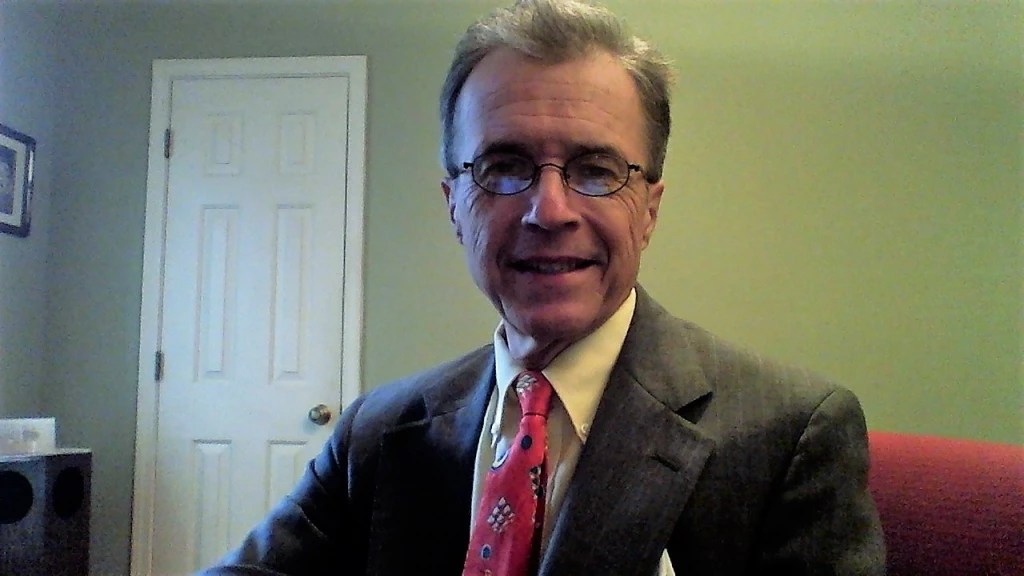
Dr. David Edward Marcinko; MBA MEd
SPONSOR: http://www.HealthDictionarySeries.org
***
***
Clickbait has become a defining feature of the modern information ecosystem, and nowhere is its influence more consequential than in the world of finance and investing. Money is emotional. Markets move fast. People fear missing out, and they fear losing what they have even more. These psychological triggers make financial audiences especially vulnerable to sensational headlines, exaggerated claims, and oversimplified narratives. Clickbait thrives in this environment because it promises clarity in a world that is inherently uncertain. Yet the consequences of misleading financial content extend far beyond wasted time—they can distort decision‑making, fuel market manias, and erode trust in legitimate financial education.
At its core, clickbait in finance works the same way it does in any other domain: it uses emotionally charged language, bold promises, or shocking predictions to attract attention. But the stakes are higher. A headline about a celebrity feud may waste a few minutes; a headline about a “guaranteed 500% return” can push someone into a reckless investment. Financial clickbait often exploits the tension between risk and reward. It taps into the desire for quick wealth, the fear of economic collapse, or the illusion that secret knowledge is available to anyone who clicks. The result is a flood of content that prioritizes engagement over accuracy and excitement over nuance.
One of the most common forms of financial clickbait is the “hot stock” prediction. These headlines often imply certainty where none exists: a small company is about to “explode,” a new technology will “change everything,” or a well‑known investor is “betting big” on a particular sector. The problem is not that these claims are always false—sometimes they are loosely based on real trends—but that they oversimplify complex realities. Markets are influenced by countless variables, and no single article can capture the full picture. Yet clickbait encourages readers to believe that one bold prediction is all they need. This can lead to impulsive trading, overconfidence, and a misunderstanding of how investing actually works.
Another form of clickbait preys on fear. Headlines predicting imminent market crashes, currency collapses, or economic disasters spread rapidly because fear is a powerful motivator. These articles often rely on dramatic language and selective data to create a sense of urgency. While economic downturns do happen, the constant drumbeat of alarmist content can distort perceptions of risk. Investors who consume too much fear‑based clickbait may become overly cautious, missing opportunities for long‑term growth. Others may panic‑sell during normal market volatility, locking in losses that could have been avoided. Fear‑driven clickbait doesn’t just misinform—it can actively harm financial well‑being.
Clickbait also thrives in the personal finance space, where it often takes the form of oversimplified advice. Headlines like “Retire by 35 With This One Trick” or “Never Pay Taxes Again Using This Secret Strategy” promise easy solutions to complex problems. These articles typically rely on extreme examples, unrealistic assumptions, or loopholes that apply only to a tiny fraction of people. While they may contain kernels of truth, they create false expectations about what is achievable. Personal finance is deeply individual, shaped by income, goals, risk tolerance, and life circumstances. Clickbait flattens these differences, offering one‑size‑fits‑all advice that rarely fits anyone well.
Social media has amplified the reach and impact of financial clickbait. Platforms reward content that generates strong reactions, and financial creators—both legitimate and dubious—compete for attention in crowded feeds. Short‑form videos, in particular, encourage bold claims and simplified narratives. A 30‑second clip about a “secret investment strategy” is far more likely to go viral than a nuanced explanation of portfolio diversification. This dynamic has given rise to a new class of influencers who blend entertainment with financial commentary. Some provide valuable insights, but many rely on clickbait tactics to grow their audiences, blurring the line between education and hype.
The consequences of financial clickbait extend beyond individual investors. When sensational content spreads widely, it can influence market behavior on a larger scale. Retail investors may pile into speculative assets based on viral predictions, creating bubbles that eventually burst. Rumors and misleading headlines can trigger sudden price swings, especially in smaller or more volatile markets. Even professional investors must contend with the ripple effects of misinformation, as sentiment shifts rapidly in response to online narratives. In this way, clickbait contributes to market noise, making it harder for everyone to distinguish signal from speculation.
Despite its negative effects, clickbait persists because it works. It taps into human psychology—curiosity, fear, greed, and the desire for certainty. It also reflects a broader challenge: financial information is complex, and many people feel overwhelmed by it. Clickbait offers a shortcut, a promise that the complexity can be reduced to a single headline. The solution is not to eliminate attention‑grabbing content entirely but to encourage more critical consumption. Readers must learn to recognize sensational language, question bold claims, and seek out multiple sources before making financial decisions. Content creators, for their part, can strive to balance engagement with accuracy, resisting the temptation to oversell or oversimplify.
In the end, clickbait in finance and investing is a symptom of a larger tension between information and attention. As long as financial content competes for clicks, sensationalism will remain a temptation. But investors who understand the mechanics of clickbait—and the psychology behind it—can protect themselves from its influence. By approaching financial headlines with skepticism and seeking out thoughtful, well‑sourced analysis, they can make better decisions and avoid the pitfalls of hype‑driven misinformation. The markets may be unpredictable, but the ability to think critically about financial content is a skill that pays dividends over time.
COMMENTS APPRECIATED
SPEAKING: Dr. Marcinko will be speaking and lecturing, signing and opining, teaching and preaching, storming and performing at many locations throughout the USA this year! His tour of witty and serious pontifications may be scheduled on a planned or ad-hoc basis; for public or private meetings and gatherings; formally, informally, or over lunch or dinner. All medical societies, financial advisory firms or Broker-Dealers are encouraged to submit an RFP for speaking engagements: CONTACT: Ann Miller RN MHA at MarcinkoAdvisors@outlook.com -OR- http://www.MarcinkoAssociates.com
Like, Refer and Subscribe
***
***
Share this:

Filed under: iMBA, Inc. | Tagged: david marcinko |
 The Leading Business Education Network for Doctors, Financial Advisors and Health Industry Consultants
Leave a comment