INTERNATIONAL: Diversification

SPONSOR: http://www.MarcinkoAssociates.com

Dr. David Edward Marcinko; MBA MEd

DEFINITIONS

***

***

International diversification occupies a central position in contemporary financial and strategic management discourse, reflecting the realities of an increasingly integrated global economy. At its essence, international diversification refers to the deliberate allocation of investments or business activities across multiple national markets rather than concentrating them within a single domestic environment. Although the concept appears straightforward, its implications are multifaceted, influencing portfolio construction, corporate expansion, and the broader dynamics of global economic interaction. A more formal examination of this strategy illustrates why it has become indispensable for investors and firms seeking stability, growth, and long‑term competitiveness.

For investors, the primary rationale for international diversification lies in its capacity to mitigate risk. Financial markets across countries rarely move in perfect synchrony. Economic cycles differ, political conditions vary, and sectoral strengths are distributed unevenly across regions. By holding assets in multiple countries, investors reduce their exposure to localized downturns. A recession in one economy may coincide with expansion in another, and fluctuations in currency values can either offset or enhance returns. This interplay of global forces creates a more balanced and resilient portfolio than one confined to a single national market.

In addition to risk reduction, international diversification expands the opportunity set available to investors. No single country dominates all industries or innovation pathways. Some economies lead in advanced technology, others in manufacturing, natural resources, or consumer markets. Emerging economies, in particular, offer prospects for rapid growth as their infrastructures develop and their middle classes expand. By extending their reach beyond domestic borders, investors gain access to a broader array of firms, sectors, and long‑term structural trends. This expanded scope can enhance return potential and provide exposure to global developments that may be absent or underrepresented in a home market.

For firms, international diversification carries strategic significance that extends beyond financial considerations. Companies expand abroad to access new customer bases, secure raw materials, reduce production costs, or tap into specialized labor markets. Operating in multiple countries reduces dependence on a single regulatory or economic environment, thereby enhancing organizational resilience. A firm with a diversified international presence can reallocate resources, adjust supply chains, or modify pricing strategies in response to regional shifts. This flexibility strengthens long‑term stability and supports sustained competitive advantage.

Nevertheless, international diversification presents notable challenges. Investors must navigate unfamiliar regulatory frameworks, political uncertainties, and currency risks. A country may offer attractive growth prospects yet lack the institutional transparency or legal protections that investors expect. Firms face comparable complexities. Expanding into foreign markets requires sensitivity to cultural differences, adaptation of products or services to local preferences, and effective management of logistical and operational hurdles. Failure to address these factors can diminish the anticipated benefits of diversification.

***

***

Despite these obstacles, the long‑term advantages of international diversification often outweigh its difficulties. Advances in technology, reductions in trade barriers, and the increasing availability of global financial information have lowered many of the practical barriers that once hindered cross‑border investment and expansion. Real‑time data, digital communication, and integrated supply chains enable both investors and firms to operate globally with greater efficiency and confidence.

International diversification also contributes to innovation and competitiveness. Exposure to global markets encourages firms to adopt best practices, learn from international competitors, and respond to diverse consumer demands. This exchange of ideas fosters innovation and strengthens organizational adaptability. Investors similarly benefit from access to global innovation cycles, gaining exposure to industries and technologies that may be less developed in their domestic markets.

Finally, international diversification supports broader economic stability. When capital and business activity are distributed across regions, localized shocks are less likely to trigger systemic disruptions. Although global interconnectedness can transmit risks, it also creates buffers that help absorb economic volatility. A diversified global financial system is better positioned to sustain long‑term growth and withstand regional disturbances.

In sum, international diversification reflects a fundamental recognition that no single market encompasses all opportunities or risks. For both investors seeking balanced returns and firms pursuing strategic growth, engagement with global markets offers a wider array of possibilities and a more resilient foundation for long‑term success.

COMMENTS APPRECIATED

EDUCATION: Books

SPEAKING: Dr. Marcinko will be speaking and lecturing, signing and opining, teaching and preaching, storming and performing at many locations throughout the USA this year! His tour of witty and serious pontifications may be scheduled on a planned or ad-hoc basis; for public or private meetings and gatherings; formally, informally, or over lunch or dinner. All medical societies, financial advisory firms or Broker-Dealers are encouraged to submit an RFP for speaking engagements: CONTACT: Ann Miller RN MHA at MarcinkoAdvisors@outlook.com -OR- http://www.MarcinkoAssociates.com

Like, Refer and Subscribe

***

***

Broker–Dealer Financial Markets

SPONSOR: http://www.MarcinkoAssociates.com

Dr. David Edward Marcinko; MBA MEd

***

***

Structure, Function and Significance

Broker–dealer markets occupy a central position in modern financial systems, acting as the connective tissue between investors, issuers, and the broader marketplace. These markets are defined by the activities of broker–dealers—financial intermediaries who facilitate the buying and selling of securities either on behalf of clients or for their own accounts. Their dual capacity as both agents and principals creates a dynamic environment that blends service provision, risk‑taking, and market‑making. Understanding how broker–dealer markets operate provides insight into the mechanisms that support liquidity, price discovery, and overall market efficiency.

At the core of broker–dealer markets is the distinction between brokerage and dealing functions. When acting as brokers, these intermediaries execute trades for clients and earn commissions for matching buyers and sellers. Their role is primarily that of a facilitator, ensuring that client orders are executed at the best available prices. In contrast, when acting as dealers, they trade for their own accounts, buying and selling securities with the intention of profiting from price movements or spreads. This principal role requires them to commit capital, assume risk, and maintain inventories of securities. The ability to switch between these roles allows broker–dealers to respond flexibly to market conditions and client needs.

One of the most important contributions of broker–dealer markets is the provision of liquidity. Liquidity refers to the ease with which assets can be bought or sold without causing significant price changes. Dealers enhance liquidity by standing ready to buy or sell securities at publicly quoted prices, even when natural buyers or sellers are not immediately available. This willingness to transact helps stabilize markets, reduces volatility, and ensures that investors can enter or exit positions efficiently. In times of market stress, the presence of committed dealers can prevent disorderly trading and maintain orderly market functioning.

Price discovery is another critical function supported by broker–dealer markets. Through continuous trading, quoting, and negotiation, broker–dealers help establish fair market values for securities. Their quotes reflect both supply‑and‑demand conditions and their own assessments of risk and expected returns. Because dealers often have access to extensive market information, order flow, and analytical tools, their pricing decisions contribute significantly to the informational efficiency of markets. Investors rely on these prices as signals for making informed decisions, and issuers depend on them to gauge market sentiment and capital‑raising conditions.

The structure of broker–dealer markets varies across asset classes and jurisdictions, but certain common features define their operation. Many broker–dealer markets are decentralized, meaning that trading does not occur on a single centralized exchange but rather through networks of dealers who negotiate directly with one another or with clients. This over‑the‑counter (OTC) structure is prevalent in markets for corporate bonds, derivatives, and certain equities. In such environments, relationships, reputation, and negotiation skills play a significant role in determining execution quality. Dealers often specialize in particular sectors or instruments, allowing them to develop expertise and maintain inventories tailored to client demand.

Regulation plays a substantial role in shaping broker–dealer markets. Because broker–dealers handle client assets, provide investment recommendations, and influence market prices, they are subject to oversight designed to protect investors and ensure fair dealing. Regulatory frameworks typically require broker–dealers to maintain adequate capital, manage conflicts of interest, and adhere to standards of conduct. These rules aim to balance the need for market efficiency with the imperative of investor protection. While regulation can impose costs and constraints, it also enhances trust in the financial system, which is essential for market participation.

Technological innovation has transformed broker–dealer markets in recent decades. Electronic trading platforms, algorithmic execution, and real‑time data analytics have reshaped how dealers operate and interact with clients. Automation has reduced transaction costs, increased transparency, and accelerated trade execution. At the same time, it has introduced new challenges, such as managing the risks associated with high‑frequency trading and ensuring that automated systems behave predictably under stress. Broker–dealers have adapted by investing in technology, developing sophisticated risk‑management systems, and refining their market‑making strategies.

Competition within broker–dealer markets has also intensified. Traditional dealers now compete with electronic market makers, alternative trading systems, and other non‑traditional liquidity providers. This competition has narrowed spreads and improved execution quality for many investors. However, it has also pressured traditional dealers to evolve their business models, focusing more on value‑added services such as research, advisory work, and customized trading solutions. The interplay between traditional and electronic participants continues to shape the evolution of these markets.

Despite these changes, the fundamental importance of broker–dealer markets remains unchanged. They continue to serve as vital intermediaries that connect capital seekers with capital providers, facilitate investment activity, and support the functioning of the broader economy. Their ability to provide liquidity, enable price discovery, and manage risk makes them indispensable to financial stability and growth.

In summary, broker–dealer markets represent a complex and dynamic component of the financial landscape. Through their dual roles as brokers and dealers, these intermediaries support efficient trading, enhance liquidity, and contribute to accurate pricing. Their operations are influenced by regulatory frameworks, technological advancements, and competitive pressures, all of which shape their evolving role in global finance. As markets continue to develop, broker–dealers will remain central to the mechanisms that allow financial systems to function smoothly and effectively.

COMMENTS APPRECIATED

EDUCATION: Books

SPEAKING: Dr. Marcinko will be speaking and lecturing, signing and opining, teaching and preaching, storming and performing at many locations throughout the USA this year! His tour of witty and serious pontifications may be scheduled on a planned or ad-hoc basis; for public or private meetings and gatherings; formally, informally, or over lunch or dinner. All medical societies, financial advisory firms or Broker-Dealers are encouraged to submit an RFP for speaking engagements: CONTACT: Ann Miller RN MHA at MarcinkoAdvisors@outlook.com -OR- http://www.MarcinkoAssociates.com

Like, Refer and Subscribe

***

***

CRYPTO-CURRENCY: From Birth to Current Status

By Staff Reporters

SPONSOR: http://www.MarcinkoAssociates.com

***

***

The Origins and Current Status of Cryptocurrency: A 2025 Perspective

Introduction

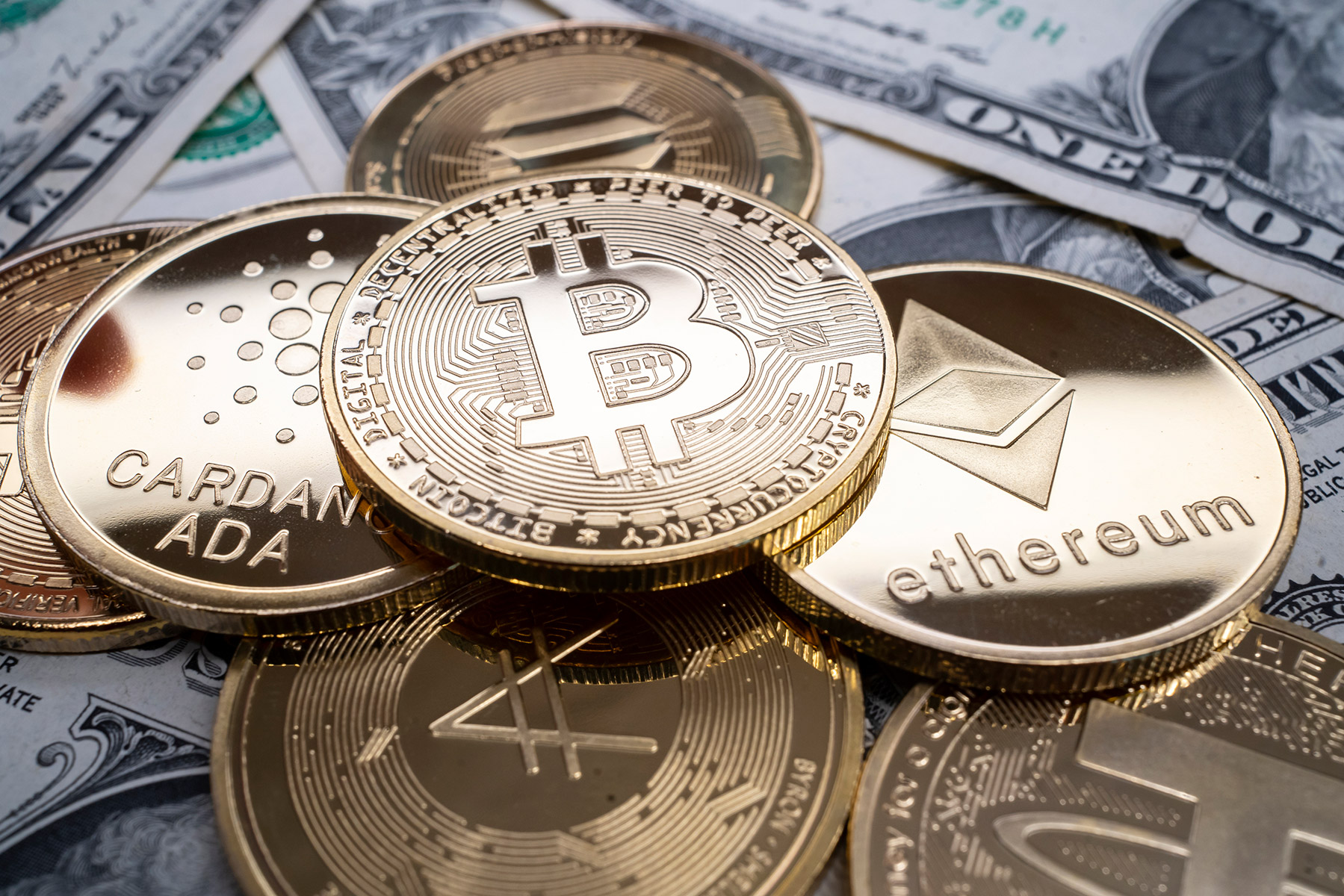
Cryptocurrency has evolved from a niche technological experiment into a global financial force. In just over a decade, it has disrupted traditional banking, inspired new economic models, and sparked debates about the future of money. As of 2025, cryptocurrencies are not only investment assets but also tools for innovation, decentralization, and financial inclusion. This essay explores the origins of cryptocurrency, its evolution, and its current status in the global economy.

Origins of Cryptocurrency

The Pre-Bitcoin Era

Before Bitcoin, digital currency was a theoretical concept explored by cryptographers and computer scientists. In the 1980s, David Chaum introduced DigiCash, an early form of electronic money that prioritized privacy. Though innovative, DigiCash failed commercially due to lack of adoption and centralization.

Other attempts, like Hashcash and B-money, laid the groundwork for decentralized systems but never materialized into functioning currencies. These efforts, however, contributed key ideas that would later be incorporated into Bitcoin.

REAL MONEY: https://medicalexecutivepost.com/2025/03/27/cryptocurrency-real-money-or-not/

The Birth of Bitcoin

In 2008, an anonymous figure (or group) known as Satoshi Nakamoto published the Bitcoin white paper: “Bitcoin: A Peer-to-Peer Electronic Cash System.” This document proposed a decentralized currency that used blockchain technology to validate transactions without a central authority.

Bitcoin officially launched in January 2009 with the mining of the genesis block. Early adopters were cryptographers, libertarians, and tech enthusiasts. The first real-world Bitcoin transaction occurred in 2010 when Laszlo Hanyecz paid 10,000 BTC for two pizzas — now commemorated as Bitcoin Pizza Day.

Bitcoin’s design solved the double-spending problem and introduced a transparent, immutable ledger. Its supply was capped at 21 million coins, making it deflationary by design.

Evolution and Expansion

Rise of Altcoins

Bitcoin’s success inspired the creation of alternative cryptocurrencies, or “altcoins.” Litecoin (2011), Ripple (2012), and Ethereum (2015) introduced new functionalities. Ethereum, in particular, revolutionized the space by enabling smart contracts — self-executing agreements coded directly onto the blockchain.

Smart contracts laid the foundation for decentralized applications (dApps), decentralized finance (DeFi), and non-fungible tokens (NFTs). These innovations expanded crypto’s use cases beyond simple transactions.

ICO Boom and Regulatory Pushback

In 2017, the crypto market experienced a massive bull run fueled by initial coin offerings (ICOs). Startups raised billions by issuing tokens, often without clear business models or regulatory oversight. While some projects succeeded, many failed or turned out to be scams.

Governments responded with crackdowns. The U.S. Securities and Exchange Commission (SEC) began classifying certain tokens as securities, requiring registration and compliance. China banned ICOs and crypto exchanges altogether.

Despite the volatility, the 2017–2018 cycle cemented crypto’s place in mainstream finance and attracted institutional interest.

Cryptocurrency in the 2020s

COVID-19 and the Digital Gold Narrative

The COVID-19 pandemic in 2020 accelerated crypto adoption. As governments printed trillions in stimulus, concerns about inflation grew. Bitcoin was increasingly viewed as “digital gold” — a hedge against fiat currency devaluation.

Major companies like Tesla, MicroStrategy, and Square added Bitcoin to their balance sheets. PayPal and Visa began supporting crypto transactions. The narrative shifted from speculation to legitimacy.

Ethereum and the DeFi Explosion

Ethereum’s ecosystem exploded with the rise of DeFi platforms like Uniswap, Aave, and Compound. These services allowed users to lend, borrow, and trade assets without intermediaries. Total value locked (TVL) in DeFi surpassed $100 billion by 2021.

Ethereum also became the backbone of the NFT boom. Artists, musicians, and creators used NFTs to monetize digital content, leading to record-breaking sales and mainstream attention.

STABLE COINS: https://medicalexecutivepost.com/2023/08/11/paypal-crypto-stablecoin-pyusd/

Current Status of Cryptocurrency (2025)

Market Performance

As of 2025, the global cryptocurrency market has added over $600 billion in value year-to-date, with a total market capitalization exceeding $2.5 trillion.

CRYPTO INFLATION: https://medicalexecutivepost.com/2022/08/27/inflation-and-crypto-currency/

COMMENTS APPRECIATED

EDUCATION: Books

Like, Refer and Subscribe

***

***