







 Support our online development, and advance our onground research initiatives in free market economics, as we seek to showcase the brightest Next-Gen minds.
THE ME-P DISCLAIMER: Posts, comments and opinions do not necessarily represent iMBA, Inc., but become our property after submission. Copyright © 2006 to-date. iMBA, Inc allows colleges, universities, medical and financial professionals and related clinics, hospitals and non-profit healthcare organizations to distribute our proprietary essays, photos, videos, audios and other documents; etc. However, please review copyright and usage information for each individual asset before submission to us, and/or placement on your publication or web site. Attestation references, citations and/or back-links are required. All other assets are property of the individual copyright holder.
Support our online development, and advance our onground research initiatives in free market economics, as we seek to showcase the brightest Next-Gen minds.
THE ME-P DISCLAIMER: Posts, comments and opinions do not necessarily represent iMBA, Inc., but become our property after submission. Copyright © 2006 to-date. iMBA, Inc allows colleges, universities, medical and financial professionals and related clinics, hospitals and non-profit healthcare organizations to distribute our proprietary essays, photos, videos, audios and other documents; etc. However, please review copyright and usage information for each individual asset before submission to us, and/or placement on your publication or web site. Attestation references, citations and/or back-links are required. All other assets are property of the individual copyright holder.


By Staff Reporters
***
***
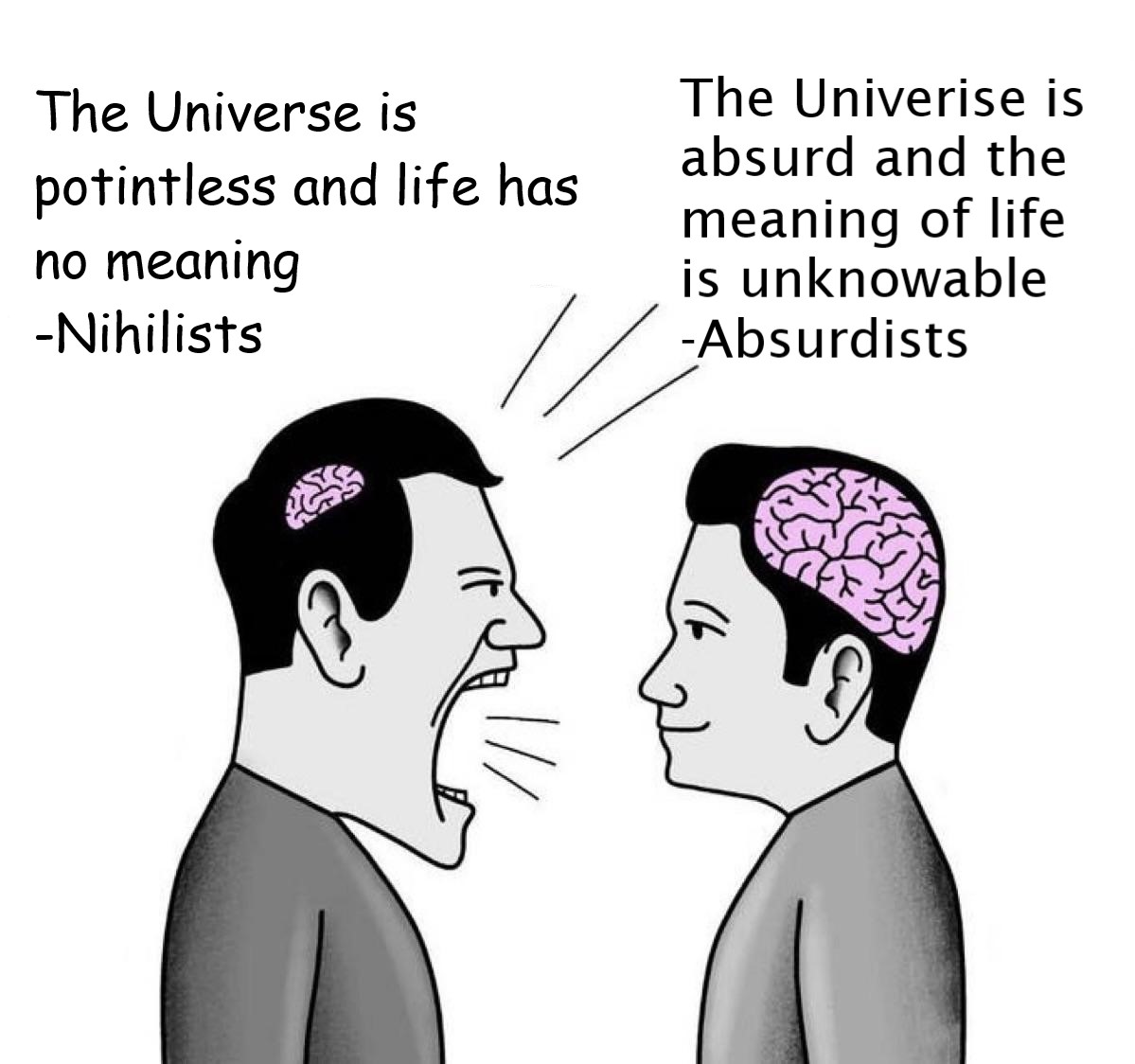
Absurdism is the philosophical idea that life is inherently meaningless, but we should embrace the absurdity and create our own meaning. Think of it as existentialism’s quirky cousin. It’s like laughing at the cosmic joke instead of crying over spilled milk. Absurdism encourages us to find joy in the randomness and chaos of life.
So, according to colleague Dan Arily PhD, the next time you’re feeling overwhelmed by the lack of purpose, channel your inner absurdist and find humor in the absurdity of it all.
Nihilism, on the other hand, is the belief that all values are baseless and that nothing can be known or communicated. It is often associated with extreme pessimism and a radical skepticism that condemns existence. A true nihilist would believe in nothing, have no loyalties, and no purpose other than, perhaps, an impulse to destroy. While few philosophers would claim to be nihilists, nihilism is most often associated with Friedrich Nietzsche who argued that its corrosive effects would eventually destroy all moral, religious, and metaphysical convictions and precipitate the greatest crisis in human history.
In the 20th century, nihilistic themes–epistemological failure, value destruction, and cosmic purposelessness–have preoccupied artists, social critics and philosophers, alike. Mid-century, for example, the existentialists helped popularize tenets of nihilism in their attempts to blunt its destructive potential. By the end of the century, existential despair as a response to nihilism gave way to an attitude of indifference, often associated with anti-foundationalism.
COMMENTS APPRECIATED
Subscribe Today!
***
***
Share this:

Filed under: Career Development, Ethics, Glossary Terms, LifeStyle, mental health | Tagged: absurd, absurdism, Dan Ariely PhD, existentialism, Friedrich Nietzsche, life, Nihilism, nihilist, philosophy |
 The Leading Business Education Network for Doctors, Financial Advisors and Health Industry Consultants
Leave a comment