







 Support our online development, and advance our onground research initiatives in free market economics, as we seek to showcase the brightest Next-Gen minds.
THE ME-P DISCLAIMER: Posts, comments and opinions do not necessarily represent iMBA, Inc., but become our property after submission. Copyright © 2006 to-date. iMBA, Inc allows colleges, universities, medical and financial professionals and related clinics, hospitals and non-profit healthcare organizations to distribute our proprietary essays, photos, videos, audios and other documents; etc. However, please review copyright and usage information for each individual asset before submission to us, and/or placement on your publication or web site. Attestation references, citations and/or back-links are required. All other assets are property of the individual copyright holder.
Support our online development, and advance our onground research initiatives in free market economics, as we seek to showcase the brightest Next-Gen minds.
THE ME-P DISCLAIMER: Posts, comments and opinions do not necessarily represent iMBA, Inc., but become our property after submission. Copyright © 2006 to-date. iMBA, Inc allows colleges, universities, medical and financial professionals and related clinics, hospitals and non-profit healthcare organizations to distribute our proprietary essays, photos, videos, audios and other documents; etc. However, please review copyright and usage information for each individual asset before submission to us, and/or placement on your publication or web site. Attestation references, citations and/or back-links are required. All other assets are property of the individual copyright holder.


From 1999 – 2016
By BLS
***
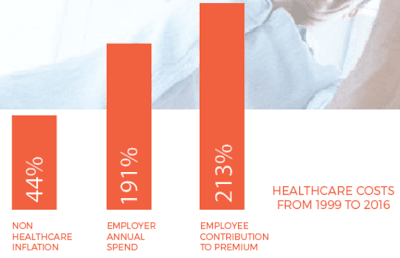
***
Conclusion
Your thoughts and comments on this ME-P are appreciated. Feel free to review our top-left column, and top-right sidebar materials, links, URLs and related websites, too. Then, subscribe to the ME-P. It is fast, free and secure.
Speaker: If you need a moderator or speaker for an upcoming event, Dr. David E. Marcinko; MBA – Publisher-in-Chief of the Medical Executive-Post – is available for seminar or speaking engagements.
Book Marcinko: https://medicalexecutivepost.com/dr-david-marcinkos-bookings/
Subscribe: MEDICAL EXECUTIVE POST for curated news, essays, opinions and analysis from the public health, economics, finance, marketing, IT, business and policy management ecosystem.
***
Share this:

Filed under: Health Economics | Tagged: healthcare costs |
 The Leading Business Education Network for Doctors, Financial Advisors and Health Industry Consultants
US Spent $3.58 Trillion on Healthcare in 2017
Altarum recently released an analysis on Health Sector Economic Indicators. Here are some key findings from the report:
• US health spending was $3.58 trillion from January 2017 to January 2018.
• Health spending was 4.8% higher in 2018 than it was in January 2017.
• Home health care spending grew the fastest in 2017, at 7.7%.
• Spending on dental services grew the slowest in 2017, at 3.2%.
• Health spending growth increased from 4.3% in 2016 to 4.6% in 2017.
• Prescription drug spending grew 1.3% in 2016 and 5% in 2017.
Source: Altarum, March 16, 2018
LikeLike
Why Your Health Insurer Doesn’t Care About Your Big Bills
Patients may think their insurers are fighting on their behalf for the best prices. But saving patients money is often not their top priority.
https://www.propublica.org/article/why-your-health-insurer-does-not-care-about-your-big-bills
Dr. David E. Marcinko MBA
LikeLiked by 1 person
PwC Speaks
The employer medical cost trend is a projection of the year-over-year increase in the cost to treat patients in the employer-based market, excluding Medicare, Medicaid and plans on the ACA exchanges. Factors such as new technologies, drug spending, government regulation, payment models, patient demographics, lifestyle factors and general inflation all play into the medical cost trend.
PwC’s HRI identified the following three factors as emerging inflators for 2019:
1. Retail and urgent care clinics have made care increasingly easy to access, driving utilization up in the short term. As healthcare providers strive to become more consumer-oriented, more patients are driven to use healthcare services. Providers hope this will eventually drive costs down as patients are treated in lower-cost settings, hopefully preventing major illness or catching it early.
2. Provider mega-mergers are increasing prices. Almost all — 93 percent — of metropolitan hospital markets will be highly concentrated in 2019, according to the report. This market concentration is expected to drive healthcare prices up in the short term as merging providers have to cover the costs of integration and find more power at the negotiating table. Eventually, economies of scale could reverse this trend, HRI suggests.
3. Growth in physician employment and consolidation will also drive up prices. As physicians join larger practices or hospitals and health systems, they typically become less efficient and adopt the larger organization’s billing practices, which drives up costs. Physician practices acquired by hospitals may also bill a facility fee on top of the fee for a patient visit, according to the report.
However, HRI identified three factors that are expected to help offset these inflators. These include a less severe flu season, greater patient engagement and “high-performance networks” with limited providers.
Dr. David Marcinko MBA
LikeLike
The US Spent $10,637 Per Person on Healthcare in 2018
The Peterson-KFF Health System Tracker recently released an analysis of healthcare spending in the U.S. compared to other similar countries. Here are some key findings from the report:
• In 2018, the U.S. spent $10,637 on health per person compared to $5,527 in comparable countries.
• Americans spent $6,624 per person on inpatient and outpatient care, compared to $2,718.
• The U.S. spent $1,397 per capita on prescription drugs, while comparable countries spent $884.
• Spending on health administration was $937 in the U.S., compared to $201 in similar countries.
Source: Health System Tracker, September 25, 2020
LikeLike