







 Support our online development, and advance our onground research initiatives in free market economics, as we seek to showcase the brightest Next-Gen minds.
THE ME-P DISCLAIMER: Posts, comments and opinions do not necessarily represent iMBA, Inc., but become our property after submission. Copyright © 2006 to-date. iMBA, Inc allows colleges, universities, medical and financial professionals and related clinics, hospitals and non-profit healthcare organizations to distribute our proprietary essays, photos, videos, audios and other documents; etc. However, please review copyright and usage information for each individual asset before submission to us, and/or placement on your publication or web site. Attestation references, citations and/or back-links are required. All other assets are property of the individual copyright holder.
Support our online development, and advance our onground research initiatives in free market economics, as we seek to showcase the brightest Next-Gen minds.
THE ME-P DISCLAIMER: Posts, comments and opinions do not necessarily represent iMBA, Inc., but become our property after submission. Copyright © 2006 to-date. iMBA, Inc allows colleges, universities, medical and financial professionals and related clinics, hospitals and non-profit healthcare organizations to distribute our proprietary essays, photos, videos, audios and other documents; etc. However, please review copyright and usage information for each individual asset before submission to us, and/or placement on your publication or web site. Attestation references, citations and/or back-links are required. All other assets are property of the individual copyright holder.


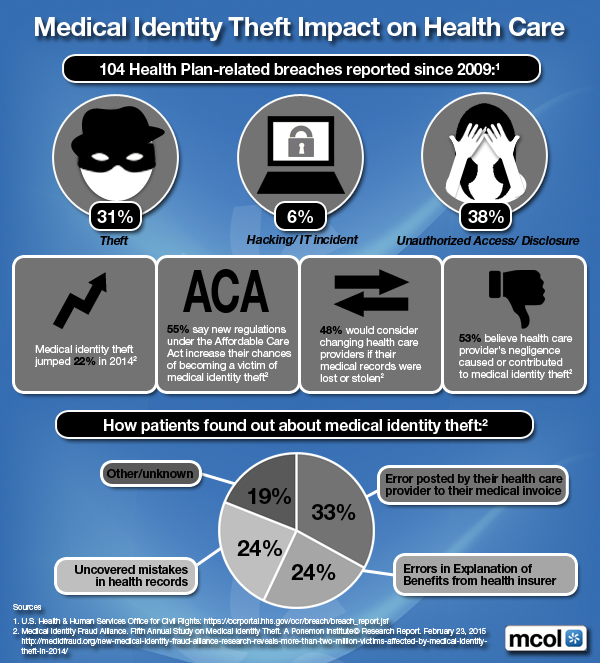
Health Plan Related Breaches Since 2009
Channel Surfing the ME-P
Have you visited our other topic channels? Established to facilitate idea exchange and link our community together, the value of these topics is dependent upon your input. Please take a minute to visit. And, to prevent that annoying spam, we ask that you register. It is fast, free and secure.
More:
- Health Data Breaches Multiplying
- How Expensive are Healthcare Data Breaches?
- Medical Identity Theft on the Rise
- Pitfalls with Health Care Provider Data
Conclusion
How does this relate to emails? Your thoughts and comments on this ME-P are appreciated. Feel free to review our top-left column, and top-right sidebar materials, links, URLs and related websites, too. Then, subscribe to the ME-P. It is fast, free and secure.
Speaker: If you need a moderator or speaker for an upcoming event, Dr. David E. Marcinko; MBA – Publisher-in-Chief of the Medical Executive-Post – is available for seminar or speaking engagements. Contact: MarcinkoAdvisors@msn.com
OUR OTHER PRINT BOOKS AND RELATED INFORMATION SOURCES:
- PRACTICES: www.BusinessofMedicalPractice.com
- HOSPITALS: http://www.crcpress.com/product/isbn/9781466558731
- CLINICS: http://www.crcpress.com/product/isbn/9781439879900
- ADVISORS: www.CertifiedMedicalPlanner.org
- FINANCE: Financial Planning for Physicians and Advisors
- INSURANCE: Risk Management and Insurance Strategies for Physicians and Advisors
- Dictionary of Health Economics and Finance
- Dictionary of Health Information Technology and Security
- Dictionary of Health Insurance and Managed Care


Share this:

Filed under: Health Law & Policy, Information Technology, Risk Management | Tagged: health data breaches, HIPAA, identity theft, Medical Identity Theft |
 The Leading Business Education Network for Doctors, Financial Advisors and Health Industry Consultants
Hospital Data does not Equal Community Health
The Becker Hospital Report is a misleading “population health” study that incorrectly projects community health with hospital payment data.
About 15 tears ago I worked at HCIA. HCIA found Albany Hospital was the worst in the country for cardiac care. The following year Albany Hospital was one of the best in the US by changing admissions requirements.
https://ebukstelblog.wordpress.com/2015/02/03/hospital-data-does-not-equal-community-health/
Hospital data does not reflect the health of a community.
Edward Bukstel
via Hope R. Hetco RN MHA
LikeLike
Cyber Hacks
Recent cyber-attacks perpetrated against covered entities in the healthcare industry underscore both the sophistication of cyber hackers and the continued security vulnerabilities of even the largest US firms.
For example, last year alone, over 10 million people in the US were impacted by health care data breaches. Information housed by covered entities provides fertile ground for hackers because it contains names, birthdates – and most importantly – Social Security numbers, which are key pieces of information hackers use to open new credit lines, create fake medical records, or apply for loans.
It’s clear that covered entities, and PHI, are a target of these cyber criminals. Yet, even with these alarming trends, there are basic security practices that many healthcare providers still fail to implement to bolster their defenses against cyber criminals.
Jeremy
LikeLike
IDENTITY THEFT
Speaking in front of an audience used to be Americans’ greatest fear. According to a Chapman University study done last year, public speaking has dropped to number five. Number one is now walking down a dark alley alone.
And the number two fear? Identity theft
I found this hard to believe until I started noticing all the ads on identity theft. They warn that not only can your bank account be stolen, so can your retirement nest egg and yes, even your home equity! They suggest you can be wiped out in one fell swoop. What isn’t there to be terrified of here?
The ads’ answer to calming your fears is simple: buy identity theft insurance.
While there is a grain of truth in the outrageous claims, the probability of horrendous financial losses from identity theft is slim. Most identity theft insurance policies provide the services of a professional to help reestablish your credit in addition to covering some monetary losses from a theft.
Still, I don’t recommend identity theft insurance.
So it was ironic that a few months ago I was the victim of identity theft. Someone from our bank called, suspicious about a scheduled a wire transfer on a personal account for $904 to an account in Mexico. The account had been hacked. As best we could determine, hackers had gained access to my wife’s computer which, unknown to us, had the Microsoft update feature disabled 18 months prior and was 161 updates behind.
We had six other personal and business accounts at this bank under a number of different usernames and passwords. We learned that all these accounts were tied together into one group that could be accessed by any individual account’s username and password. The fraud department agent said all the accounts were compromised and would need to be closed.
Of course, this was a major inconvenience. It meant rescheduling scores of automatic payments on seven checking accounts, getting new authorizations, notifying vendors, and purchasing new checks. But at least the problem was resolved.
Until three months later my bookkeeper called to ask about nine wire transfers, totaling $6,300, in one month out of one infrequently used account. The bank confirmed that hackers used a username and password to gain access to the account, and the transfers escaped the watchful eye of their fraud department.
I had not set up online banking on any of the new accounts. There were no usernames or passwords, so how could anyone have gained access? Then I discovered that even though the bank had closed all the accounts and opened new ones, they only disabled the username and password the hackers had used to gain access the first time. They left all the others active.
This was baffling. It had seemed obvious to me that closing the accounts included disabling all access to the accounts. I found out otherwise.
Fortunately, the bank covered our loss. We did have to close all the accounts a second time; this time disabling all the usernames and passwords.
This experience taught me two lessons. First, don’t assume a protective action has been taken just because it seems obvious to you: ask questions and make sure. Second, if your bank links all your accounts when you do online banking, it may be wise to only have one or two accounts at a bank and only access them using one username and password.
I also learned that insurance would not have compensated us for our personal time and hassle involved in signing and approving new accounts, something which could not be outsourced.
My advice to skip identity theft insurance still stands.
Rick Kahler MS CFP®
LikeLike