







 Support our online development, and advance our onground research initiatives in free market economics, as we seek to showcase the brightest Next-Gen minds.
THE ME-P DISCLAIMER: Posts, comments and opinions do not necessarily represent iMBA, Inc., but become our property after submission. Copyright © 2006 to-date. iMBA, Inc allows colleges, universities, medical and financial professionals and related clinics, hospitals and non-profit healthcare organizations to distribute our proprietary essays, photos, videos, audios and other documents; etc. However, please review copyright and usage information for each individual asset before submission to us, and/or placement on your publication or web site. Attestation references, citations and/or back-links are required. All other assets are property of the individual copyright holder.
Support our online development, and advance our onground research initiatives in free market economics, as we seek to showcase the brightest Next-Gen minds.
THE ME-P DISCLAIMER: Posts, comments and opinions do not necessarily represent iMBA, Inc., but become our property after submission. Copyright © 2006 to-date. iMBA, Inc allows colleges, universities, medical and financial professionals and related clinics, hospitals and non-profit healthcare organizations to distribute our proprietary essays, photos, videos, audios and other documents; etc. However, please review copyright and usage information for each individual asset before submission to us, and/or placement on your publication or web site. Attestation references, citations and/or back-links are required. All other assets are property of the individual copyright holder.


Am I Scolded?
[By Rick Kahler MS CFP®] http://www.KahlerFinancial.com
 Just recently I heard from an insurance salesman who scolded me for never giving any investment advice except to put all your money into “The Wall Street Casino.”
The impetus for this admonishment was the “up-down”, “buy-sell”, market craziness of this past week; no doubt.
My Story
Over the past 23 years, I’ve penned scores of columns about the benefits of a diversified portfolio of asset classes (Wall Street being just one of them). Still, I would far rather invest 100% of my retirement funds in a diversified portfolio of US stocks than speculate on a roulette wheel. There is a big difference between investing and speculating.
I learned that difference the hard way when I was in my early twenties. I had some money in savings and some mutual funds in an IRA, but they weren’t building wealth fast enough for me. Gold prices were up and going higher, so I took $1000 out of my savings and put it into gold futures. In just a few days, my $1000 had turned into $3000.
My broker suggested putting the $3000 into pork bellies. I didn’t really know what they were, but he seemed to know what he was talking about, so I bought pork bellies. For a few days, everything was fine. Then the price of pork bellies tanked. For five days straight, the price fell so dramatically that trading was stopped at the beginning of the day. I couldn’t even sell. There was nothing to do except watch the losses pile up.
By the time trading resumed, I had a margin call for $12,500 ($50,000 today, adjusted for inflation). To pay it, I had to wipe out my savings and cash in my IRA. At least I had savings, so I didn’t have to go borrow the money.
I had made a classic rookie mistake—speculating instead of investing.
***

***
The Money Options Triad
There are three things you can do with money you wish to set aside: save, invest, or speculate.
- Saving is putting money away for future needs, often in a bank savings account or CDs. The primary purpose isn’t building wealth; it’s having money when you need it for emergencies or large purchases.
- Investing is diversifying money into stocks, bonds, real estate, commodities, and other asset classes. The purpose is to build wealth over the long term, so investing is boring. While you will see the value of your money decline as well as increase, it is unlikely that over a long period of time you will actually suffer a permanent loss of capital. Your returns over time will probably be more than you would earn from simple savings.
- Speculating is putting money into a high-risk investment in the hope of building wealth quickly. It’s exciting, dramatic, and risky. Examples of speculating include trying to time the markets through day trading, putting everything you have into one investment, and borrowing to buy stocks, real estate, or commodities. True, great fortunes have been made through speculating, but many more fortunes have been lost. Not only can you lose your initial investment, you can—as I did with my pork bellies—lose way more money than you had to begin with.
When novices skip from saving to speculating, chances are good that they’ll lose big. Unfortunately, too many of them learn the wrong lesson. They decide, “Investing is too risky,” never realizing they were speculating rather than investing.
***

***
The Savings Trap
As a result, in the future they may limit themselves to saving. Their money stays safe, but over time they lose in a big way, especially through decreased purchasing power. Investing is not a “casino,” but a way to earn the long-term returns that are so important for building net worth and achieving financial security.
Assessment
So, have I been scolded; my bad?
Conclusion
Your thoughts and comments on this ME-P are appreciated. Feel free to review our top-left column, and top-right sidebar materials, links, URLs and related websites, too. Then, subscribe to the ME-P. It is fast, free and secure.
Speaker: If you need a moderator or speaker for an upcoming event, Dr. David E. Marcinko; MBA – Publisher-in-Chief of the Medical Executive-Post – is available for seminar or speaking engagements. Contact: MarcinkoAdvisors@msn.com
OUR OTHER PRINT BOOKS AND RELATED INFORMATION SOURCES:
- PRACTICES: www.BusinessofMedicalPractice.com
- HOSPITALS: http://www.crcpress.com/product/isbn/9781466558731
- CLINICS: http://www.crcpress.com/product/isbn/9781439879900
- ADVISORS: www.CertifiedMedicalPlanner.org
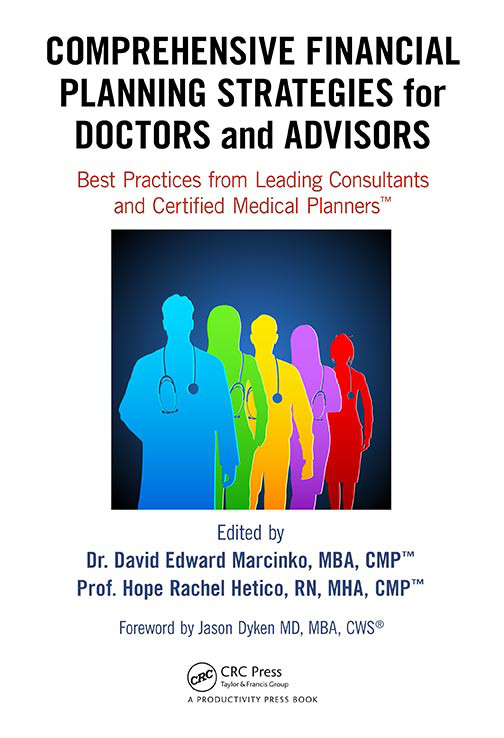
- FINANCE: Financial Planning for Physicians and Advisors
- INSURANCE: Risk Management and Insurance Strategies for Physicians and Advisors
- Dictionary of Health Economics and Finance
- Dictionary of Health Information Technology and Security
- Dictionary of Health Insurance and Managed Care
Share this:

Filed under: Investing | Tagged: "The Wall Street Casino", Investing, Rick Kahler CFP® |
 The Leading Business Education Network for Doctors, Financial Advisors and Health Industry Consultants
US Economy Has Not “Decoupled”
For a while around the time of the Financial Crisis some wondered whether or not developing nations were “decoupled” from issues in the developed world. As it turns out, they were not.
A reverse version of this could be developing, as a weakening Chinese economy (that the Chinese government is averse to greatly stimulating) and steady weakness in Europe may combine to potentially create a force of economic weakening that may this time blow west instead of east.
http://unlovedmoney.com/2014/10/01/us-economy-has-not-decoupled/
The US economy has gotten a lot of attention recently for its relative economic strength. But, we may soon better appreciate the fact that the US economy does not exist in a vacuum.
David Twyford
via Ann Miller RN MHA
LikeLike
Wall Street and “Bad Actors”
If Wall Street bankers and their regulators are once again under fire, the heat just got turned up recently.
http://www.msn.com/en-us/money/markets/why-wall-street-breeds-so-many-bad-apples/ar-BBf6f3O?ocid=iehp
Simon
LikeLike
When Wall Street Wins The Economy Loses?
New research shows that runaway growth in the financial sector is detrimental to the real economy, as highly skilled workers gravitate toward finance and industries dependent on outside investment suffer. Mainstream political thinking holds that a nation’s economic fortitude relies on an ever-expanding financial sector.
http://www.msn.com/en-us/money/markets/when-wall-street-wins-the-economy-loses/ar-BBhTacF
But, new research disputes the notion. In a new paper – titled “Why does financial sector growth crowd out real economic growth?” – authors Stephen Cecchetti and Enisse Kharroubi show that when banking blossoms, the “real” economy withers.
Norman
LikeLike
Hillary Clinton’s Mixed Record on Wall Street Belies Her Tough ‘Cut it Out’ Talk
According to Jeff Gerth, as a U.S. senator during the crisis years, Clinton’s legislative proposals to reform banking and housing finance didn’t gain traction.
http://www.propublica.org/article/hillary-clinton-mixed-record-on-wall-street-tough-cut-it-out-talk?utm_source=et&utm_medium=email&utm_campaign=dailynewsletter&utm_content=&utm_name=
This story was co-published with The Daily Beast.
Wallace
LikeLike