






 Support our online development, and advance our onground research initiatives in free market economics, as we seek to showcase the brightest Next-Gen minds.
THE ME-P DISCLAIMER: Posts, comments and opinions do not necessarily represent iMBA, Inc., but become our property after submission. Copyright © 2006 to-date. iMBA, Inc allows colleges, universities, medical and financial professionals and related clinics, hospitals and non-profit healthcare organizations to distribute our proprietary essays, photos, videos, audios and other documents; etc. However, please review copyright and usage information for each individual asset before submission to us, and/or placement on your publication or web site. Attestation references, citations and/or back-links are required. All other assets are property of the individual copyright holder.
Support our online development, and advance our onground research initiatives in free market economics, as we seek to showcase the brightest Next-Gen minds.
THE ME-P DISCLAIMER: Posts, comments and opinions do not necessarily represent iMBA, Inc., but become our property after submission. Copyright © 2006 to-date. iMBA, Inc allows colleges, universities, medical and financial professionals and related clinics, hospitals and non-profit healthcare organizations to distribute our proprietary essays, photos, videos, audios and other documents; etc. However, please review copyright and usage information for each individual asset before submission to us, and/or placement on your publication or web site. Attestation references, citations and/or back-links are required. All other assets are property of the individual copyright holder.


Today is Ada Lovelace Day 2014
[By Dr. David Edward Marcinko MBA CMP™]
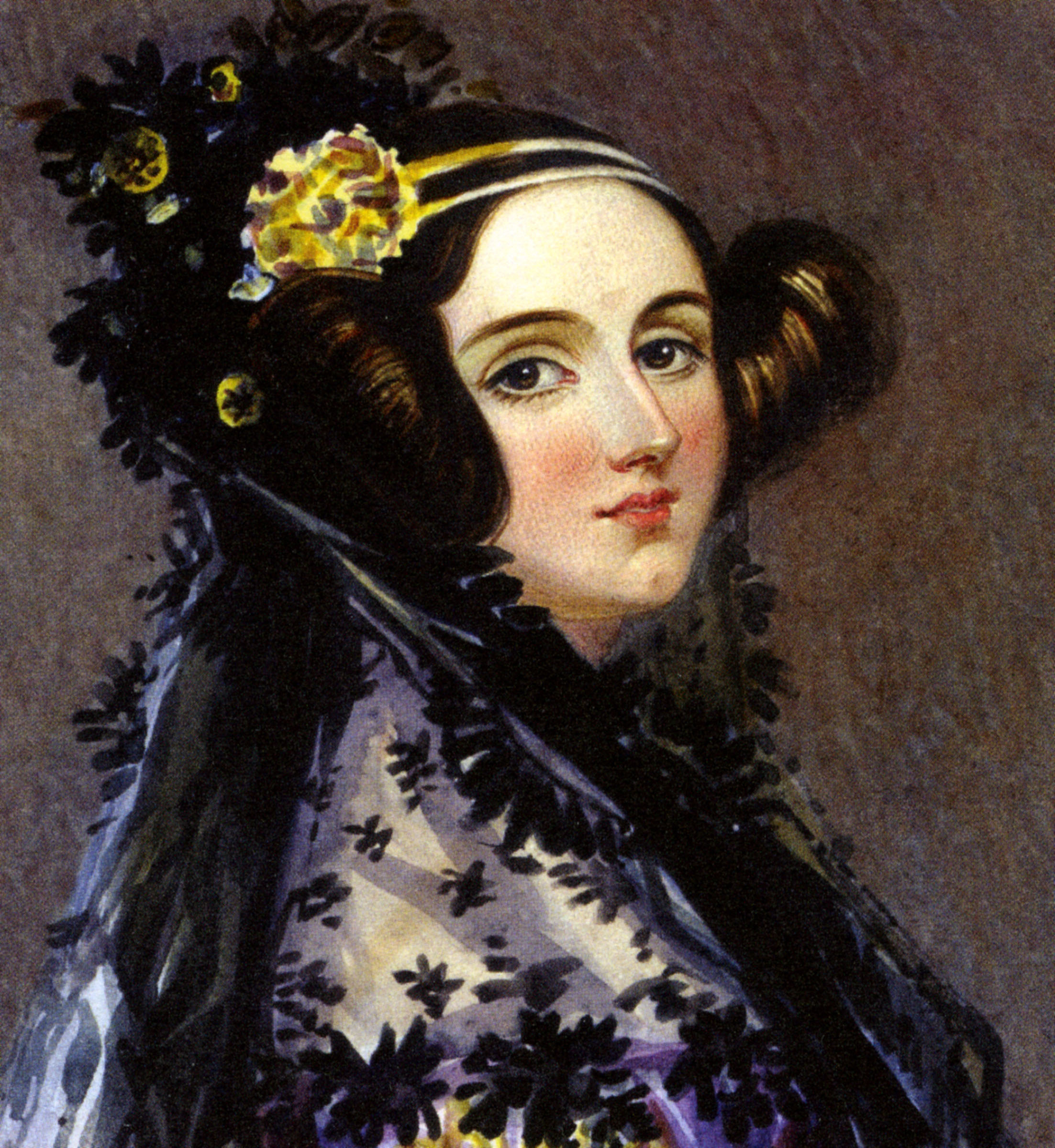
 Ada Lovelace Day was created to celebrate one of the first female computer programmers. As the daughter of the poet Lord Byron, Augusta Ada Byron, was brought up by her mother, Annabella, after he passed.
Her mother feared that she would inherit her father’s poetic temperament, and gave Ada a strict upbringing of logic, science and mathematics. Ada became fascinated with mechanisms and designed steam flying machines, poring over the scientific magazines of the time and embracing the British Industrial revolution.
The Analytical Engine
In 1833, Ada Lovelace was introduced to Charles Babbage whom she helped to develop a device called The Analytical Engine; an early predecessor of the modern computer. Lovelace and Babbage worked together closely for many years in order to refine the Engine. Ada found relative fame in 1842 when she expanded on an article by an Italian mathematician, in which she elaborated on the use of machines through the manipulation of symbols. Although Babbage had sketched out programs before, Lovelace’s were the most elaborate and complete, and the first to be published; so she is often referred to as “the first computer programmer”.
***
***
Death
Ada Lovelace died of cancer at the age of 36 a few short years after the publication of “Sketch of the Analytical Engine, with Notes from the Translator”. The Analytical Engine remained a vision for many but until Ada’s notes inspired Alan Turing to work on the first modern computers in the 1940’s.
Assessment
Her passion and vision for technology have made her a powerful symbol for women in the modern world of technology. But, was she the “mother” of Health Information Technology? You decide.
More:
Conclusion
Your thoughts and comments on this ME-P are appreciated. Feel free to review our top-left column, and top-right sidebar materials, links, URLs and related websites, too. Then, subscribe to the ME-P. It is fast, free and secure.
Speaker: If you need a moderator or speaker for an upcoming event, Dr. David E. Marcinko; MBA – Publisher-in-Chief of the Medical Executive-Post – is available for seminar or speaking engagements. Contact: MarcinkoAdvisors@msn.com
OUR OTHER PRINT BOOKS AND RELATED INFORMATION SOURCES:
- PHYSICIANS: www.MedicalBusinessAdvisors.com
- PRACTICES: www.BusinessofMedicalPractice.com
- HOSPITALS: http://www.crcpress.com/product/isbn/9781466558731
- CLINICS: http://www.crcpress.com/product/isbn/9781439879900
- ADVISORS: www.CertifiedMedicalPlanner.org
- BLOG: www.MedicalExecutivePost.com
- FINANCE: Financial Planning for Physicians and Advisors
- INSURANCE: Risk Management and Insurance Strategies for Physicians and Advisors


Share this:

Filed under: Information Technology, LifeStyle | Tagged: Ada Lovelace, Alan Turing, Analytical Engine, Charles Babbage, Steve Jobs |
 The Leading Business Education Network for Doctors, Financial Advisors and Health Industry Consultants
Dictionary of HIT,
Here is a good resource for related HIT info, term and definitions.
Basil
LikeLike
Health Information Technology is a scam. It’s always been a scam.
“Obama Administration Report Slams Digital Health Records – The Obama administration took vendors of electronic health records to task for making it costly and cumbersome to share patient information and frustrating a $30 billion push to use digital records to improve quality and cut costs.”
Melinda Beck for The Wall Street Journal
[April 10, 2015]
http://www.wsj.com/articles/report-slams-digital-health-records-1428638879?mod=WSJ_TechWSJD_NeedToKnow
Beck: “Farzad Mostashari, a former ONC director and now CEO of Aledade Inc., which helps doctors join together in integrated systems, said he has seen vendors charge small practices as much as $29,000 for an interface to send patient data to other providers, and as much as $1 a virtual page to transmit patient files, which can run thousands of pages. The [Office of the National Coordinator for Health Information Technology (ONC)] report stressed that the agency cannot regulate prices and that most of the alleged actions don’t violate current laws.”
We’ve been had.
D. Kellus Pruitt DDS
LikeLike
MARGARET HAMILTON
[This Woman Helped Put the First Man on the Moon]
On July 20, 1969, minutes before the astronauts aboard the Apollo 11 lunar module were about to make their historic landing on…
https://www.linkedin.com/pulse/woman-helped-put-first-man-moon-glenn-leibowitz
[via Glenn Leibowitz on LinkedI]n
Ann Miller RN MHA
LikeLike
Breaking Barriers That Stop Women from Working in Technology
Women like to tinker, but social barriers continue to stop them from pursuing technical careers that would benefit the economy.
As Eleonore Fournier-Tombs writes for MIT Technology Review, a recent study found that females like to fiddle with data, devices, and code in much the same way that men do, but sexism in the workplace discourages them from pursuing these fields for a living.
The Economist also notes that the lack of women entering technical careers contributes to a shortfall in U.S. workers able to take on technical roles. According to the magazine, there could be over 1 million vacant computing and IT roles by 2020, many of which could be filled if more women gained technical qualifications. M
aking that happen isn’t just about solving workplace sexism or pay equality, though—it’s also about breaking stereotypes. “This Christmas, maybe we can skip the perfume ads and show women receiving a gift that they really want: an external hard drive or a book on Unix programming,” suggests Fournier-Tombs.
MIT Technology Review
LikeLike
The Problem
Tech jobs are among the fastest growing in the country, yet girls are being left behind.
While interest in computer science ebbs over time, the biggest drop off happens between the ages of 13-17.
Visit: http://www.GirlsWhoCode.com
Ann Miller RN MHA
LikeLike
It’s Ada Lovelace day today
People are celebrating the extraordinary life of the first computer programmer as inspiration for women in tech everywhere.
The Independent
LikeLike