ME-P SYNDICATIONS:
WSJ.com,
CNN.com,
Forbes.com,
WashingtonPost.com,
BusinessWeek.com,
USNews.com, Reuters.com,
TimeWarnerCable.com,
e-How.com,
News Alloy.com,
and Congress.org


BOARD CERTIFICATION EXAM STUDY GUIDES
Lower Extremity Trauma
[Click on Image to Enlarge]
The “Medical Executive-Post” is about connecting doctors, health care executives and modern consulting advisors. It’s about free-enterprise, business, practice, policy, personal financial planning and wealth building capitalism. We have an attitude that’s independent, outspoken, intelligent and so Next-Gen; often edgy, usually controversial. And, our consultants “got fly”, just like U. Read it! Write it! Post it! “Medical Executive-Post”. Call or email us for your FREE advertising and sales consultation TODAY [678.779.8597] E-mail: MarcinkoAdvisors1738@outlook.com



ePodiatryConsentForms.com
Suite #5901 Wilbanks Drive, Norcross, Georgia, 30092 USA [1.678.779.8597]. Our location is real and we are now virtually enabled to assist new long distance clients and out-of-town colleagues.
If you want the opportunity to work with leading health care industry insiders, innovators and watchers, the “ME-P” may be right for you? We are unbiased and operate at the nexus of theoretical and applied R&D. Collaborate with us and you’ll put your brand in front of a smart & tightly focused demographic; one at the forefront of our emerging healthcare free marketplace of informed and professional “movers and shakers.” Our Ad Rate Card is available upon request [678-779-8597].

“Providing Management, Financial and Business Solutions for Modernity”
Whether you’re a mature CXO, physician or start-up entrepreneur in need of management, financial, HR or business planning information on free markets and competition, the "Medical Executive-Post” is the online place to meet for Capitalism 2.0 collaboration.

Support our online development, and advance our onground research initiatives in free market economics, as we seek to showcase the brightest Next-Gen minds.
THE ME-P DISCLAIMER: Posts, comments and opinions do not necessarily represent iMBA, Inc., but become our property after submission. Copyright © 2006 to-date. iMBA, Inc allows colleges, universities, medical and financial professionals and related clinics, hospitals and non-profit healthcare organizations to distribute our proprietary essays, photos, videos, audios and other documents; etc. However, please review copyright and usage information for each individual asset before submission to us, and/or placement on your publication or web site. Attestation references, citations and/or back-links are required. All other assets are property of the individual copyright holder.







 The Leading Business Education Network for Doctors, Financial Advisors and Health Industry Consultants
Electronic and Mobile Aps
Be aware that according to the Microsoft Corporation:
• More than 20,000 health related Internet sites have been formed in recent years
• 54 percent of all Internet users regularly use the net for health related information
• 4 million patients have made at least one on-line e-health purchase, and
• 25 percent of adults visiting disease specific web-sites ask their physicians for advertised products
Patients now demand efficient and roluex-like personal e-and-m communication with their healthcare providers. So, all healthcare players (provider, pharmaceutical and payor) must creatively and aggressively deploy digital technology to drive down costs and foster better relationships. Non-communicative practitioners, groups and hospitals will cease to function in the future, unless they provide:
• Patient-Based Customer Relationship Management (CRM) and e-mail Solutions
• Telemedicine, Real-time Video Conferencing and PDA Wireless Connectivity
• Streamlined Client Enrollment, Provider Management and Efficient Data IT Systems
• Medical Materials Management and Supply-Chain Improvement
• Website Design, Development, Security and Maintenance
• Customized e-Healthcare Initiatives, Business and Best-Practices
And, by partnering with corporate alliance strategists, you will maintain the competitive edge for all your communication functions.
Dr. David Edward Marcinko MBA
LikeLike
On m-Health Aps
“Most consumers take mobile health app claims at face value and think that because they’re available through a trusted retailer like the iTunes Store, they must have been reviewed by the FDA, which isn’t usually the case.”
Nathan Cortez
[Law professor Southern Methodist University]
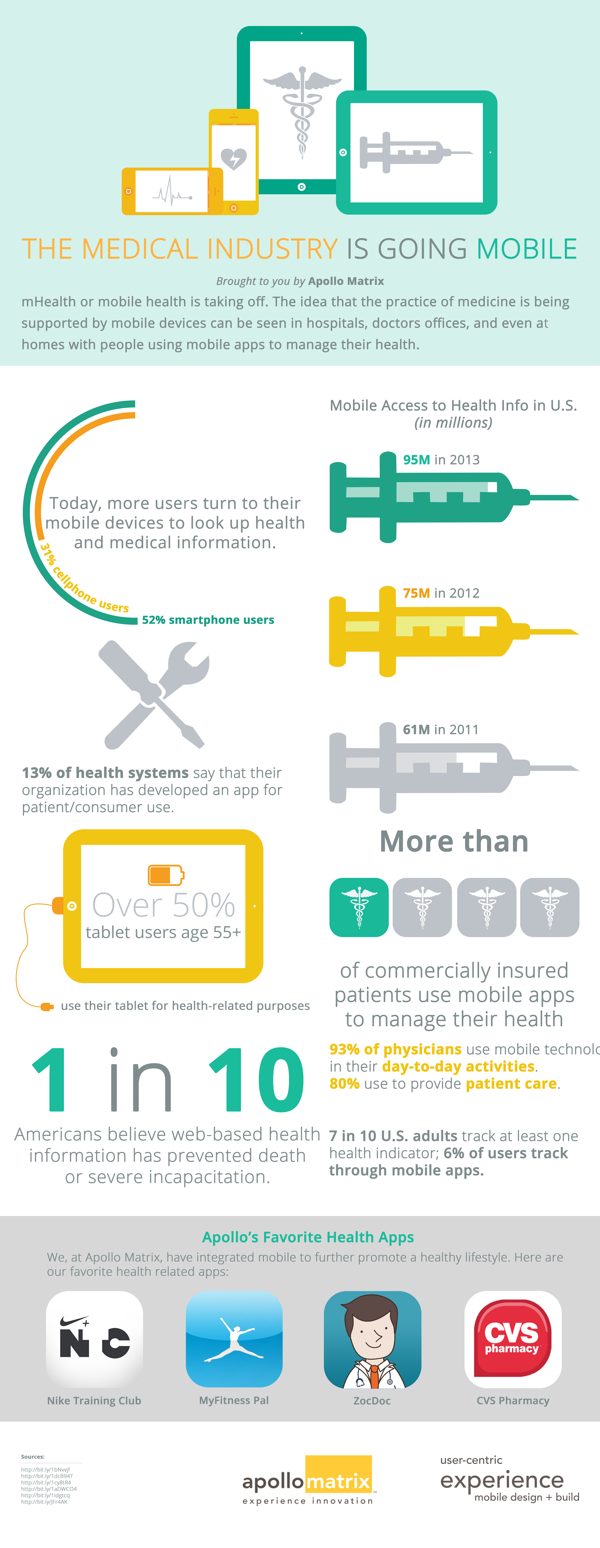
And, a move into the mobile health (mHealth) space promises significant future returns, as GlobalData forecasts this market to grow at a Compound Annual Growth Rate (CAGR) of 31.5%, from an estimated $3 billion in 2013 to $11.8 billion by 2018.
Publication Source: Product Design & Development
Data Source – Global Data
LikeLike
[The Other Side of Wireless – SLIDE SHOW]
Connecting Medical Devices with Mobile, Cloud Computing and Analytics to Improve Health Economic Outcomes
Franklin
LikeLike
Mobile health market
The global mHealth market (Mobile health market) is expected to reach USD 49,119.2 million by 2020, according to a new study by Grand View Research, Inc. Monitoring services is expected to remain the dominant and fastest growing market segment, with market revenue of USD 1,227.5 million in 2012, and an estimated CAGR of 49.7% from 2014 to 2020.
Source: Grand View Research, Inc.
LikeLike
Mobile Devices Are a ‘Silent Killer’ Of PHI; BYOD Policies Are a Must
Mobile devices in the workplace are ubiquitous and healthcare organizations, more now than ever, are facing the challenge of incorporating personal devices into regular workflow as access to protected health information (PHI) expands and CMS continues its push for interoperability. Stage Three of the Electronic Health Record (EHR) Incentive Program is set to take effect in 2017, with all providers required to meet its EHR and interoperability requirements in 2018.
That’s a big reason for the jump in bring-your-own-device (BYOD) policies in healthcare, according to Ron Calhoun, healthcare practice leader for Aon Risk Solutions, who says that until now the industry has not been able to adapt to the trend fast enough. Calhoun thinks the interoperability movement and the value-based care movement add up to a “perfect storm” for healthcare providers in terms of privacy risk, because not only are they dealing with the headache of securing Web-accessible clinical data, but now are dealing with the additional challenge of monitoring multiple contractors and an endless number of mobile devices.
Source: Report on Patient Privacy [September 2015]
LikeLike