





 Support our online development, and advance our onground research initiatives in free market economics, as we seek to showcase the brightest Next-Gen minds.
THE ME-P DISCLAIMER: Posts, comments and opinions do not necessarily represent iMBA, Inc., but become our property after submission. Copyright © 2006 to-date. iMBA, Inc allows colleges, universities, medical and financial professionals and related clinics, hospitals and non-profit healthcare organizations to distribute our proprietary essays, photos, videos, audios and other documents; etc. However, please review copyright and usage information for each individual asset before submission to us, and/or placement on your publication or web site. Attestation references, citations and/or back-links are required. All other assets are property of the individual copyright holder.
Support our online development, and advance our onground research initiatives in free market economics, as we seek to showcase the brightest Next-Gen minds.
THE ME-P DISCLAIMER: Posts, comments and opinions do not necessarily represent iMBA, Inc., but become our property after submission. Copyright © 2006 to-date. iMBA, Inc allows colleges, universities, medical and financial professionals and related clinics, hospitals and non-profit healthcare organizations to distribute our proprietary essays, photos, videos, audios and other documents; etc. However, please review copyright and usage information for each individual asset before submission to us, and/or placement on your publication or web site. Attestation references, citations and/or back-links are required. All other assets are property of the individual copyright holder.


Understanding Succession and Exit Planning for Physicians
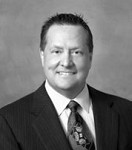
By Michael J. Searcy, ChFC, CFP®, AIFA®
Doctors who once planned to rely on the sale of their practice to fund their retirement are now finding it more difficult to recruit younger physicians for their succession plan. If you are a mature doctor today who owns a smaller medical / dental practice (one or two doctor groups), you may be finding that both the economy and desires of younger doctors are changing the game for developing an exit strategy.
The Plan
In preparing a succession plan, a major key to success is starting the process early. Waiting until you near retirement to begin thinking about selling your practice may leave you with limited (often unfavorable) options. While some doctors choose to fund a buy-out vehicle during the early stages of their practice with the end goal of selling and retiring in mind, the majority are not in a position where they have a longstanding plan in place. For doctors who are more than 5-7 years out from retirement, making time to consult with professionals and come up with an enticing purchase proposition for a younger doctor can lead to receiving maximum value for the practice.
Understand the Obstacles
Several factors lead to younger doctors not purchasing existing practices. These include the heavy competition from hospitals that are competing for more doctors, their desire to set up their own practice, or their aversion to the responsibilities of running a business. By understanding the obstacles you may face in finding a successor, you can plan ahead to overcome them and get your practice in optimal operating order to increase its attractiveness to potential successors.
The Questions
Questions to consider during the process include:
- Do I know my practice’s worth? Getting an accurate valuation is important for you and your successor. Valuation companies that specialize in medical and dental practice valuations will consider your tangible assets, accounts receivable and the goodwill/brand of your practice to give you an accurate picture of your worth. By overvaluing your practice, you may repel potential buyers.
- Are all operations running smoothly? There may be areas of your practice that need strengthened before a sale. This can make things smoother as you prepare for a sale, and also make the practice more attractive.
- Can I/we sustain another doctor’s salary while they are being groomed to take over?
- If not, is there a hospital affiliate who can hire the doctor to work in my practice until we build the financial base to sustain another salary?
- Am I protecting my patients? Aside from adhering to any patient notification laws of your state, you want your patients to understand any upcoming transitions. Creating a plan to protect your clients may help retain them after the transition.
Build an Alternative Nest Egg
While the sale of your practice may be a wonderful addition to your retirement fund, it is important to build a nest egg as you work and not rely on that big chunk from a sale at the end of your career. No sale or purchase price is guaranteed and economic changes or new regulations could make your practice unsellable. By building a nest egg for retirement throughout the course of your career, you can have greater peace of mind that you can experience financial freedom in retirement.
Assessment
Developing your exit strategy will take time, organization and careful planning. Avoid adding additional stress by viewing the sale of your practice as your financial freedom for retirement. When it comes time to transfer your ownership out of your practice, make sure you are able to focus solely on a successful outcome!
The Author
Michael J. Searcy, ChFC, CFP, AIFA, is President of Searcy Financial Services, Inc., a registered investment advisory firm in Overland Park, KS, offering integrated wealth management solutions to doctors. Searcy has been listed by Medical Economics as one of the “Top 150 Financial Advisors for Doctors” in 2002-2006 and 2011. For additional information, visit www.SearcyFinancial.com
Your thoughts and comments on this ME-P are appreciated. Feel free to review our top-left column, and top-right sidebar materials, links, URLs and related websites, too. Then, subscribe to the ME-P. It is fast, free and secure.
Link: http://feeds.feedburner.com/HealthcareFinancialsthePostForcxos
Speaker: If you need a moderator or speaker for an upcoming event, Dr. David E. Marcinko; MBA – Publisher-in-Chief of the Medical Executive-Post – is available for seminar or speaking engagements. Contact: MarcinkoAdvisors@msn.com
OUR OTHER PRINT BOOKS AND RELATED INFORMATION SOURCES:
LEXICONS: http://www.springerpub.com/Search/marcinko
PHYSICIANS: www.MedicalBusinessAdvisors.com
PRACTICES: www.BusinessofMedicalPractice.com
HOSPITALS: http://www.crcpress.com/product/isbn/9781466558731
CLINICS: http://www.crcpress.com/product/isbn/9781439879900
ADVISORS: www.CertifiedMedicalPlanner.org
BLOG: www.MedicalExecutivePost.com



Share this:

Filed under: Career Development, Retirement and Benefits | Tagged: A Retirement Game Changer for Mature Physicians?, Michael J. Searcy |
 The Leading Business Education Network for Doctors, Financial Advisors and Health Industry Consultants
Bogle Names Seven Deadly Sins of U.S. Retirement System
http://www.fa-mag.com/online-extras/12627-the-inadequacy-of-our-national-savings.html
John C. Bogle identifies seven deadly sins that are putting our retirement system in a dangerous situation.
Graham
LikeLike
A 25-point retirement age checklist
Deciding when to retire can involve a complex set of factors. Here’s what to consider when making the big decision.
http://money.msn.com/baby-boomers/a-25-point-retirement-age-checklist?gtg1=33049
But, is it right for doctors?
Ann Miller RN MHA
LikeLike
Retirement
Mike – Did you know that Fidelity just pronounced that a 65-year-old couple needs $240,000 to cover insurance premiums and uninsured medical costs.
Of course, this does not cover long-term care provisions.
Scott
LikeLike
Savers Can Increase Living Standards 20% In Retirement
Nobel Prize winner William F. Sharpe of Stanford Graduate School of Business, maintains savers most likely will come out ahead if they follow this rule.
http://www.gsb.stanford.edu/news/research/william-sharpe-how-invest-turbulent-market?utm_source=Stanford+Business+Re%3AThink&utm_campaign=f7ccf08347-Re_Think_Issue12_Test_2_Col_4_26_2013&utm_medium=email&ct=t%28Stanford_Business_Re_Think_Issue_Twelve_Test_2_Col%29&mc_cid=f7ccf08347&mc_eid=50cb3ac513
Ann Miller RN MHA
LikeLike