





 Support our online development, and advance our onground research initiatives in free market economics, as we seek to showcase the brightest Next-Gen minds.
THE ME-P DISCLAIMER: Posts, comments and opinions do not necessarily represent iMBA, Inc., but become our property after submission. Copyright © 2006 to-date. iMBA, Inc allows colleges, universities, medical and financial professionals and related clinics, hospitals and non-profit healthcare organizations to distribute our proprietary essays, photos, videos, audios and other documents; etc. However, please review copyright and usage information for each individual asset before submission to us, and/or placement on your publication or web site. Attestation references, citations and/or back-links are required. All other assets are property of the individual copyright holder.
Support our online development, and advance our onground research initiatives in free market economics, as we seek to showcase the brightest Next-Gen minds.
THE ME-P DISCLAIMER: Posts, comments and opinions do not necessarily represent iMBA, Inc., but become our property after submission. Copyright © 2006 to-date. iMBA, Inc allows colleges, universities, medical and financial professionals and related clinics, hospitals and non-profit healthcare organizations to distribute our proprietary essays, photos, videos, audios and other documents; etc. However, please review copyright and usage information for each individual asset before submission to us, and/or placement on your publication or web site. Attestation references, citations and/or back-links are required. All other assets are property of the individual copyright holder.


Fun on a Slow Day [will that be paper or electrons?]
[By Darrell K. Pruitt DDS]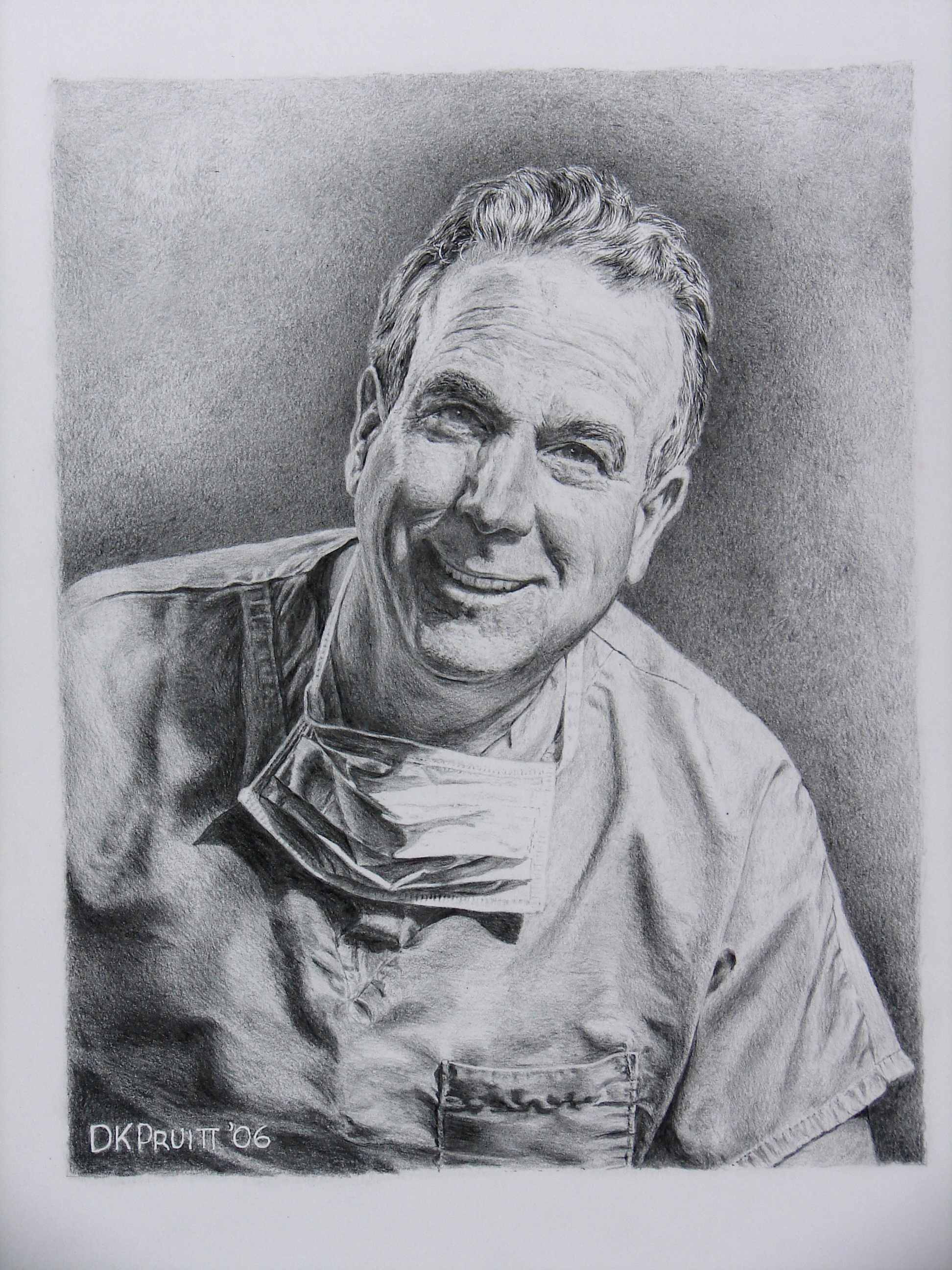
As anyone following the ME-P knows by now, Dental Economics’ officials have been suspiciously unhelpful in locating experts capable of responding to concerns about the cost and safety of EHRs in dentistry – quite the opposite.
The CR Foundation
In addition, Dr. Gordon Christensen’s CR Foundation has also suspiciously avoided discussion of EDRs with this dentist. Nevertheless, I’m certain that like most other EDR stakeholders, employees of DE and CRF at least secretly agree that this consumer has tolerated good ol’ boy behavior in the marketplace far longer than any vendor anywhere else in the free world could ever expect – no matter how important.
Dentrix, too!
At some point, Dental Economics, CR Foundation and Dentrix will either have to answer at least one dentist’s sincere questions about EDRs or censor me from their Facebooks. Over time, not-anonymous censorship would be second only to anonymous censorship as the worst possible choice. If I’m given the opportunity, I’ll prove it.
As readers can tell, sometimes on slow days, even silence from rude people who profit off of my profession irritates me – causing me to want to grab them by the attentions. I’m feeling especially itchy today, so I also posted the following on Dental Economics Facebook:
Dear Dental Economics:
If the AMA finally admits that EHRs are a poor substitute for thinking, don’t you agree it’s time for shy stakeholders in dentistry to accept ownership of their products’ weaknesses? And for other stakeholders to either help me or get out of the damn way?
“EHRs Linked to Errors, Harm, AMA Says — Clinicians can introduce errors when they copy and paste sensitive patient data into electronic health records, according to AMA research.”
http://www.informationweek.com/news/healthcare/EMR/232400325
Or, do you think if dentists remain silent like good little professionals, those who profit from EDRs and related advertisements will suddenly become honest with our patients? I’m not that optimistic. I think if interoperable EDRs are ever to succeed, dentists must pester the unresponsive leaders even while hangers-on would shield them for their own selfish reasons. For example, dentists are unlikely to ever read in Dental Economics the following hints of the imminent failure of EHRs in dentistry: 96% of EHR systems have been breached in the last 2 years and the frequency of breaches rose 32% in the last year – costing over $6.5 billion. The fantasy is over, DE. It’s becoming increasingly difficult for even stakeholders to get giddy about EDRs.
Once the high risks of identity theft from dental offices can no longer be suppressed by stakeholders, our patients’ trust will be forever lost – just to protect the most selfish of people in the healthcare industry from accountability.
Where are you Dentrix?
And what’s the opinion of your CRF investigators, Dr. Gordon Christensen? Are EDRs cheaper than paper dental records or not? As you know, a few months ago your former CEO stated in an article on Dentistry iQ that EDRs offer dentists a “high return on investment,” yet failed to produce evidence supporting his incredible claim.
Regardless of an institution’s reputation and market share, deceiving doctors and patients for personal gain is just wrong.
Since the misleading statement from the influential CEO has never been corrected, his lie which is still featured on Dentistry iQ continues to harm naïve dentists and clueless patients – but not without the help of 8 Dental Economics editors who voted the CEO’s article as a tie for the “Most important story for the dental profession in 2011.”
Assessment
Way to go, Dental Economics editors! Any of you have enough confidence to discuss why you chose the former CEO’s article? I think your readers would like to hear your reasons. I certainly would. What could it hurt?
Conclusion
Your thoughts and comments on this ME-P are appreciated. Feel free to review our top-left column, and top-right sidebar materials, links, URLs and related websites, too. Then, subscribe to the ME-P. It is fast, free and secure.
Speaker: If you need a moderator or speaker for an upcoming event, Dr. David E. Marcinko; MBA – Publisher-in-Chief of the Medical Executive-Post – is available for seminar or speaking engagements. Contact: MarcinkoAdvisors@msn.com
OUR OTHER PRINT BOOKS AND RELATED INFORMATION SOURCES:
- DICTIONARIES: http://www.springerpub.com/Search/marcinko
- PHYSICIANS: www.MedicalBusinessAdvisors.com
- PRACTICES: www.BusinessofMedicalPractice.com
- HOSPITALS: http://www.crcpress.com/product/isbn/9781466558731
- CLINICS: http://www.crcpress.com/product/isbn/9781439879900
- ADVISORS: www.CertifiedMedicalPlanner.org
- BLOG: www.MedicalExecutivePost.com
- FINANCE:Financial Planning for Physicians and Advisors
- INSURANCE:Risk Management and Insurance Strategies for Physicians and Advisors

Share this:

Filed under: Information Technology, Pruitt's Platform | Tagged: ADA, AMA, CR Foundation, Darrell K. Pruitt DDS, Dentrix, Dr. Gordon Christensen, eDRs, EMRs |
 The Leading Business Education Network for Doctors, Financial Advisors and Health Industry Consultants
Of eDR Tyrants
Even though dentists are the customers who keep dentalcare stakeholders like Dental Economics, CR Foundation and Dentrix in business, it hardly surprises me that nobody responded to last week’s open letter from this dentist concerning the cost and danger of the EDRs they promote. Such immaturity in business relationships – which causes vendors to look like weak, insensitive tyrants – appears to still be common with many who profit from the sale of mandated products to dentists. My question is, is their self-limiting shyness an innate developmental disorder dentists should perhaps pity and donate money to a cause, or is it a perk with an expiration date?
My letter to the children was chosen as today’s featured article on the Medical Executive-Post.
The ME-P has 360,000 readers. Dental Economics Facebook has 1,431. That’s transparency.
It’s of course hard for me to tell, but I’m pretty certain that each time I put industry leaders on the spot concerning the safety of the EDRs they promote for profit, they hunker down just a little bit more – making it even more difficult to respond…. And the longer they resist transparency with their customers, the deeper they slide out of sight.
As DE, CRA Foundation and Dentrix are discovering, the slippery downside to a policy of evasion is its inevitable ending. If a formerly rude leader wants to be a part of the community, he or she has to not-anonymously crawl out of a hole – leaving the other tyrants way behind. Naturally, my first question will be, “What took you so long?” Crawling in public can be embarrassing.
D. Kellus Pruitt DDS
LikeLike
Don’t trust Dentrix
Dr. Bill Busch, “The Dentrix Dentist,” says, “Dentrix is going to separate themselves from the pack of other software programs this year. You all have picked the right one. Tell your friends its time to switch for sure. Get Moving!”
He also says that EDRs will save dentists $65,000 a year over paper dental records. So do you trust the information Dr. Busch provides, Doc?
http://thedentrixdentist.blogspot.com/2012/01/spread-word-dentrix-goes-big-in-2012.html?spref=fb
Darrell
LikeLike
Dear Dr. Bill Busch, “The Dentrix Dentist”:
Must other prospective buyers of electronic dental records chase you all over the internet begging for evidence behind your claims about the advantages of Dentrix products over paper dental records? That’s no way to win customers. But then, your competitors are no more consumer-friendly than you are.
You simply ignored this dentist’s most basic questions about EDRs’ cost and safety that I painstakingly posted on your blog on January 23 in response to your incredible sales pitches two days earlier. (See: “New Year’s Resolution…Get A Coach…Really…” on The Dentrix Dentist blog).
http://thedentrixdentist.blogspot.com/2012/01/new-years-resolutionget-coachreally.html
Yet today, I discovered that you took the time on January 25 to post another questionable press release for Dentrix on Sidekick titled “You’ve got to go Paper-Less in 2012!”
http://sidekickmag.com/blog/you%E2%80%99ve-got-to-go-paper-less-in-2012-%E2%80%A6-the-electronic-medicaldental-record-emredr
Evading dentists’ questions about Dentrix’s cost and safety is one thing, but openly misleading naïve and trusting professionals into believing they must go paperless within the year – just to move dangerous software – is completely irresponsible. But I respect your courage.
As long as you and I are sorting truth from hyperbole and worse, perhaps you can share with interested readers why the return on investment from EDRs fell almost 40% in four days between January 21st , when you said they save dentists $65,000 a year over paper records, and January 25th, when you said the yearly ROI was only $40,000 – according to Dr. Larry Emmott’s mysterious estimate. Did the sudden increase in cost have anything to do with my mention of the FTC?
As I said last week, when I long ago asked Dr. Emmott to share evidence supporting his incredible estimate of savings, he never responded. But since you repeatedly attach value to his quote of $40,000 – benefitting you and Dentrix – I trust you wouldn’t carelessly lure customers such an attractive selling point without verifying the numbers. After all, how would you and Dentrix look in the eyes of the dental industry if we later discover that the only difference between Dr. Emmott’s guess of $40,000 and your guess of $65,000 is ambition? “Truth in advertising” is more than just an honorable goal to aspire to. It’s the law.
http://www.ftc.gov/speeches/anthony/naruc.shtm
Your suspicious evasion of my concerns which are shared by virtually all healthcare providers – followed days later by a continued reliance on unsupported claims I haven’t even touched on – reveals that you still deny the truth to dentists who unlike you, are held accountable when dangerous and expensive products harm their customers.
Compared to others in the HIT industry, you appear to be late in discovering that the internet made your unresponsive sales techniques obsolete. Readers these days easily recognize your evasion of the most basic questions about your product: Its cost and safety.
D. Kellus Pruitt DDS
LikeLike
Censored by Sidekick!
Censorship by those who would profit off my profession while shielding dentists and patients from truth in healthcare really, really pisses me off, Sidekick Magazine.
“Sidekick Magazine, A Resource for Dental Office Design,” censored the following comment and blocked me from posting anything else on their Facebook. If you find anonymous censorship to protect ad profits as unethical as I do, please like Sidekick Facebook and express your feelings to its 465 fans. If we don’t put a stop to rudeness by stakeholders it will only continue. Sidekick doesn’t respect you, Doc.
https://www.facebook.com/SidekickMagazine?sk=wall
————————–
Beware of censorship, Doc
Last week, Dr. Bill Busch claimed on his Dentrix Dentist blog that EDRs can save dentists up to $65,000 a year over paper dental records. Like any consumer should do upon discovering a vendor’s suspicious sales pitches, I asked Dr. Busch for evidence supporting his claim of savings from purchasing Dentrix. Even though he never responded to this and other questions about EDR systems on his blog, within days, he lowered his estimate by $25,000 for his article titled “You’ve got to go Paper-Less in 2012!” which he posted on Sidekick.
http://sidekickmag.com/blog/you%E2%80%99ve-got-to-go-paper-less-in-2012-%E2%80%A6-the-electronic-medicaldental-record-emredr
I responded by warning Dr. Busch about the FTC a second time following his Sidekick article. Unfortunately, the moderator has chosen not to post it – I suppose she wants to protect ad income by shielding Sidekick readers from the truth: EDRs are more expensive and more dangerous than paper dental records.
That is why I posted my letter to Dr. Busch here on the Sidekick Facebook, as well as thise Medical Executive-Post which has over 360,000 readers. How many does Sidekick have?
Darrell K. Pruitt DDS
LikeLike
More on eDRs
This week, I successfully struck up another edgy discussion about EHRs on the HIT LinkedIn site with Genevieve Morris, Senior Associate at Audacious Inquiry located in Washington, DC.
http://www.linkedin.com/groupItem?view=&gid=3993178&type=member&item=104202753&commentID=77488082#commentID_77488082
The fact that the HIT consultant has chosen to protect her dentist friend – an anonymous source of misleading information about the benefits of electronic dental records – I think we are probably at the end of the conversation. Here is our last exchange.
Genevieve Morris:
I’m going to put aside your comment that a dentist with a large practice doesn’t know anything about dentistry. I am in no way being sarcastic or mean when I ask this question, I genuinely would like to hear your thoughts. Why are EDRs dangerous for patients? What about them is dangerous to patient safety? Or are your concerns more about the security of electronic records?
My response:
Genevieve, I want you to know that I am enjoying our conversation, and hope it continues. Such transparency with HIT stakeholders is almost unprecedented – meaning a lot of obscure but important information about EHRs is finally being shared. Thanks.
Open, marketplace discussions about the inadequacies of HIT has been sorely missed ever since President George W. Bush shielded EHR vendors from competitive, free market influences with his 2004, half-baked executive order – favoring the interests of politically-connected parasites over Americans’ welfare. And that is exactly why electronic dental records are both more expensive and more dangerous than paper dental records. Bush guaranteed subsidized sales for EHR vendors regardless of the products’ value to those who pay for them before discovering surprise liabilities.
You said, “I’m going to put aside your comment that a dentist with a large practice doesn’t know anything about dentistry.” I have no idea who you are protecting from accountability for misleading people, but the fact is, virtually any dentist will confirm that her selling points are creative but imaginary. I have clearly explained why. If you are still unsatisfied, invite your friend to defend her statements here on LinkedIn.
By the way, do you know if the OCR’s HIPAA audits have been extended to Business Associates yet? I’ve read that the frequency and volume of PHI breaches from BAs are increasing. It occurred to me that your anonymous dentist friend may not be aware of the danger.
If 500 or more of her patients’ identities are reported to be fumbled by a contracted HIT service company’s careless mistake or careful thief, the breach is sure to cause great harm to her practice. According to federal law, not only will her (former) patients have to be notified, but the unfortunate incident has to be reported in the local media. Aside from the financial as well as the physical harm stolen EHRs can cause patients, they can bankrupt 100% HIPAA compliant dentists even if they are not at fault for the breach.
I’m glad you asked, “Why are EDRs dangerous for patients?” Did you know that according to recent reports, stolen medical identities are selling for $50 each while financial identities bring only $5?
Don’t feel bad. Apparently almost nobody in the HIT industry is aware that identity thieves are increasingly targeting medical identities over social security numbers. And when a person’s medical identity is stolen, the thief will imperceptively change the victim’s medical history – including allergies – to suit the thief. Need I say more?
The increasing, life-threatening danger to clueless Americans simply doesn’t happen with paper dental records.
Yes, my concerns are more about the security of electronic records. Regardless of your job, as a vulnerable patient, they should be your concerns as well.
D. Kellus Pruitt DDS
LikeLike
Dental Economics is replacing its editors
http://www.dentistryiq.com/articles/2014/06/dental-economics-announces-change-in-editorial-leadership-team.html
I wonder if the new editors will improve DentistryIQ.com’s ethics, or if they will continue to protect ad revenue from dishonest stakeholders by anonymously censoring readers’ safety concerns.
D. Kellus Pruitt DDS
LikeLike