







 Support our online development, and advance our onground research initiatives in free market economics, as we seek to showcase the brightest Next-Gen minds.
THE ME-P DISCLAIMER: Posts, comments and opinions do not necessarily represent iMBA, Inc., but become our property after submission. Copyright © 2006 to-date. iMBA, Inc allows colleges, universities, medical and financial professionals and related clinics, hospitals and non-profit healthcare organizations to distribute our proprietary essays, photos, videos, audios and other documents; etc. However, please review copyright and usage information for each individual asset before submission to us, and/or placement on your publication or web site. Attestation references, citations and/or back-links are required. All other assets are property of the individual copyright holder.
Support our online development, and advance our onground research initiatives in free market economics, as we seek to showcase the brightest Next-Gen minds.
THE ME-P DISCLAIMER: Posts, comments and opinions do not necessarily represent iMBA, Inc., but become our property after submission. Copyright © 2006 to-date. iMBA, Inc allows colleges, universities, medical and financial professionals and related clinics, hospitals and non-profit healthcare organizations to distribute our proprietary essays, photos, videos, audios and other documents; etc. However, please review copyright and usage information for each individual asset before submission to us, and/or placement on your publication or web site. Attestation references, citations and/or back-links are required. All other assets are property of the individual copyright holder.


An Emerging Trend Vital to Physicians
[Staff Reporters]
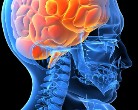
According to Associate Professor Gregory O. Ginn, PhD; MBA, CPA, MEd., of the University of Las Vegas, an emerging trend for all medical providers is evidence-based medicine that offers the promise of improving the quality of clinical services. And, some argue that evidence-based medicine is a trend that will prevail for the foreseeable future.
Definition
According to the Dictionary of Health Insurance and Managed Care, EBM involves the judicious use of the best current evidence in making decisions about the care of the individual patient. Evidence-based medicine (EBM) is meant to integrate clinical expertise with the best available research evidence and patient values. EBM was initially proposed by Dr. David Sackett and colleagues at McMasters University in Ontario, Canada.
Expert Driven Standards of Care
In the past, standards of care were often set by panels of experts. Today, however, there is a greater demand for empirical evidence to establish the efficacy of clinical protocols. Evidence-based medicine can directly affect financial performance because it facilitates the elimination of therapies that cannot be demonstrated to be effective.
Example:
For example, evidence-based medicine can reduce a hospital’s prescription drug costs. Evidence-based medicine may also affect operations management if it shows that multiple approaches to treatment can be efficacious. Of course, in order to accommodate different modalities of treatment, hospitals will need more sophisticated information systems that allow for data integration.
Assessment
Evidence-based medicine may also be used to support another trend, the development of alternative and complementary medicine.
Channel Surfing the ME-P
Have you visited our other topic channels? Established to facilitate idea exchange and link our community together, the value of these topics is dependent upon your input. Please take a minute to visit. And, to prevent that annoying spam, we ask that you register. It is fast, free and secure.
Conclusion
Your thoughts and comments on this ME-P are appreciated. Feel free to review our top-left column, and top-right sidebar materials, links, URLs and related websites, too. Then, subscribe to the ME-P. It is fast, free and secure.
Speaker: If you need a moderator or speaker for an upcoming event, Dr. David E. Marcinko; MBA – Publisher-in-Chief of the Medical Executive-Post – is available for seminar or speaking engagements. Contact: MarcinkoAdvisors@msn.com
OUR OTHER PRINT BOOKS AND RELATED INFORMATION SOURCES:
- PRACTICES: www.BusinessofMedicalPractice.com
- HOSPITALS: http://www.crcpress.com/product/isbn/9781466558731
- CLINICS: http://www.crcpress.com/product/isbn/9781439879900
- ADVISORS: www.CertifiedMedicalPlanner.org
- FINANCE: Financial Planning for Physicians and Advisors
- INSURANCE: Risk Management and Insurance Strategies for Physicians and Advisors
- Dictionary of Health Economics and Finance
- Dictionary of Health Information Technology and Security
- Dictionary of Health Insurance and Managed Care


Share this:

Filed under: Health Insurance, Managed Care, Practice Management, Research & Development | Tagged: EBM, evidence based medicine |
 The Leading Business Education Network for Doctors, Financial Advisors and Health Industry Consultants
Evidence Based Medicine
The American College of Physicians’ High-Value, Cost-Conscious Care initiative will assess benefits, harms, and costs of diagnostic tests and treatments for various diseases to determine whether they provide good value;
http://managedhealthcareexecutive.modernmedicine.com/mhe/News+Analysis/ArticleStandard/Article/detail/670349
The time for EBM is now!
Graham
LikeLike
Physicians, Money and Decision Making
Modern medical care decision making can be clouded by all sorts of factors and money is just one of them. But, I am not sure we are always aware of the way money influences our decisions as doctors.
http://www.kevinmd.com/blog/2012/04/money-influences-decisions-doctors.html
But we should be.
Dr. Raj
LikeLike
Evidence-based Medicine (EBM)
Few are opposed to evidence-based medicine. What’s the alternative? Ignorance-based medicine? Hunches?
However, the real world applicability of evidence-based medicine (EBM) is frequently overstated. Our ideal research model is the randomized controlled trial, where studies are conducted with carefully selected samples of patients to observe the effects of the medicine or treatment without additional interference from other conditions.
Unfortunately, this model differs from actual medical practice because hospitals and doctors’ waiting rooms are full of elderly patients suffering from several co-morbidities and taking about 12 to 14 medications, (some unknown to us). It is often a great leap to apply findings from a study under “ideal conditions” to the fragile patient.
So wise physicians balance the “scientific findings” with the several vulnerabilities and other factors of real patients. Clinicians are obliged to constantly deal with these messy tradeoffs, and the utility of evidence-based findings is mitigated by the complex challenges of the sick patients, multiple medications taken, and massive unknowns.
http://thehealthcareblog.com/blog/2015/05/22/credibility-of-evidence-a-reconsideration-of-the-logic-and-strength-of-our-healthcare-decisions/
This mix of research with the messy reality of medical and hospital practice means that evidence, even if available, is often not fully applicable.
Edwin
LikeLike