







 Support our online development, and advance our onground research initiatives in free market economics, as we seek to showcase the brightest Next-Gen minds.
THE ME-P DISCLAIMER: Posts, comments and opinions do not necessarily represent iMBA, Inc., but become our property after submission. Copyright © 2006 to-date. iMBA, Inc allows colleges, universities, medical and financial professionals and related clinics, hospitals and non-profit healthcare organizations to distribute our proprietary essays, photos, videos, audios and other documents; etc. However, please review copyright and usage information for each individual asset before submission to us, and/or placement on your publication or web site. Attestation references, citations and/or back-links are required. All other assets are property of the individual copyright holder.
Support our online development, and advance our onground research initiatives in free market economics, as we seek to showcase the brightest Next-Gen minds.
THE ME-P DISCLAIMER: Posts, comments and opinions do not necessarily represent iMBA, Inc., but become our property after submission. Copyright © 2006 to-date. iMBA, Inc allows colleges, universities, medical and financial professionals and related clinics, hospitals and non-profit healthcare organizations to distribute our proprietary essays, photos, videos, audios and other documents; etc. However, please review copyright and usage information for each individual asset before submission to us, and/or placement on your publication or web site. Attestation references, citations and/or back-links are required. All other assets are property of the individual copyright holder.


Doctor of Nurse Practice – Filling the Void
Dr. David Edward Marcinko; MBA, CMP™
[Publisher-in-Chief]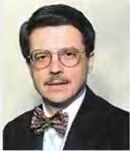
As the shortage of family doctors and primary-care physicians mount, and the domestic uninsured problem exacerbates to > 40 million uninsured Americans, the nursing profession is stepping up-to-the-plate by offering one possible solution to healthcare reform.
Cause and Effect
And, it is not happing because of managed care cost constraints, medical benefit rationing or reductions, or any other draconian or political machination. Rather, it’s happening because nurses are taking medicine back to its root-core constituency – patients.
In fact, according to leading industry expert and adjunct professor of healthcare administration Hope Rachel Hetico RN, MHA, CPHQ, CMP™ of Atlanta, it’s more like a cause-effect relationship. “Patients with a problem – are seeking solutions; and it doesn’t get more basic than that”, says Hetico.
Not a New Concept
The “doctor-nurse” concept is not revolutionary by any means, opines Hetico. But, it is the “new formalized execution and marketplace acceptance that is very exiting.” And, “the nurse-as-doctor concept is a natural evolution of the nurse practitioner-model which, after a slow start, is finally taking off to the benefit of patients and physicians, alike.”
The “growing success of retail and on-site medical clinics, increased pricing transparency, and related consumer directed health care plan initiatives was the real impetus; and now there is no looking back.”
The Future of DNPs?
For example, by the year 2015, the Doctor of Nurse Practice (DNP) program will be recognized by the accrediting body of the American Association of Colleges of Nursing (AACN), which oversees schools that offer advanced degrees to nurse-practitioners such as, nurse anesthetists (CRNAs), clinical nurse specialists and nurse midwives, etc.
And, according to Christopher Guadagnino PhD, of the Physicians News Digest, the National Board of Medical Examiners (NBME) will begin offering part of the United States Medical Licensing Examination (USMLE) – the physicians’ medical board examination – as certification proof of DNPs’ advanced training.
Passing that exam is “intended to provide further evidence to the public that DNP certification holders are qualified to provide comprehensive patient care,” according to the Council for the Advancement of Comprehensive Care (CACC); a consortium of academic and health policy leaders promoting the clinical doctoral degree for primary care nurses.
The Nay-Sayers
Of course, nurse practitioners (NPs) poised for expanded clinical practice opportunities inevitably raise concerns about medical quality and safety of care. And, some physician groups warn that blurring the line between doctors and nurses will only confuse patients and jeopardize care.
Still, that hasn’t seemed to have happened with other limited licensed medical specialists, like podiatrists [Doctors of Podiatric Medicine] who may prescribe medications, admit patients to the hospital, cover the emergency room and perform sophisticated bone, tendon and soft tissue reconstructive surgical procedures; after four years of college, post-baccalaureate matriculation in a 4 year podiatric medical school, with an additional 1-4 years of internship, residency and/or fellowship training.
The “entrenched traditional system is self-centered, bureaucratic and very patronizing in some cases. It just doesn’t want to share power or give patients much credit for their own care in the contemporary and collaborative healthcare zeitgeist”, says Hetico.
Nurses with doctorates may also use the imprimatur DrNP after their name, and the titular designation of “Doctor”, as well. Physician groups want DNPs to be required to clearly state to patients, and prospective students, that they are not Medical Doctors [MDs] -or- Doctors of Osteopathic Medicine [DOs] who seemed to have negotiated the nomenclature divide.
Changing the “Codes”
Reality may have outpaced the debate over these issues however, given the intensifying shortage of first-line primary care providers, family practitioners and internists. Moreover, the possible causes for the shortage are both obvious, and subtle.
As noted by industry analyst Brian Klepper, at Health Care Renewal, and Dr. Roy Poses, a Clinical Associate Professor at Brown University’s School of Medicine opine, economics may play a major role in the debate on the dearth of primary care physicians. Moreover, perhaps an overall re-assessment of the CPT® coding systems and the primary medical compensation system is even in order, and more than partially blamed as causative.
For example, there is often a financial conflict in the advisory relationship that the Center for Medical and Medicaid Services (CMS) uses with the American Medical Association’s (AMA’s) Relative Value Scale Update Committee (RUC). Essentially, according to Klepper and Poses, the RUC is overwhelmingly dominated by specialists, who have consistently urged CMS to increase specialty reimbursement at the expense of primary care.
Link: http://www.thehealthcareblog.com/the_health_care_blog/2008/05/more-on-physici.html
Questionable Specialists
Yet, if perception is reality, whether patients actually benefit from some highly-paid surgical specialists, and their elective interventions and surgeries, is certainly debatable.
As an example, the recent May 2008 lay article published in PARADE magazine by Dr. Ranit Mishori, suggested that more than a few surgeries like knee arthroscopy, certain back and sinus procedures are not only often un-necessary, but economically motivated. This is not an epiphany to those in the industry, or outside its realm, anymore.
Why?
Therefore, is it any wonder why over the last five years the percent of medical school graduates entering family practice has dropped from 14 percent to 8 percent? Or, why only 25 percent of internal medicine residents now go into office-based practice; with the rest becoming hospitalists or sub-specialists.
Moreover, is another private insurance/Medicare paid knee scope really esteem-enhancing or self-actualizing for the operating surgeon? Or, is it demoralizing to perform same for mere “lucre.”
Now, ask the same question to a DNP treating a private pay diabetic patient, or an uninsured pediatric patient, or an elderly senior citizen.
Where is the “justice”, some may cry?
Thus, one can hardly blame the DNPs if Paretto’s 80/20 law of reason is pursed as at least partial help in the current healthcare insurance crisis conundrum. Perhaps, it really is better to treat 80% of the many patients appropriately with doctor-nurses; than 20% of the vital few patients inappropriately with super-specialty care?
Philosophical Considerations
Now however, based on the above thoughts, we are entering into the realm of philosophy, moral introspection, theology, ontology debate and – even religion – as these ruminations include many diverse points-of-view, like the following among others:
-
Utilitarians, who argue for medical resource distribution based on achieving the “greatest good for the greatest number of patients.”
-
Libertarians, who believe that recipients of medical resources should be those patients who have made the greatest contributions to the production of those resources – a free market approach to distribution.
-
Egalitarians, which support the distribution of medical resources based on the greatest patient need, irrespective of contribution or other considerations.
Consequently, developing a system of access based on such “justice” is fraught with enormous difficulty.
Industry Innovation and Redemption
Disruptive innovations are often considered simplistic, and compared to toys when they first emerge (remember the first Apple computer?). But, there may be no stopping DNPs from making their healthcare services more collaborative, useful, convenient, electronic and affordable to the patient.
Redemption, and dare I say it; salvation of the healthcare industrial complex depends on such innovation and change. And, the industry can be saved by those of this ilk, but change requires courage. Proponents of the DNP program exhibit the requisite courage, but do the rest of the industry? The lives of our patients, and more than 40 million currently under/uninsured Americans, may just depend on it.
Assessment
Today, patients, payers, employers and all web-enable and modern 2.0 healthcare workforce stakeholders demand collaboration between doctors, NPs, other medical professionals, and all physician specialists. In fact, it is becoming the rule, rather than the exception, in an increasingly transparent and accountable society.
So, what do you think about this increased market-competition in healthcare generally, and with DNPs in particular; please comment and opine?
Conclusion
Your thoughts and comments on this ME-P are appreciated. Feel free to review our top-left column, and top-right sidebar materials, links, URLs and related websites, too. Then, subscribe to the ME-P. It is fast, free and secure.
Speaker: If you need a moderator or speaker for an upcoming event, Dr. David E. Marcinko; MBA – Publisher-in-Chief of the Medical Executive-Post – is available for seminar or speaking engagements. Contact: MarcinkoAdvisors@msn.com
OUR OTHER PRINT BOOKS AND RELATED INFORMATION SOURCES:
- PRACTICES: www.BusinessofMedicalPractice.com
- HOSPITALS: http://www.crcpress.com/product/isbn/9781466558731
- CLINICS: http://www.crcpress.com/product/isbn/9781439879900
- ADVISORS: www.CertifiedMedicalPlanner.org
- FINANCE: Financial Planning for Physicians and Advisors
- INSURANCE: Risk Management and Insurance Strategies for Physicians and Advisors
- Dictionary of Health Economics and Finance
- Dictionary of Health Information Technology and Security
- Dictionary of Health Insurance and Managed Care


Share this:

Filed under: Career Development, Managed Care, Op-Editorials, Quality Initiatives, Research & Development |
 The Leading Business Education Network for Doctors, Financial Advisors and Health Industry Consultants
DNP Classes
The Thomas Jefferson University School of Nursing [JSN] is one of over 70 schools nationwide that offer a DNP degree. In September 2007, Jefferson welcomed its first cohort of 18 DNP students representing a wide variety of medical practice specialties, including acute care, primary care, healthcare administration, population health, education and industry. Twenty students comprise the second cohort entering in September 2008.
-Ann
LikeLike
Physician leaders say a new doctor of nursing practice certification exam is being wrongly compared with testing that physicians take. And they fear that patients may be misled into believing nurses who pass the exam share the same qualifications as physicians.
Last fall, the National Board of Medical Examiners began offering the voluntary DNP test to nurses, based in part on Step 3 of the U.S. Medical Licensing Examination. Step 3 is the final stage in the physician testing series. In January, the Council for the Advancement of Comprehensive Care (CACC) — a non-profit nursing group that contracted with the NBME to develop the exam — announced the results of the first DNP certification test, with 50% of candidates receiving passing scores.
In its announcement, the CACC said the exam “was comparable in content, similar in format and measured the same set of competencies and applied similar performance standards as Step 3 of the USMLE, which is administered to physicians as one component of qualifying for licensure.” In past statements, the NBME stated that the scope of the DNP exam was “materially different” from physician testing, in addition to differences in underlying training.
Source: Amy Lynn Sorrel, AMNews [6/8/09]
LikeLike
Primary Care Pay Disparity
Now AMA delegates don’t want to short-change medical specialists to pay for primary care providers.
Link: http://www.ama-assn.org/amednews/2009/06/29/prl20629.htm
This is not surprising since AMA leadership is over-weighted with “specialists”.
Sam
LikeLike
Salaries for Doctors; Not Fees
For decades, the American Medical Association has violently opposed any system other than fee-for-service medicine, but virtually any health reform that works is likely to require changes to physician payment models. That the system will change, at this point, is basically a done deal; the question is what those changes will be. And that all turns on what policymakers feel will offer the most appropriate incentives
Best wishes.
Richard
LikeLike
Sam, Richard and Ann,
I guess there has been an abrupt philosophical shift on this issue; at least in Cali – fornia. “Doctor Shortage may be Mitigated by Nurse Practitioners and Physician Assistants”
Link: http://www.examiner.com/x-5968-DC-Public-Policy-Examiner~y2009m8d26-Doctor-shortage-may-be-mitigated-by-Nurse-Practitioners-and-Physician-Assistants
Debra; RN
LikeLike
More on DNPs from a Fan,
As a surgeon and “doer”, rather than a cognitive “thinker” throughout my medical career, I continually am impressed by the acumen of NPs and DNPs.
For the last decade, I have not only sought out their services for myself, but for my wife and daughter, as well. Don’t get me wrong, I see my super specialist colleagues when needed, but for those 80/20 cases, it is hard to beat the knowledge, unhurried human comfort and access of these ancillary healthcare providers.
Unlike GPs, gatekeepers and FPs, ego is seldom an issue as they “know what they don’t know'”. This is perhaps the most important quality in any industry segment.
http://online.wsj.com/article/SB120710036831882059.html?mod=todays_us_personal_journal
With the potential of more than 50 million new patients poised to enter the domestic healthcare delivery system, we will need all the help we can get! And, one leader of this movement is my colleague David B. Nash; MD, MBA of the Jefferson Medical College in Philadelphia, PA.
Kudos, David!
Cordially,
Dr. David Edward Marcinko; MBA
[Publisher-in-Chief]
LikeLike
A Non-Physician Provider Taxonomy
Source: Health Capital Consultants, LLC.
Click to access Scope.pdf
Ann Miller; RN, MHA
LikeLike
DNP New Book Review
Dear Dr. Marcinko,
The new book: Doctor of Nursing Practice assists and advises current DNP students, and those considering obtaining the degree, and also serves as a reference for those who have already completed a DNP program.
This text is modeled after the eight DNP Essentials as outlined by the American Association of Colleges of Nursing (AACN). Each section discusses the materials relevant to an element of the essentials document and helps students understand the essentials and complete the steps necessary to fulfill the requirements of the degree.
Link: http://www.jbpub.com/catalog/9780763773465/
Thanks for your support.
Debra
LikeLike
More on DNPs, etc.
With an impending shortage of primary care doctors, 28 states are considering expanding the authority of nurse practitioners [NPs]. Nurses with advanced degrees want the right to practice without a doctor’s watchful eye and to prescribe narcotics. And, if they hold a doctorate, they want to be called “Doctor.”
http://www.msnbc.msn.com/id/36472308/ns/health-health_care
Of course, the AMA is against the legislation. But, who really cares about the dinosaur [minority] AMA anymore … irrelevant!
Charles
LikeLike
Dr. Marcinko,
Thanks for this reasoned and well thought-out post on DNPs! I enjoy the ME-P forum and will comment on some other posts, going forward.
Feel free to ask your ME-P readers to check out my nursing blog, as well.
Patricia K. Lynn RN
http://find-nursing-schools.com/
LikeLike
Want to be a PCP – Cough up $2.5 Million
Approximately $2.5 million is the lifetime earnings gap between cardiologists (who average lifetime earnings of about $5 million) and primary care doctors (who average $2.5 million).
To come up with the numbers, Duke University researchers modeled the lifetime income of cardiologists and primary care physicians between the ages of 22 and 65, taking into account medical school debt, earning potential and the age at which doctors begin earning an income.
http://www.medcitynews.com/2010/05/morning-read-choose-primary-care-give-up-2-5m/
Unfortunately, the numbers once again illustrate why so few medical school students choose primary care.
Melvin
LikeLike
Much more on DNPs
Did you know that now might be an excellent time to get an advanced degree in nursing, so say the experts at the US News University Directory? Not only are nurses in high demand, but expert nurses like nurse practitioners could earn six figure incomes; according to some others.
http://www.healthcarefinancenews.com/news/high-demand-high-salaries-nurse-practitioners
NP Business Practice start-up Video:
http://www.nursepractitionerbusinessowner.com/startupsystem-replay.html
Facts about the Doctor of Nursing Practice:
http://www.aacn.nche.edu/Media/FactSheets/dnp.htm
Doctor of Nursing Practice (DNP) Programs: http://www.aacn.nche.edu/DNP/DNPProgramList.htm
Yale University School of Nursing:
http://nursing.yale.edu/Academics/DNP_FAQs.html
New York University College of Nursing: http://www.nyu.edu/nursing/academicprograms/dnp/index.html
Source: Barbara Ficarra, RN, BSN, MPA
LikeLike
American Academy of Nurse Practitioners (AANP)
http://www.aanp.org/AANPCMS2/Conferences/NationalConference/
Ann Miller RN MHA
[Executive-Director]
LikeLike
Report Calls for Bigger Role and Equal Reimbursement for Nurses
A new report released last week may give nurses with advanced degrees a potent weapon in their perennial battle to get the authority to practice without a doctor’s oversight.
The Institute of Medicine [IOM] report says nurses should take on a larger and more independent role in providing health care in America, something many doctors have repeatedly opposed, citing potential safety concerns. It calls for states and the federal government to remove barriers that restrict what care advanced practice nurses – those with a master’s degree – provide and includes many examples of nurses taking on bigger responsibilities.
And so, your thoughts are appreciated.
Hope R. Hetico RN MHA
[Managing Editor]
http://www.BusinessofMedicalPractice.com
LikeLike
Doctors versus Nurses
New Jersey health officials may let specialized nurses sedate patients in hospitals without a doctor present, an idea that has angered many physicians statewide. Current rules require nurse anesthetists to work under direct supervision of an anesthesiologist. Now the state health department is proposing to let the nurses work unassisted, provided there’s a plan to reach a doctor if necessary.
http://online.wsj.com/article/SB10001424052702304354104575568093578513032.html?mod=WSJ_NY_News_LEFTTopStories
Talk about eroding relationships; please explain.
Lauren
LikeLike
CMS Finalizes Its Physician Supervision and ‘Immediately Available’ Requirements
CMS has shaken up physician supervision requirements again, this time in the final 2011 outpatient prospective payment system (OPPS) regulation announced Nov. 3rd.
The rule finalized a new method for supervising certain outpatient therapeutic services and set in motion a plan to adapt supervision requirements to different services. CMS also revamped the definition of “direct supervision” to give providers more flexibility, the agency says. The provisions affecting physician and non-physician practitioner (NPP) supervision of hospital outpatient therapeutic services is a hot spot, because of controversy over the mandate itself and the trouble some hospitals have complying with it.
Generally, CMS requires direct physician supervision for all outpatient therapeutic services, which means that supervising physicians must be “immediately available.” But now, CMS has finalized a two-tier approach to supervising “nonsurgical extended duration therapeutic services,” a new category made up of some observation services, infusion and injection.
Non-surgical extended duration therapeutic services require direct physician supervision only at the “initiation of the service.” When patients are stable and the rest of their treatment can be delivered under general supervision, physicians can shift to the lower supervision level, which can be provided by phone. The combination of direct and general supervision is less onerous than mandating direct supervision throughout the entire service.
Source: Nina Youngstrom. Report on Medicare Compliance [11/24/10]
LikeLike
When the nurse wants to be called ‘doctor’
Some patients may be confused about the roles of various health professionals who all call themselves doctors. On the other hand, the MDs may just be pissed off?
http://www.msnbc.msn.com/id/44748258/ns/health-health_care/
Jane
LikeLike
Docs and NPs Don’t Agree on Job Roles
The United States has a shortage of primary care doctors, and some policymakers want to fill the gap by expanding the role of nurse practitioners.
http://health.usnews.com/health-news/news/articles/2013/05/15/doctors-reluctant-to-expand-nurse-practitioners-role-survey?utm_source=5.16.13&utm_campaign=11713&utm_medium=email
But, the two professions are engaged in a turf war over who can do the job better, a new survey finds. The results of the survey were reported in the May 16th issue of the New England Journal of Medicine.
Susan
LikeLike
Meeting the Demand for Primary Care: Nurse Practitioners Answer the Call
Population aging and recent coverage expansions have fueled concerns about physician shortages in primary care, leading several influential groups to recommend that nurse practitioners take on a larger role.
The ACA promotes nurse practitioners as an integral part of the future workforce, and emerging care settings, such as retail clinics, rely heavily on nurse practitioners.
Click to access Meeting-the-demand-for-primary-care-nurse-practitioners-answer-the-call-John-Iglehart-Expert-Voices-10-2014.pdf
Yet their role is often limited by scope of practice regulation and reimbursement policy.
Hope R. Hetico RN MHA
LikeLike